Trump moves toward Russian oil penalties — ambiguously

Add Axios as your preferred source to
see more of our stories on Google.
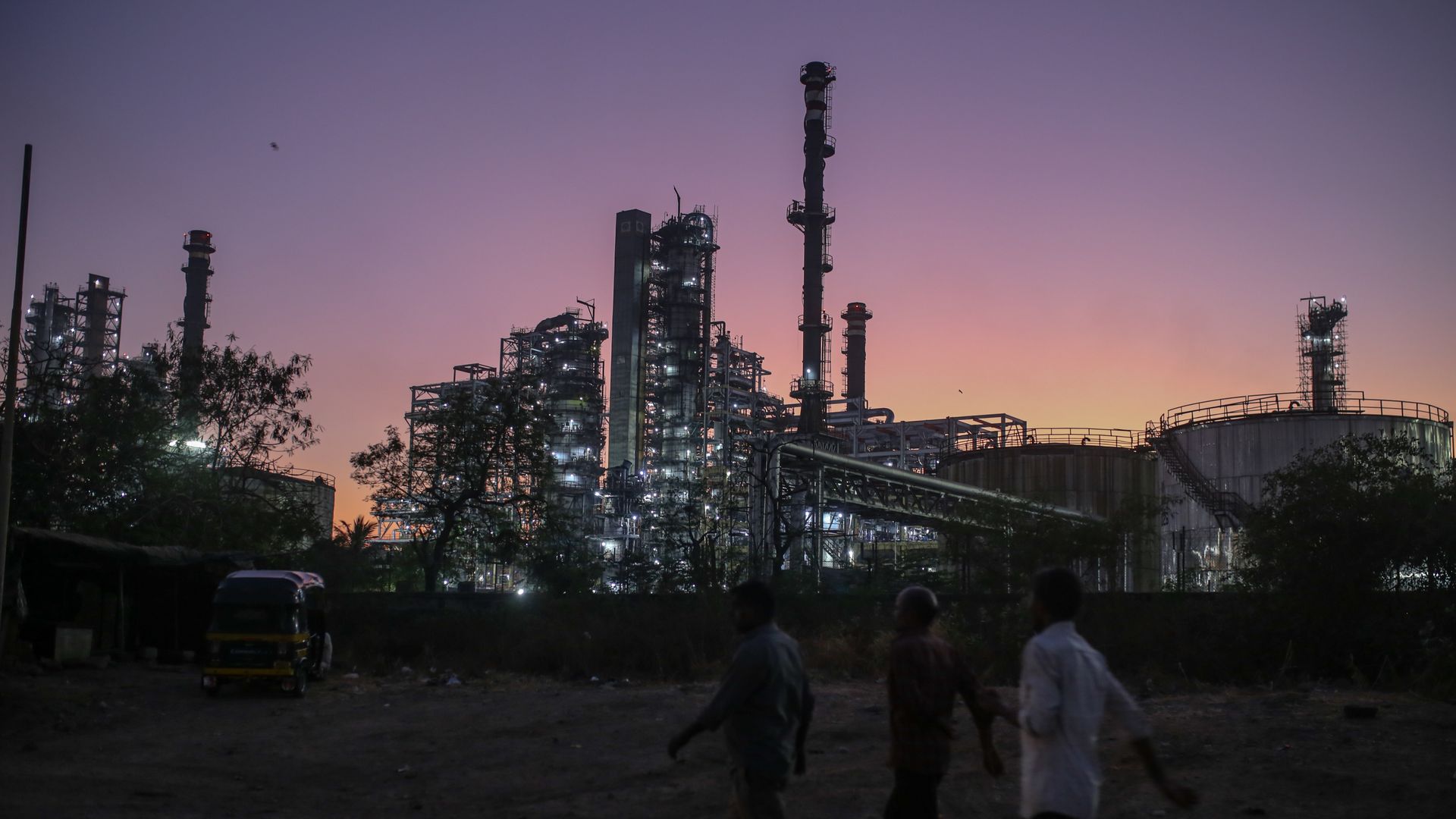
A refinery in Mumbai, India. Photo: Dhiraj Singh/Bloomberg via Getty Images
Trade could be an impetus behind President Trump's threat to impose some kind of penalty on India over its imports of Russian energy.
Why it matters: It would mark the first tangible carry-through from Trump's threats to hit Russian buyers to create leverage for a cease-fire in Ukraine.
- India is a major importer of Russian oil, with purchases surging since Europe started shunning the Kremlin's barrels.
Driving the news: The threat came in a wider Truth Social post Wednesday, in which Trump threatened a 25% overall tariff on India, plus an undefined "penalty" over Russian energy, starting Friday.
The intrigue: ClearView Energy Partners says Trump's comments on India could be more about pressure to reach a trade deal than swaying Russia on Ukraine.
- "That said, trade pressure today does not rule out peace pressure tomorrow, and we would not bet against additional economic force projection vis-à-vis Russian crude buyers on or before August 7," it said in a note, referring to the theoretical deadline Trump imposed.
Catch up quick: Trump has previously threatened 100% tariffs on all buyers of Russian energy, which would hit China, the top importer, especially hard.
- Treasury Secretary Scott Bessent repeated the saber-rattling earlier this week, while Trump on Tuesday gave Russia 10 days.
- Bipartisan legislation to impose these huge secondary sanctions is rattling around Congress as well, though Trump claims leeway to act alone.
State of play: Oil moved higher after Trump's post, and prices are at their highest levels since mid-June, with Brent trading this morning at $72.82.
Yes, but: Trump's post didn't describe the penalty India will face on Friday, and the White House didn't provide comment.
What we're watching: Whether Trump is actually, really, truly prepared to play hardball on Russian energy, which could raise oil prices.
- "[O]ur base case is that Russia will resist making serious concessions, believing that President Trump will blink at imposing measures that could push energy prices materially higher and that the White House's newfound support for Ukraine will dissipate," RBC Capital Markets' Helima Croft said in a note.
