Trump hits Canada with 35% tariff, keeps global baseline at 10%

Add Axios as your preferred source to
see more of our stories on Google.
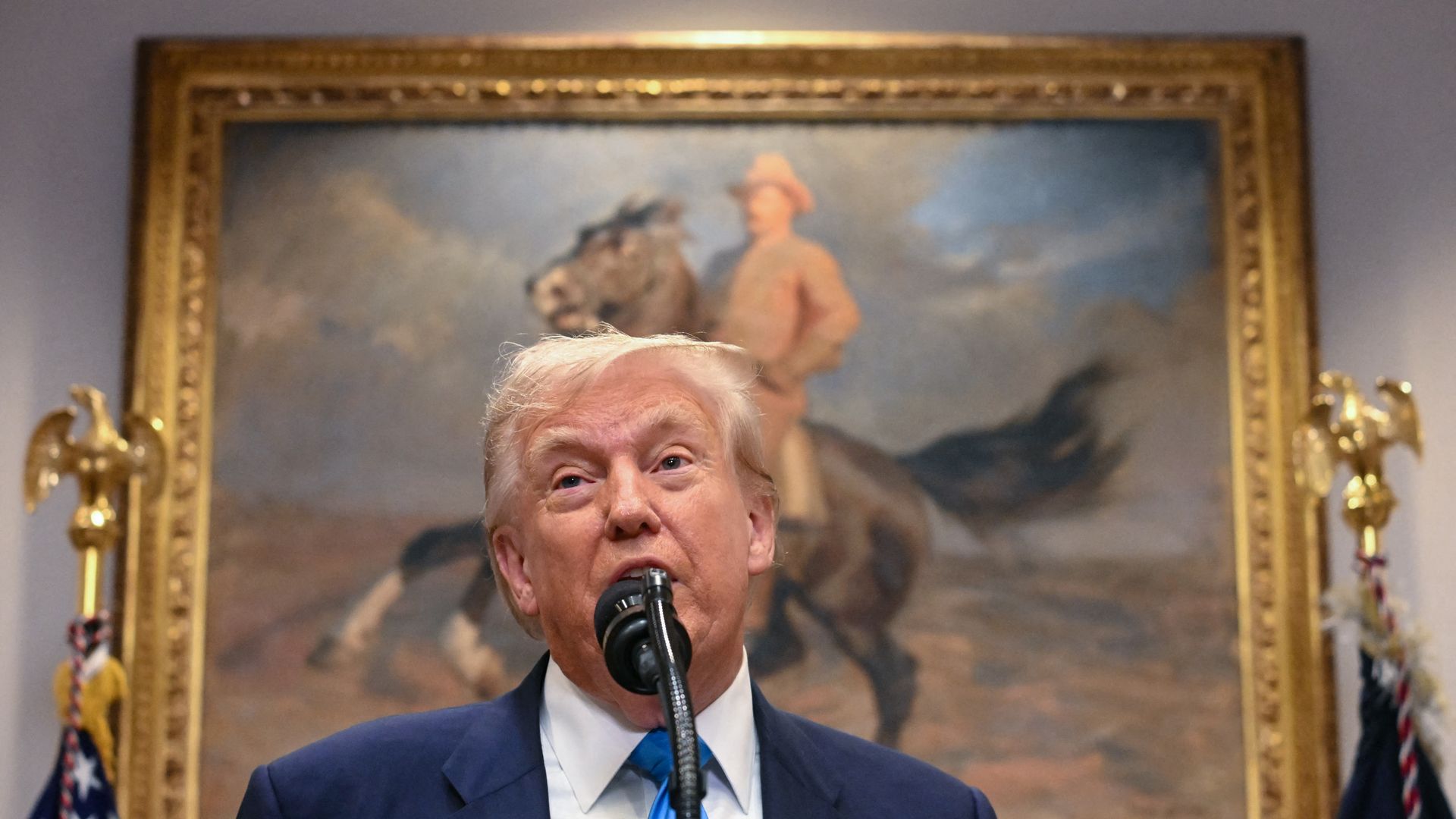
President Trump at the White House. Photo: Jim Watson/AFP via Getty Images)
President Trump on Thursday confirmed imports from most countries will face a tariff rate of 10%, while raising levies on Canada to 35% and lowering rates on many other countries.
Why it matters: The baseline rate is unchanged from the global duties Trump first set in April, and will come as a relief given his recent hints it could double.
- But the higher levy on Canada that took effect at 12:01am Friday ET, one of the top U.S. trading partners, threatens to strain an already heavily damaged relationship.
Driving the news: After months of delays, sweeping global tariffs are meant to take effect Friday.
- The U.S. has made some trade deals, or at least short-term truces, though most countries are simply being assigned a rate.
- The new approach stands in contrast to the "90 deals in 90 days" the administration promised early in the trade war. Ultimately, such speed proved far too complex given the depth of issues and breadth of counterparties.
Zoom out: The government published a list of dozens of countries Thursday night with the tariff rates that will be charged against their exports.
- Many nations were reset from their April levels to lower levies of 15%. It's effectively a scrapping of the formula the administration first used — one that economists said was based on a massive error.
- A few countries saw rates rise, like Switzerland, as well as African nations like Cameroon, Chad and the Democratic Republic of the Congo.
- Any countries not on the list will get the baseline rate instead.
- Bloomberg cited a senior administration official as saying countries were roughly divided into three groups: 10% for those with a trade surplus, around 15% for those with a deal or a modest deficit, and higher for those with no deal and larger deficits.
The intrigue: In a separate order, Trump raised duties on Canada to 35% from 25%, citing dissatisfaction over Canadian efforts to stop the flow of drugs across the border. However, goods covered by the existing USMCA trade agreement remain exempt, as they were before.
- The Canadian relationship has been fraught with tension, a stark contrast to Mexico, which on Thursday got a 90-day extension to make a better deal.
Of note: Trump's orders came just hours after a federal appellate court heard arguments in a case considering whether he even has the legal authority to impose such tariffs.
- The judges hearing that case questioned how the administration could classify trade deficits that have lasted for years, or even decades, as economic emergencies suddenly requiring tariffs.
- There's no timeframe for a ruling, which is widely expected to end up at the Supreme Court either way.
Flashback: When Trump held his "Liberation Day" event April 2 and imposed tariffs, there were two kinds: a 10% global baseline, and higher reciprocal tariffs against dozens of countries.
- The baseline tariffs went into and stayed in effect, but the reciprocal tariffs were paused after a deep panic sent financial markets plunging. It is those reciprocal tariffs that are mostly resuming Friday.
What to watch: How companies and investors respond to the news.
- Stocks were slightly lower in late trading Thursday night, and bond yields just a tick higher.
- Markets have mostly accepted the tariff regime as it stands now, though companies and consumers are facing the highest rates in a century or more, with still-developing economic impacts.
Go deeper: Trump's 35% tariffs on Canada take effect as trade talks deadline lapses
Editor's note: This story has been updated with new information throughout.
