Trump's 35% tariffs on Canada take effect as trade talks deadline lapses

Add Axios as your preferred source to
see more of our stories on Google.
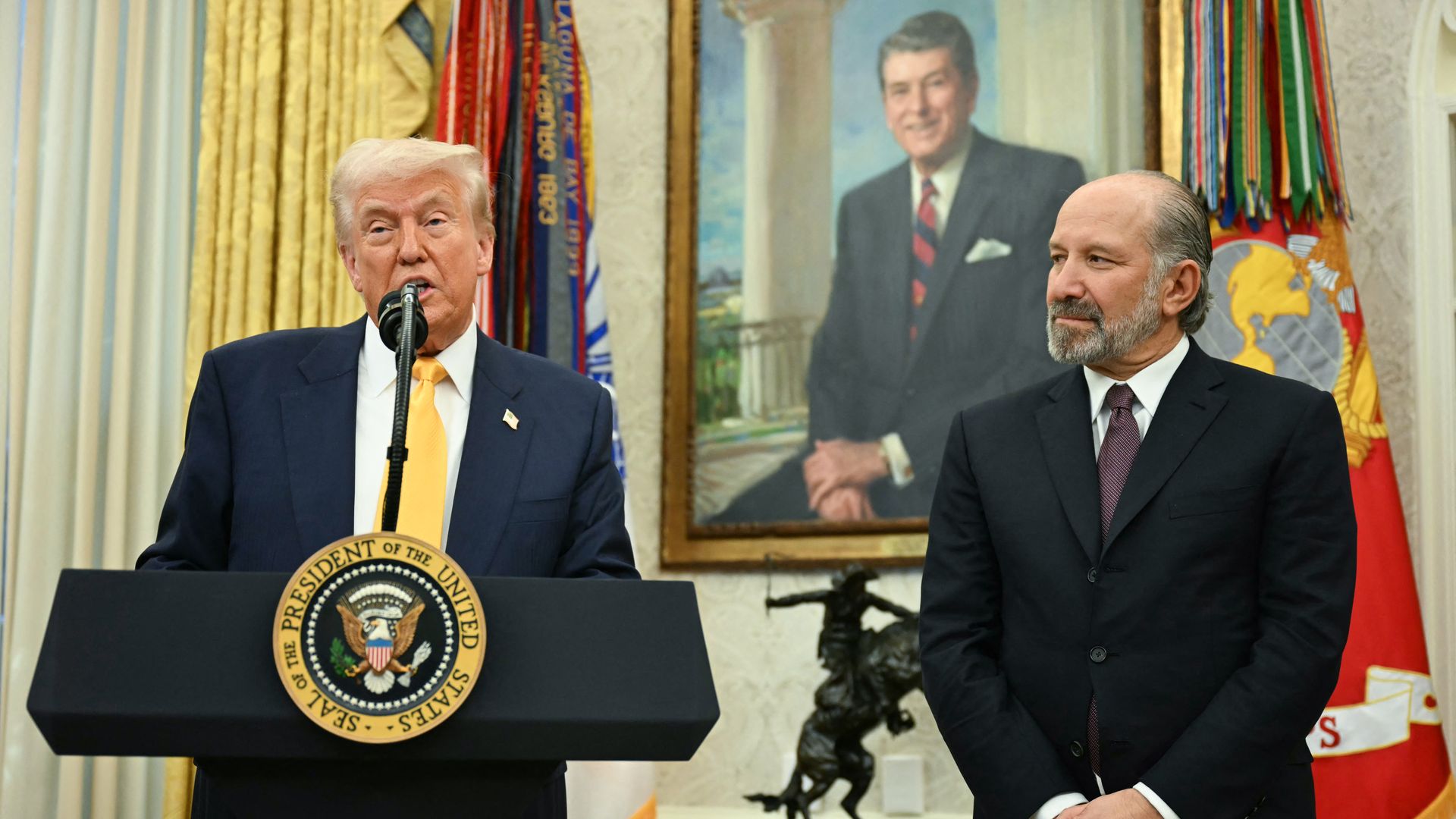
President Trump and Commerce Secretary Howard Lutnick at the White House earlier this year. Photo: Jim Watson/AFP via Getty Images
President Trump's tariffs order for countries yet to strike a trade deal with the U.S. went into effect just after midnight on Friday, though most levies aren't due to start until Aug. 7.
Why it matters: While countries like Mexico struck trade deal extensions ahead of Trump's deadline, others face steep tariffs. The president increased Some Canadian goods imported to the U.S. on Thursday to 35%, effective 12:01am Friday ET.
- An appeals court is now considering the legality of the tariffs, and the judges have indicated they're wary of the Trump administration's argument that global trade imbalances amounted to a national emergency.
Zoom in: Canadian Prime Minister Mark Carney said Wednesday he had expected trade talks to continue beyond the deadline, but his pledge to recognize Palestinian statehood prompted Trump to say it "will make it very hard for us to make a Trade Deal" with the North American neighbor.
- Trump said at a Thursday briefing he "didn't like" Carney's plans, but it's "not a deal-breaker." He told NBC News late Thursday that he hadn't spoken with Carney but didn't plan to strike a deal before the deadline.
- The reason a White House fact sheet gave on the tariffs was the Trump administration's belief that Canadian officials had "failed to cooperate in curbing" the flow of drugs into the U.S. from the border.
- The U.S.-Mexico-Canada Agreement (USMCA) on trade is exempt from the tariffs hike.
The latest: Carney said in a statement early Friday that pledged to continue negotiating with the Trump administration that the USMCA exemption meant that "the average U.S. tariff rate on Canadian goods remains one of the lowest for all of its trading partners."
- His statement that was posted to his social media channels noted that Canada accounts for 1% of U.S. fentanyl imports and that Canadian officials were working to further reduce this and the country's government was making "historic investments" in border security.
State of play: Trump made a series of trade deals in the leadup to the Aug. 1 deadline, including with the European Union, the U.K. and Japan.
- Despite the deadline date, many of the tariffs will become effective seven days after Trump's July 31 order.
- Some nations got substantially lowered rates versus what was first announced in April.
- Trump confirmed Thursday that imports from most nations would face a baseline tariff rate of 10%, but he increased the levy of close trading partner Canada to 35% as threatened.
By the numbers: Financial markets largely dipped in response to the start of the new tariff regime, with stocks dropping 0.66% in Japan and 3.7% in South Korea overnight.
- Australia's S&P/ASX 200 benchmark was down 0.76%.
What to watch: China's 90-day trade truce with the U.S. remains in effect until Aug. 12.
Go deeper: Tariff deals could reverse "sell America" trade, pull investors back to U.S. stocks
Editor's note: This article has been updated with market reaction and comment from Canadian Prime Minister Mark Carney.
