Appeals court judges question trade emergency behind Trump tariffs

Add Axios as your preferred source to
see more of our stories on Google.
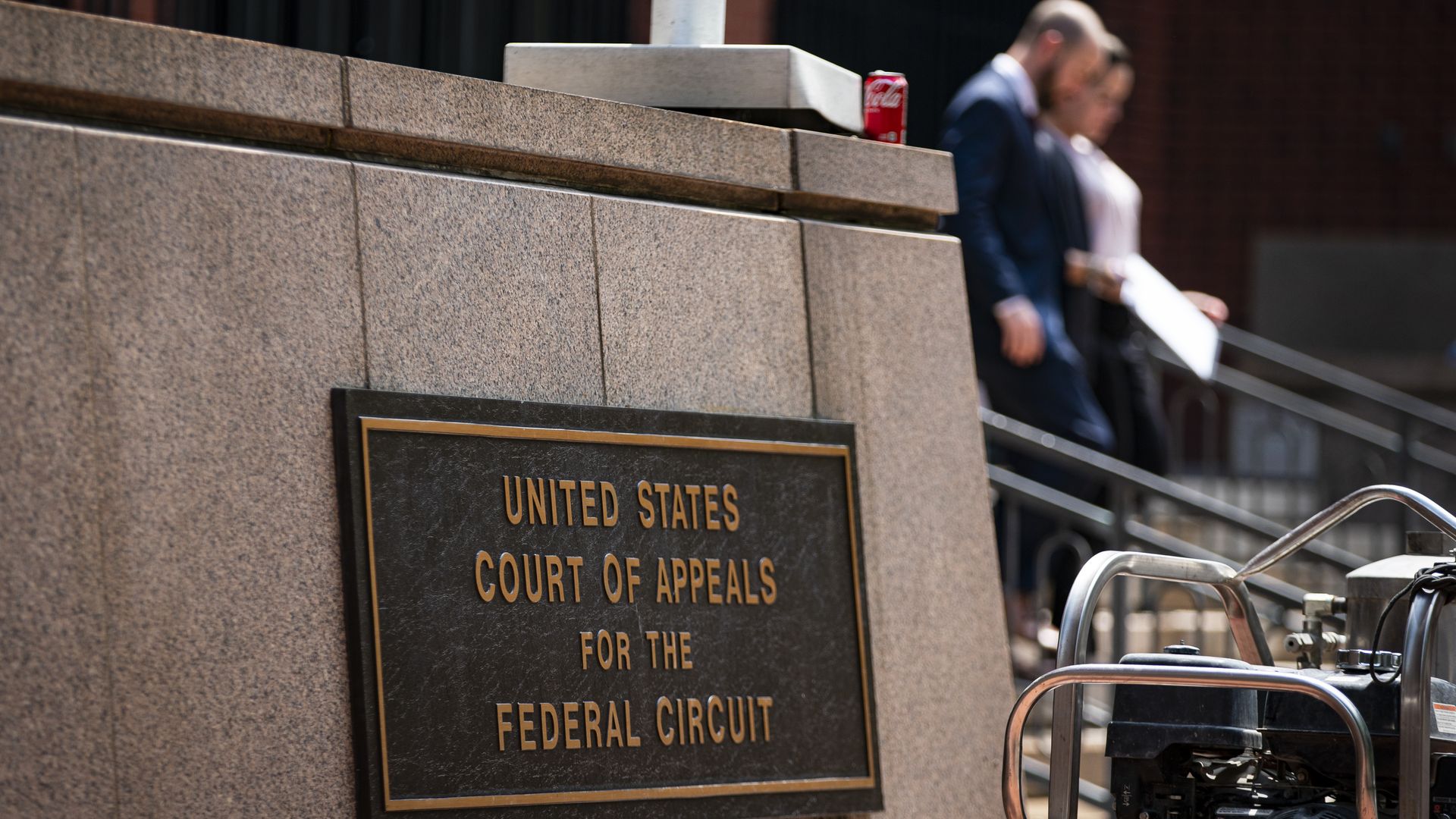
Photo: Al Drago/Bloomberg via Getty Images
Appeals court judges on Thursday appeared wary of the Trump administration's argument that global trade imbalances amounted to a national emergency.
Why it matters: It is among the high-stakes legal questions threatening the sweeping tariffs at the center of Trump's economic agenda.
The big picture: Trump has leaned on untested powers to impose tariffs across much of the globe.
- Those powers faced legal scrutiny on Thursday, just one day before he's set to lean on them to impose higher tariffs.
What they're saying: The judges pushed Justice Department lawyers on the Trump administration's declaration of a national emergency over trade deficits that have been persistent for years.
- The judges questioned whether the administration can lean on a law that does not mention tariffs at all to impose them.
- "If the president says there's a problem with our military readiness and he puts a 20% tax on coffee," that would not deal with the emergency, one judge said.
Details: The White House says the tariffs are covered under the International Emergency Economic Powers Act (IEEPA).
- The law says the president can regulate economic transactions "to deal with any unusual and extraordinary threat" that amounts to a national emergency.
- The White House says that U.S. trade deficits are among the national emergencies justifying its global tariff policies.
The intrigue: "A dissatisfaction with the limits in IEEPA itself is not a license for the court to impose its own limitations," Brett Shumate, an assistant attorney general at the Justice Department, argued.
- Shumate argued that the trade deficit has "reached a tipping point" and the tariffs give the "president leverage to address the emergency."
The other side: A group of small businesses sued the Trump administration over the tariffs.
- The judges pushed Neal Katyal, who argued on behalf of the plaintiffs, to clarify why the powers to regulate granted in IEEPA did not cover the imposition of tariffs.
- "If this argument is true, every single time you and I sell a stock, the SEC can tax it," Katyal, a former top DOJ official during the Obama administration, argued.
Threat level: Katyal said that both political parties should be worried about the precedent if Trump's tariffs are upheld.
- "If you have a president who says, 'I can tariff a country 145% and blow off the laws of Congress' today, you can have a future president — maybe a radical Democrat — who can do the same thing about climate emergencies," Katyal told reporters.
Context: Thursday's hearing comes after the Court of International Trade ruled in May that Trump overreached when imposing the tariffs.
- The court blocked the levies, though the tariffs were reinstated by the appeals court.
What to watch: It's unclear when the U.S. Court of Appeals for the Federal Circuit will issue a ruling.
- Whatever judges rule, the case is all but certain to advance to the Supreme Court.
The bottom line: Trump's global tariffs have unleashed a bout of economic uncertainty.
- Adding to that uncertainty: whether the tariffs are even legal.
Editor's note: This story has been updated with comments by the plaintiffs' attorney.
