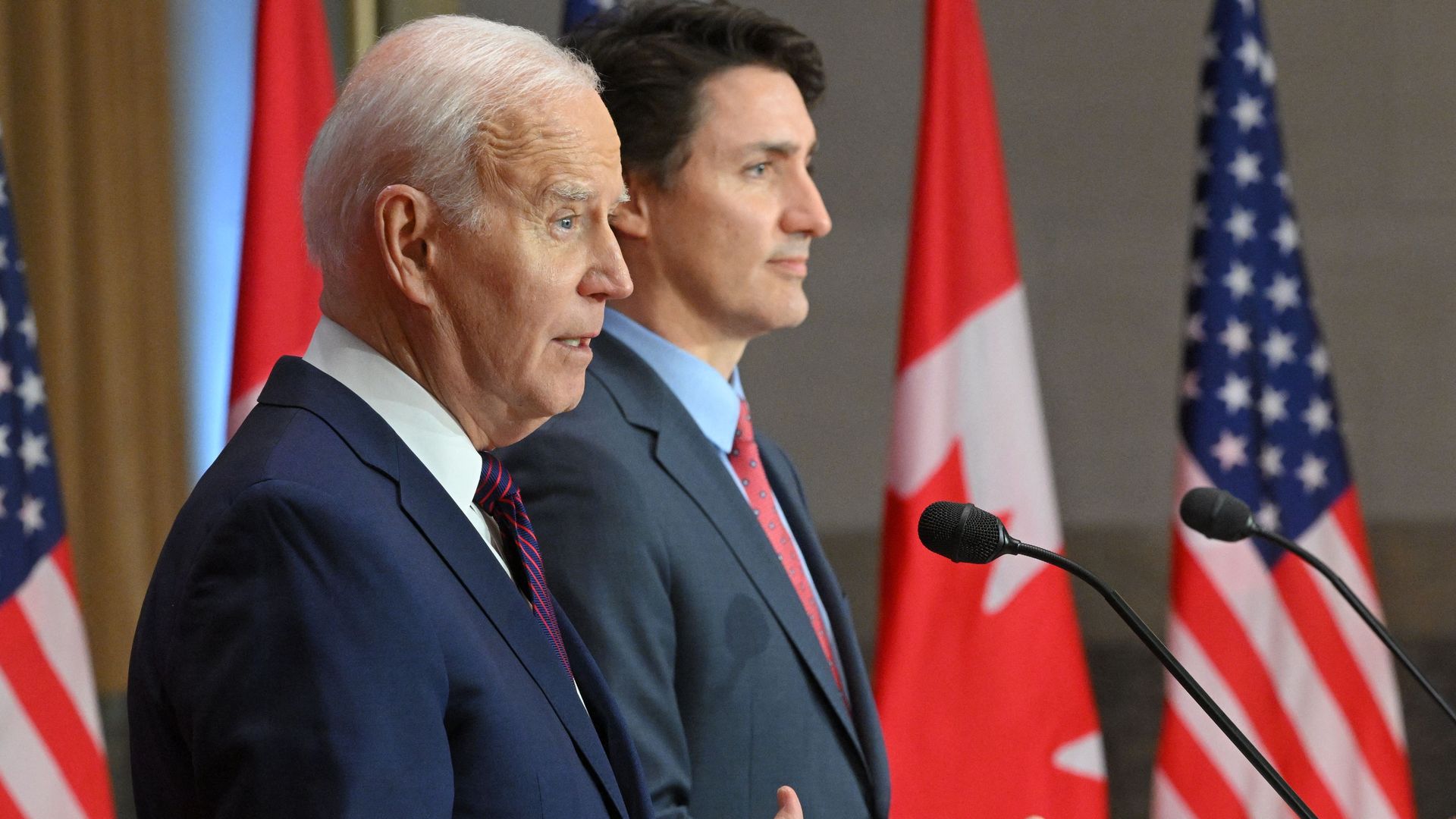
The U.S. and Canada have struck a new agreement that will allow them to divert some asylum-seekers amid a surge in entries at the northern border.
Driving the news: The deal closes a legal loophole that allowed migrants traveling from the U.S. to Canada to apply for asylum if they used unofficial crossings — and vice versa.
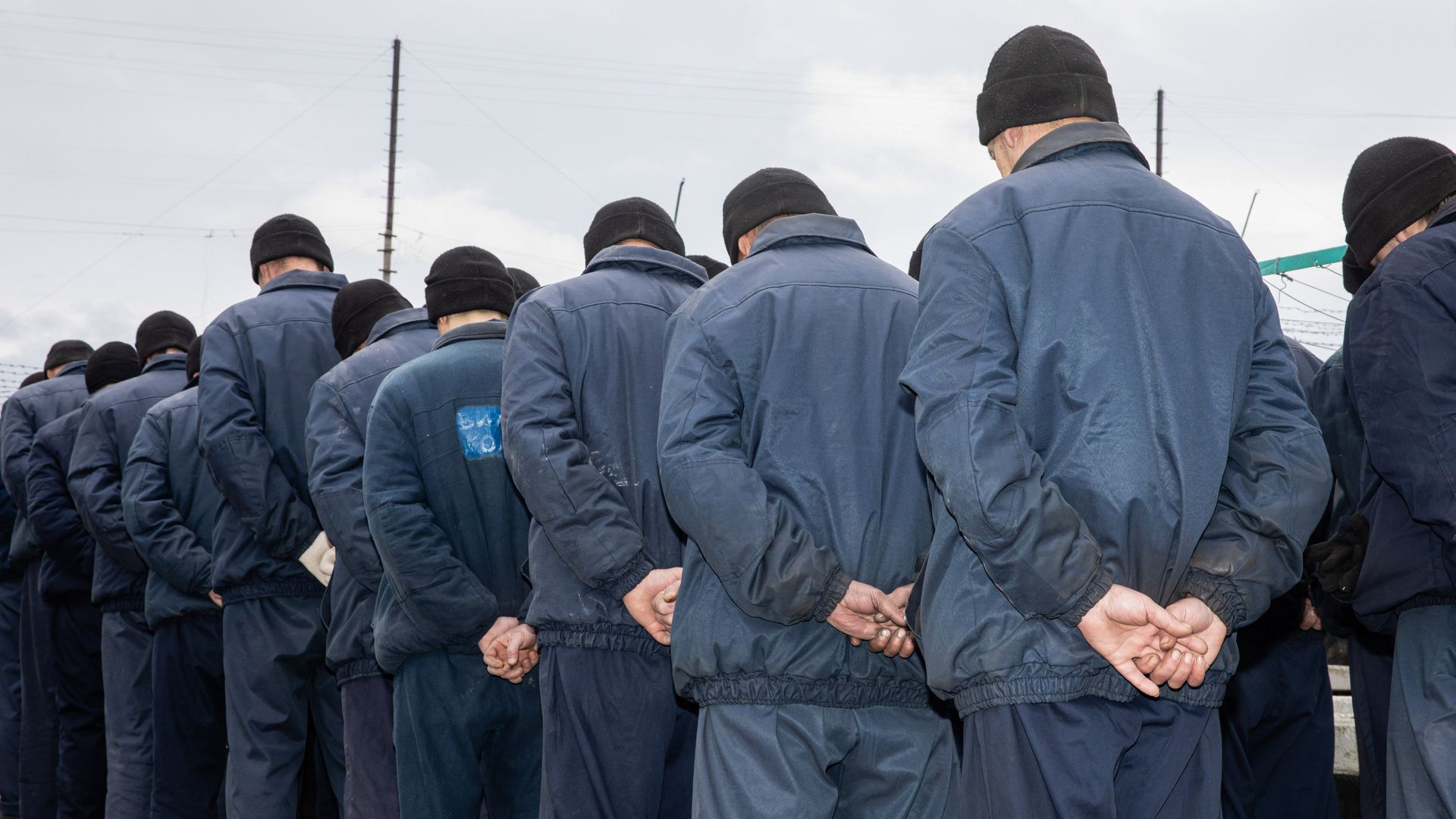
The UN published a report Friday highlighting summary executions, torture, and other instances in which Russia and Ukraine violated international human rights laws in their treatment of prisoners of war.
The big picture: The report comes after another UN report last week found that Russian forces in Ukraine committed an array of violations that amount to war crimes and possible crimes against humanity.
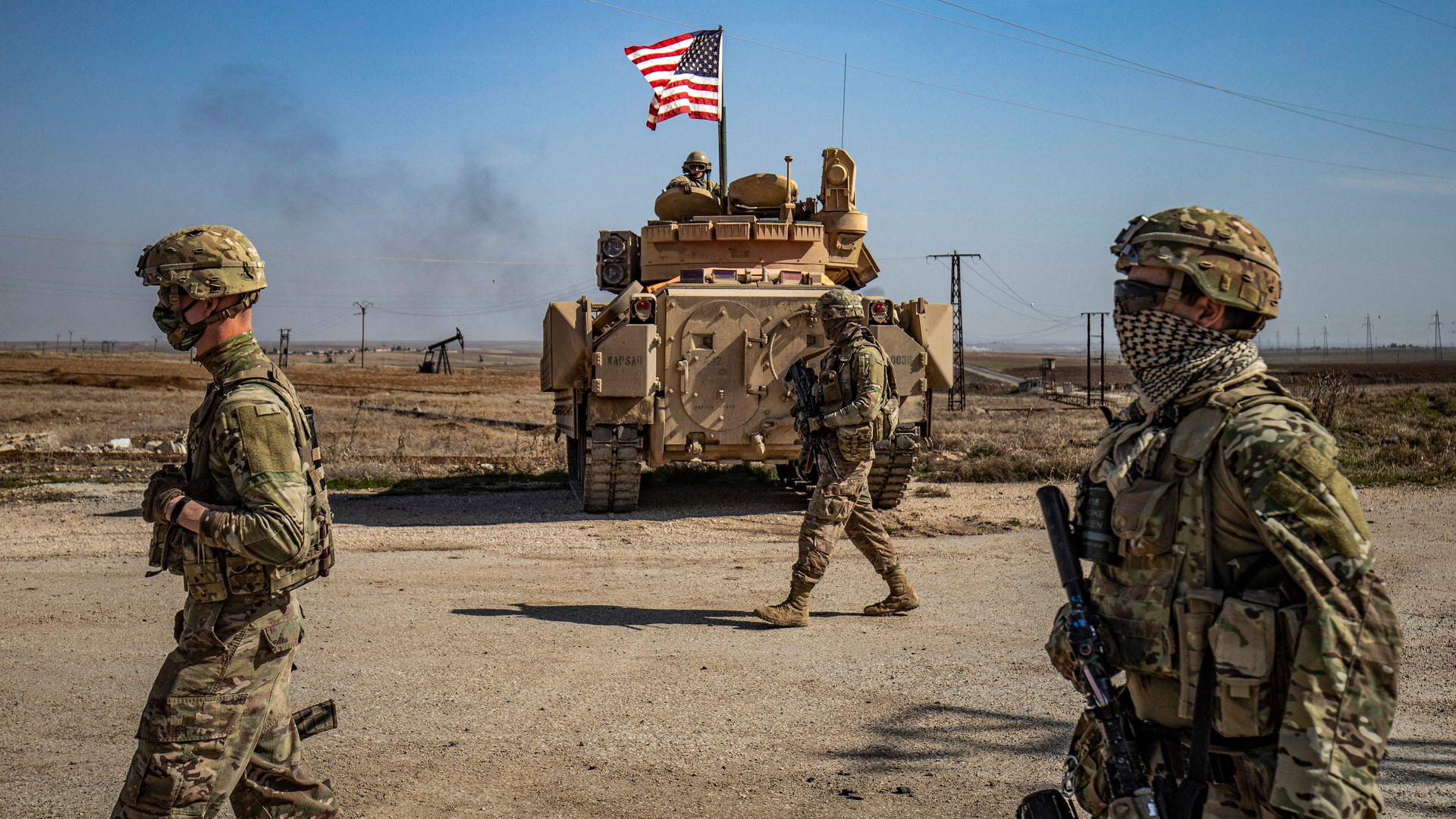
President Biden on Friday said the U.S. will "act forcefully" to protect its troops and other personnel in Syria after a drone strike by suspected Iranian proxies in the northeast part of the country killed an American contractor and wounded five American service members and another U.S. contractor.
Details: A U.S. intelligence assessment determined that the "one-way unmanned aerial vehicle" that struck a maintenance facility on a coalition base near Hasakah on Thursday was "of Iranian origin," per a U.S. Defense Department statement issued late Thursday.
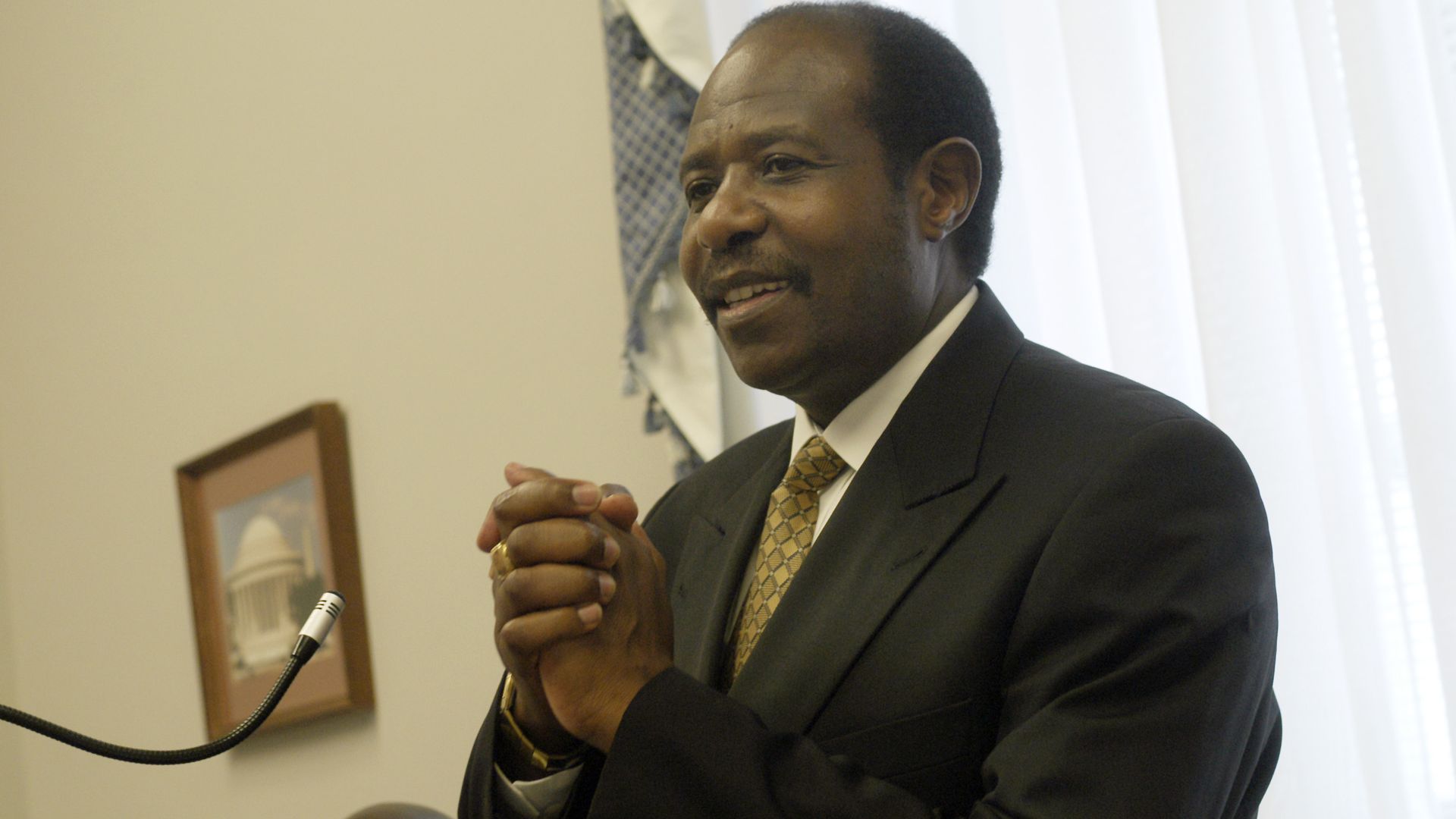
Paul Rusesabagina, whose actions to shield Tutsis during the Rwandan genocide served as the basis of the film "Hotel Rwanda," will be released from prison on Saturday, according to a spokesperson for the Rwandan government.
The backstory: Rwandan President Paul Kagame came to power after the genocide, and Rusesabagina became a prominent critic-in-exile of his increasingly authoritarian rule. Rusesabagina's family says he was taken to Rwanda against his will in 2020. He was later convicted of terrorism charges.
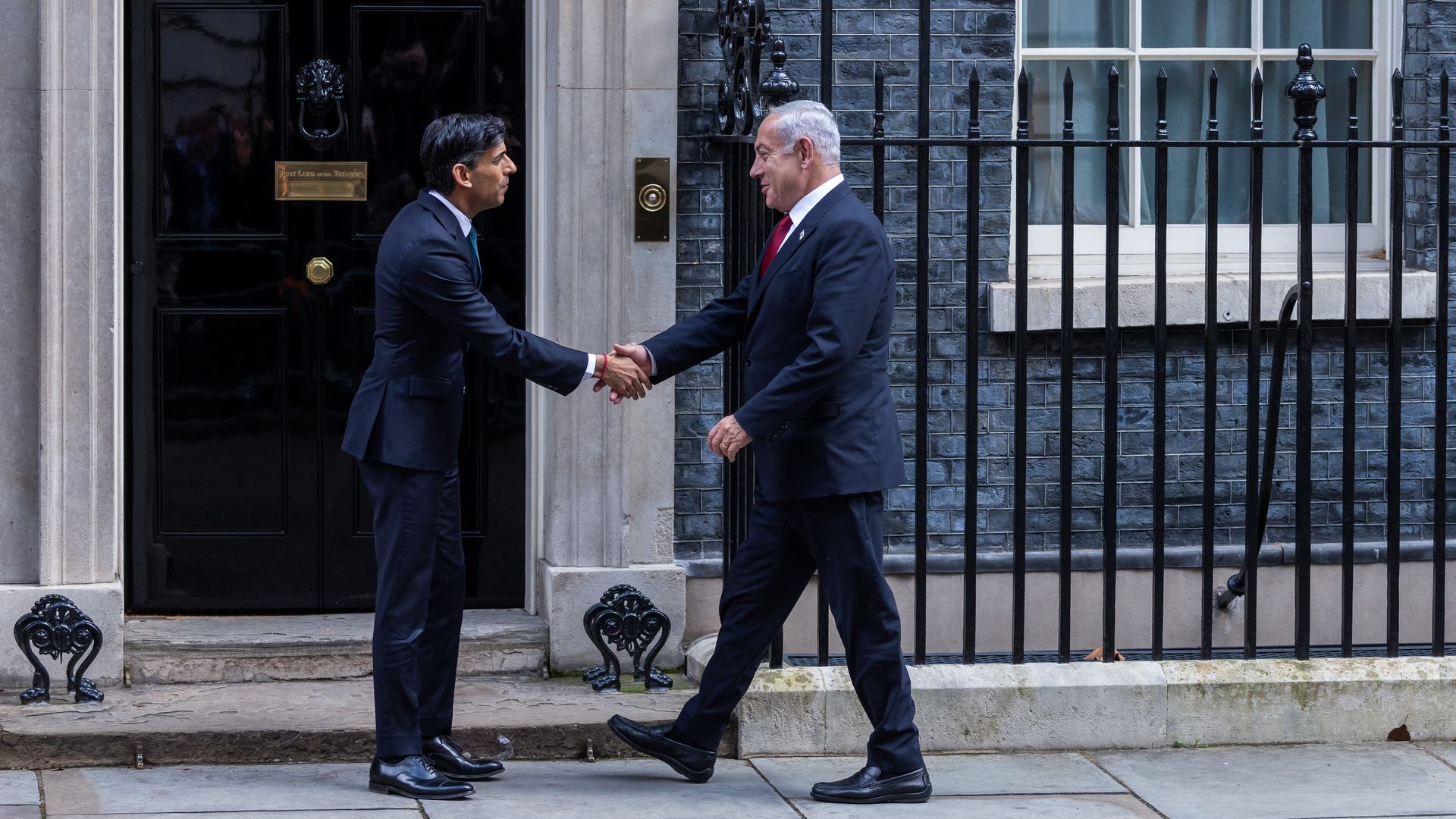
British Prime Minister Rishi Sunak told Israeli Prime Minister Benjamin Netanyahu on Friday that he is concerned about the Israeli government’s plan to weaken the country's Supreme Court and other democratic institutions, according to two sources with knowledge of the meeting.
Why it matters: Sunak’s criticism, while mostly conveyed in private, adds to the growing international pressure Netanyahu is facing over his judicial overhaul plan and the anxiety among Israel’s key allies over its potential consequences for the country's democracy.
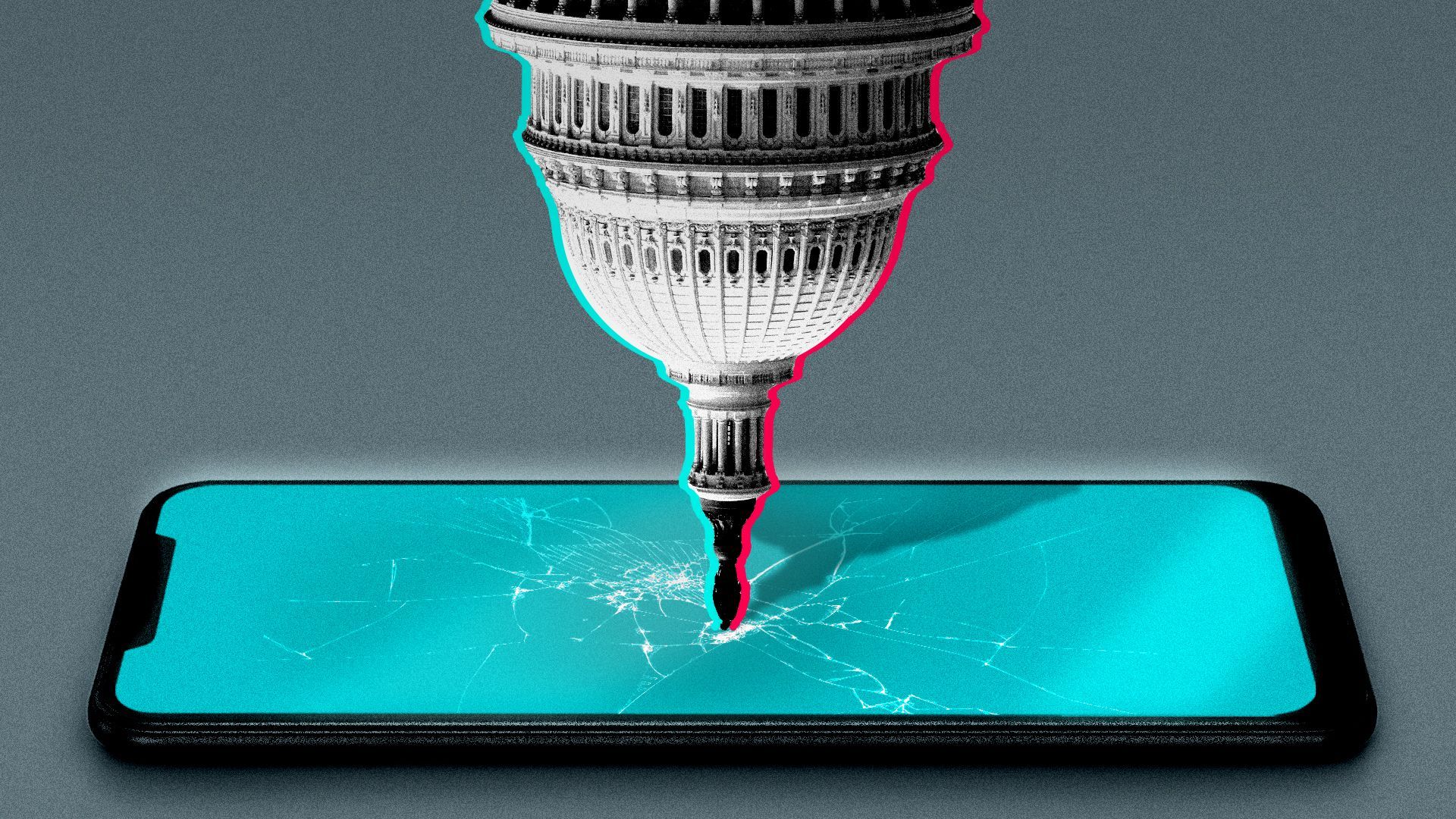
TikTok's future in the U.S. is most likely to be determined by the courts, rather than by politicians, executives or influencers.
Driving the news: Congress gave the social media company no quarter yesterday, in a four-hour hearing that mostly vacillated between moral panic and red scare.
Authorities in the Indian state of Punjab blocked mobile internet for 27 million residents and arrested at least 154 people while conducting a massive manhunt for a Sikh separatist leader who was relatively unknown until recently: Amritpal Singh.
The big picture: The manhunt has gripped the country since Saturday and awakened memories of a decade of bloodshed in the 1980s and 1990s when Sikh separatism, known as the Khalistan movement, was violently suppressed.
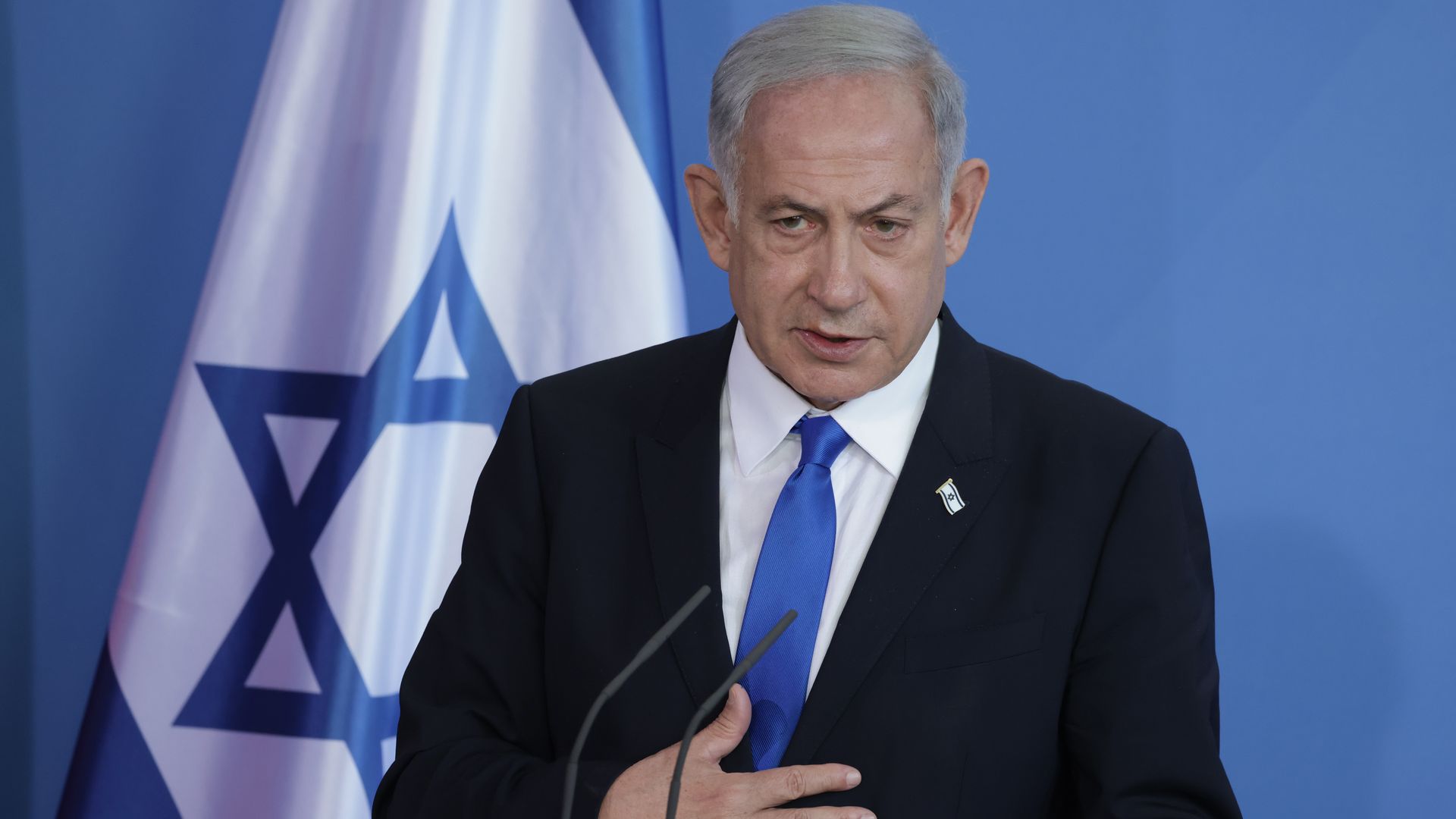
Israeli Prime Minister Benjamin Netanyahu announced on Thursday that he will not suspend his judicial overhaul plan, despite mass nationwide demonstrations and unprecedented warnings from the leaders of the military and security services who say protests among reservists could impact the IDF's operational preparedness and capabilities.
Why it matters: Netanyahu's speech signals he has no intention of accepting any compromise on the key elements of the plan and that he is totally aligned with the most extremist ministers in his government. He said one of those key elements — a law that will give his coalition an automatic majority on the panel that appoints Supreme Court judges — will be put to a vote in the Knesset next week.
A U.S. Senate bill introduced on Wednesday seeks to help residents of Puerto Rico access the same food aid benefits that other U.S. citizens receive.
Why it matters: Puerto Ricans are U.S. citizens, but their access to several federal programs is restricted. For example, they haven't been eligible for the Supplemental Nutrition Assistance Program (SNAP) since the U.S. government cut the territory off from the program in the early 1980s in an effort to reduce federal spending.
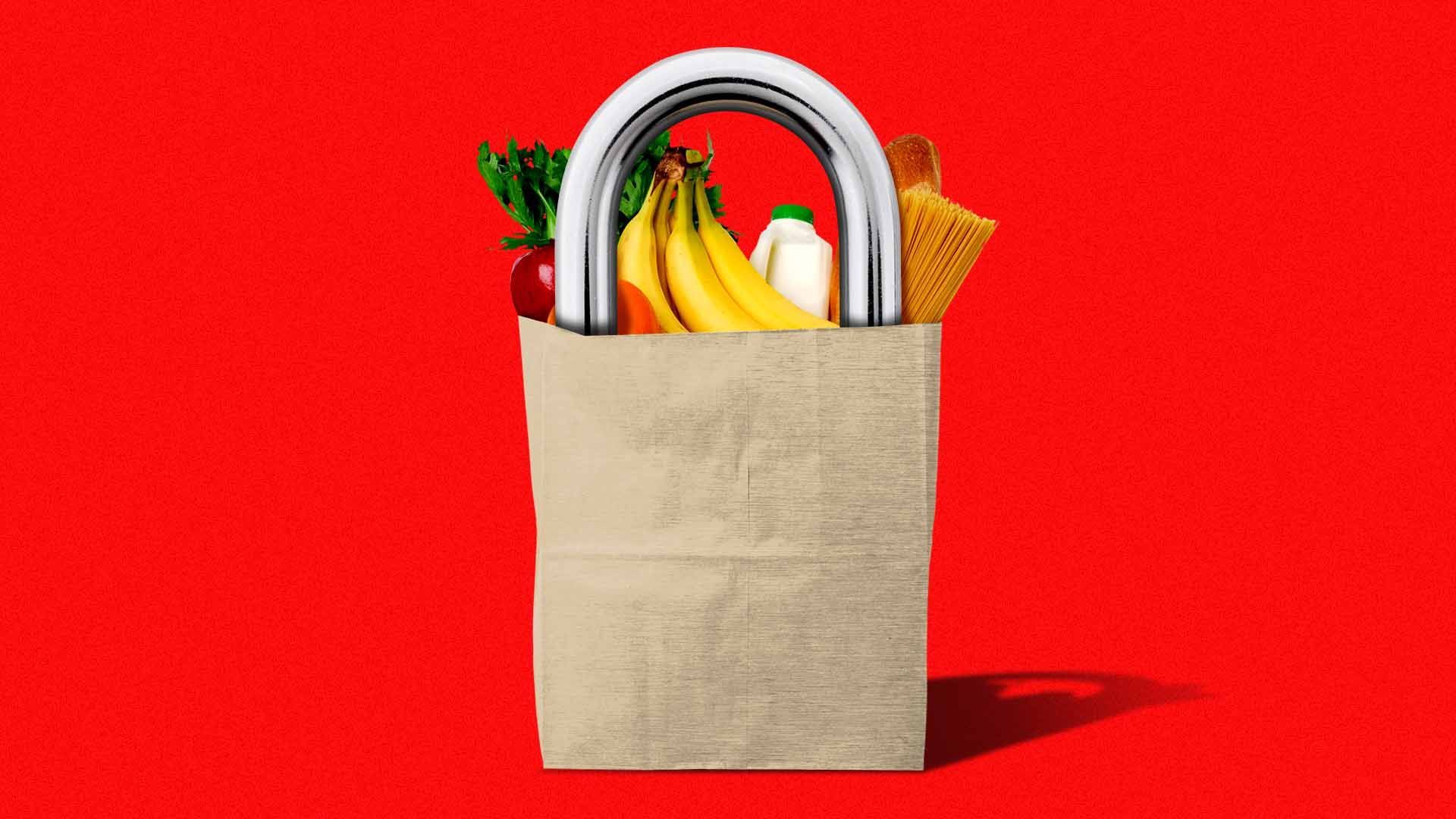
Latinos and Black American adults are at a much higher risk of experiencing food insecurity than their white counterparts, according a new study by the Urban Institute.
The big picture: Sky-high food price inflation has added financial hardship for families across the country, especially Latinos.That hardship is likely to be exacerbated now that pandemic-era enhanced benefits have ended.