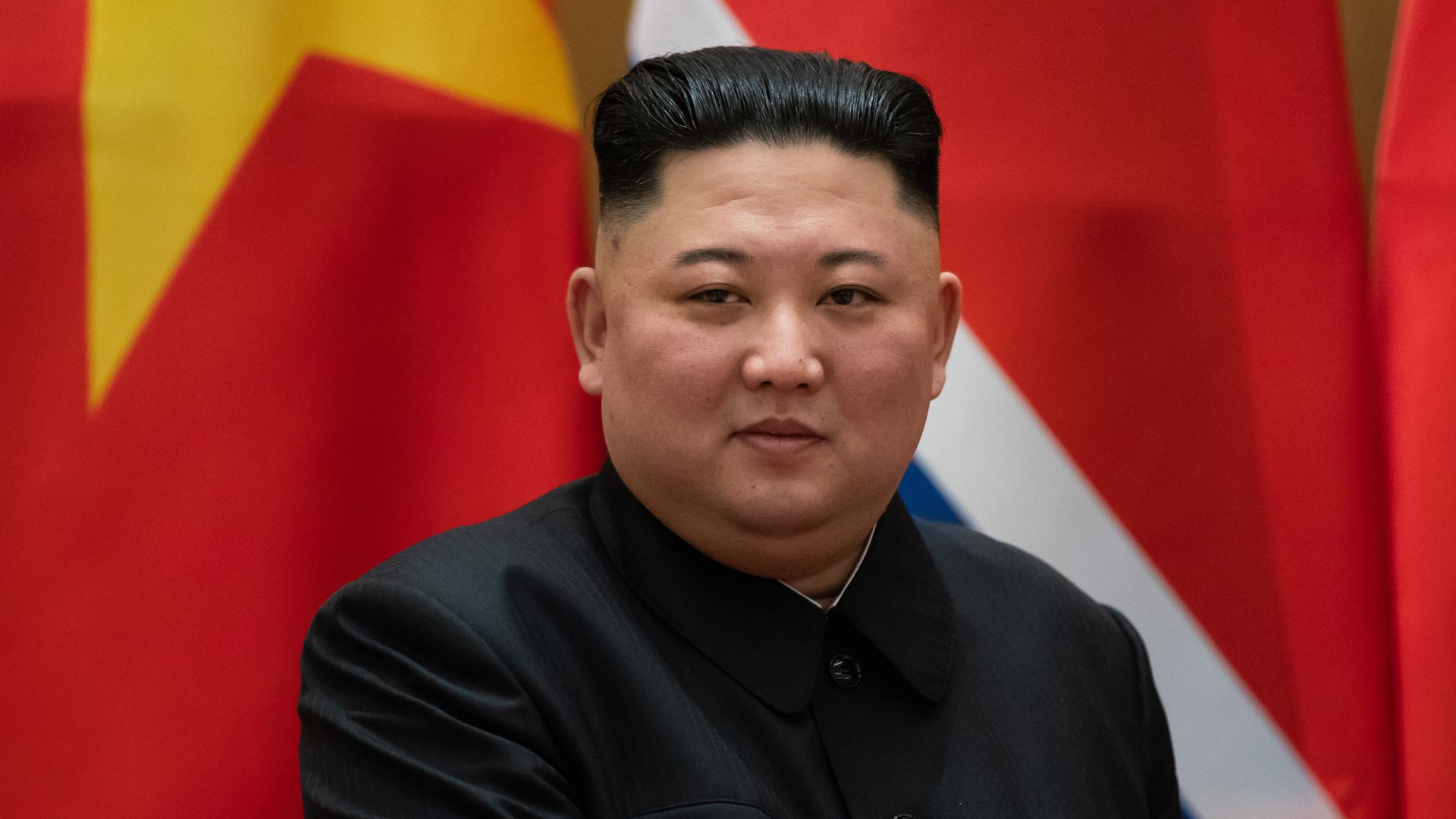
North Korea faces a growing food crisis that has left children and elderly people at risk of starvation, a UN investigator said in a report out Wednesday.
Driving the news: Prolonged and strict measures implemented to curb the spread of COVID-19 have worsened conditions in the isolated Asian nation and have lead to "severe economic hardship," per the report.
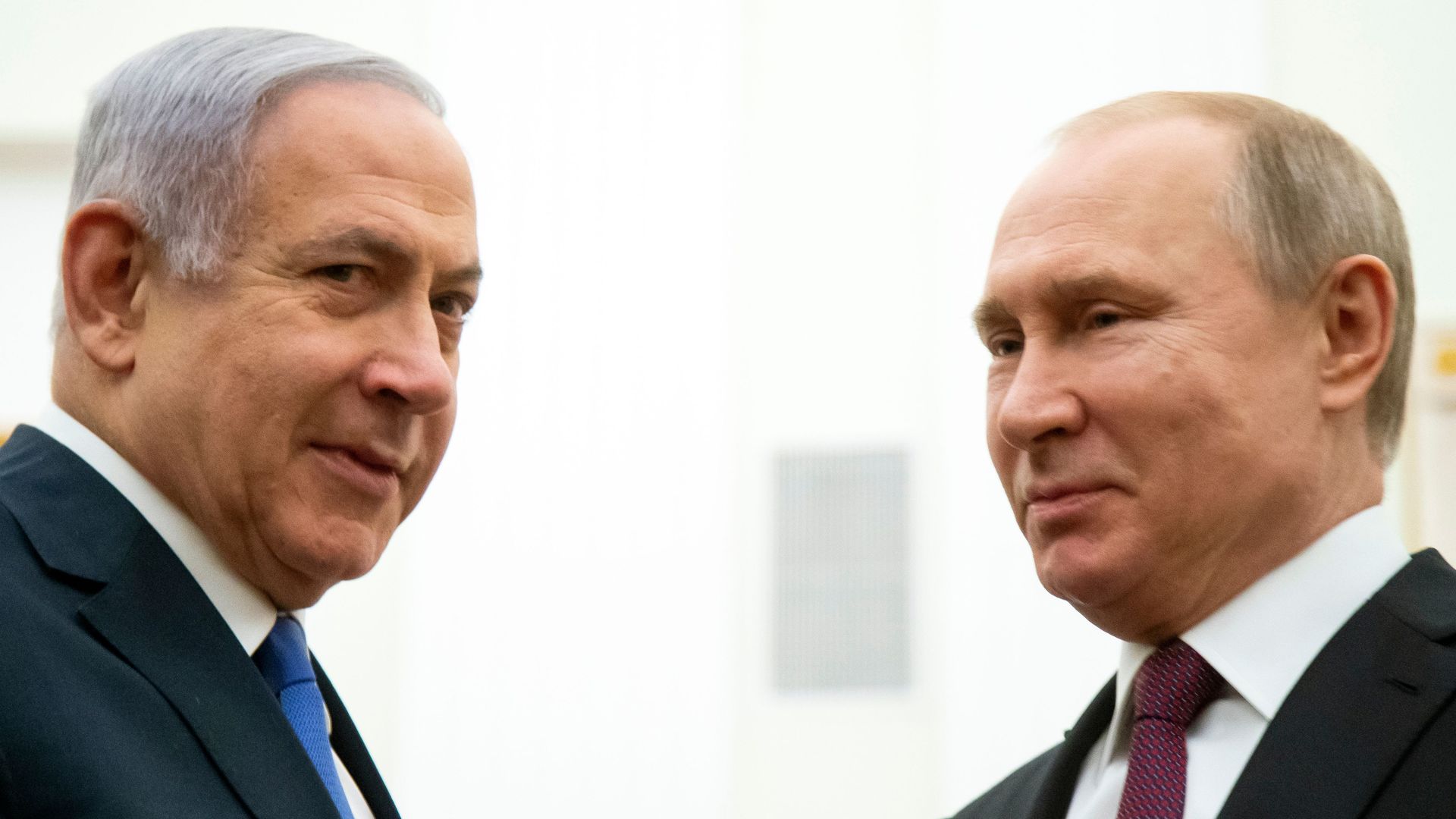
Days after being ousted as prime minister, Benjamin Netanyahu passed a message to Russian President Vladimir Putin promising a quick comeback, a source close to Netanyahu and a European diplomat told me.
Why it matters: Netanyahu and Putin had a close relationship that grew even closer after Russia began its military involvement in Syria in 2015. Netanyahu flaunted that relationship during election campaigns — meeting with Putin days before the 2019 vote and even featuring a picture of the two together on a campaign billboard to emphasize his stature as a statesman.
Abu Dhabi — Shiite cleric Muqtada al-Sadr has emerged from Sunday's parliamentary elections as the leading figure in Iraqi politics.
Why it matters: Al-Sadr has positioned himself as a bulwark against foreign interference in Iraq. He has a history of violent opposition to U.S. forces in the country but has more recently proved adept at presenting himself to regional and international partners as a more palatable alternative to pro-Iranian rivals.
The federal government is demanding Moderna provide enough vaccines to the global initiative COVAX, at not-for-profit prices, a top federal official said during an intense panel event today.
What they're saying: "We expect that Moderna will step up as a company," David Kessler, the Biden administration's chief science officer of the COVID-19 response, said, adding Moderna has additional capacity to meet these demands. "Failure to do that would be unconscionable in my view."
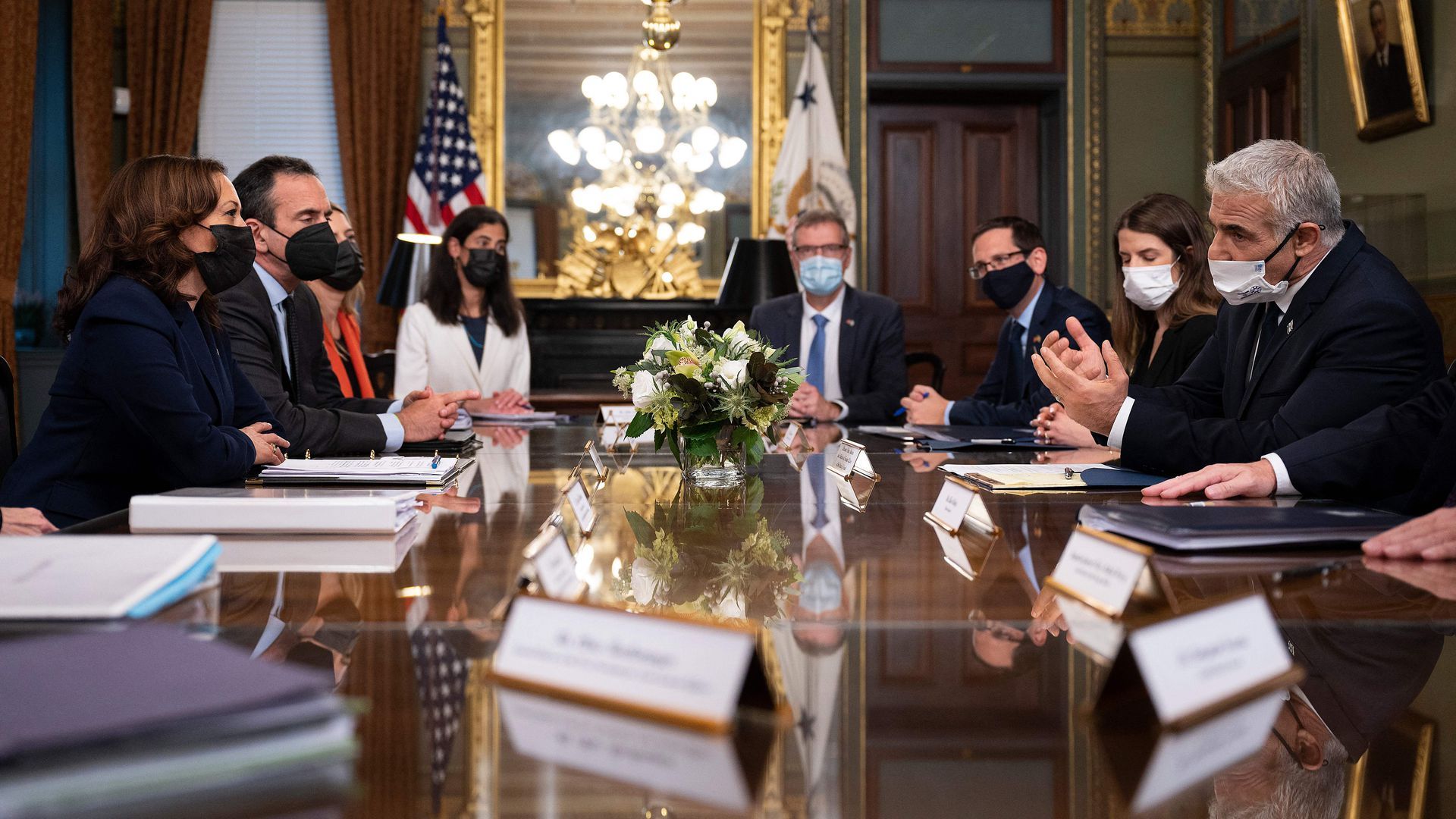
The trilateral meeting on Wednesday between Secretary of State Antony Blinken and the foreign ministers of Israel and the United Arab Emirates epitomized the Biden administration's belated embrace of the Abraham Accords.
Why it matters: The normalization deals struck between Israel and four Arab countries were Donald Trump's landmark foreign policy achievement, and while the Biden administration has long said it wants to push them forward, it has only recently started taking steps in that direction.
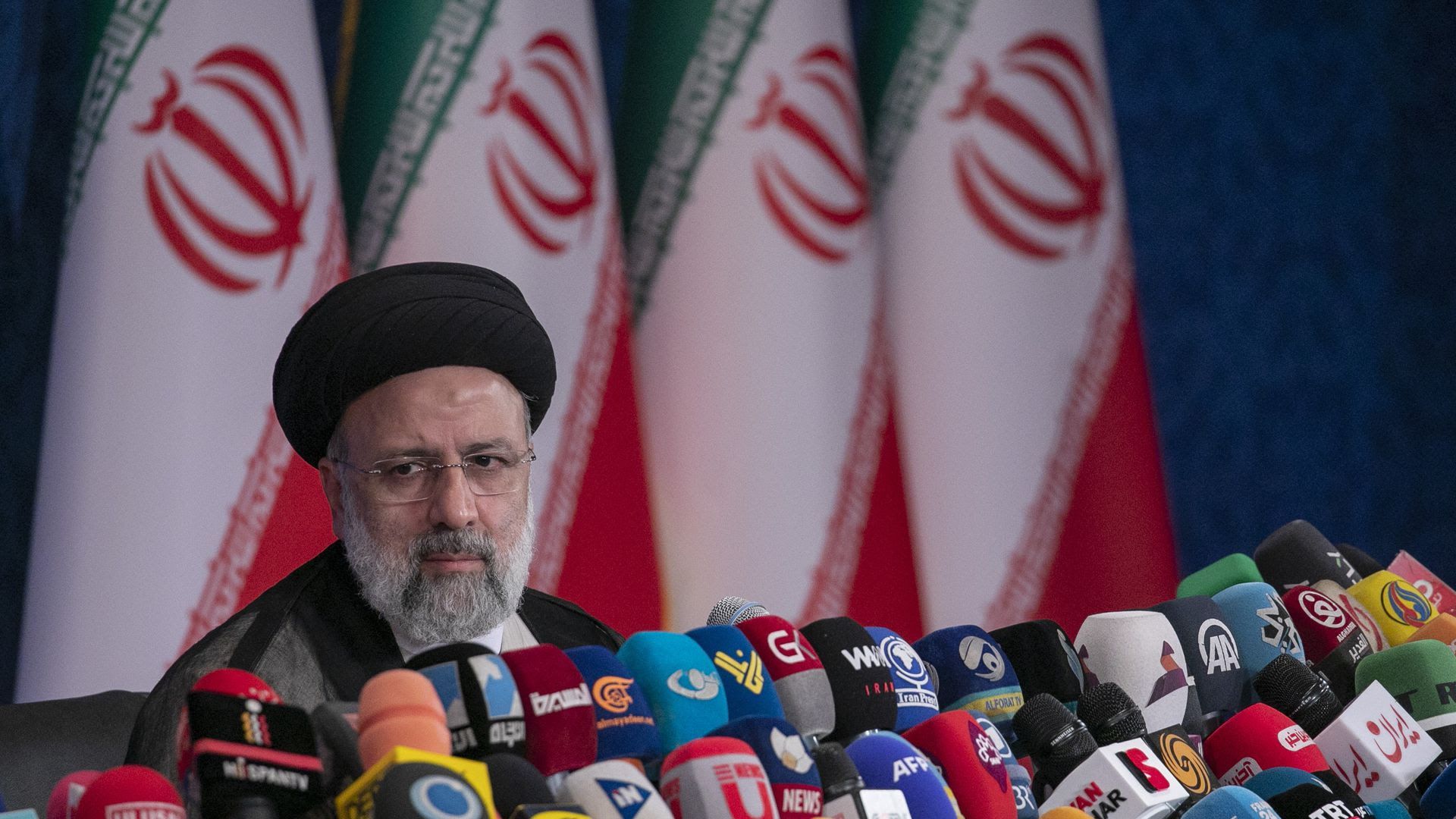
The Biden administration is grappling with a new dilemma as nuclear negotiations with Iran remain frozen: whether more pressure on Iran would help push the Iranians back to the 2015 deal, or lead Iran to escalate its nuclear program, U.S. and Israeli officials told Axios.
Why it matters: The Iranian nuclear program has made significant advances in recent months that will be difficult to roll back — and that could potentially undercut the benefits of salvaging the 2015 accord, particularly if a deal isn’t reached soon.
The Biden administration will open up U.S. land borders with Canada and Mexico to non-essential travel starting in November — but only to those fully vaccinated against COVID-19.
Why it matters: Government officials and business leaders have decried the economic impact pandemic travel restrictions have had on border communities. They have called for the U.S. to reopen the borders given high, and rising, vaccinations rates there.
Russia is not one of the 30 countries invited to this week's virtual counter-ransomware summit hosted by the White House, where the U.S. and its partners will discuss ways to crack down on global cybercriminal networks, according to a senior Biden administration official.
Why it matters: The Biden administration is seeking to form an international coalition to stop ransomware attacks without having to rely on the Russian government, which has been accused of harboring cyber gangs.
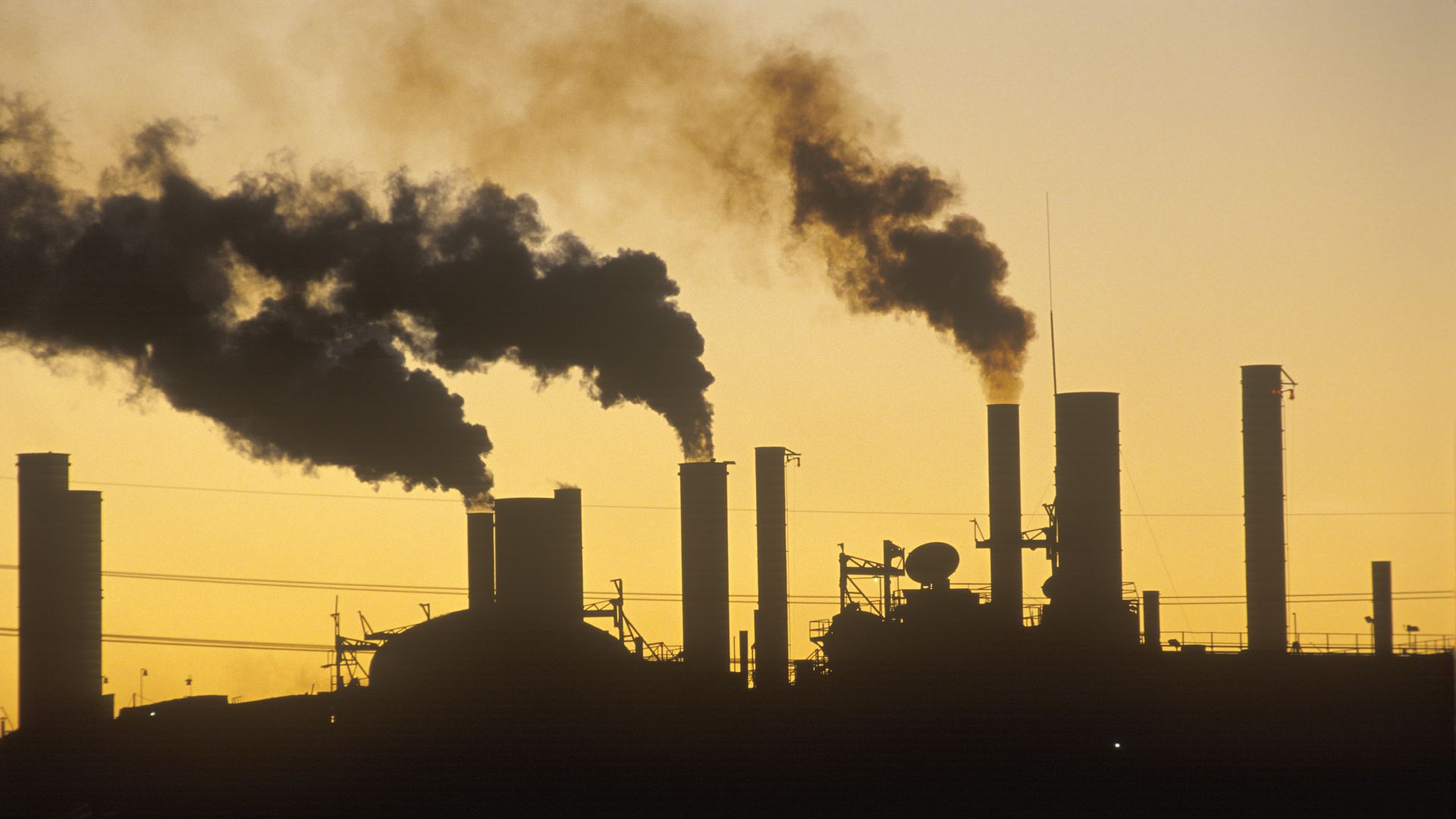
Why it matters: It shows how, despite surging renewables, the global energy system remains far from an emissions-slashing pathway that achieves Paris agreement goals for limiting global warming.