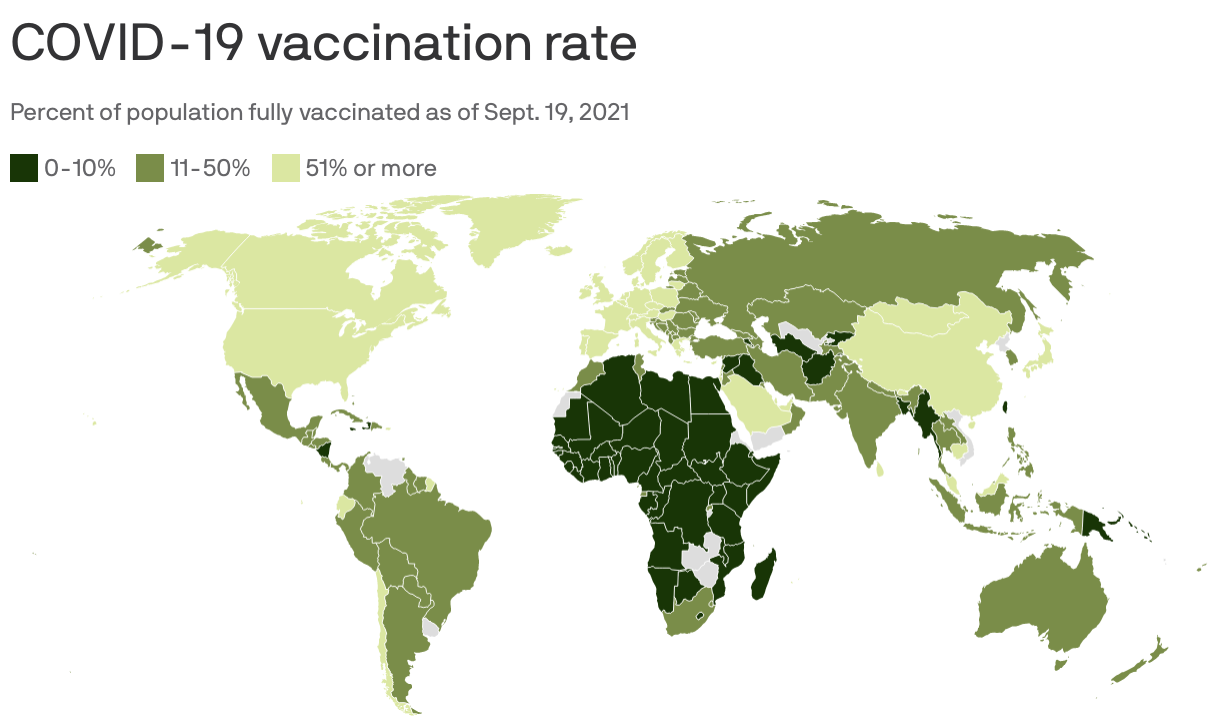
President Biden will conveneworld leaders on Wednesday on the sidelines of the UN General Assembly to push them to do more to end the pandemic — though he's also facing criticism for prioritizing boosters at home.
Why it matters: There is still no functional plan in place to vaccinate the world, and past summits of this sort have flopped. The White House hopes that this virtual gathering will produce ambitious promises, accountability measures to track progress, and ultimately help achieve a 70% global vaccination rate this time next year.
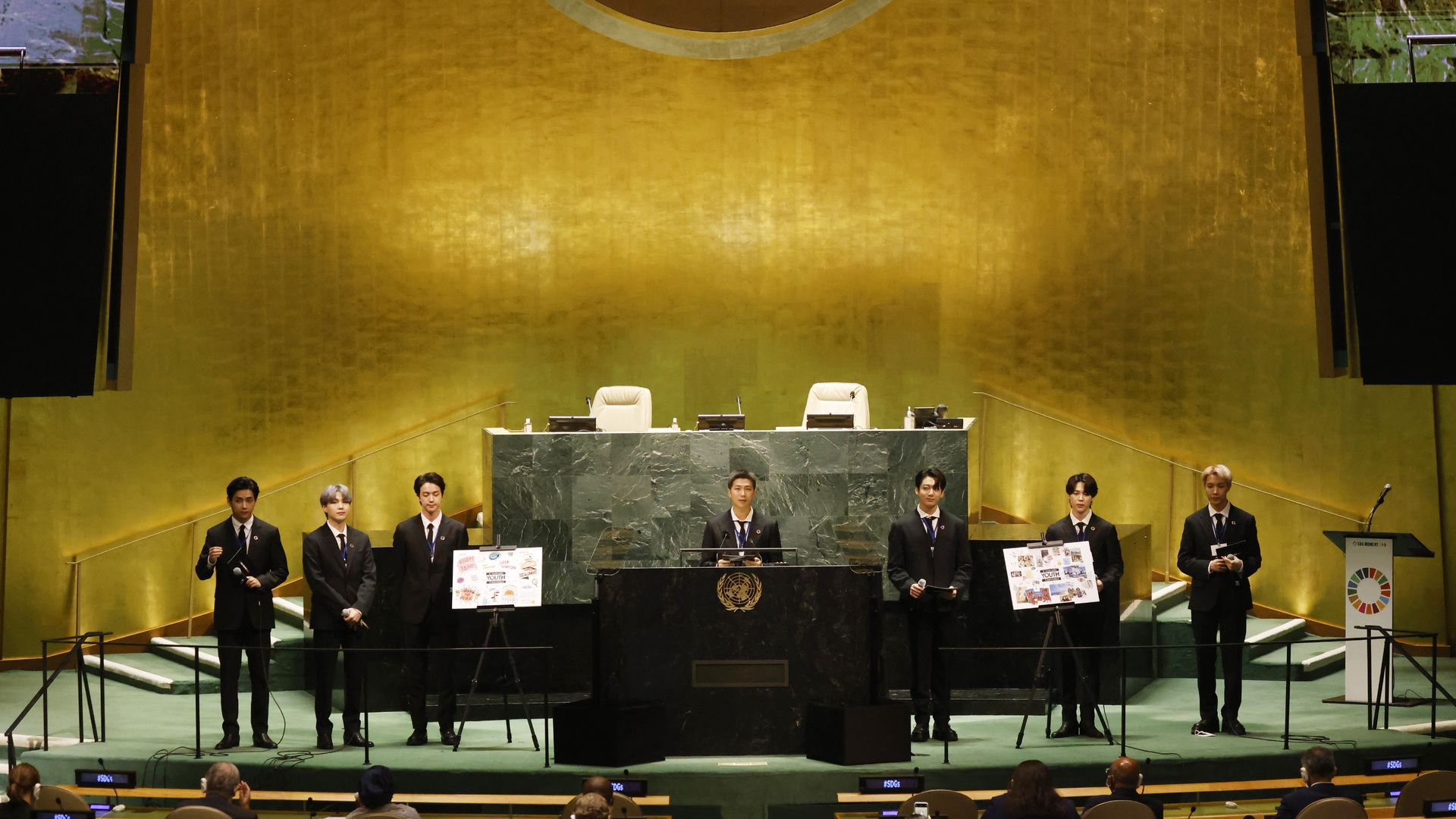
The United Nations General Assembly's livestream received an unprecedented boost in popularity Monday when more than a million viewers tuned in to watch the uber-popular Korean pop boy band BTS take the stage in the hallowed General Assembly hall.
Driving the news: The group delivered a seven-minute speech addressing climate change, vaccinations, digital interconnectedness, as well as a hopeful message about how young people can make a positive impact, per the Washington Post.
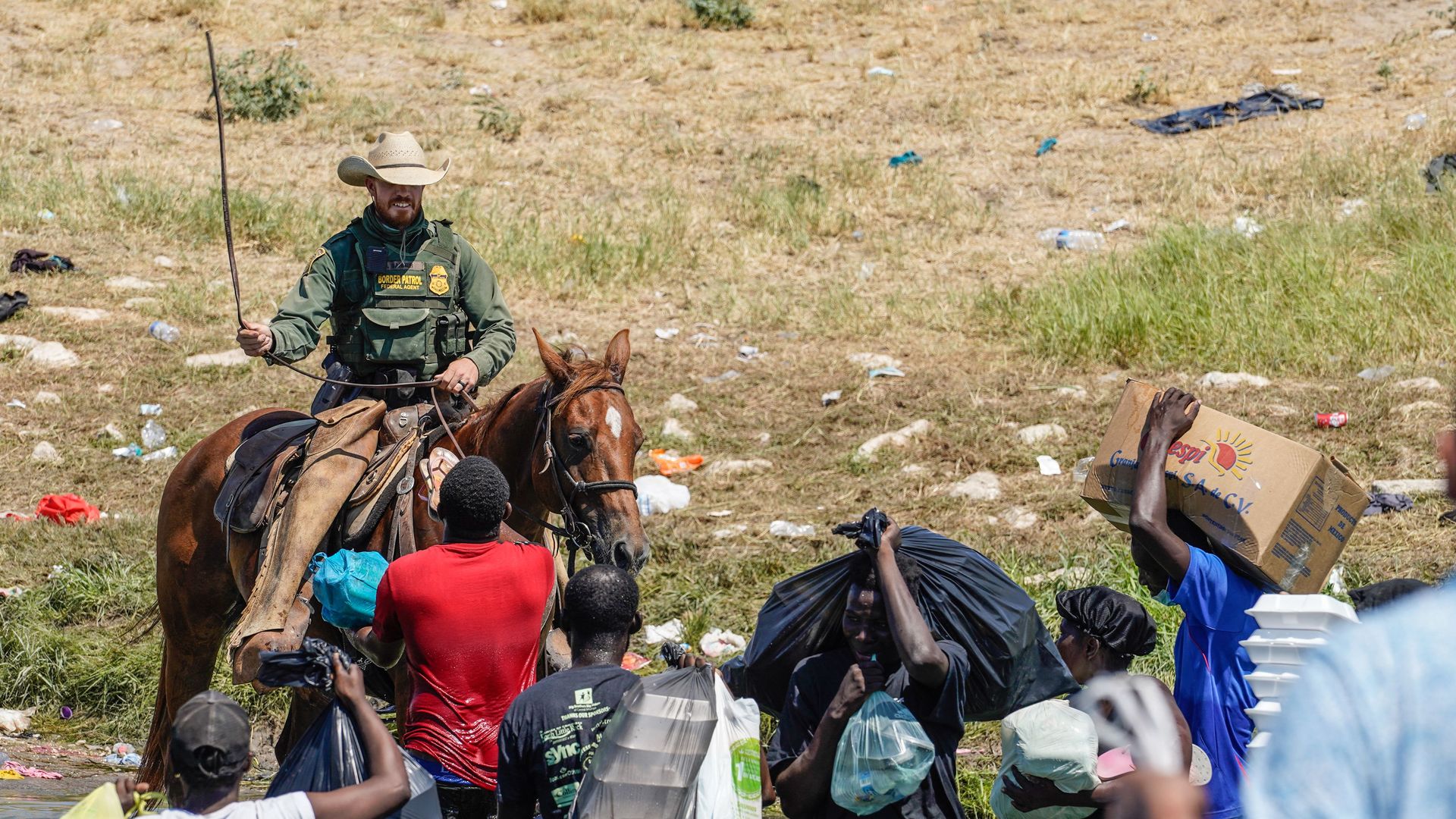
Our thought bubble, via Axios' Russell Contreras: The images of Border Patrol agents on horseback charging at Haitian migrants drew an emotional response online since the Border Patrol has a troubled and violent history against communities of color.
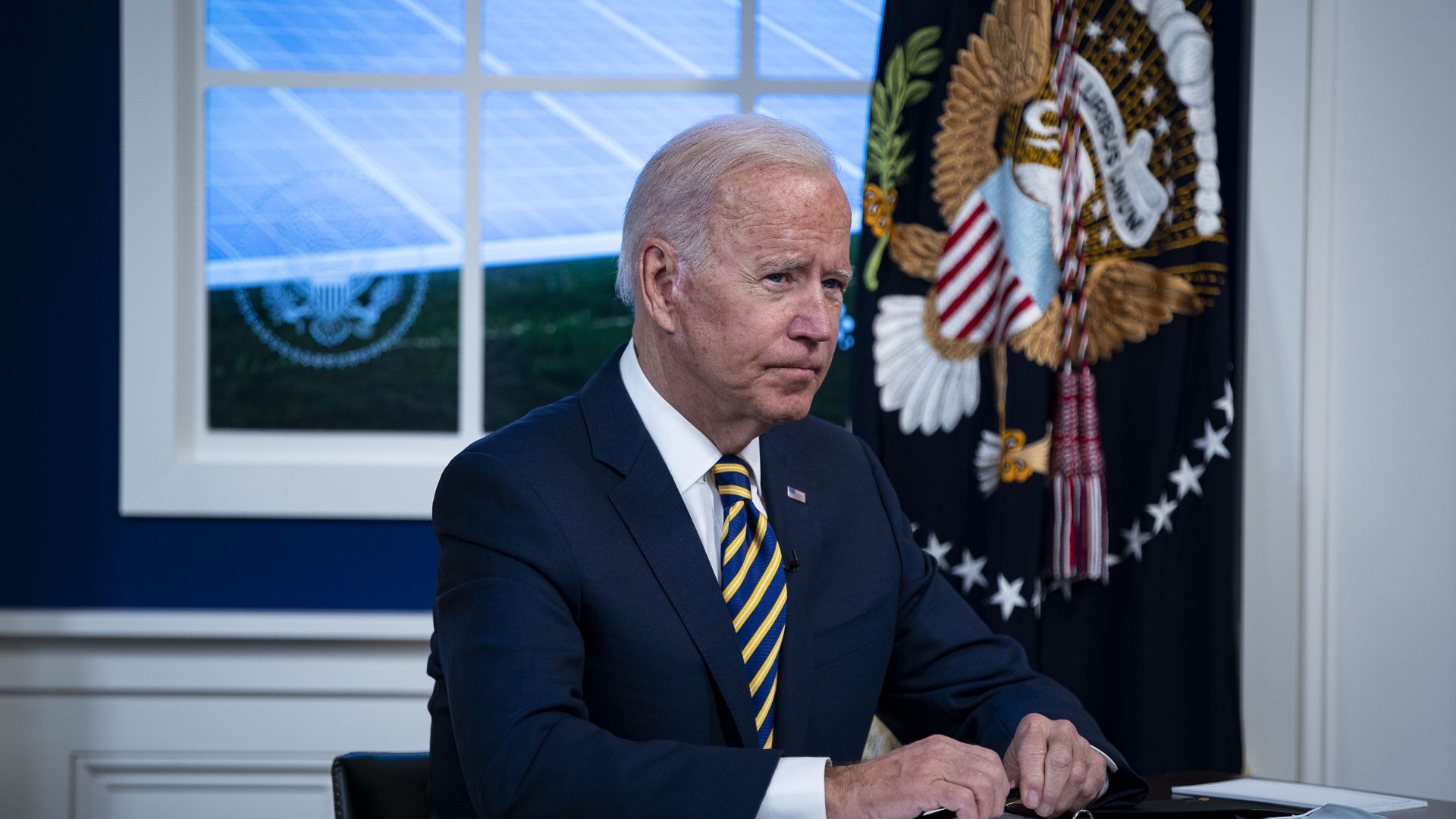
President Biden will use his first address before the UN General Assembly to lay out his vision for an era of "intensive diplomacy" with allies and "vigorous competition" with great powers — without a Cold War with China.
Why it matters: Biden will take the podium in New York on Tuesday with his own international credibility in question after the chaotic withdrawal from Afghanistan. His administration also is struggling to build international momentum to fight climate change, the pandemic and rising global authoritarianism.
The State Department condemned the Russian government's crackdown on opposition groups during this weekend's parliamentary elections, saying in a statement Monday that the vote "took place under conditions not conducive to free and fair proceedings."
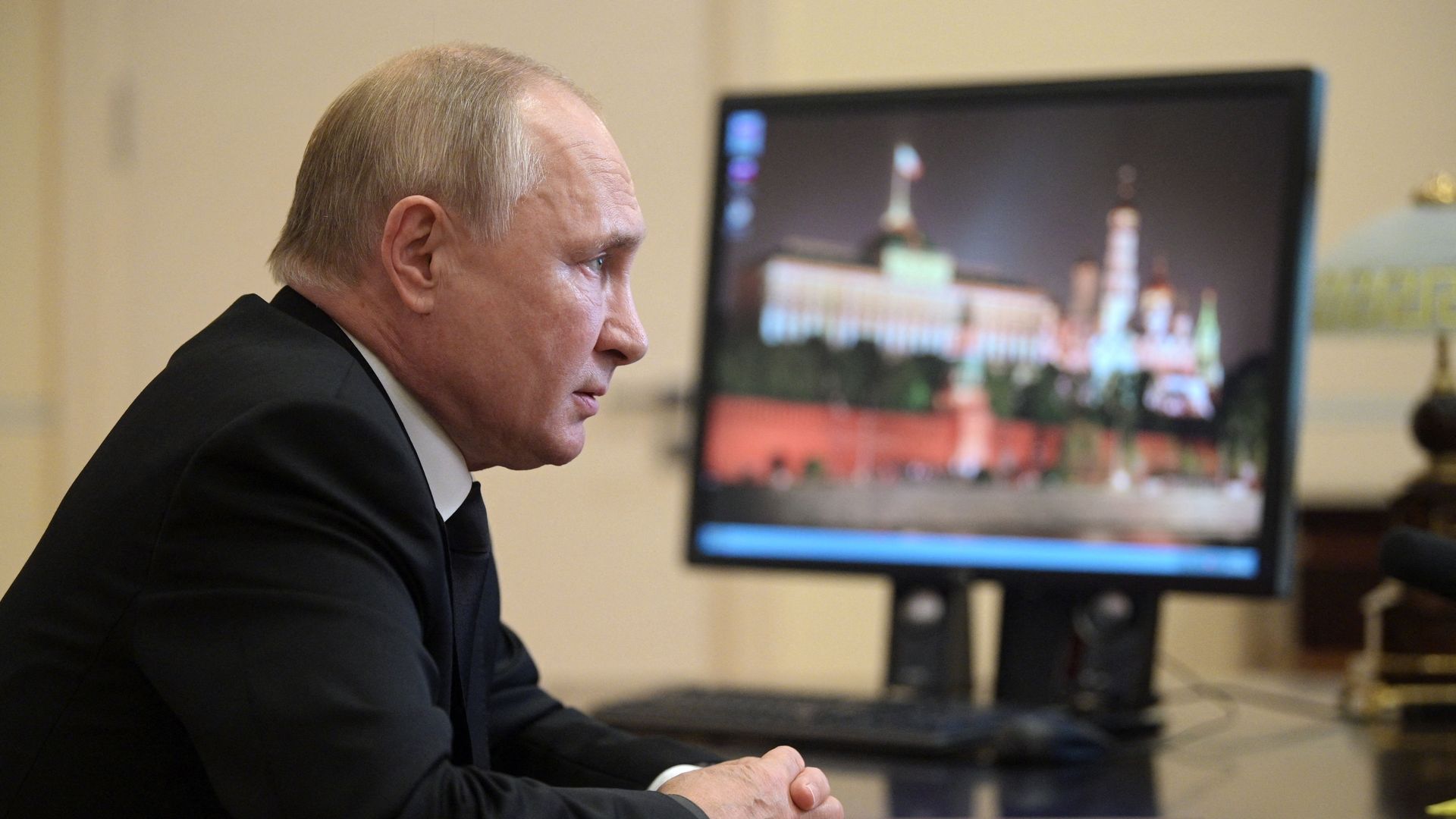
Why it matters: President Vladimir Putin's ruling party retained its supermajority through a vote marred by widespread irregularities, reports of ballot-stuffing and restrictions on the Russian strongman's most vocal critics.
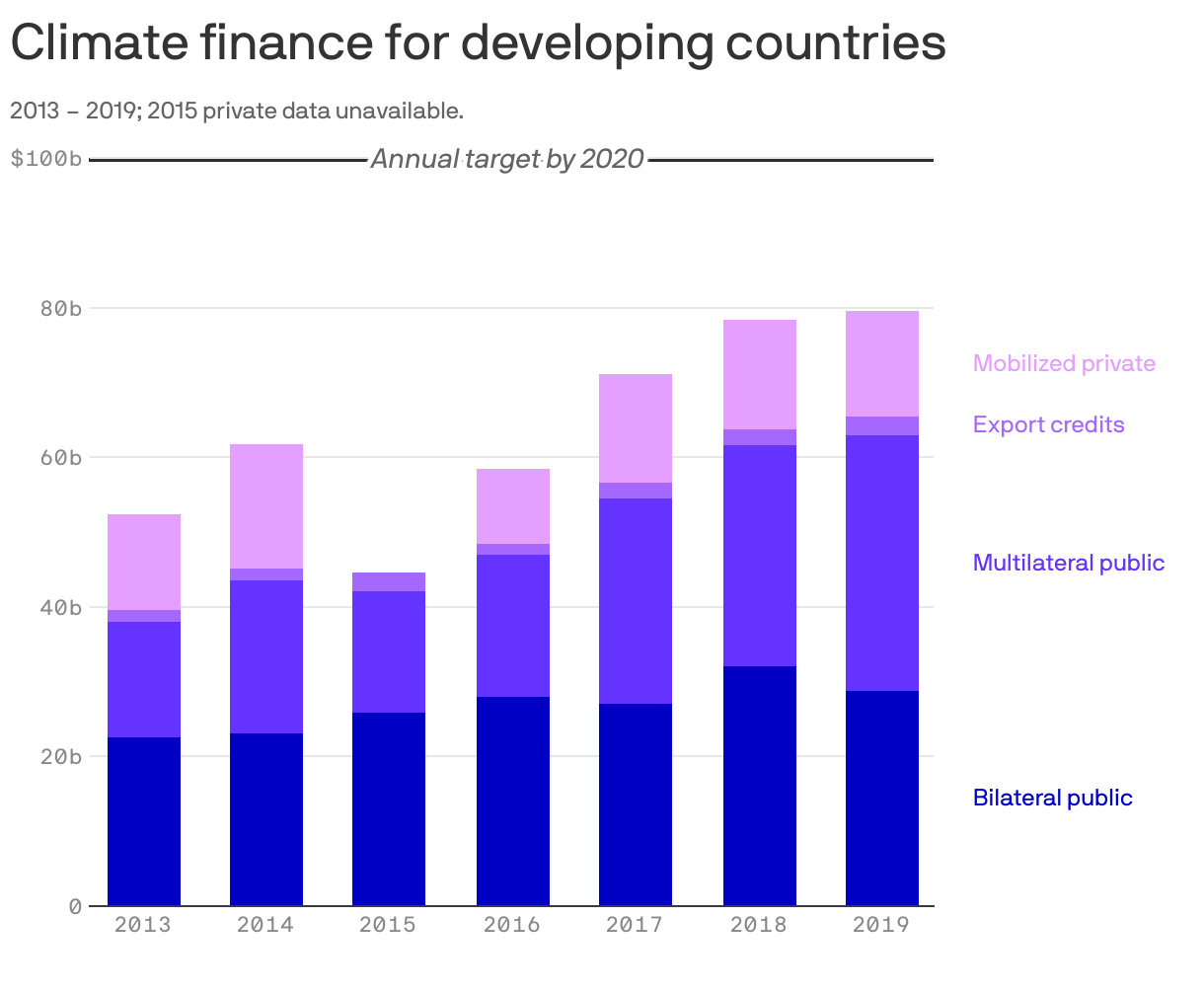
Two new reports show the gap between multilateral climate goals and what's actually happening.
Driving the news:OECD data shows developed economies are falling short of a 2009 pledge to mobilize $100 billion annually by 2020 to help developing nations cut emissions and adapt to warming.
High-level talks in New York City and Washington this week will provide more signals about what might get done — or not — at the critical United Nations climate summit this fall.
Driving the news: British Prime Minister Boris Johnson and U.N. Secretary-General António Guterres will convene a closed-door gathering of leaders Monday morning on the sidelines of the U.S. General Assembly.
Paul Rusesabagina, whose story inspired the film "Hotel Rwanda" about the 1994 genocide, was found guilty of forming a terrorist group, the New York Times reports.
Why it matters: Rusesabagina has maintained his innocence and boycotted the trial, which his family and supporters have denounced as a "sham" designed to silence him for criticizing Rwandan leader Paul Kagame.
At least six people were killed and 28 were wounded after a gunman opened fire at Russia's Perm State University on Monday, investigators said.
Driving the news: The Investigative Committee of Russia identified the shooter as a student but has not released a name. The committee said the suspect was injured while resisting arrest and was taken to a "medical institution."
Governments around the world are finding it easier than ever to make the internet, and the companies that run it, knuckle under.
Driving the news: Russia Friday forced Apple and Google to remove an app that supporters of dissident leader Alexei Navalny had created to coordinate opposition votes in Russian elections.
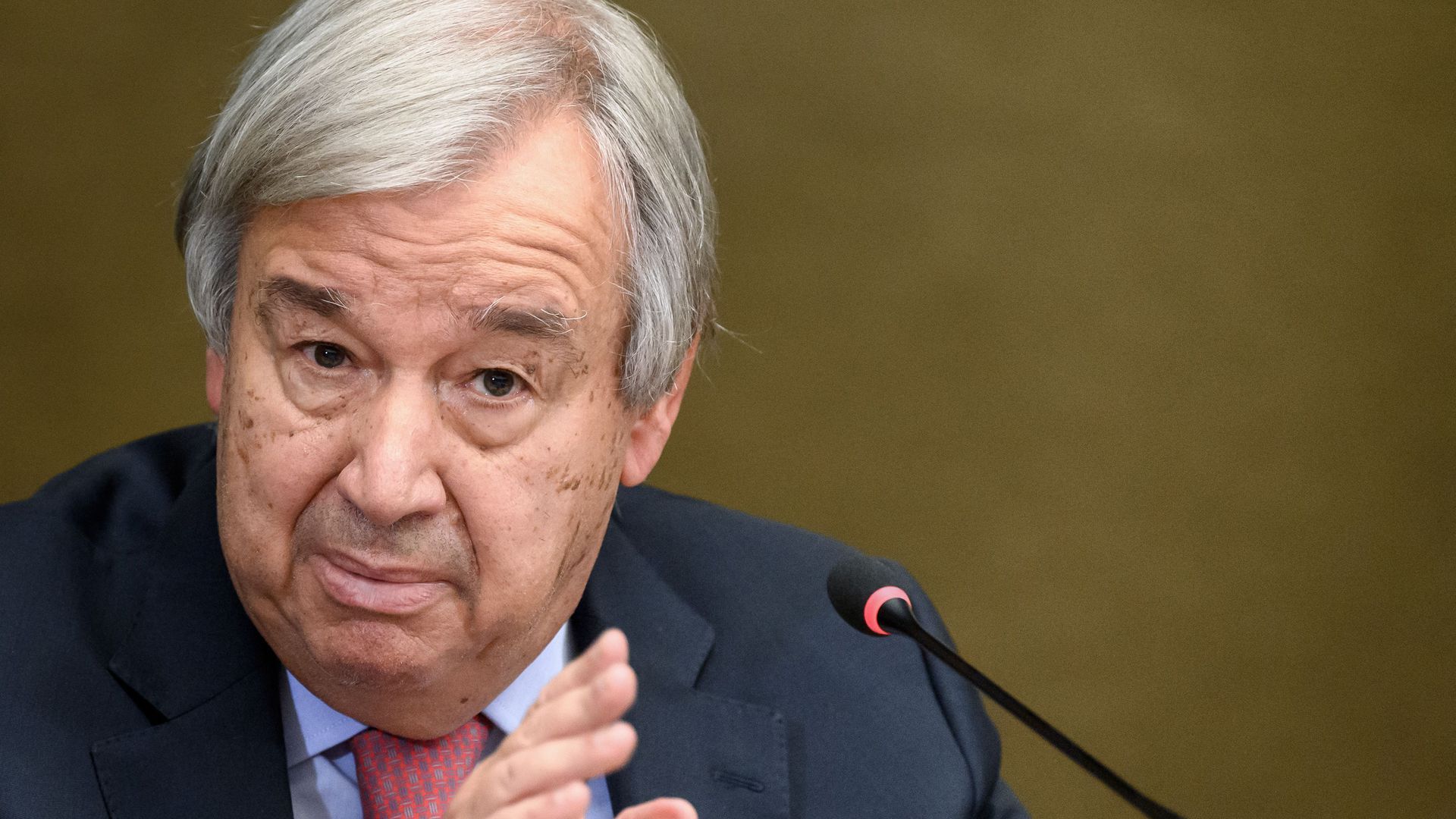
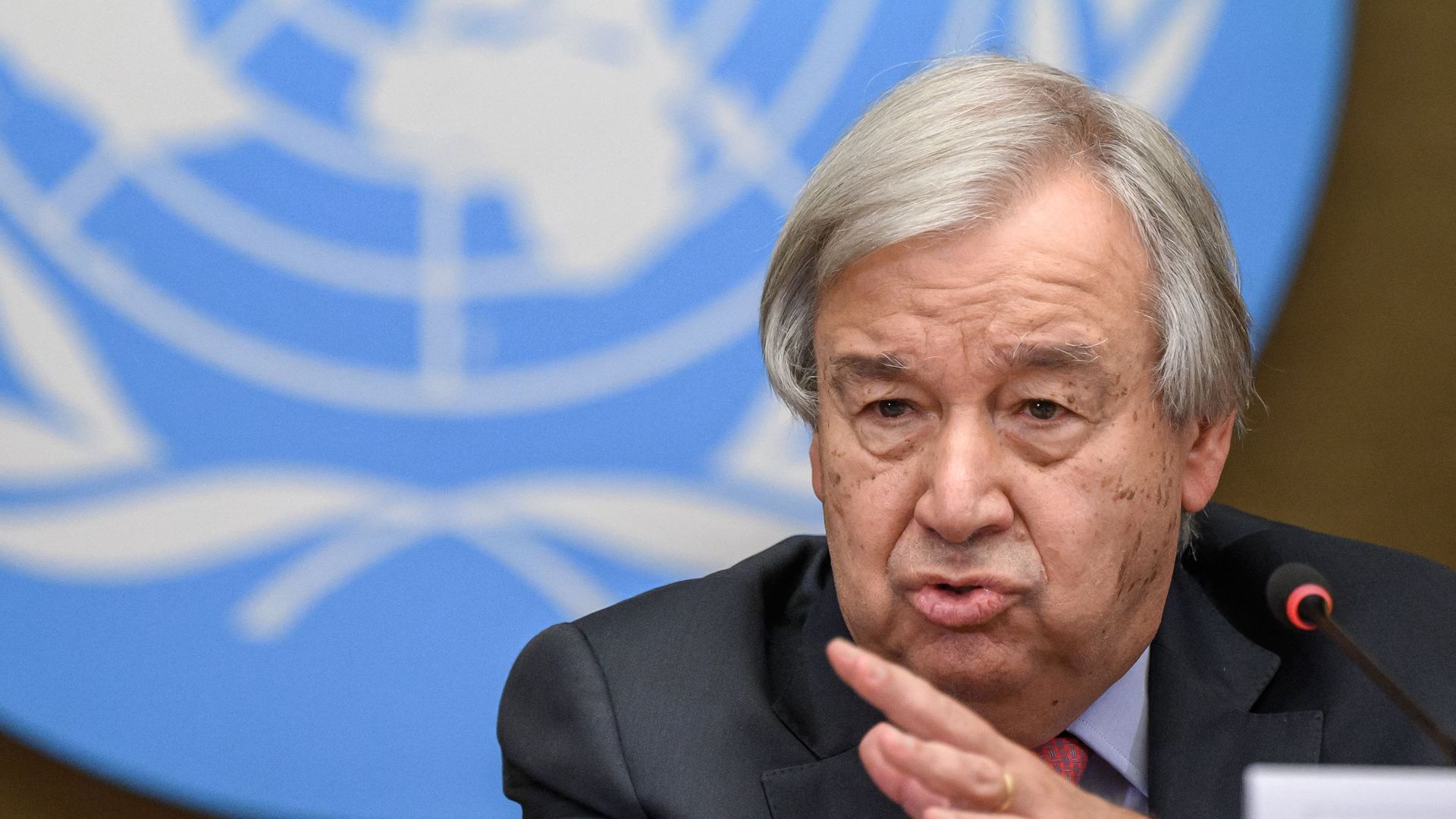
UN Secretary-General António Guterres raised concerns in an interview with AP, published Monday, of another Cold War between the U.S. and China.
Why it matters: Guterres made the comments ahead of this week's UN General Assembly in New York. Guterres told AP the U.S.-U.K. deal to provide nuclear-powered submarines to Australia "is just one small piece of a more complex puzzle ... this completely dysfunctional relationship between China and the United States."
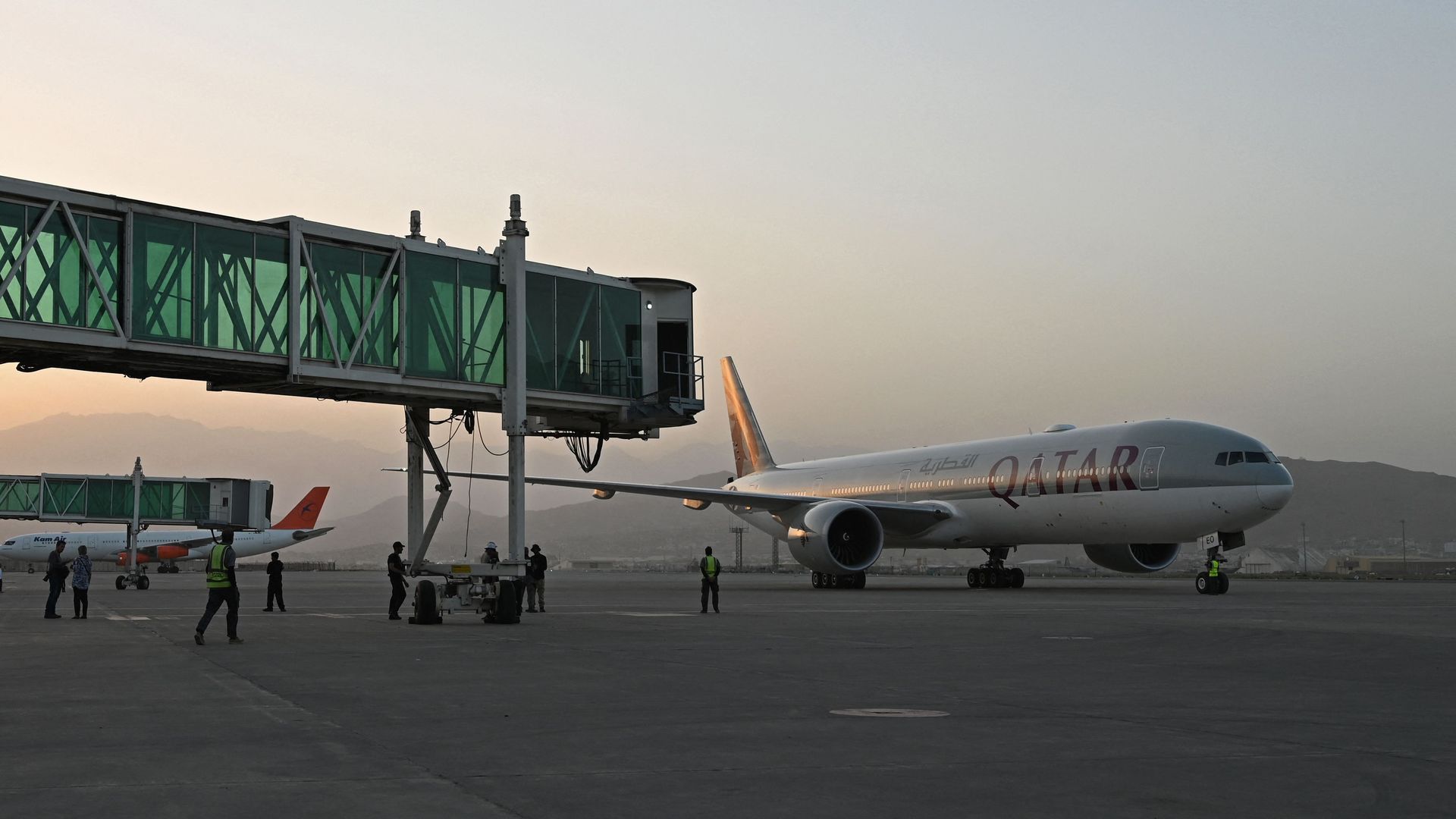
A flight carrying more than 230 passengers, including Afghans, Americans and other international civilians departed from Kabul's airport for Qatar's capital, Doha, Sunday, Qatari official Lolwah Al-Khater announced.
Why it matters: A Qatari official told Reuters 236 passengers were on the plane — making it the biggest evacuation flight since the full U.S. military pullout on Aug. 31. It's the fourth airlift by Qatar Airways from Afghanistan under Taliban rule.
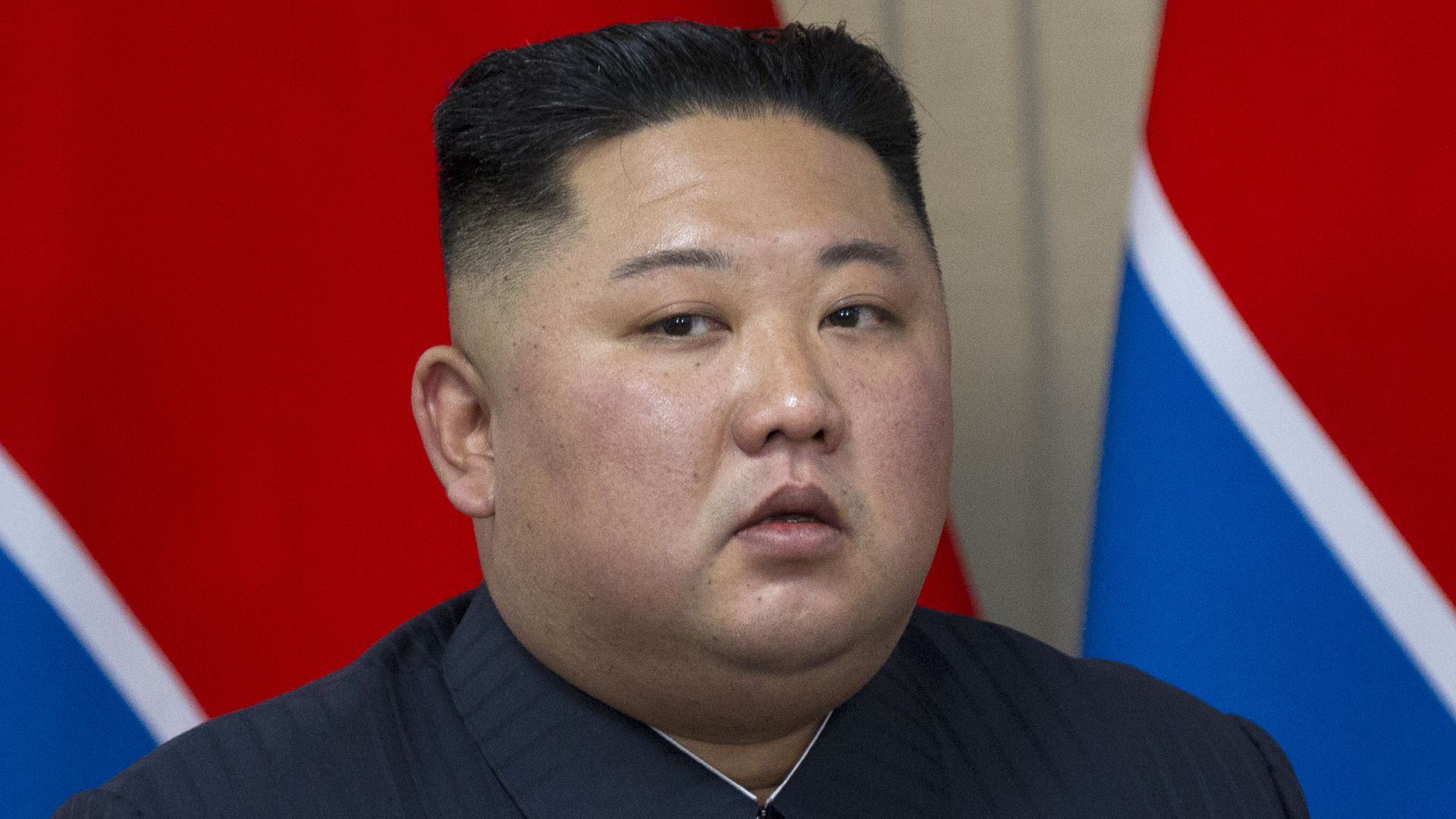
North Korea warned of possible "counteraction" if it finds the new U.S. deal to provide nuclear-powered submarines to Australia is a threat to its security, per a statement published by the state-run KCNA news agency Monday.
Details: The North Korean Foreign Ministry statement said both the U.S. security partnership with the U.K. and Australia, known as AUKUS, and the submarine deal were "extremely undesirable and dangerous acts which will upset the strategic balance in the Asia-Pacific region and trigger off a chain of nuclear arms race."