Brutal surges in coronavirus cases are hitting much of the world all at once, from Europe to Brazil to India.
The big picture: Cases are rising just about everywhere, in a swift reversal from early February, when they were falling on every continent. They're also now ticking up in the U.S., which is in the midst of a race between vaccines and variants.
When an authoritarian regime is being buffeted by Western sanctions, it can typically expect a helping hand from a powerful friend: Vladimir Putin.
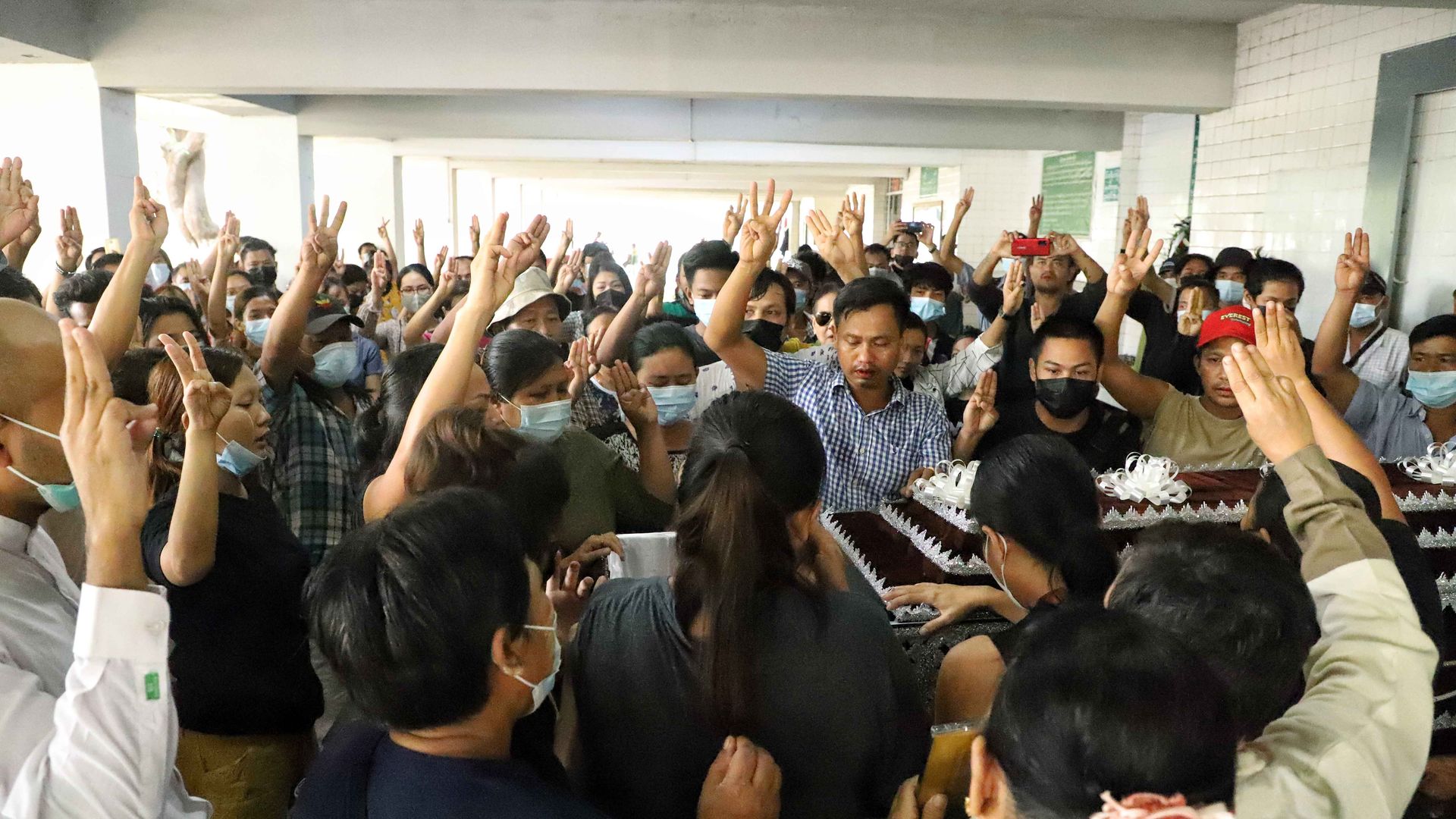
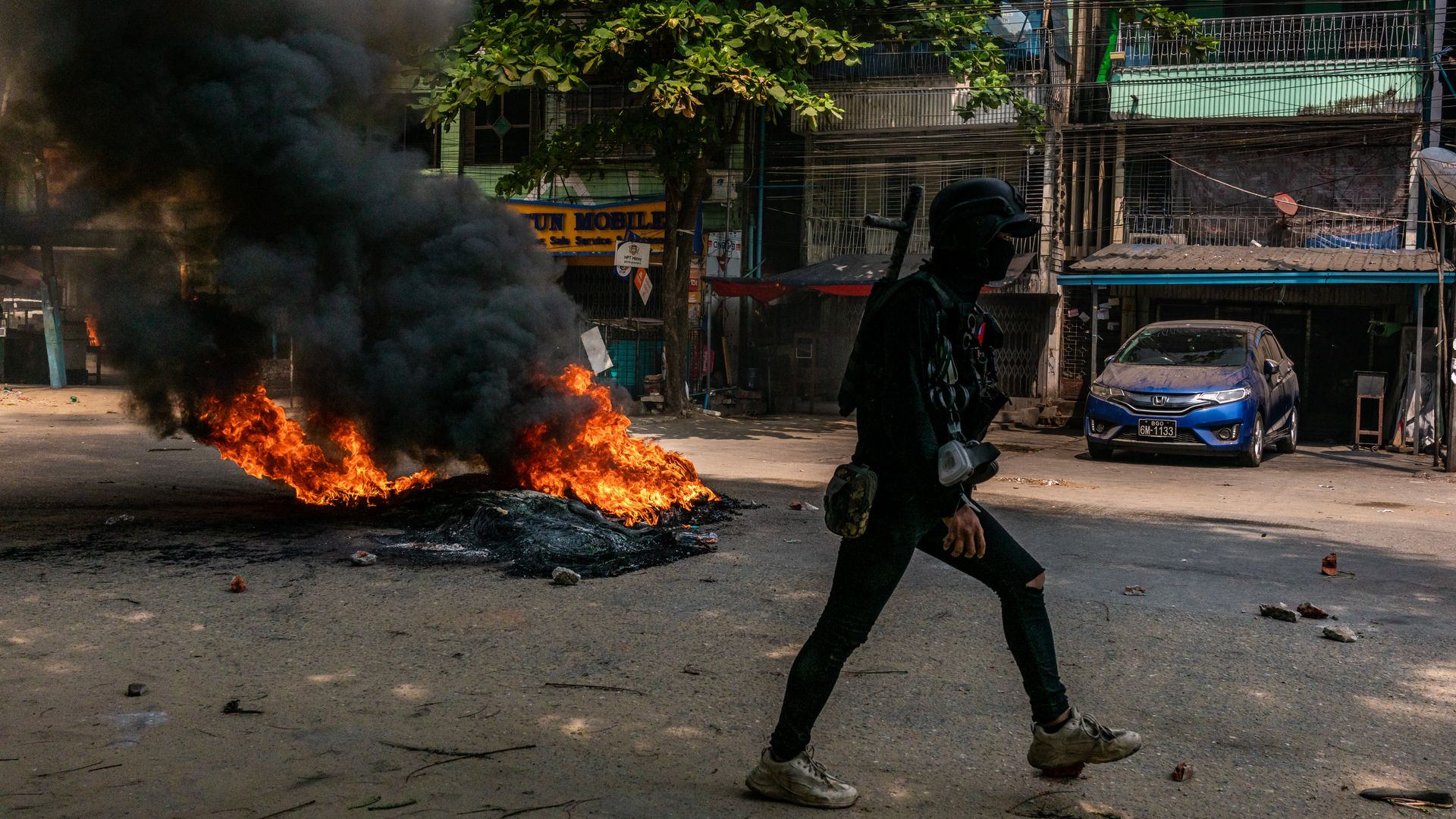
Driving the news: As Myanmar's military was firing on protesters and bystanders on Saturday and the U.S. was preparing its toughest response yet to the Feb. 1 military coup, Russia's deputy defense minister was in Myanmar to show Moscow's steadfast support and desire to deepen its "strategic partnership."
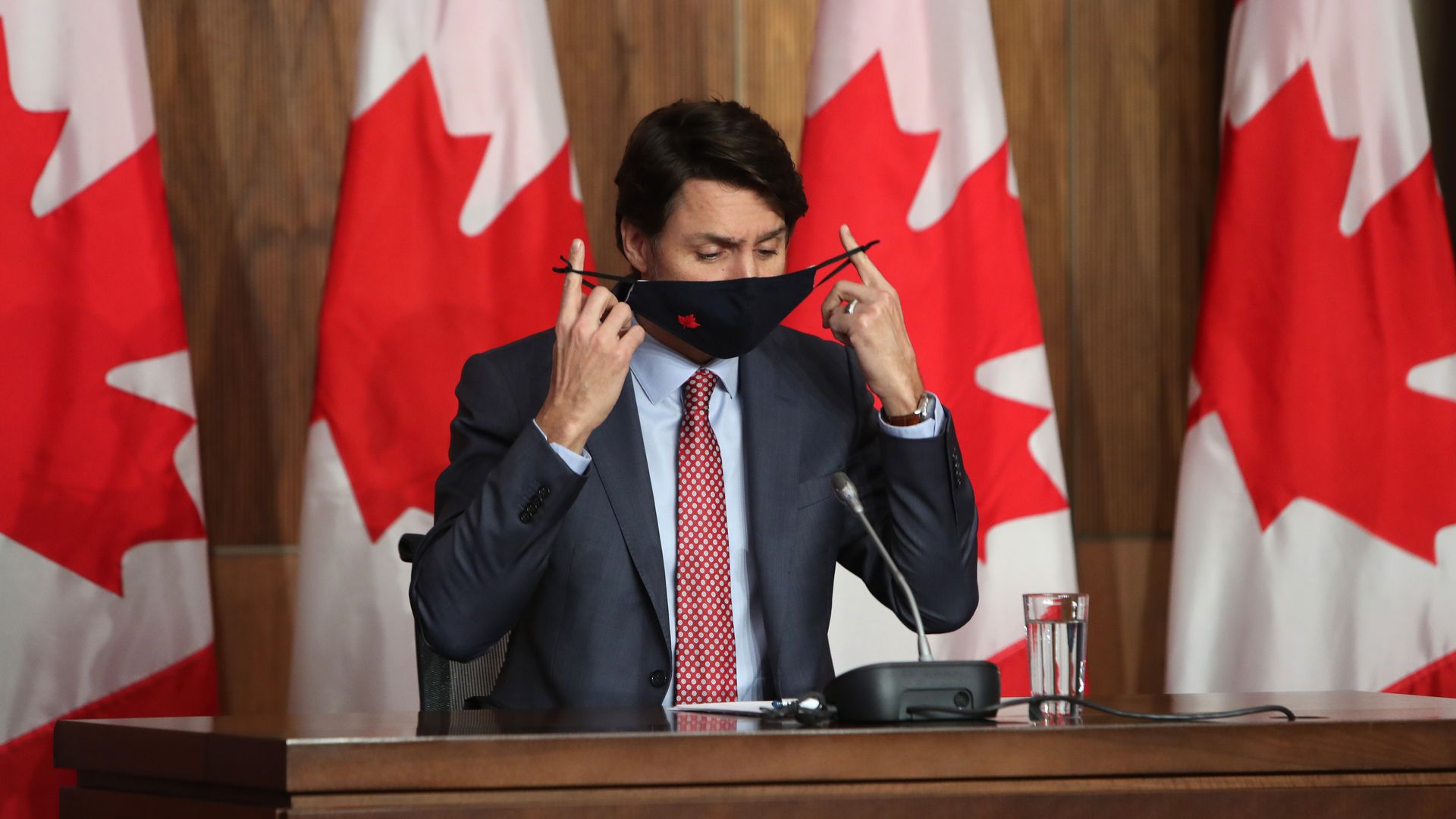
Canada is suspending use of the AstraZeneca coronavirus vaccine for people under 55 due to concerns that the shot could cause blood clots, ABC News reports.
Why it matters: AstraZeneca's COVID-19 vaccine has been put on hold throughout parts of Europe and has not yet received its emergency use authorization in the U.S. Canada is also facing a relatively slow vaccine rollout, with just 1.8% of its population being fully vaccinated, Bloomberg News notes.
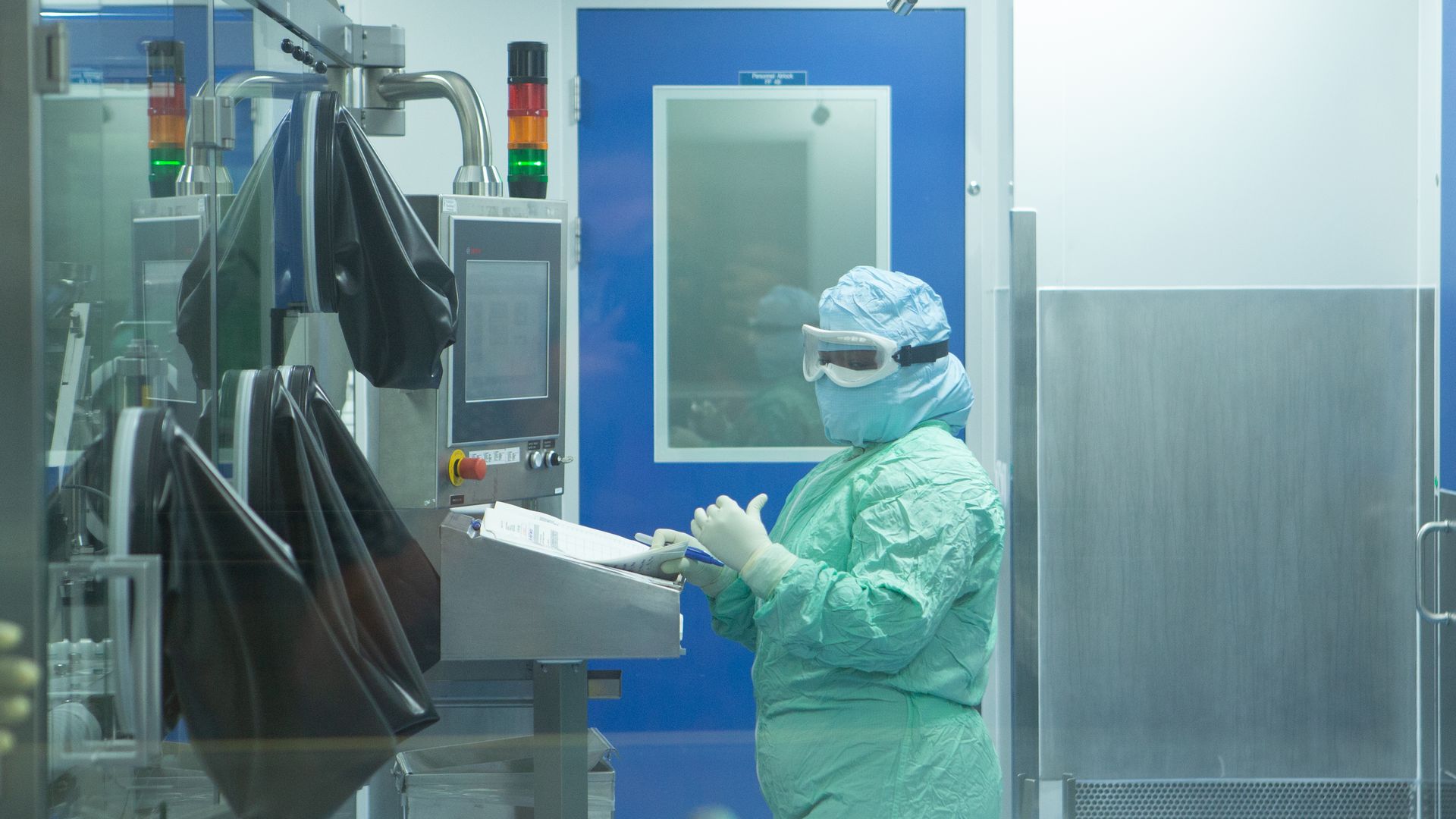
Johnson & Johnson has inked a deal with the African Union (AU) to supply up to 400 million doses of its coronavirus vaccine starting in the third quarter of the year, the drugmaker announced Monday.
Why it matters: Disparities in vaccine access remain a challenge for Africans, especially as the continent struggles to contain the coronavirus variant that originated in South Africa.
The U.S. government will cut off all trade engagement with Myanmar as bloodshed continues in the Southeast Asian country, U.S. Trade Representative Katherine Tai said Monday.
Why it matters: Police have led an increasingly violent crackdown on pro-democracy protesters since the military overthrew Myanmar's democratically elected government in February. Myanmar security forces killed over 100 people Saturday in the bloodiest day since the coup.
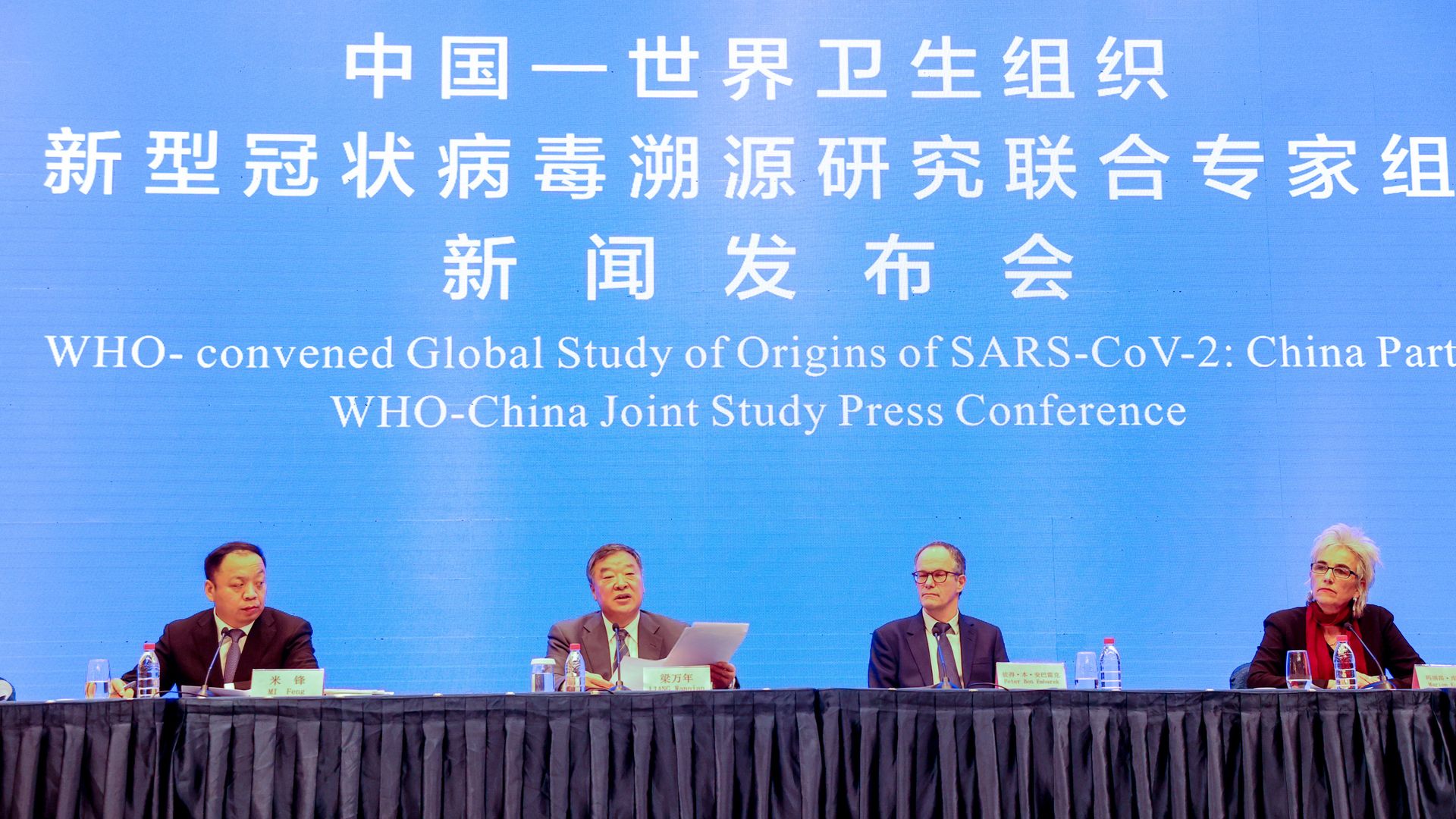
A report from a team of scientists assembled by the World Health Organization and China leaves unresolved the question of where the coronavirus originated, but calls the possibility that it leaked from a laboratory "extremely unlikely," according to a copy obtained by Axios.
Why it matters: The process of investigating the origins of the virus has been fraught with geopolitical tensions, and the report set to be released on Tuesday will likely create more questions than it answers.
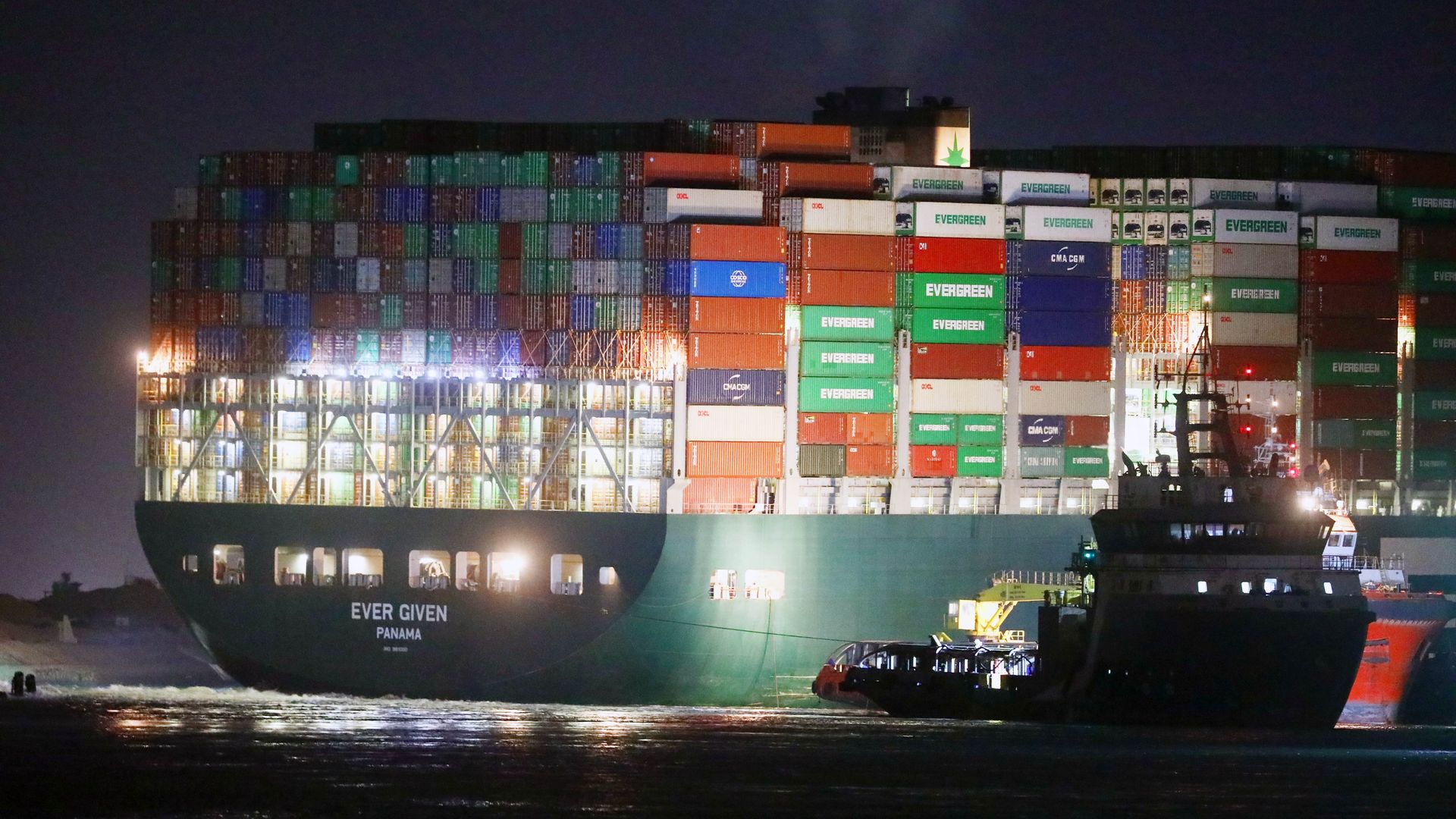
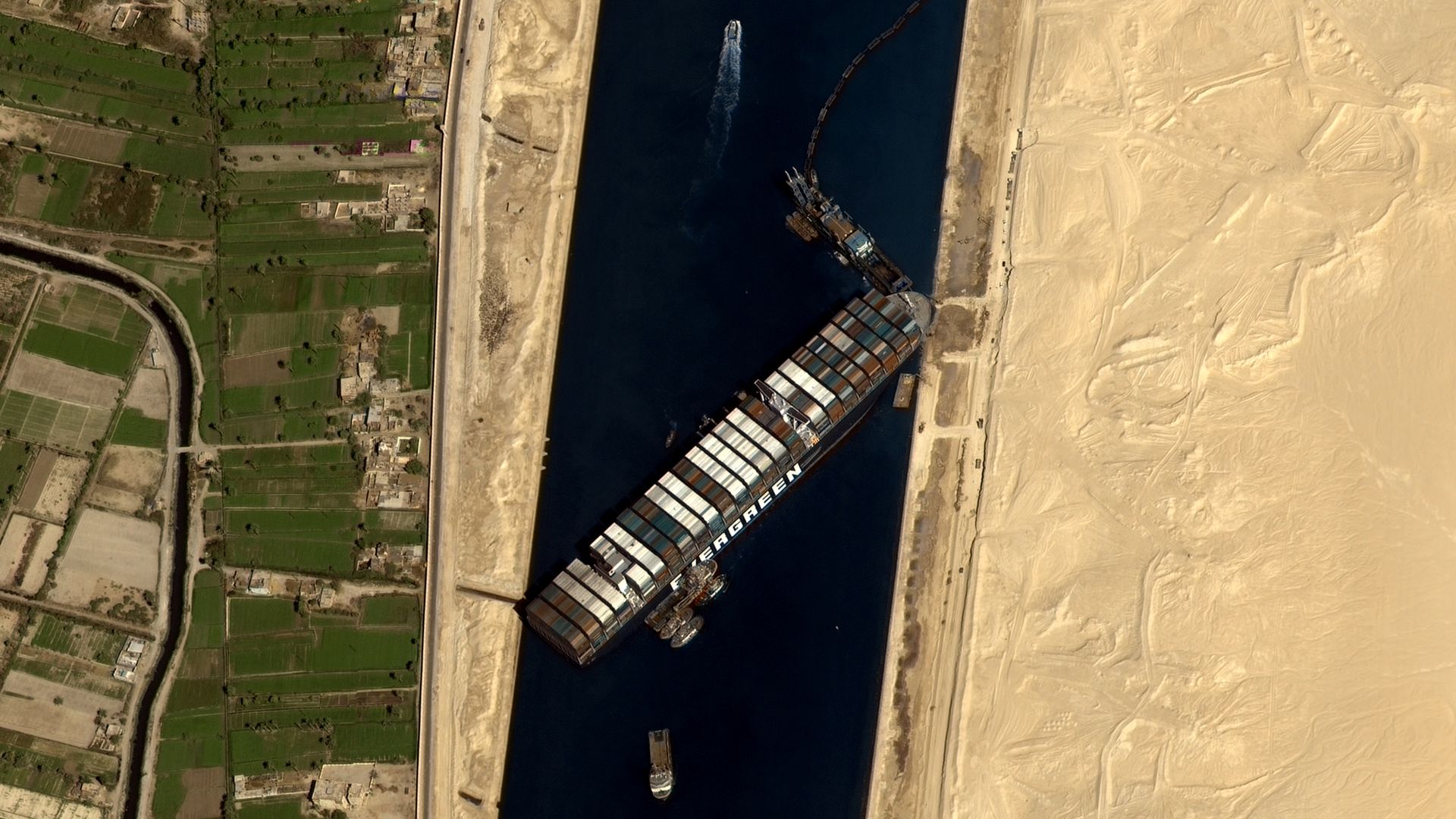
Rescue teams on Monday fully freed the "Ever Given" container ship that's been stuck in the Suez Canal for a week, hours after partially refloating the skyscraper sized vessel.
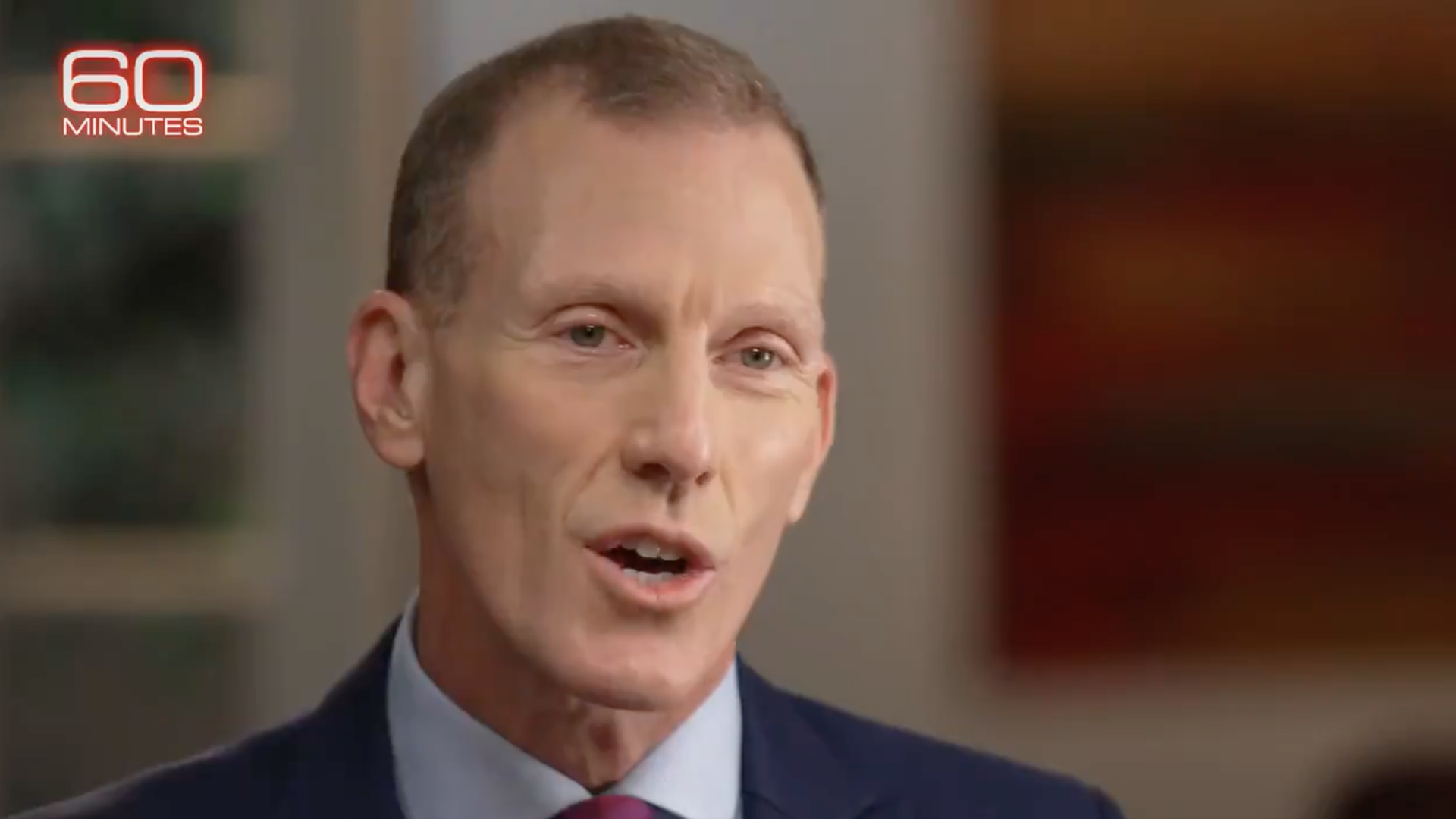
The World Health Organization's probe into the COVID-19 pandemic origins is not an investigation, it's "essentially a highly chaperoned, highly curated study tour," a WHO adviser and former Clinton administration official told CBS' "60 Minutes" Sunday.
Why it matters: Jamie Metzl's comments that China's government set the mission's ground rules and had "veto power" over who could be on the research team add to concerns raised by the Biden administration and others that the Chinese Communist Party may have interfered in the investigation.
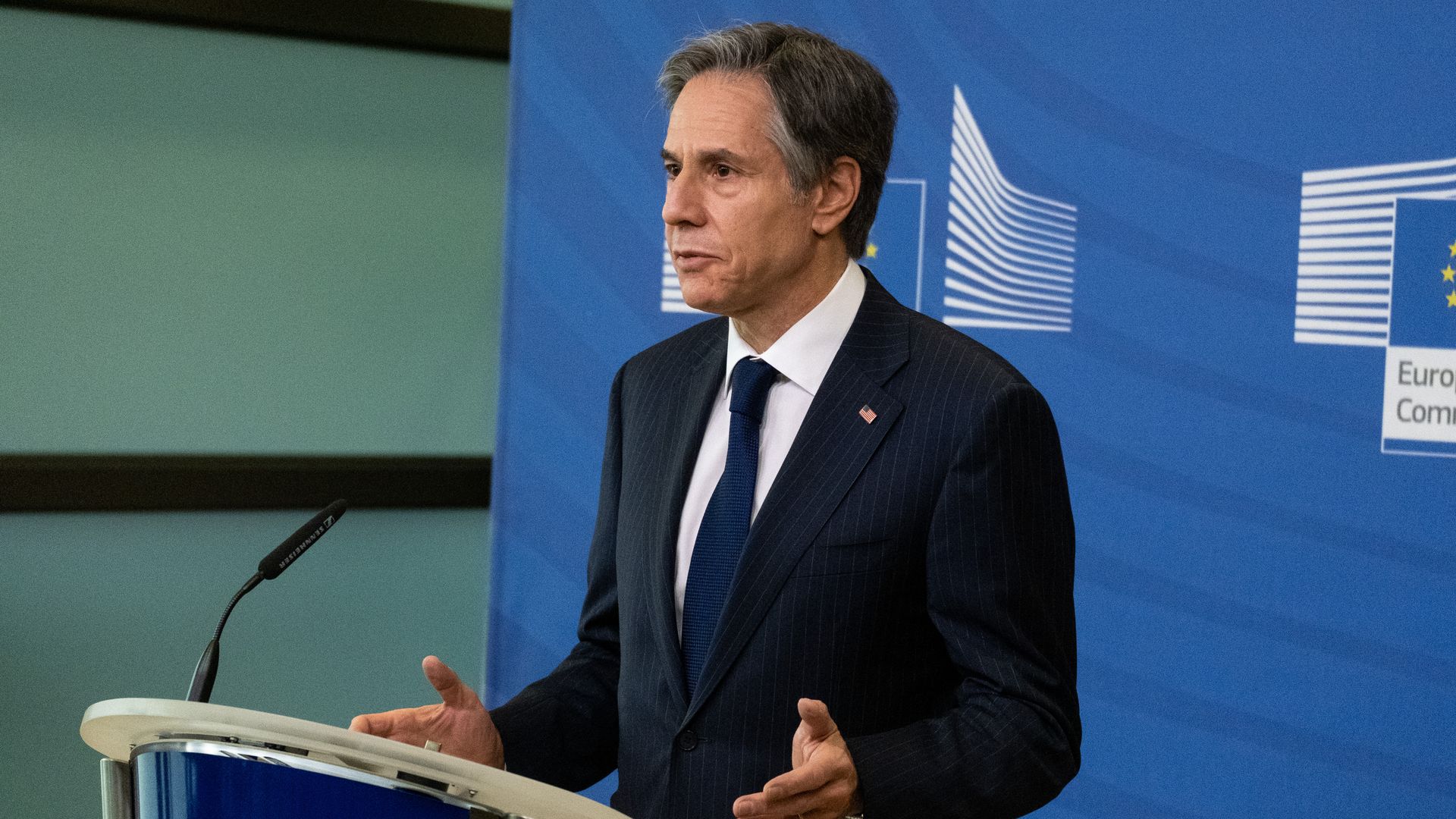
Secretary of State Antony Blinken evaded questions about whether the U.S. would seek retaliatory actions against China for its handling of the coronavirus outbreak during an interview on CNN's "State of the Union" Sunday, instead saying that the focus should be on preventing another pandemic in the future.
Why it matters: The diplomat said there should be "accountability for the past," positioning himself in contrast to his predecessor Mike Pompeo, who had called for China to be punished, per CNN.
What they're saying: "I think the issue for us is to make sure that we do everything possible to prevent another pandemic, even as we're working through this one, or at the very least, to make sure that we can mitigate in much more effective ways any damage done if something happens in the future," Blinken said.
A large part of preparing for a future pandemic, Blinken said, would be having "a system in place, including with the World Health Organization that features transparency, that features information sharing, and features access for international experts at the start of something like this."
"[T]hat's going to require a lot of reform, and that's going to require China to do things that it hasn’t done in the past."
Blinken also expressed concern about a forthcoming WHO report on the origins of the coronavirus outbreak because of the Chinese government's role in helping author it.
Flashback: During his confirmation hearing in January, Blinken said the that China had misled the world with regards to the coronavirus outbreak, per the New York Times.
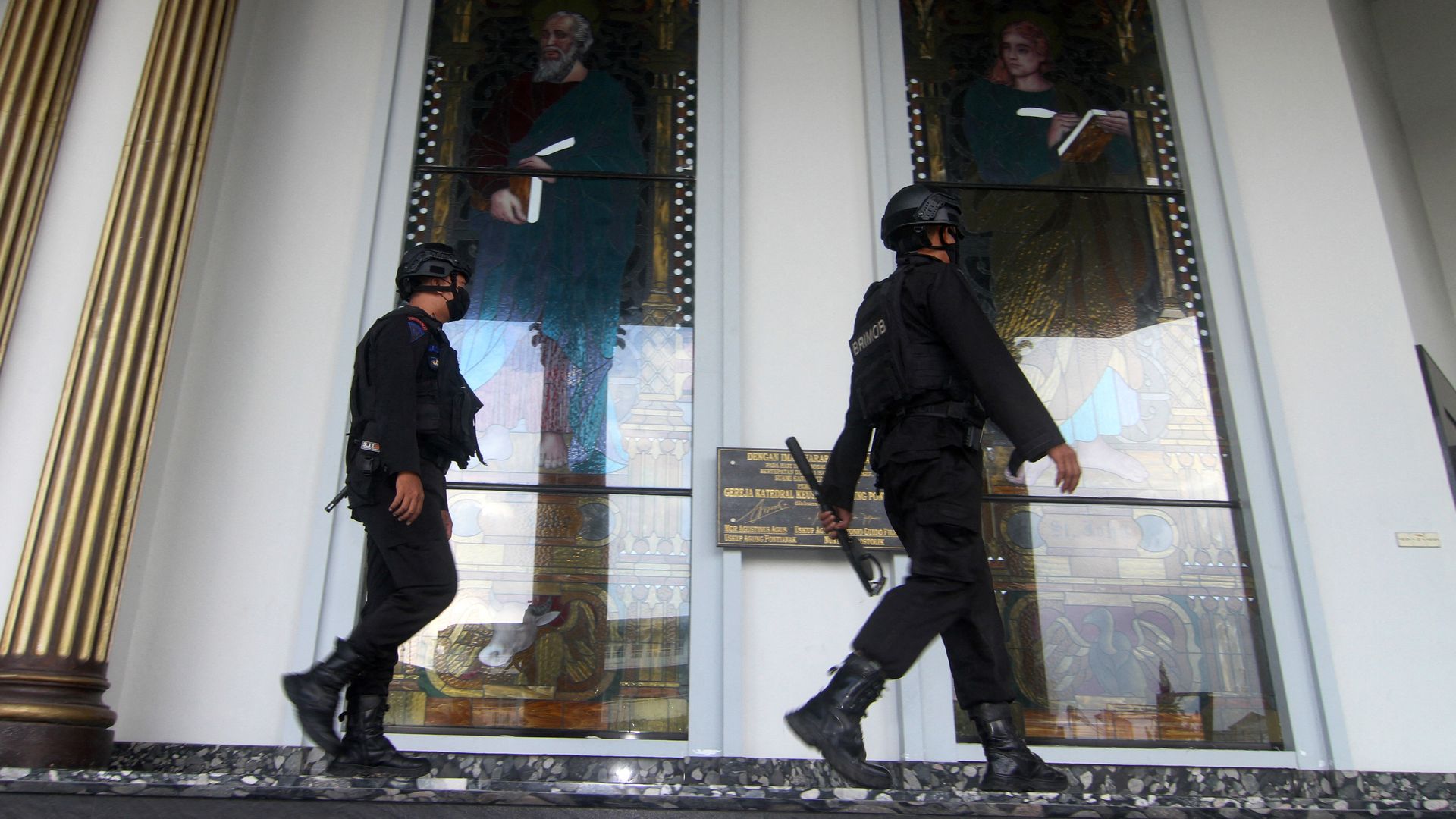
At least 19 worshippers were injured during an explosion in the Sacred Heart of Jesus Cathedral in the Indonesian city of Makassar on Palm Sunday, the first day of the Holy Week in the Christian faith, the New York Times reports.
Why it matters: Indonesian President Joko Widodo called the bombing a terrorist attack, though authorities are still investigating the blast.
Similar attacks targeting Christian places of worship in recent years have been traced back to local affiliates of the Islamic State in Indonesia, the Times notes.
The defense chiefs of 12 countries, including the U.S., issued a joint statement on Saturday condemning Myanmar's military and security forces for its crackdown on anti-coup demonstrators.
Why it matters: The statement comes after the U.N. called Saturday the deadliest day of protests since the military last month overthrew the country's democratically elected government. Protesters have rallied to restore democracy in the country for nearly two months.
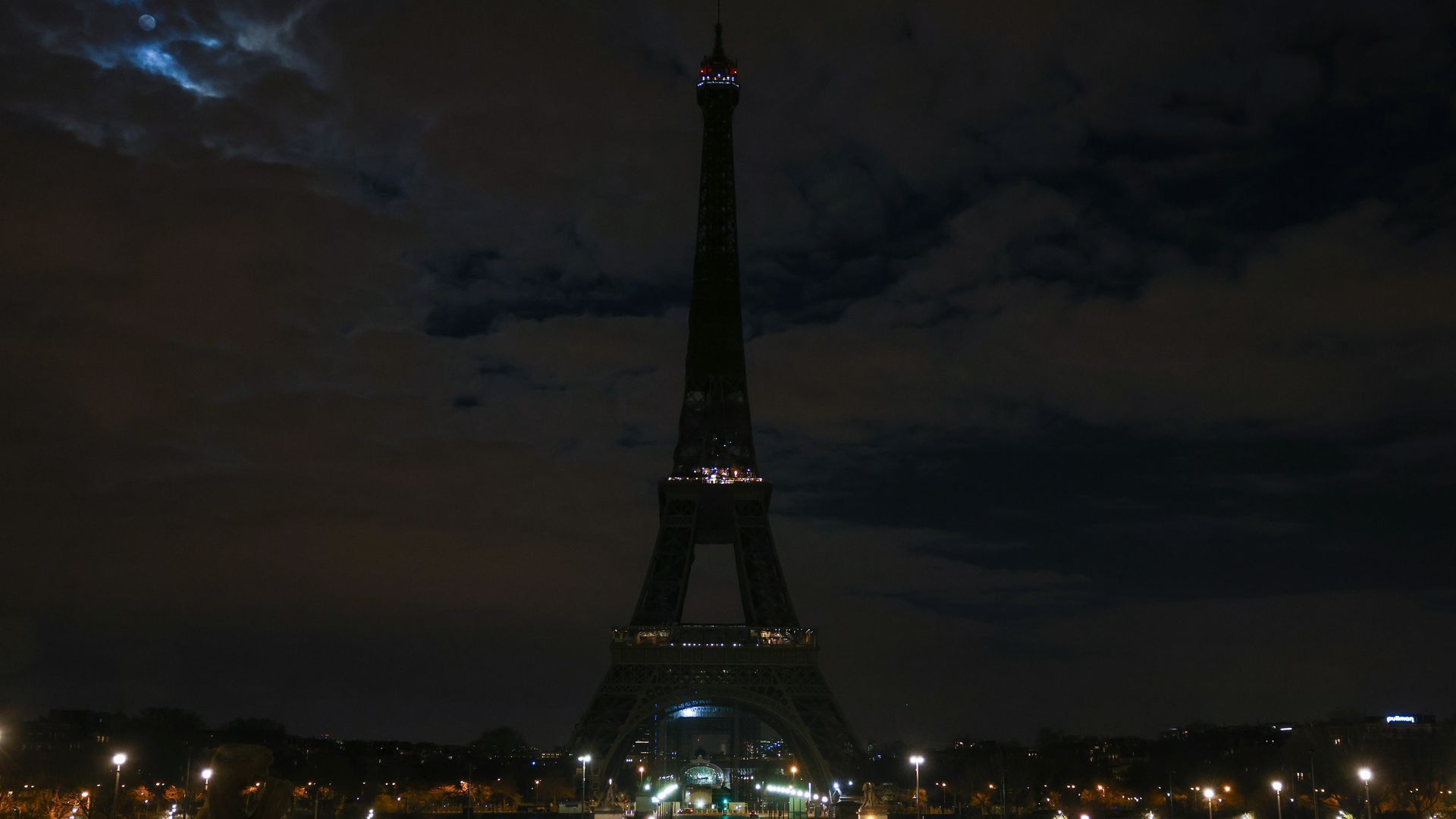
Cities around the world were turning landmark lights off Saturday for Earth Hour, with this year's theme highlighting the link between the destruction of nature and increasing outbreaks of diseases like COVID-19.
The big picture: City landmarks around the world went dark for an hour at 8:30p.m. to mark global action on climate change. Organizer WWF said in a statement, "COVID-19 has given us a stark warning of the risks, vulnerabilities and inequalities of our interconnected systems."
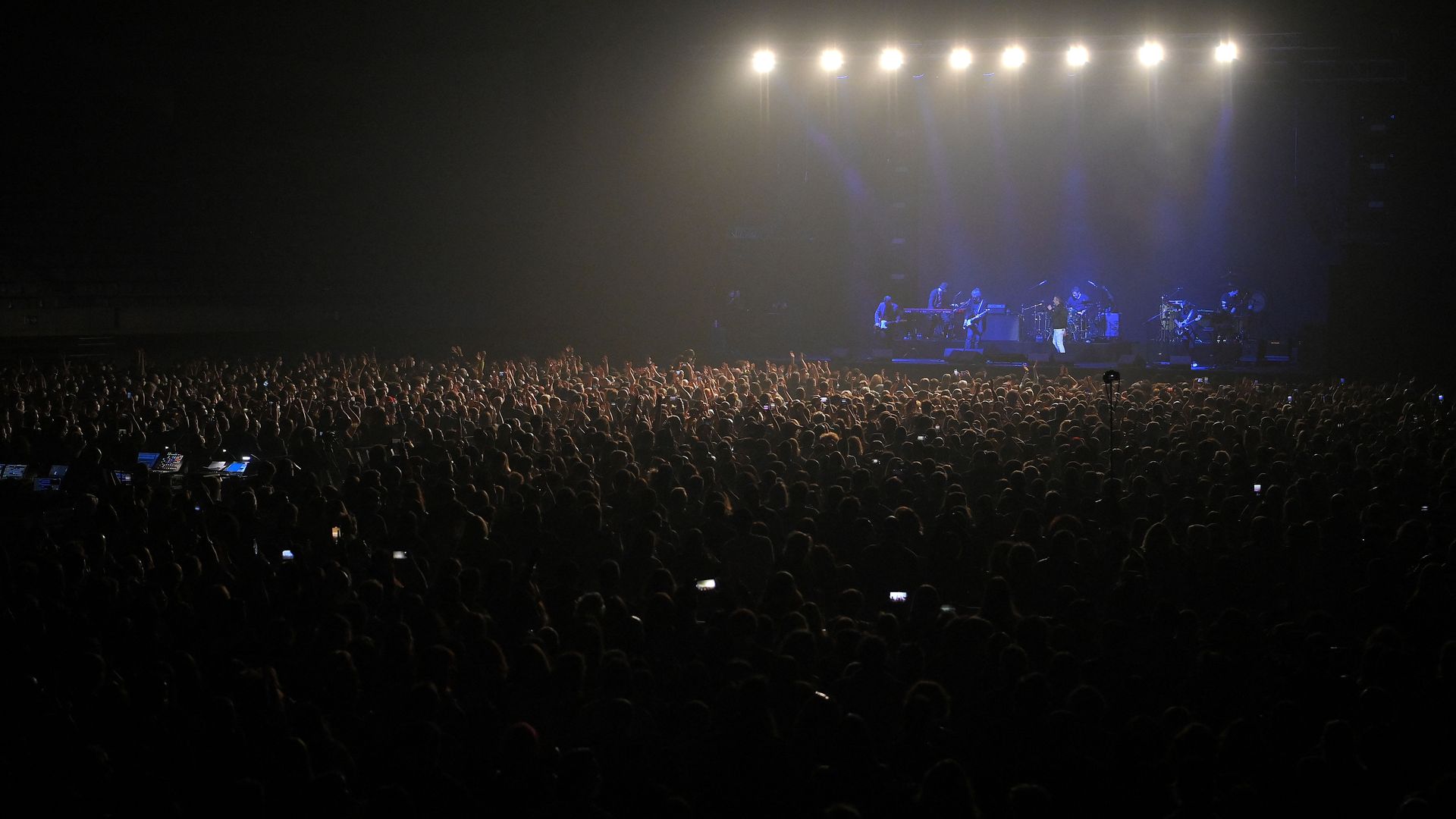
5,000 masked music fans packed into the Palau Sant Jordi arena in Barcelona, Spain, Saturday for a rock concert with no social distancing, as part of a study into the effectiveness of same-day COVID screenings.
Why it matters: Organizers say Spanish rock group Love of Lesbian's concert is the "first commercial event of this size held in Europe during the pandemic," AP notes. The event is an exception to Spain's four-person limits on gatherings in enclosed spaces, per Euronews.
The massive container ship that's captured the world's attention remained stuck in the Suez Canal six days on, but authorities expressed optimism it may be dislodged this weekend.
Why it matters: More than 300 cargo ships are blocked and waiting for rescuers to free the "Ever Given," per The New York Times. The ship — which is almost as long as the Empire State Building is tall — is also causing incredible downstream damage to the global economy.
Secretary of State Antony Blinken on Saturday night denounced retaliatory sanctions imposed by China on American and Canadian officials as "baseless."
Why it matters: In an escalating feud over human rights abuses in Xinjiang, China announced sanctions earlier Saturday on officials including USCIRF Chair Gayle Manchin, wife of Sen. Joe Manchin (D-W.Va.), and USCIRF vice chair Tony Perkins.
Former President Trump told Fox News Saturday night he intends to visit the southern border soon, as he criticized the Biden administration's response to an uptick in migrants arriving there.
Details: Trump claimed on "Justice with Judge Jeanine" that "a lot of people want me to" visit, including Immigration and Customs Enforcement and Border Patrol officials. After host Jeanine Pirro asked him when he'd go, Trump replied: "probably over the next couple of weeks."