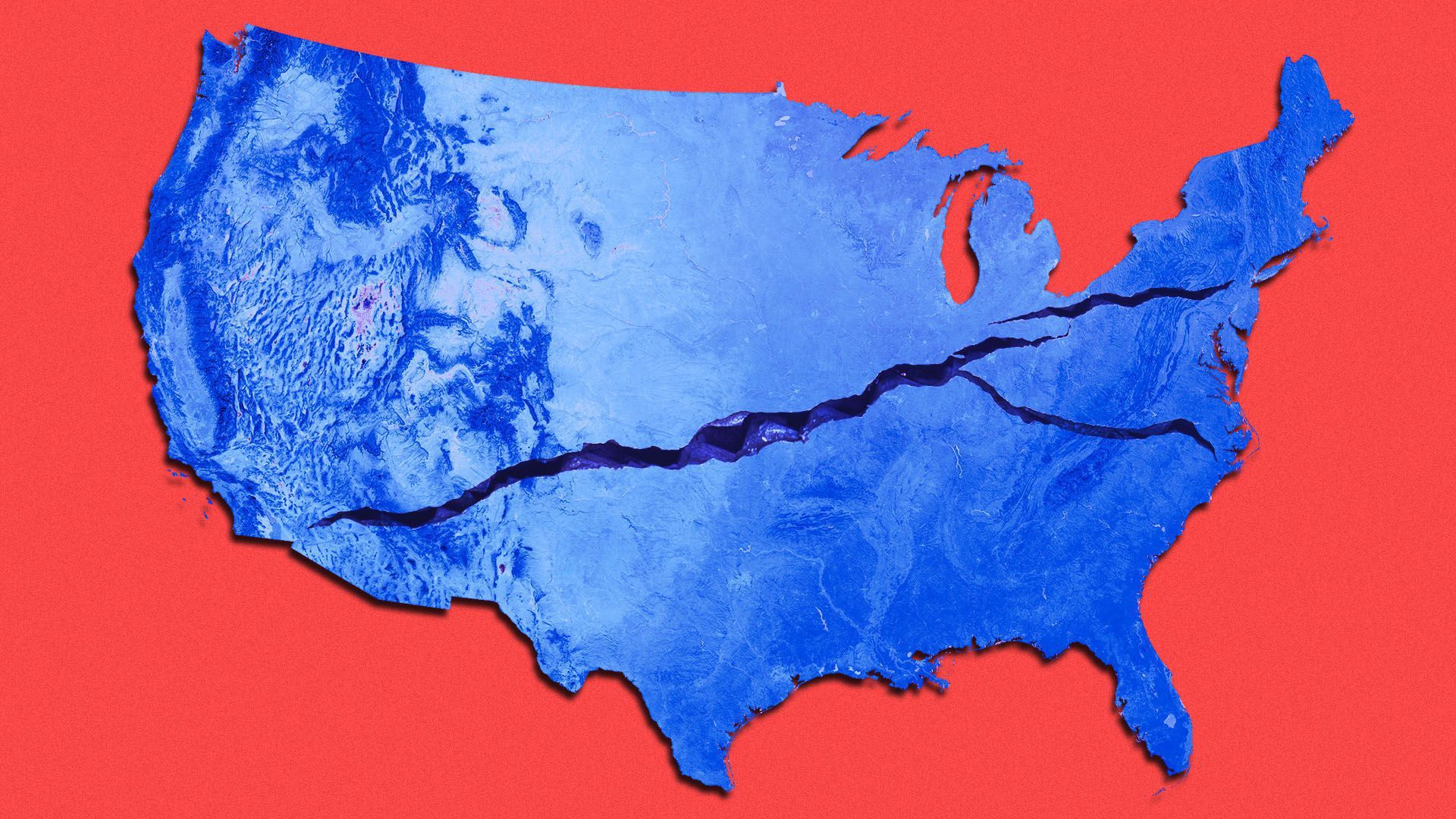
American democracy faces what could be its greatest test in a lifetime as signs mount that Russia is working to interfere in the 2020 U.S. presidential election, while the Trump administration and its allies systematically minimize those efforts, in the process becoming an accessory to them.
Why it matters: It's becoming ever more difficult to find any boundary between foreign meddling and domestic disinformation.
Why it matters: Only the U.S. has more cases (over 6.6 million). India has the fastest-growing number of daily infections — more than 90,000 each day for the five days leading up to Tuesday, the BBC notes. The country of 1.4 billion people surpassed 4 million cases on Sept. 4. India imposed lockdown measures that saw businesses close in March, but these have since eased despite soaring cases as the government aims to revive a struggling economy.
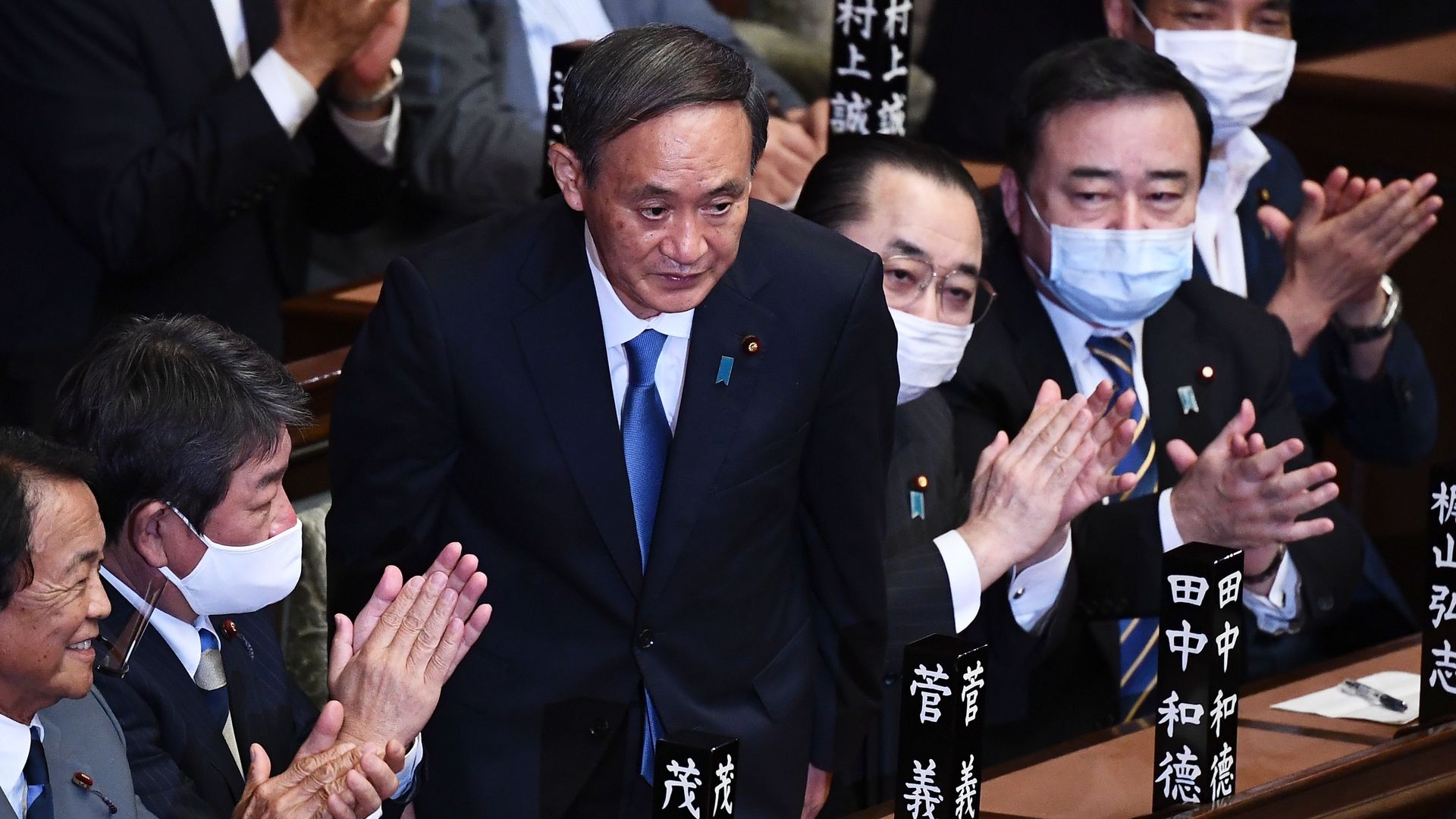
Yoshihide Suga was formally elected as Japan's prime minister by parliament’s lower house on Wednesday, per AP.
Why it matters: Suga is the first new leader of the world's third-largest economy in nearly eight years, after Shinzo Abe officially resigned from the role earlier in the day.
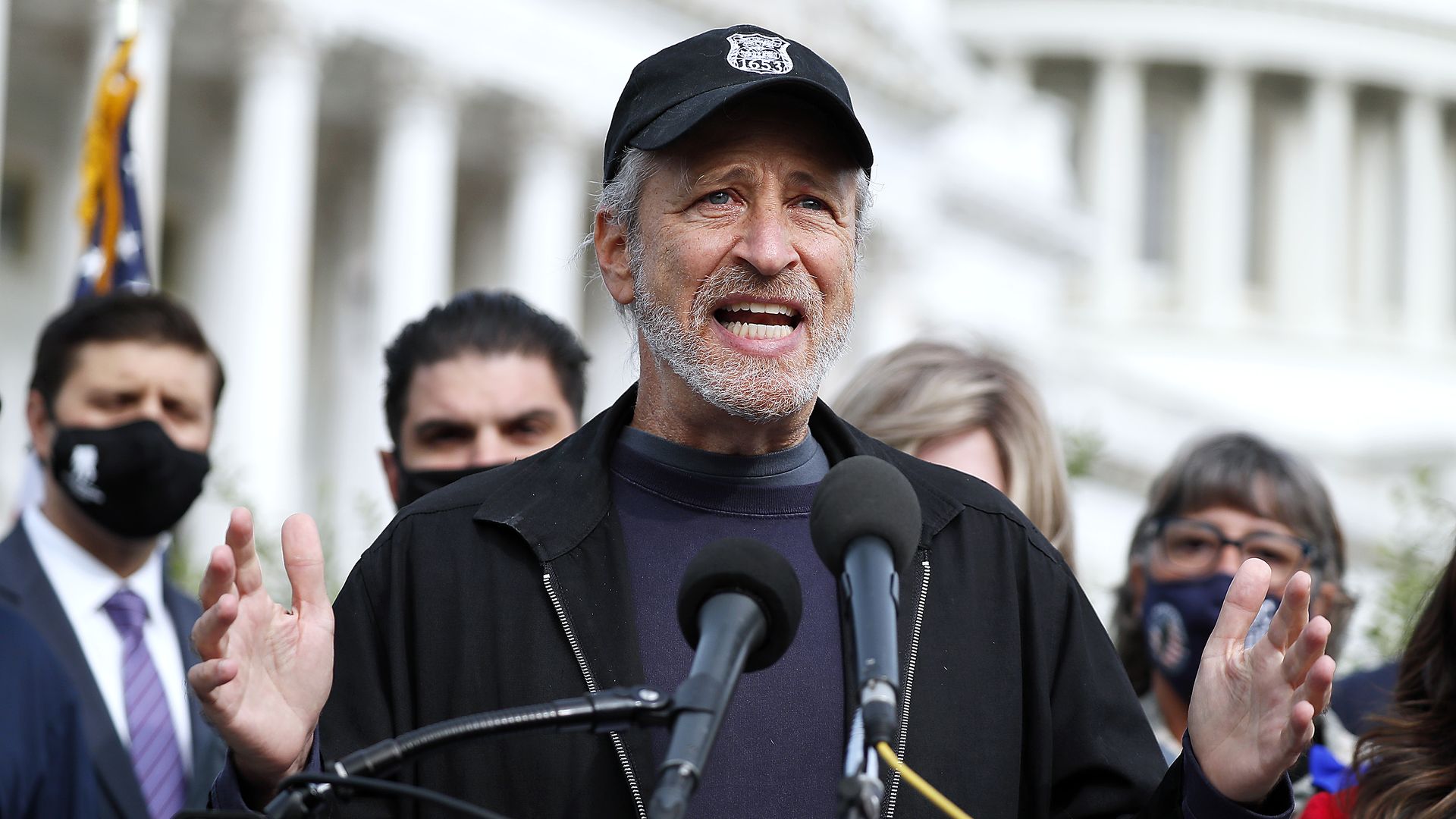
Jon Stewart noted on his return to Capitol Hill Tuesday that many veterans affected by exposure to toxic burn pits are suffering the same afflictions as first responders have since the September 11, 2001 terrorist attacks.
Driving the news: The former "Daily Show" host who's campaigned for years for the continuation of the 9/11 compensation fund, including making a powerful speech in Congress last year, is advocating for a bill that would cover medical conditions associated with veterans' exposure to the pits during this century's wars in Iraq and Afghanistan.
The peace treaty between Israel and the United Arab Emirates states that both countries are committed to "working together for a negotiated solution for the Israeli-Palestinian conflict that will meet the aspirations and needs of both parties."
Why it matters: The Emiratis face criticism from the Palestinians over their peace treaty with Israel. Officials involved in the negotiations on the text of the treaty told me the Emiratis wanted to include language on Palestinians in the document. The Emiratis wanted stronger language, but Israel did not agree.
White House senior adviser Jared Kushner told CNN on Tuesday that he expects more Arab countries to follow the United Arab Emirates and Bahrain in normalizing relations with Israel before Palestinian leadership agrees to a peace deal.
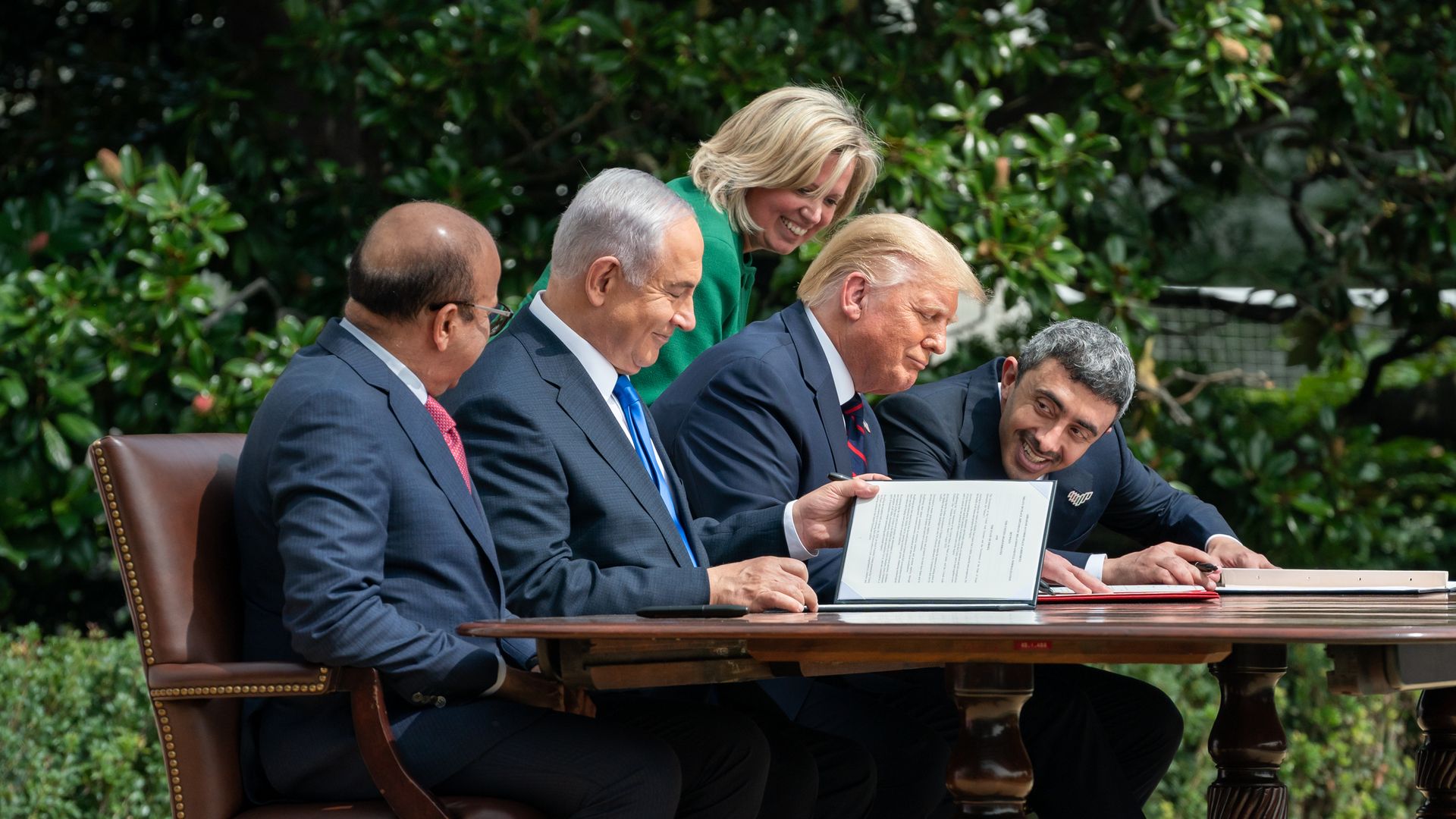
Why it matters: After hosting a White House signing ceremony on Tuesday that formalized diplomatic ties between Israel, the UAE and Bahrain, President Trump told reporters that he expects seven to nine more countries — including possibly Saudi Arabia — to agree to a similar move.
President Trump presided over U.S.-brokered normalization agreements between Israel and Bahrain and the United Arab Emirates at the White House on Tuesday, cementing formal diplomatic ties between the countries through deals with few public details.
Why it matters: "The last Arab state to make peace with Israel was Jordan, in 1994. Egypt was the first, in 1979. The agreement is also significant for relegating the Palestinians to the sidelines," WashPost reports.
By this time next week, we should all know if TikTok will be allowed to continue operating in the U.S., in partnership with Oracle, or if it will be in the process of being banned by President Trump.
Axios Re:Cap digs into the perspective from China, where TikTok's parent company is based. Our guest is CNBC Beijing bureau chief Eunice Yoon.
The U.S. has suffered a steep decline in its global image and reputation in the aftermath of its response to the coronavirus pandemic, a new survey from the Pew Research Center shows.
The big picture: Since the start of the Trump administration in 2017, the global view of the U.S. has steadily declined. However, positive views of the U.S. are now at record lows according to Pew, and in none of the 13 countries surveyed "do more than a fifth think the U.S. has done at least a somewhat good job dealing with the virus."
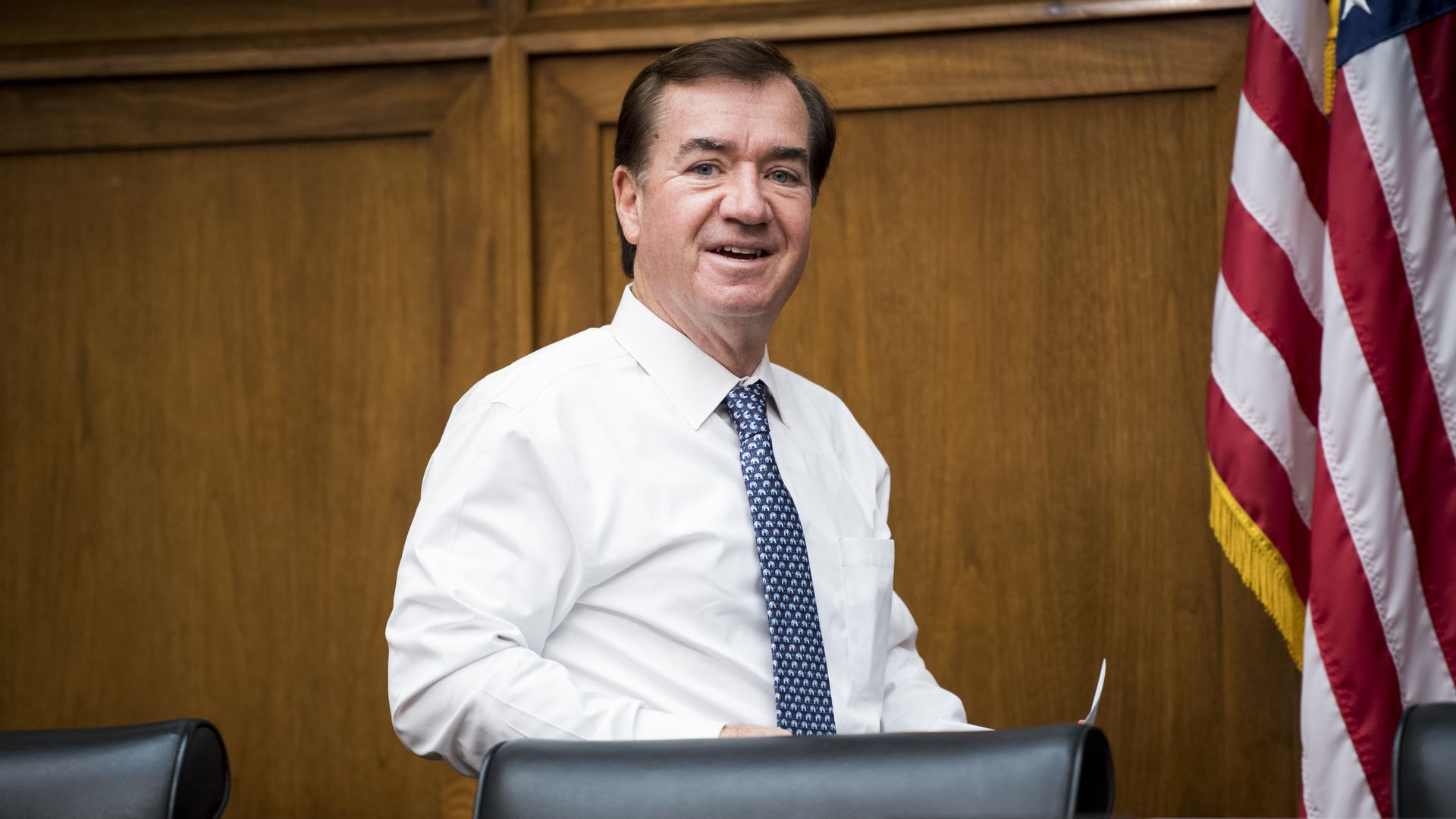
Former House Foreign Affairs Committee chair Ed Royce, a Republican from California, has registered as a lobbyist for Chinese tech giant Tencent, which helps implement the Chinese Communist Party's censorship and surveillance regime.
The catch: While in office, Royce was an outspoken critic of the Vietnamese Communist Party's human rights abuses and backed several bills targeting China.
A group of researchers from Europe, the U.S. and Japan are proposing a "tech alliance" of democratic countries in response to the Chinese government's use of technology standards and its tech sector as instruments of state power abroad, according to a version of the proposal viewed by Axios.
Why it matters: Technological rivalry may dominate the 21st century world. But so far, democratic nations have not yet acted in concert to shape standards and secure their infrastructure in the face of a strong authoritarian challenge.
A World Trade Organization panel ruled on Tuesday that the Trump administration's tariffs on over $500 billion worth of Chinese goods violate international rules, Bloomberg reports.
Why it matters: It may be a rhetorical victory for Beijing, which has denounced Trump's trade war, but the ruling will have no binding effect. President Trump has blocked all new appointments to the WTO's dispute-resolution court, rendering the international body effectively toothless.
The agreement between the UAE and Israel that will be signed on Tuesday mentions the Palestinian issue and the two-state solution as part of a reference to previous agreements which were signed, UAE minister of state for foreign affairs Anwar Gargash told me in a Zoom briefing.
Why it matters: Gargash’s comments gave the first substantive details from the agreement which up to now remained completely secret. The UAE pushed back on criticism against the agreement, with Israel stressing the deal will also help the Palestinians.
President Trump on Tuesday confirmed that he wanted to order an assassination against Syrian President Bashar al-Assad, but former Secretary of Defense James Mattis "was against it."
What he's saying: "I would have rather taken him out. I had him all set. Mattis didn't want to do it," Trump said on "Fox & Friends." His comments confirm a detail reported in journalist Bob Woodward's 2018 book "Fear."
Russian opposition leader Aleksei Navalny, who was poisoned by Novichok last month, is now awake and regaining his abilities.
The state of play: Navalny wrote in an Instagram post on Tuesday morning, "I can still do almost nothing, but yesterday I could breathe the entire day by myself," per a New York Times translation.
President Trump responded late Monday to reports that Iran plans to avenge the January killing in an American airstrike of a top general, Gen. Qasem Soleimani.
What he's saying: "Any attack by Iran, in any form, against the United States will be met with an attack on Iran that will be 1,000 times greater in magnitude!" Trump tweeted.