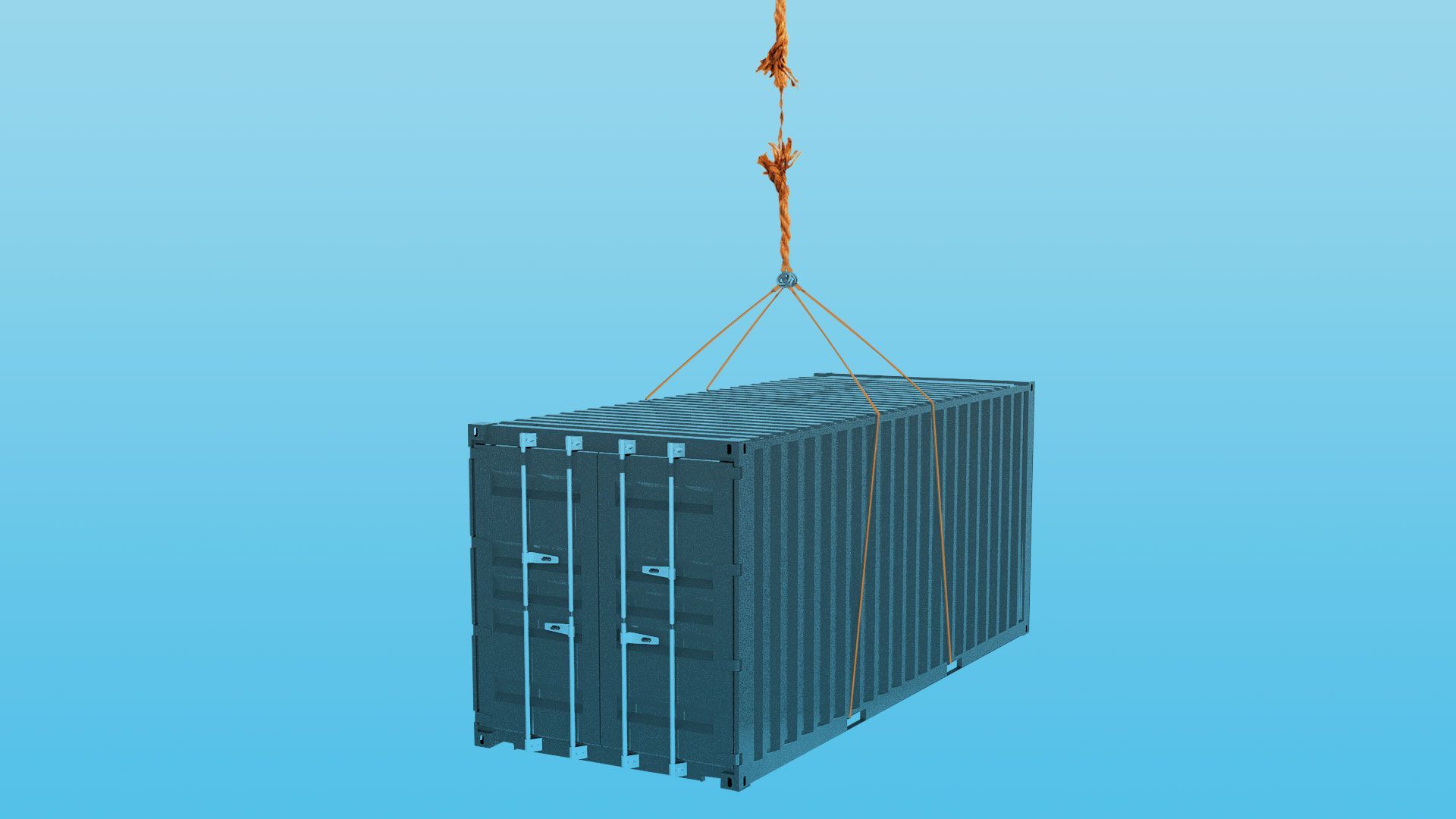
The pandemic will accentuatethe deepening uncertainty over the future of global trade, according to a new report.
Why it matters: Trade is the lifeblood of globalization, and it's helped lift hundreds of millions of people out of poverty. But populism, a growing rift between China and the U.S., and the wild card of COVID-19 could cause global trade to fracture into regional variations.
Top White House officials have bluntly warned the head of a board that administers railroad workers' retirement benefits that the investment trust he oversees is exposing investors to undue economic risk and endangering U.S. national security because it invests in certain Chinese companies.
Driving the news: The letter, dated July 7 and obtained by Axios, asks for a response within a week as to whether the U.S. Railroad Retirement Board, an independent federal agency, will cut off these Chinese investments.
The U.K. may further restrict technology from Huawei, the Chinese telecommunications giant, on its 5G networks, due to security concerns, the Washington Post reports.
The big picture: The move is seen as a diplomatic victory for the U.S., which has sought to prevent Huawei technologies from being employed in communication networks across the world. China, meanwhile, accuses the U.S. of using security rationales to squeeze Huawei from international markets because it is hostile to economic competition.
The alleged Russian campaign to pay the Taliban bounty for U.S. troops' lives represents "a huge escalation" of Russian activities in Afghanistan, but suspected Russian support of the Taliban goes all the way back to the Obama administration, former U.S. intelligence officials told Axios.
The big picture: The bounty scheme, spearheaded by the Russian military intelligence agency commonly known as the GRU, is laid out in information gathered by U.S. intelligence agencies — including intercepts of banking transfer data — and reported in a series of exclusives by the New York Times.
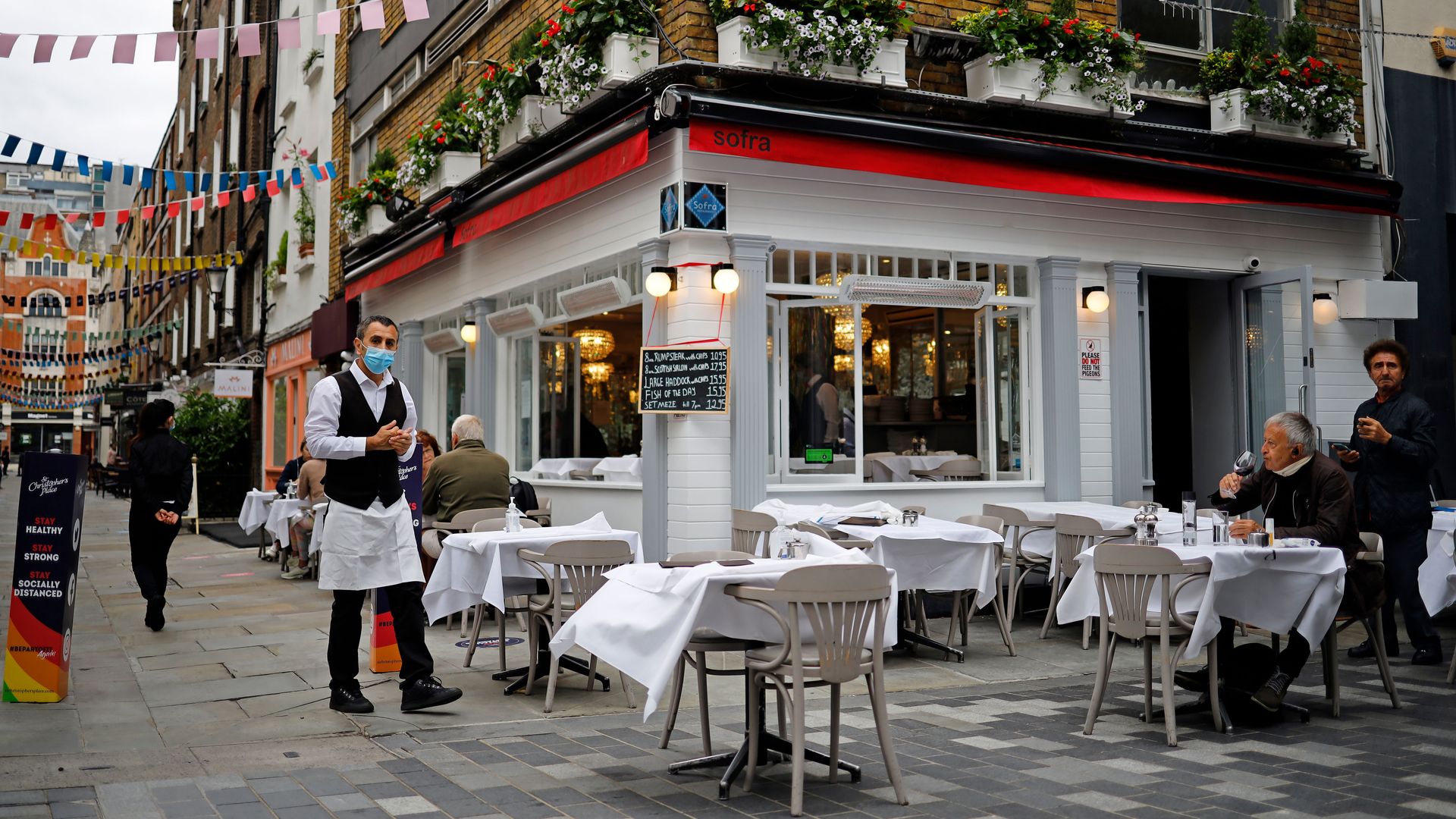
The British government will give diners a 50% discount on their restaurant bills as part of an effort to jumpstart the country's economy after emerging from its coronavirus lockdown, the U.K. Treasury announced Wednesday.
The state of play: Under the "Eat Out to Help Out" plan, each patron will get up to £10, or $12.57, off their meal — not including alcoholic beverages — if they eat out between Monday and Wednesday at businesses that sign up for the program.
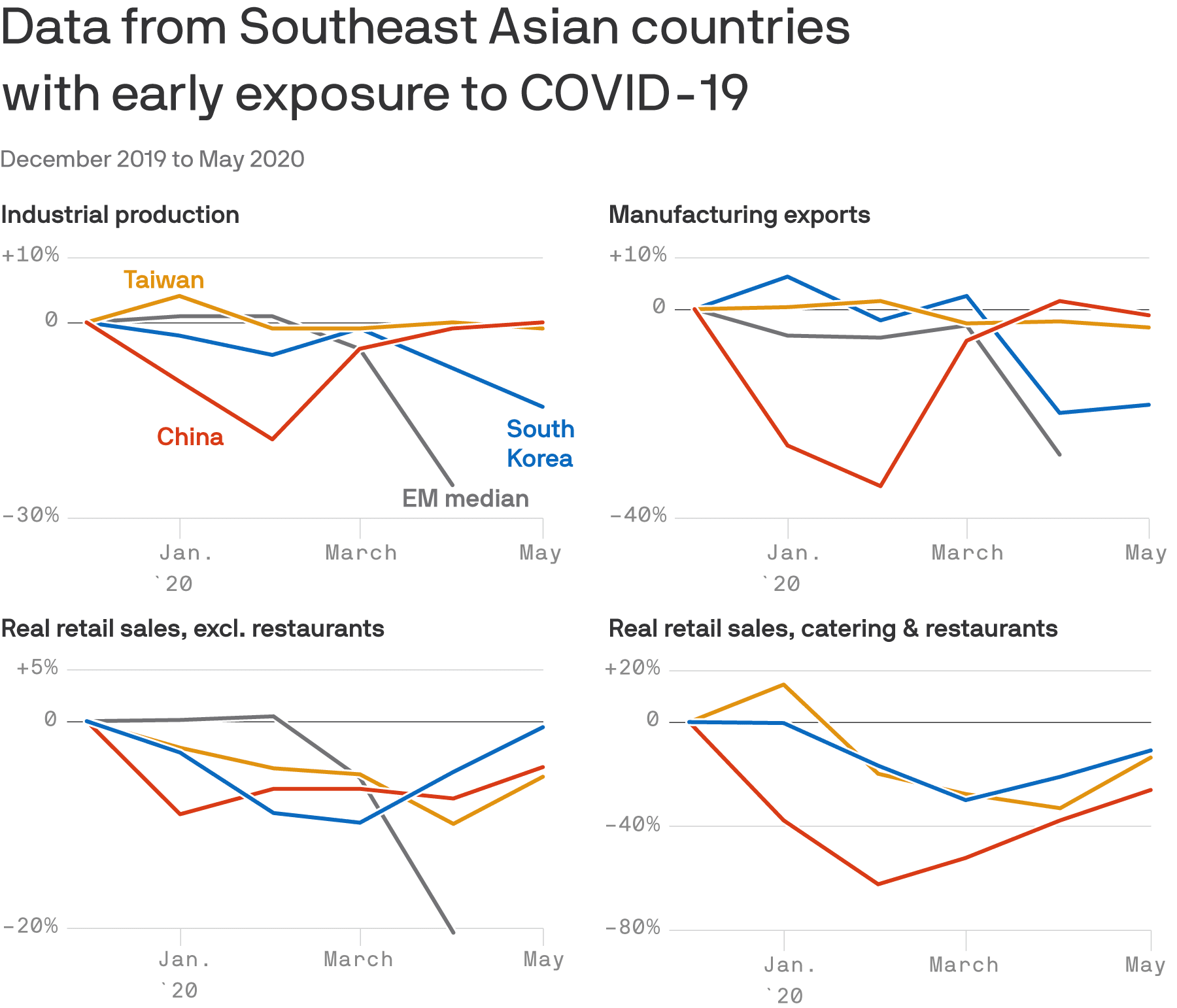
China and much of Southeast Asia look to be bouncing back strongly from the coronavirus pandemic as stock markets and much of the country's economic data are returning to pre-pandemic levels.
What's happening: "Our tracking points to a clear V-shaped recovery in China," economists at the Institute of International Finance said in a note to clients Tuesday, predicting the country's second-quarter growth will rise above 2% after its worst quarter on record in Q1.
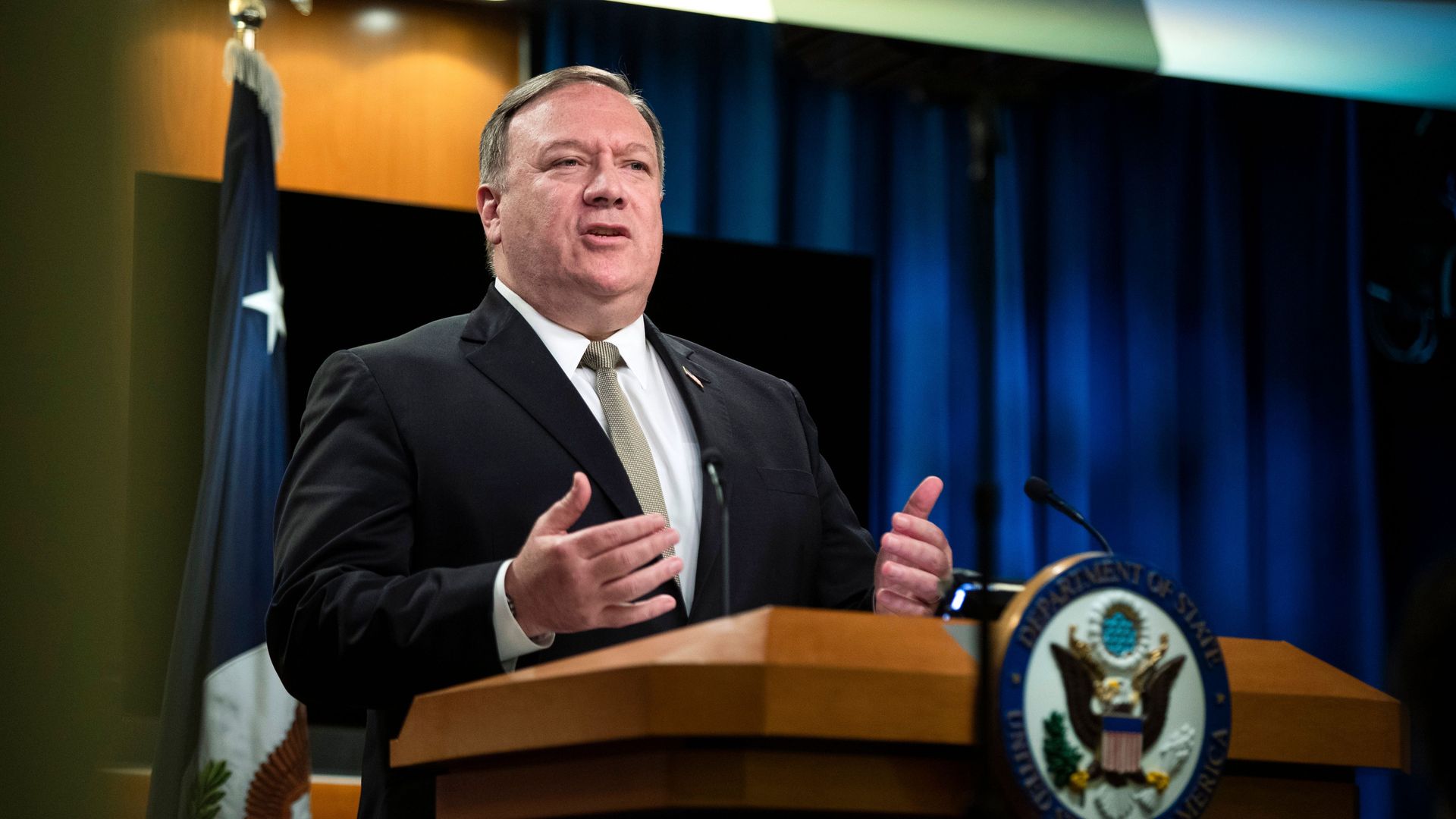
Secretary of State Mike Pompeo announced visa restrictions on Tuesday for Chinese officials whom the Trump administration believes are restricting foreigners’ access to Tibet, limiting or eliminating those officials' ability to travel to the U.S., AP reports.
Why it matters: The travel ban comes as the U.S. rebukes China for its passage of a new security law which circumvents Hong Kong's independent legal system, for China's human rights abuses in the northwestern region of Xinjiang and global trade practices.
The Trump administration informed the United Nations and Congress on Tuesday that the U.S. is officially beginning the process of withdrawing from the World Health Organization. The UN is now "in the process of verifying with the WHO whether all the conditions for such withdrawal are met," according to a spokesperson.
Why it matters: President Trump's decision to formally withdraw from the UN's global health agency — which will take effect on July 6, 2021 — comes as the pandemic continues to accelerate both in the U.S. and around the world. The U.S. is by far the largest donor to the WHO out of any country, contributing more than 14% of its total budget.
Hong Kong's new security law means that companies, international travelers, and governments around the world are now facing decisions about how much they need to extricate themselves from previously close ties to the city.
Why it matters: If Hong Kong remains a major international business hub, China could use it as a lever to significantly erode global free speech norms.
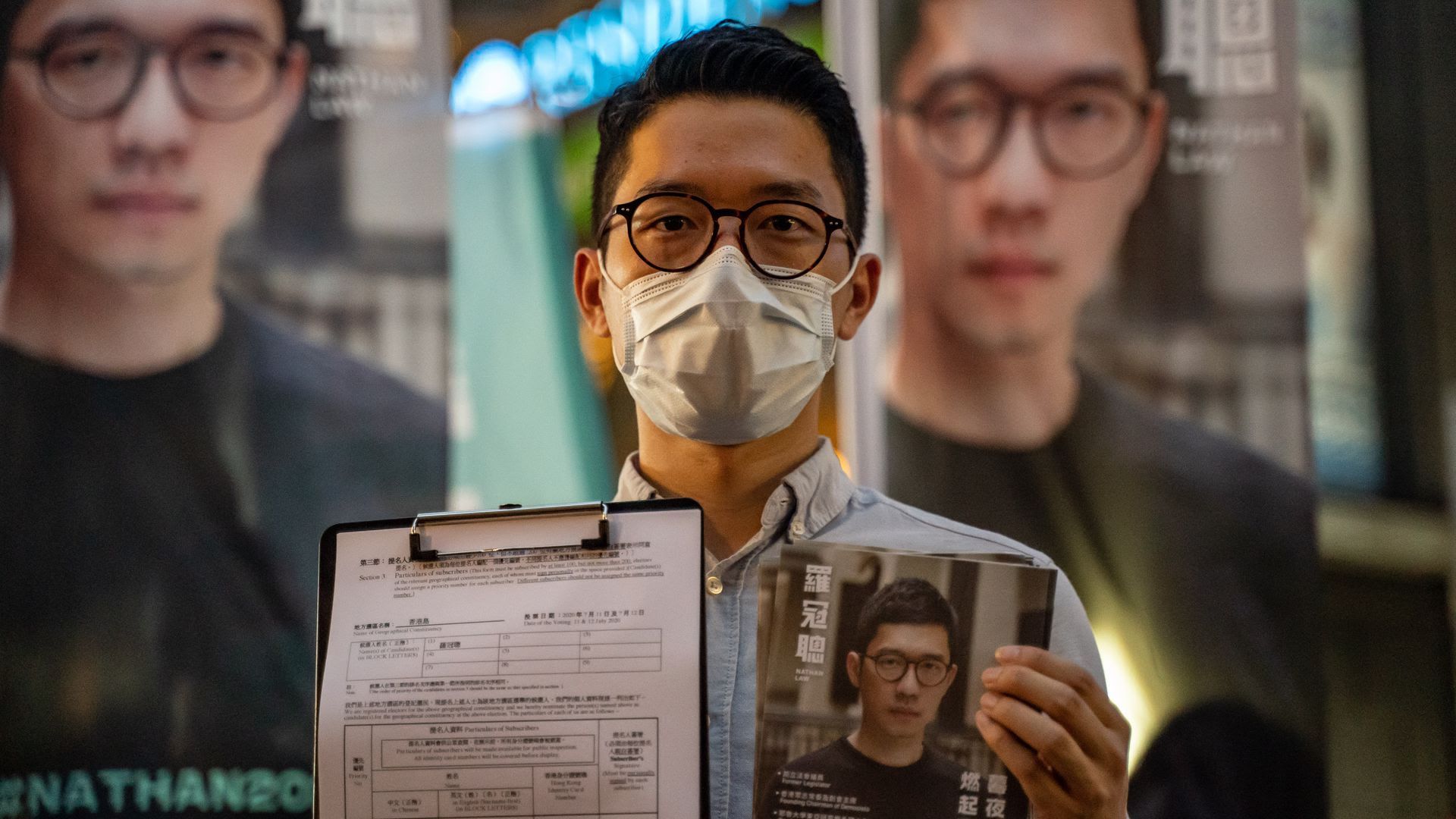
Nathan Law, a former lawmaker and prominent pro-democracy activist in Hong Kong, announced on July 2 that he had fled the city.
Why it matters: Law's departure represents the dire situation for pro-democracy activists in Hong Kong — and the hope they still have to continue their fight from afar.
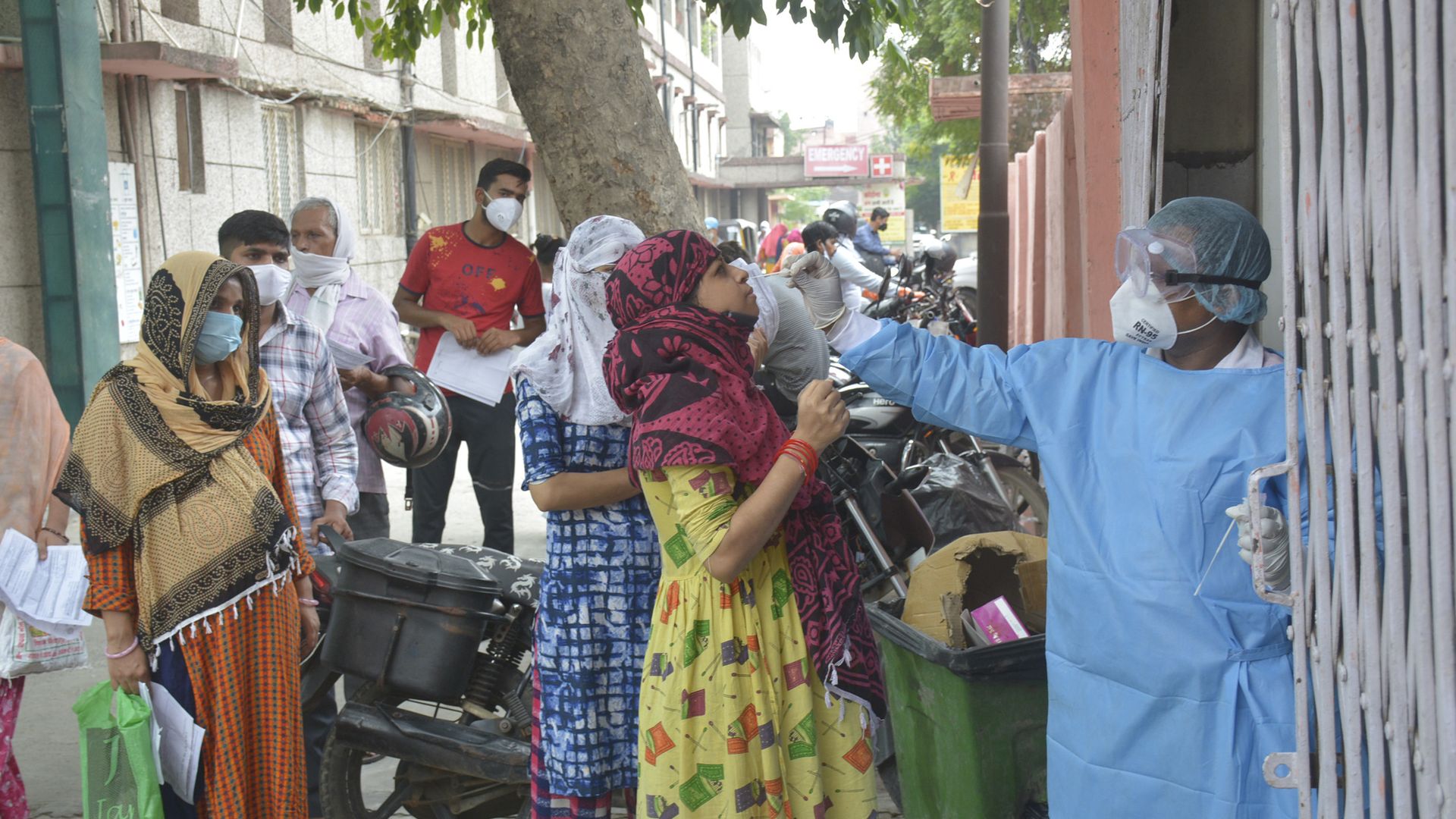
India has reported more coronavirus cases than any other countries but the U.S. and Brazil, per Johns Hopkins data.
The big picture: Schools, colleges, movie theaters, pools, religious gatherings and metro travel remain shut down according to guidance that lasts until the end of July, India's Ministry of Home Affairs announced last week.
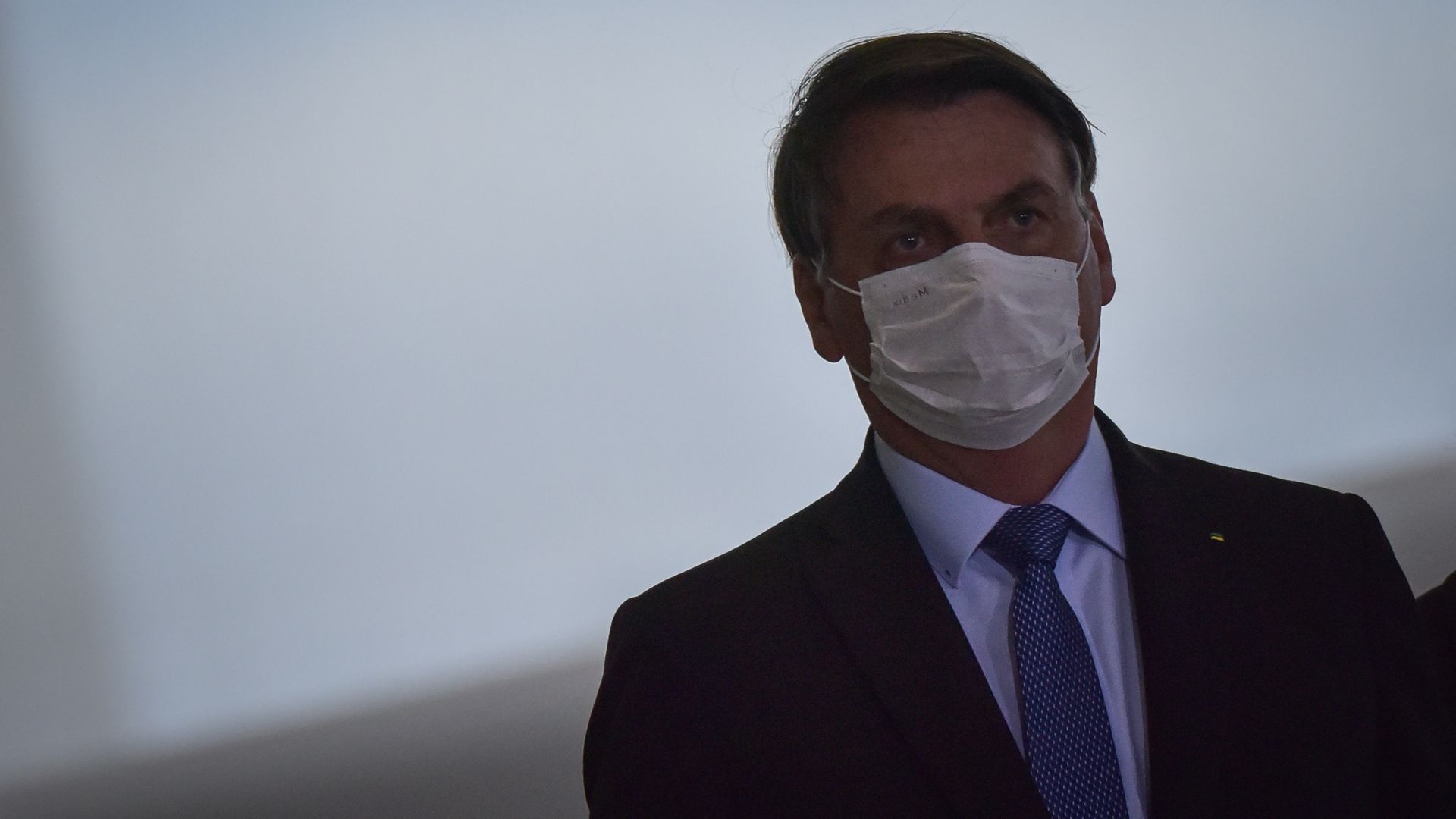
Brazilian President Jair Bolsonaro announced Tuesday that he tested positive for coronavirus.
Why it matters: Brazil's coronavirus outbreak is one of the largest in the world, topped only by the U.S., and Bolsonaro has long downplayed the effects of the virus, pushing businesses to reopen over the last few months in order to jumpstart the country's economy.
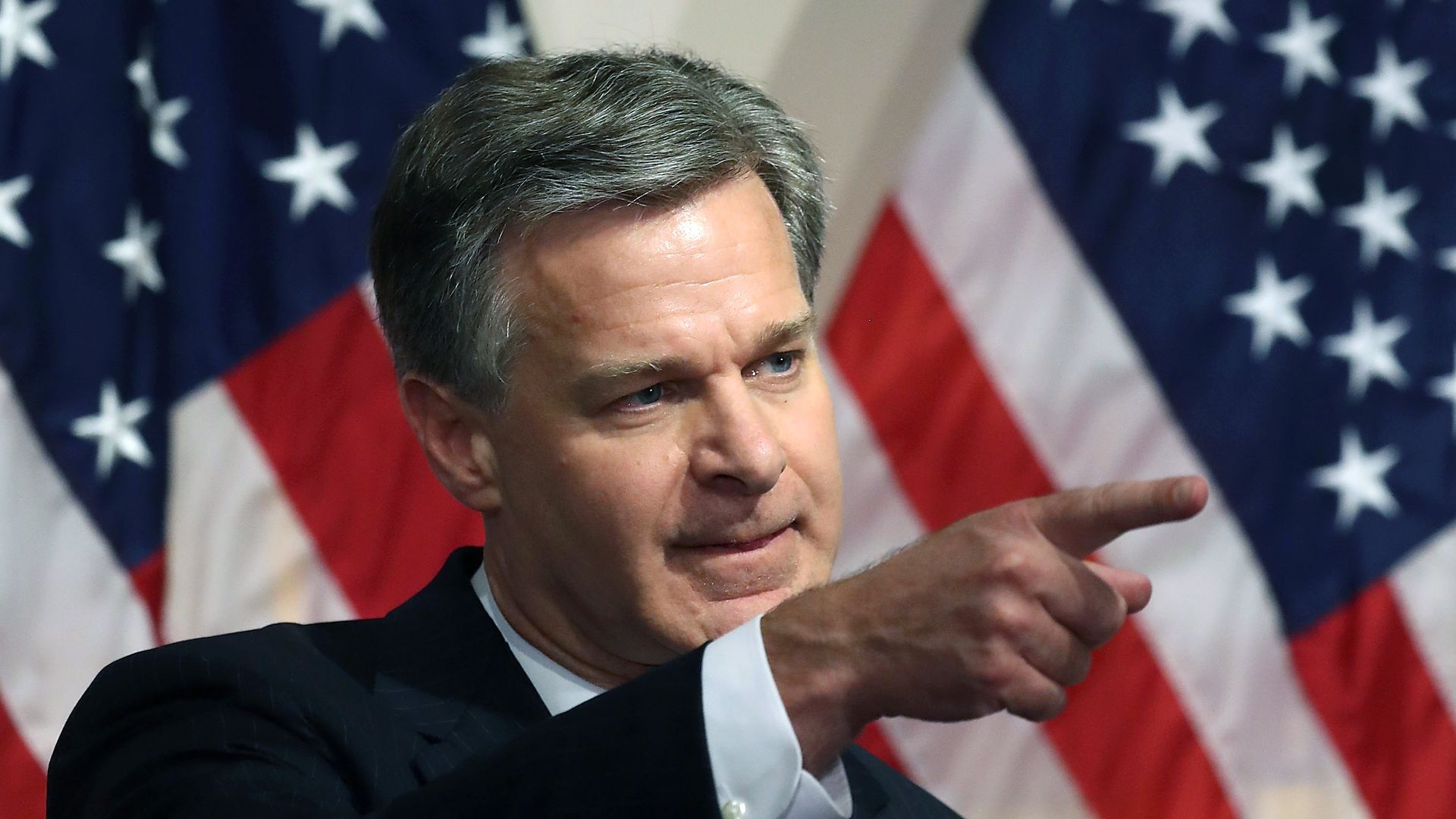
FBI Director Christopher Wray gave a speech today at the Hudson Institute in Washington, D.C. in which he laid out "more detail on the Chinese threat than the FBI has ever presented in an open forum."
Why it matters: China's increasingly aggressive behavior under General Secretary Xi Jinping is ringing alarm bells in the U.S.
As tensions between the U.S. and China escalate, more U.S. media companies like The Information, Politico and The Wire China are looking to invest in coverage of the country and its technology and business boom.
Why it matters: "It's coverage you have to have if you're a serious tech or business news operation," says Bill Bishop, author of the Sinocism newsletter.
Big Tech companies are scrambling to figure out what China's imposition of a new national security law in Hong Kong means for their businesses there.
The big picture: Tech companies, like other multinationals, had long seen bases in Hong Kong as a way to operate close to China without being subject to many of that country's most stringent laws. Now they likely must choose between accepting onerous data-sharing and censorship requirements, or leaving Hong Kong.
While MLB struggles with testing delays ahead of its shortened season, Japan's Nippon Pro Baseball (NPB) — the world's second-best league behind MLB — has not only resumed play, but will soon allow fans at games.
Secretary of State Mike Pompeo told Fox News' Laura Ingraham on Monday that the Trump administration is "looking at" a ban on Chinese social media app TikTok.
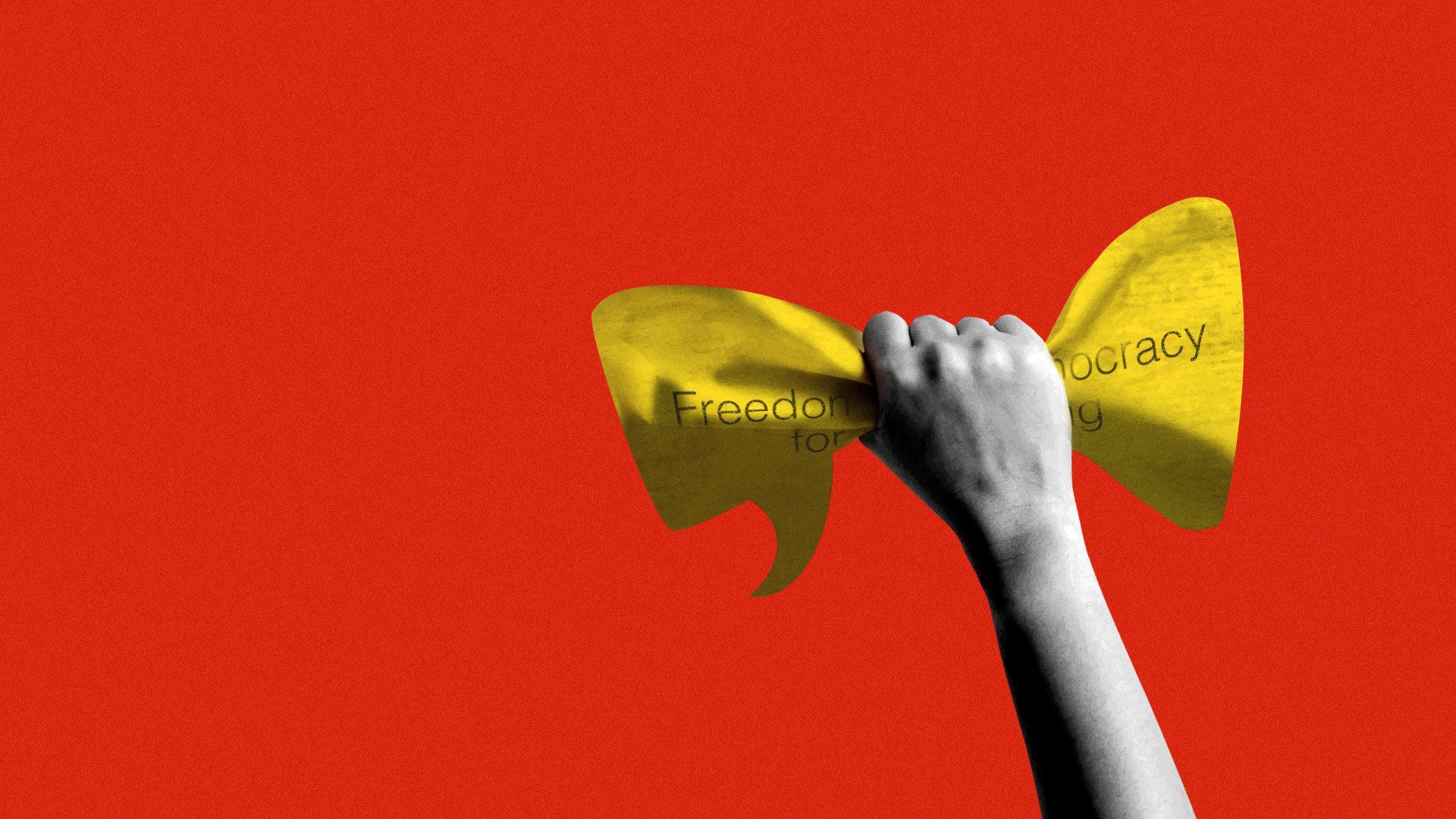
The draconian security law that Beijing forced upon Hong Kong last week contains an article making it illegal for anyone in the world to promote democratic reform for Hong Kong.
Why it matters: China has long sought to crush organized dissent abroad through quiet threats and coercion. Now it has codified that practice into law — potentially forcing people and companies around the world to choose between speaking freely and ever stepping foot in Hong Kong again.
Beijing's new national security law doesn't just apply to Hong Kong residents. Its Article 38 makes it illegal for anyone in the world to promote democratic reform for Hong Kong — including you.
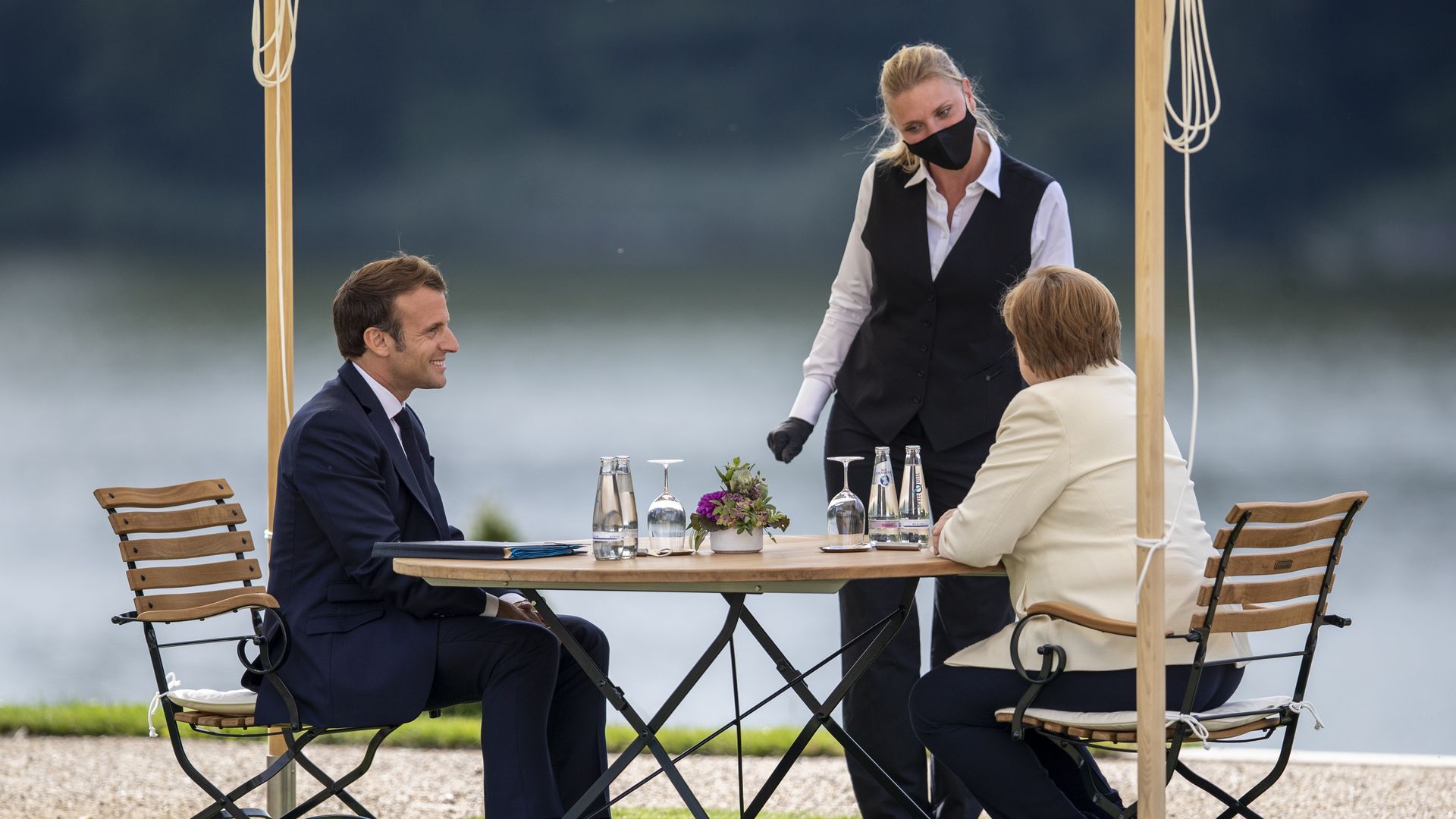
French President Emmanuel Macron is hitting refresh after three years in power, replacing his popular prime minister on Friday and reshuffling his Cabinet today.
Why it matters: Macron’s focus is now on the economic recovery from the coronavirus as the 2022 election begins to loom a bit larger on the horizon.
The image of a Nobel Peace laureatein military fatigues encapsulates the moment in which Ethiopia finds itself — on the verge of a transition to democracy, a descent into violence or, perhaps, a precarious combination of the two.
Driving the news: At least 166 people were killed after an iconic musician, Haacaaluu Hundeessaa, was murdered last Monday in Addis Ababa, the capital. Prime Minister Abiy Ahmed responded to the violence by sending in troops and shutting off the internet. High-profile opposition leaders were arrested, along with some 2,300 others.











/2020/07/07/1594129123370.gif?w=3840)