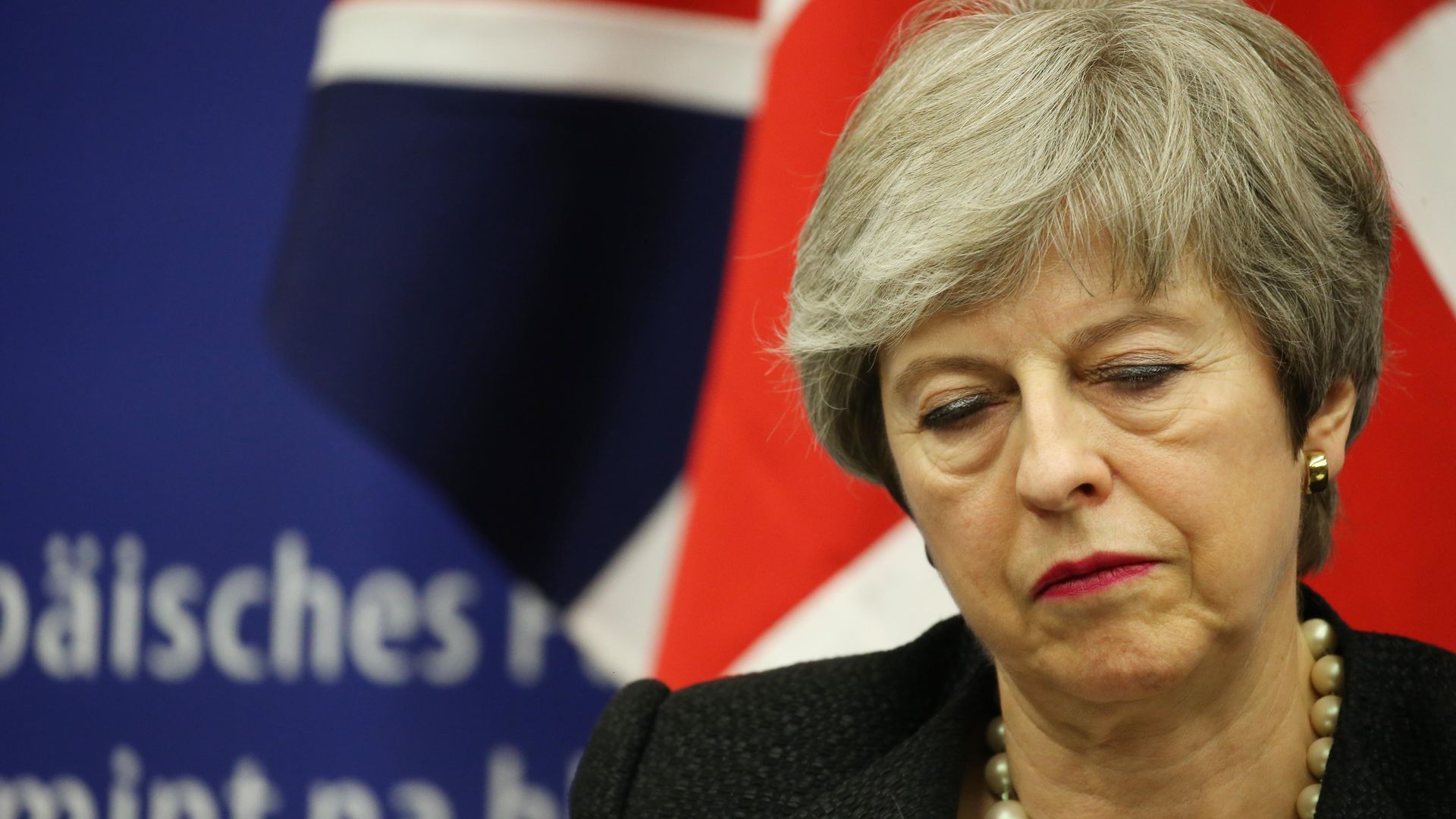
U.K. Prime Minister Theresa May, who spent weeks scrambling to make last-minute tweaks to her Brexit agreement with the European Union, saw her plan defeated once again in Parliament today. The margin was 242 to 391.
Why it matters: We are just 17 days away from "Brexit Day," when the U.K. is scheduled to leave the EU, and nowhere close to a deal. May has said she'll put forward two additional votes in the coming days — one on a so-called "no deal" Brexit, which is likely to fail, and one asking her to seek an extension to the negotiating period, which is likely to pass. Getting the EU to agree to an extension will be tricky, though, and pushing back the deadline won't get May any closer to a parliamentary majority.
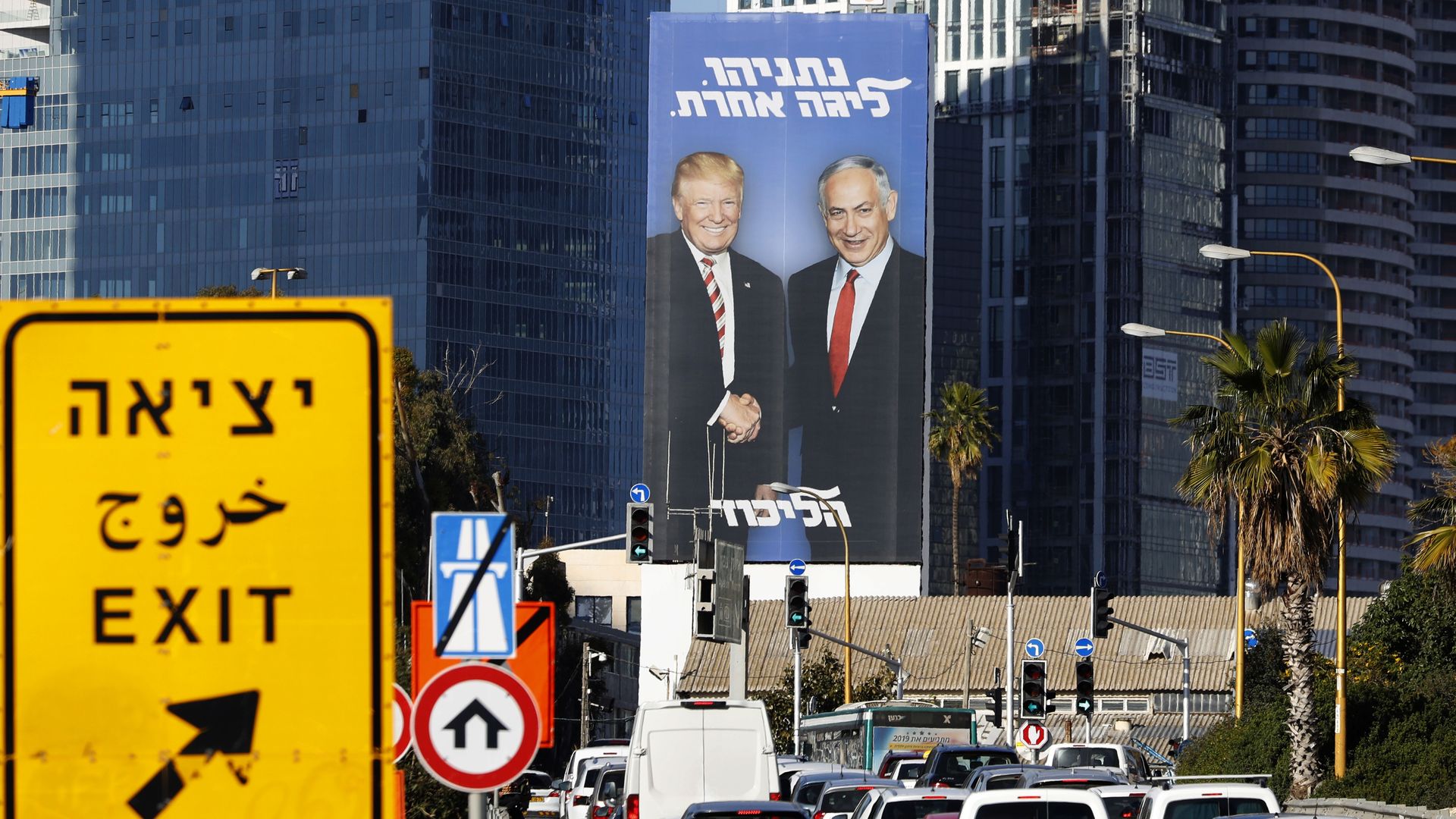
Retired General Benny Gantz, who is heading the "Blue and White" party in the Israeli election and who is Prime Minister Benjamin Netanyahu's main political opponent, confirmed today that he will speak at the AIPAC annual conference in Washington on March 25th.
Why it matters: Netanyahu is also scheduled to speak at the conference on March 26th. The fact the two main contenders will speak there is going to turn the AIPAC conference into the main battleground of the Israeli elections for at least three days - two weeks before election day.
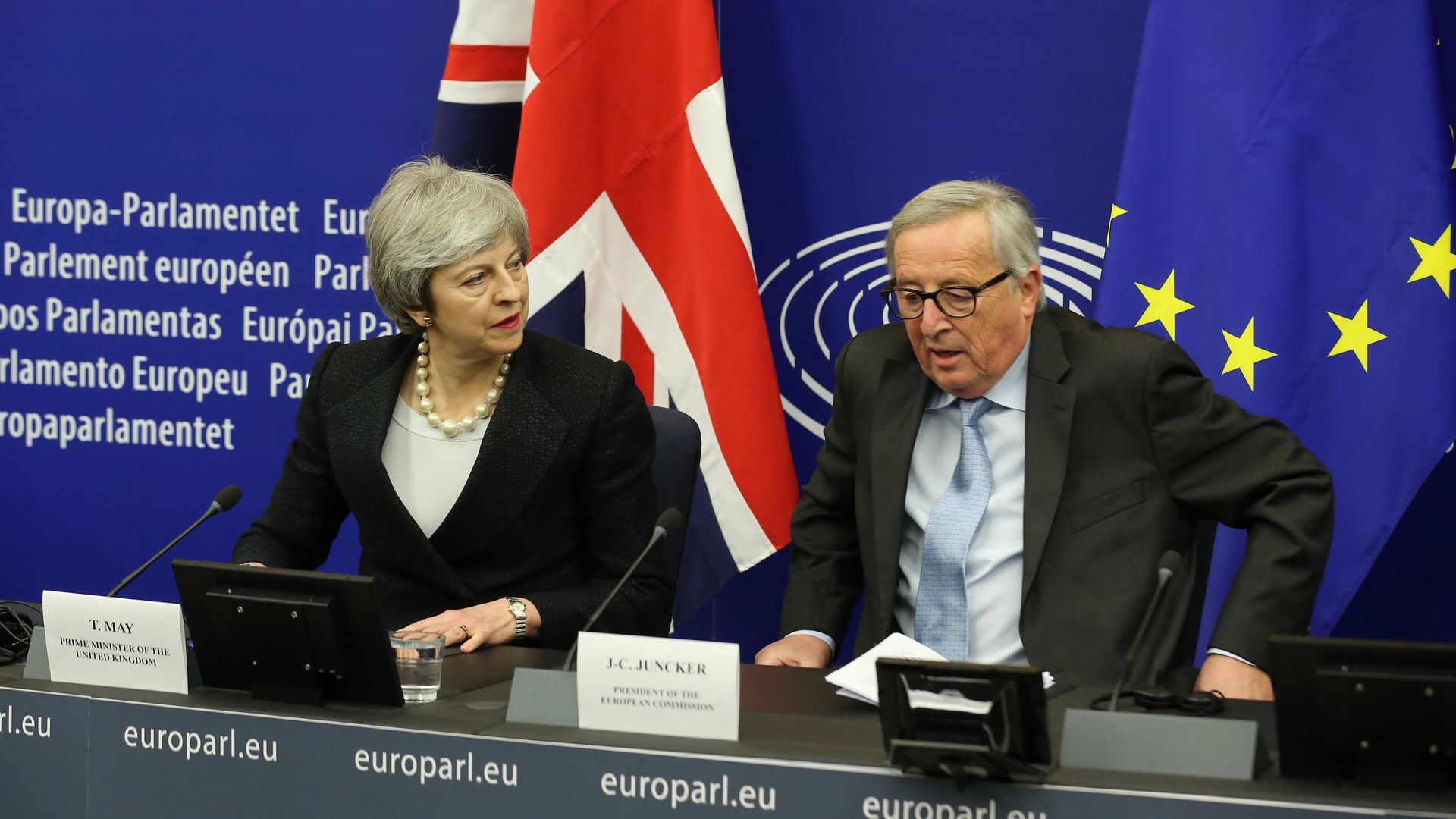
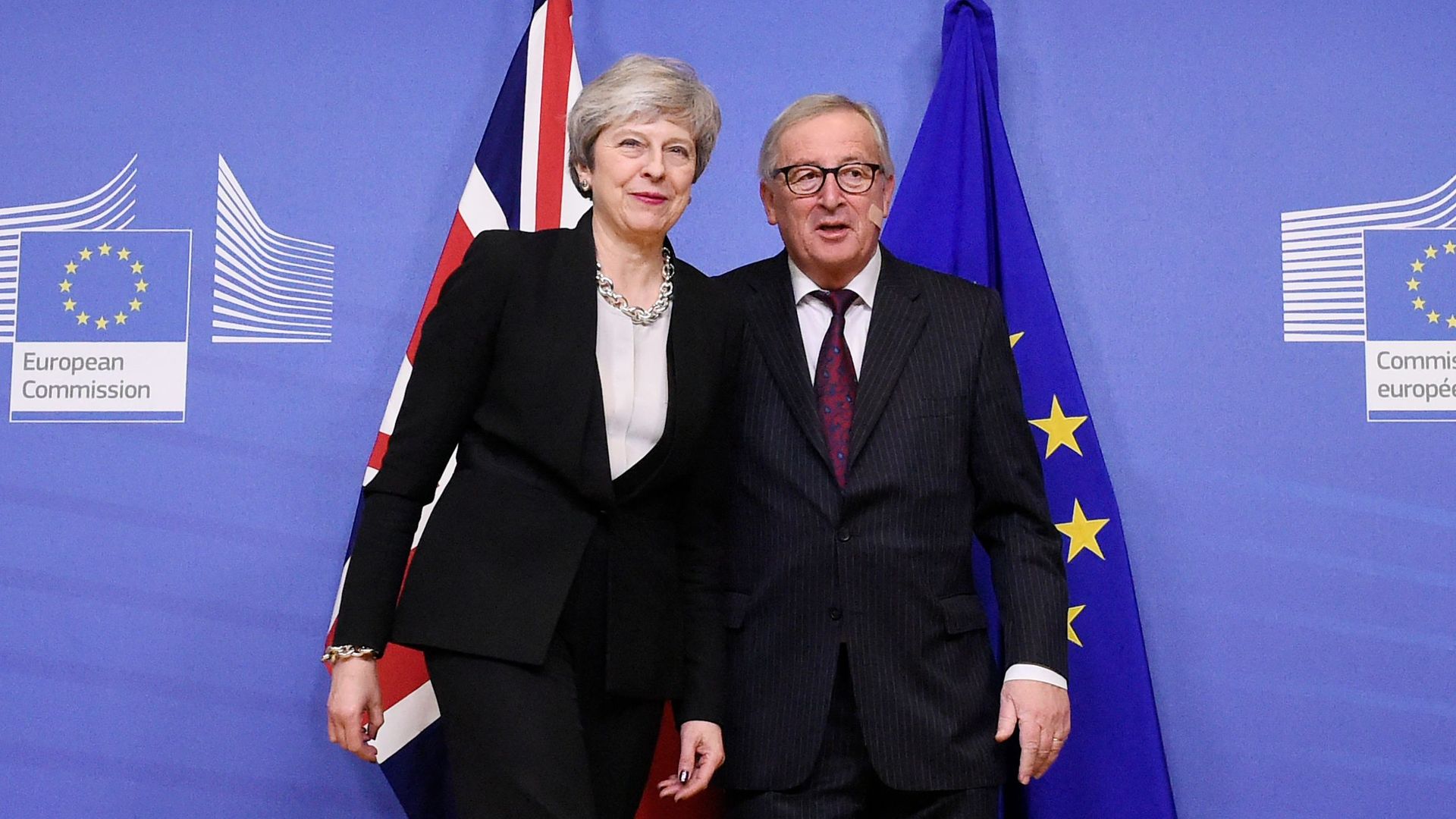
U.K. Prime Minister Theresa May and European Commission President Jean-Claude Juncker say they’ve agreed to some last-minute tweaks to the Brexit deal May will attempt to pass through Parliament tomorrow. It's unclear whether anything has really changed.
Between the lines: May is desperate to convince the Brexiteer wing of her party that the so-called “Irish backstop” won’t keep the U.K. in a kind of permanent limbo after it officially leaves the EU, which is set to happen on March 29. She’s also desperate to avoid a repeat of the humiliating defeat she suffered in January, when her (almost identical) plan failed by the largest margin in modern parliamentary history.
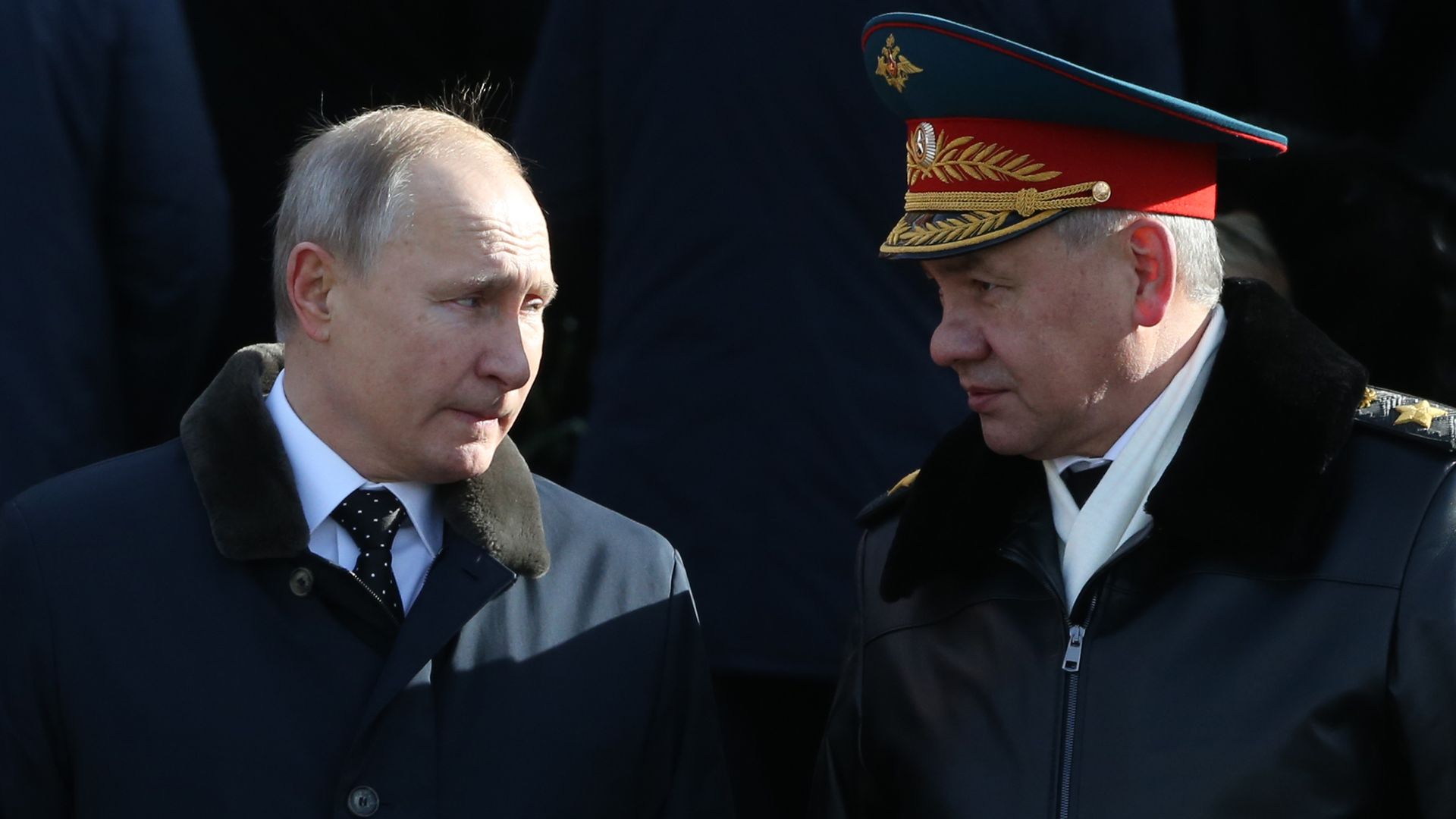
Russia’s ambassador to the U.S., Anatoly Antonov, said today at the Carnegie Endowment's nuclear policy conference that Moscow would reject a last-minute extension to the New START arms control treaty under a new U.S. administration. The treaty expires in February 2021.
Why it matters: President Trump is withdrawing the U.S. from the landmark Intermediate-Range Nuclear Forces (INF) Treaty, and there’s a real chance that New START — a far more significant treaty that limits nuclear warheads and delivery systems — could be next. President Trump has called it a “bad deal,” and national security adviser John Bolton was among the treaty’s chief critics when it was being negotiated by Barack Obama.
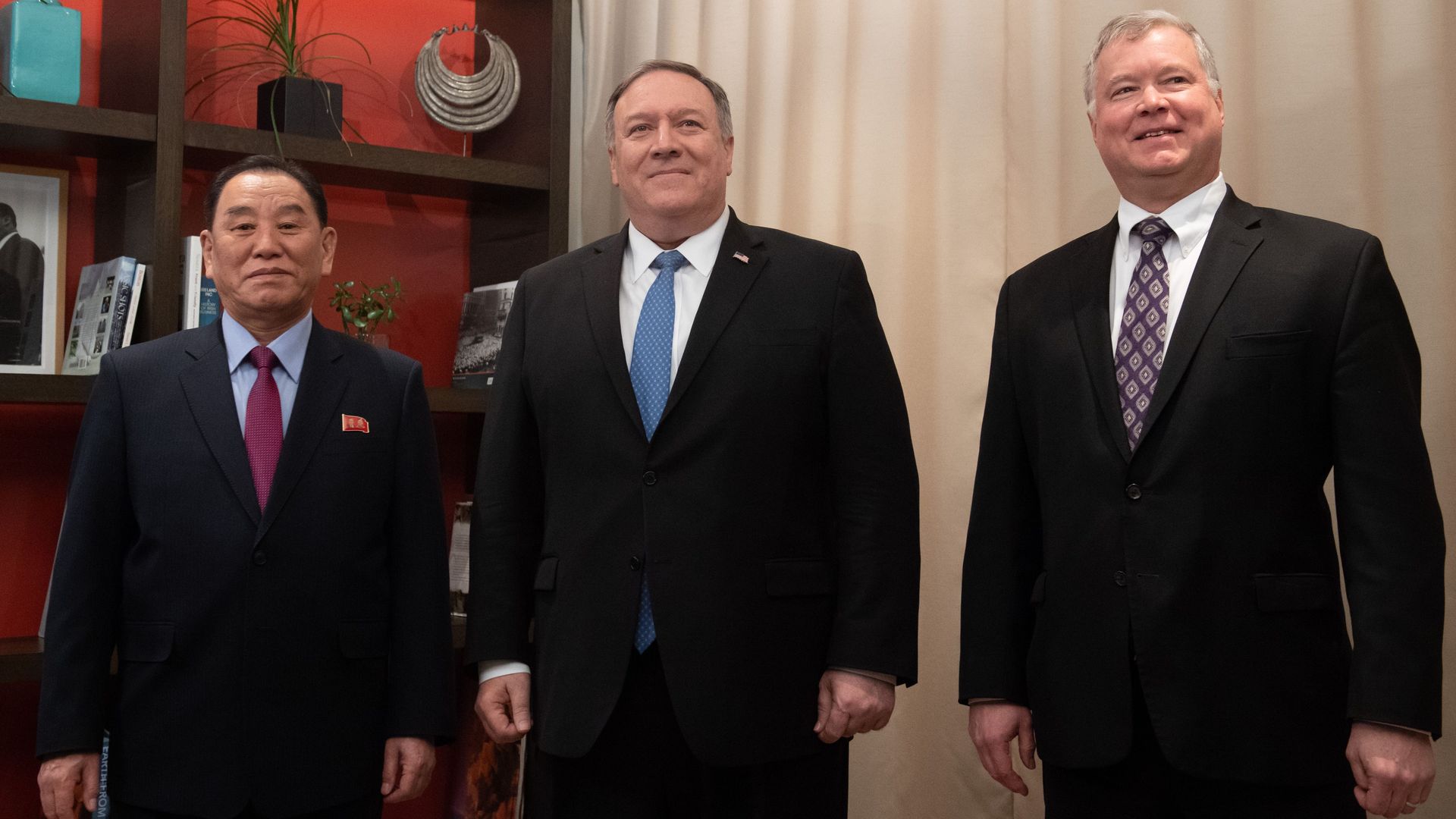
The man tasked with laying the groundwork for a nuclear deal with North Korea says the U.S. is committed to an all-or-nothing approach in which sanctions relief would only follow complete denuclearization — a demand North Korea has said it will never meet, and one that could put a deal beyond reach.
Between the lines: In the lead-up to the Hanoi summit, U.S. officials seemed to hint at openness to a step-by-step process in which some economic carrots would be available before North Korea gave up its full nuclear stockpiles. The rhetoric has been more hawkish since. Special envoy Steve Biegun denied the position was shifting, but insisted: “We are not going to do denuclearization incrementally.”
Israeli Prime Minister Netanyahu's main political opponent Benny Gantz, who is heading the "Blue and White" party that leads in the polls, thinks President Trump could recognize Israeli sovereignty in the Golan Heights in order to help Netanyahu win the April 9 elections, three Gantz aides told me.
Why it matters: Israel has occupied the Golan Heights from Syria since 1967. U.S. recognition of Israeli sovereignty in the Golan Heights would be a huge diplomatic win for Netanyahu — no less significant than the moving of the U.S. embassy to Jerusalem. In the last year, Netanyahu and other Israeli politicians, including Gantz's political ally Yair Lapid, have started calling for U.S. recognition of the Golan Heights.
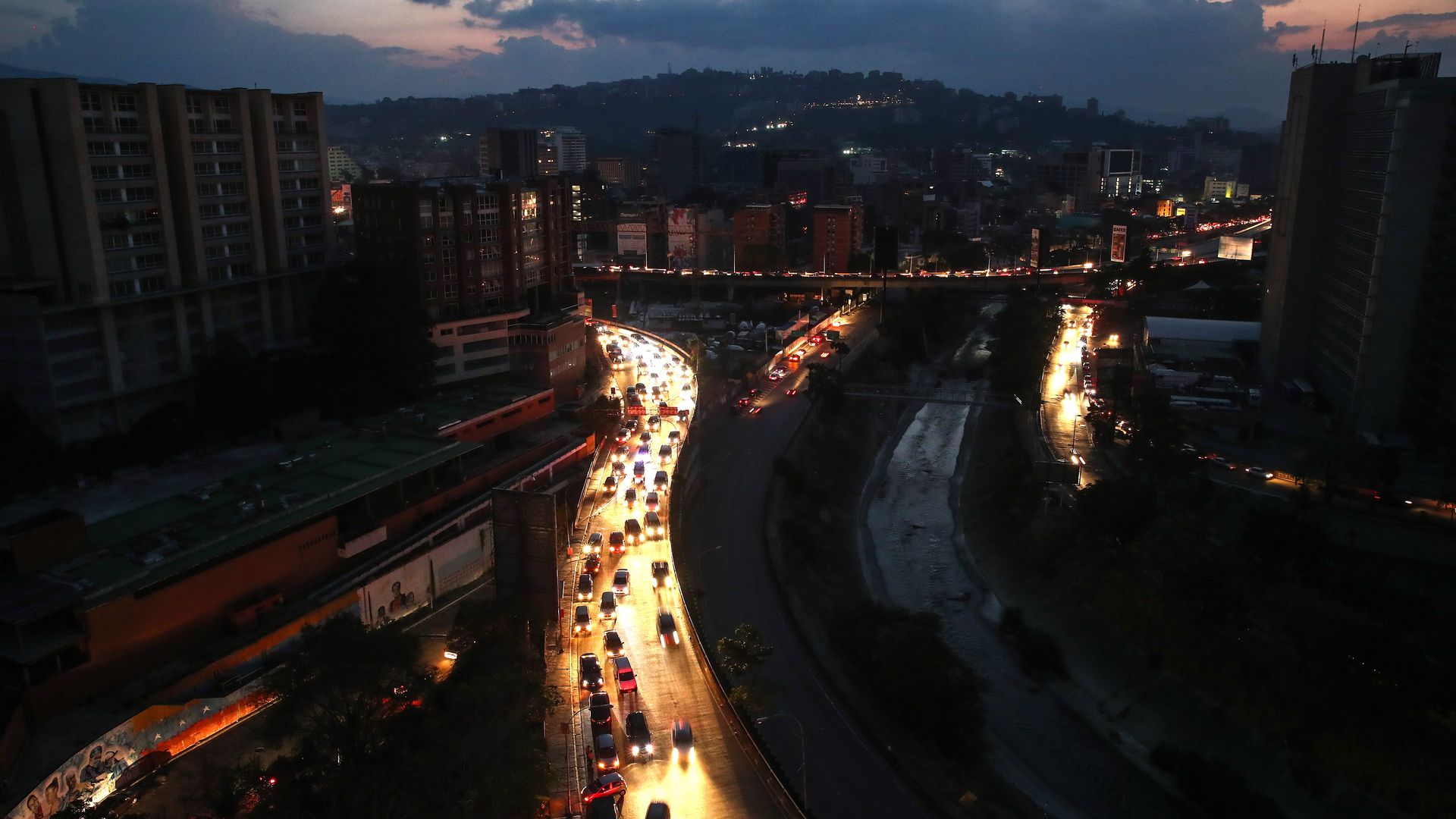
Venezuela’s Nicolás Maduro is struggling to restore power to the country’s electricity grid after a devastating 96-hour nationwide blackout knocked out cellular, internet, and water services, resulting in at least 21 preventable deaths at hospitals.
The big picture: Tottering from crisis to crisis has taken a heavy toll on Maduro. His regime hasn't yet reached a burnout point, but with social unrest erupting into lootings as the crisis-stricken country gradually regains power, he will likely face a reckoning for his failure to protect the grid.
Out tomorrow from longtime U.S. Ambassador Bill Burns, now president of the Carnegie Endowment for International Peace, "The Back Channel: A Memoir of American Diplomacy and the Case for Its Renewal."
Details: The book includes accounts of two unheeded warnings about Russia.
Britain's Prime Minister Theresa May spoke with European Commission president Jean-Claude Juncker Sunday evening ahead of a crucial Brexit vote, but talks between the two parties remain "deadlocked," Britishmediareport.
Why it matters: May faces a substantial loss if she presents to members of Parliament a deal that's largely unchanged for Tuesday's "meaningful vote." She's been trying to achieve changes to the Brexit agreement with the European Union to avoid Britain remaining indefinitely in a customs union and to maintain an open border on the island of Ireland — known as the "Irish backstop." However, the E.U. is reluctant to change the existing deal. Now, May's under pressure to delay Tuesday's vote. Talks were expected to resume Monday. Britain is due to leave the E.U. on March 29.