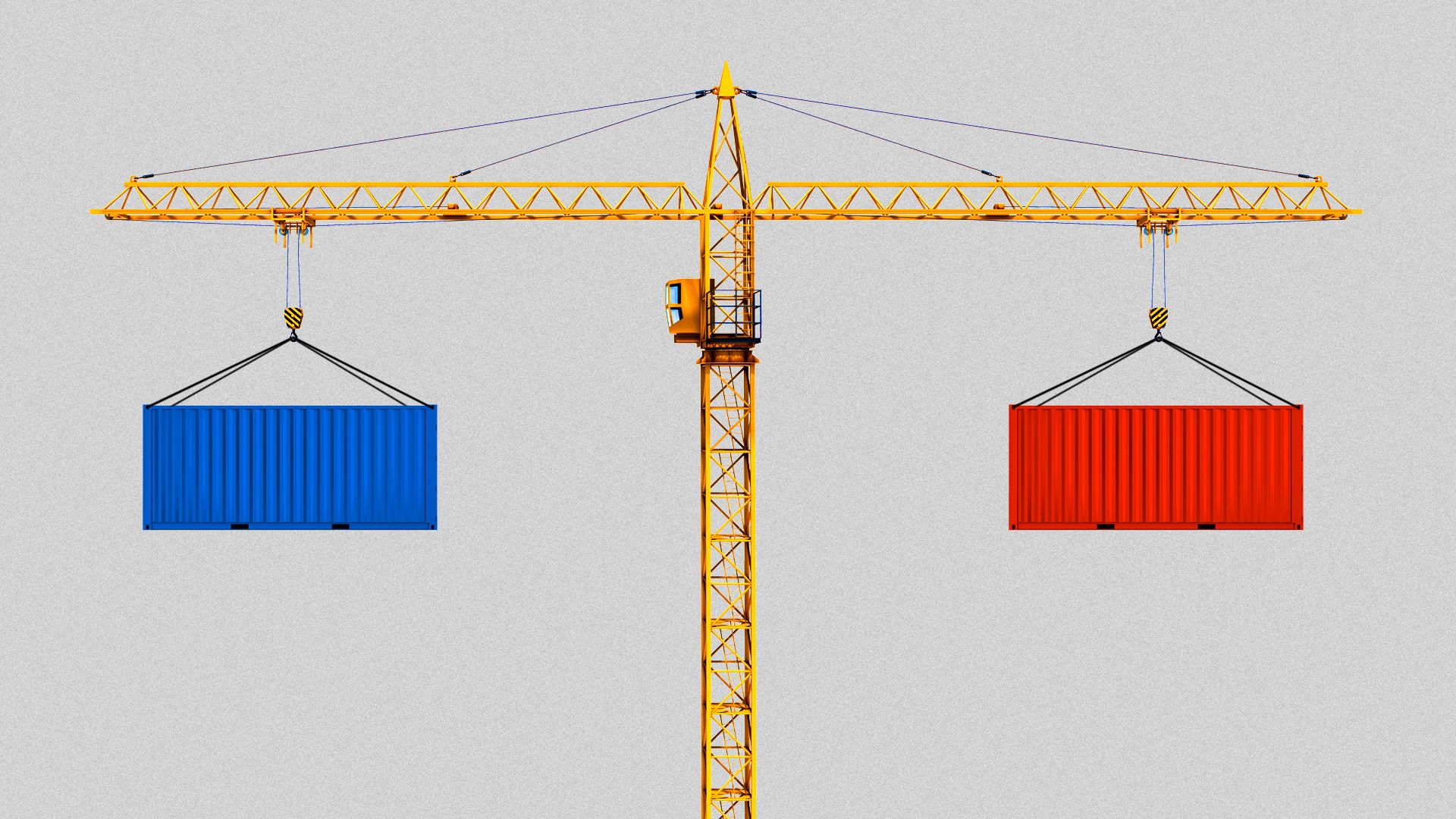
President Trump's hard-ball, America-First negotiating tactics may produce a new agreement on NAFTA as early as Friday, but history suggests he could be creating bad blood against the U.S. for years or longer.
The bottom line: Hard-ball is a negotiatingtactic with usually limited results — you win applause at home, but at the receiving end, no one is laughing. "Playing a game in which the other side looks like a loser makes potential partners less likely to subject themselves to the same fate," said Richard Fontaine, president of the Center for a New American Security.
In a series of tweets Wednesday, President Trump said there was "no reason at this time" to participate in joint "war games" with South Korea and Japan, maintaining that his relationship with Kim Jong-un is still "a very good and warm one."
Why it matters: Despite the administration's frustration with the denuclearization process with North Korea, Trump is standing by his decision to pull out of the military exercises, which he characterized as "provocative" in June. His tweets also clarify any confusion after Defense Secretary James Mattis suggested Tuesday that joint military exercises could be back on the table.
Russian President Vladimir Putin has softened his plan for pension reform in response to his falling approval rating and the threat of nationwide protests, reports the AP.
Why it matters: In a rare concession, Putin said the retirement age for women would be raised from 55 to 60, rather than 63 as originally planned. The televised speech in which he announced the partial change illustrates just how unpopular the reforms were, as Putin seldom explains his policy decisions to the public.
With the a deadline to impose further Russia sanctions looming, the Trump administration has reached out to the Kremlin in hopes of avoiding another tit-for-tat escalation with Moscow, the Washington Post's John Hudson reports.
What to watch: Secretary of State Mike Pompeo certified earlier this month that Russia had illegally used chemical weapons in the poisoning of Russian ex-double agent Sergei Skripal and his daughter in England. That triggered automatic sanctions under a 1991 law, and gave the administration three months to pick from a menu of further penalties, some of which could hit Russia hard. Pompeo has requested a meeting with Russian Foreign Minister Sergei Lavrov before that deadline, and Lavrov has accepted, per Hudson.
The British pound soared against the dollar on Wednesday after the EU's chief Brexit negotiator Michel Barnier suggested a post-Brexit partnership may be imminent, reports Reuters.
"We are prepared to offer a partnership with Britain such as has never been with any other third country."
— EU chief Brexit negotiator Michel Barnier
Why it matters: This appears to be a sign of optimism following weeks of speculation that the U.K. would crash out of the EU without a withdrawal treaty. The U.K.'s Brexit minister Dominic Raab also indicated Wednesday that Theresa May's Chequers proposal had elicited a positive reaction from EU member states, per Reuters.
The Iranian disinformation campaign uncovered by Facebook this month is much larger than previously thought, with a network of at least 10 sites and dozens of social media accounts known as the International Union of Virtual Media (IUVM) found to be part of the same operation, according to a Reuters investigation.
The big picture: The sites and social media accounts, which appear on Facebook, Instagram, Twitter and YouTube in 11 different languages, push content from Iranian state media while concealing the original source of information. The discovery continues to highlight efforts to influence American public opinion by foreign adversaries beyond Russia.
Among 18-29-year-olds, 49% view China favorably and 36% unfavorably (+13), compared to a 38%/47% (-9) split in the country as a whole, according to a new Pew survey.
Why it matters: Competition with China for supremacy in the economic, military and technological fields is ramping up, and could well define the decades to come. It’s therefore noteworthy, and a bit surprising, that young people are more likely to have positive views of the country.
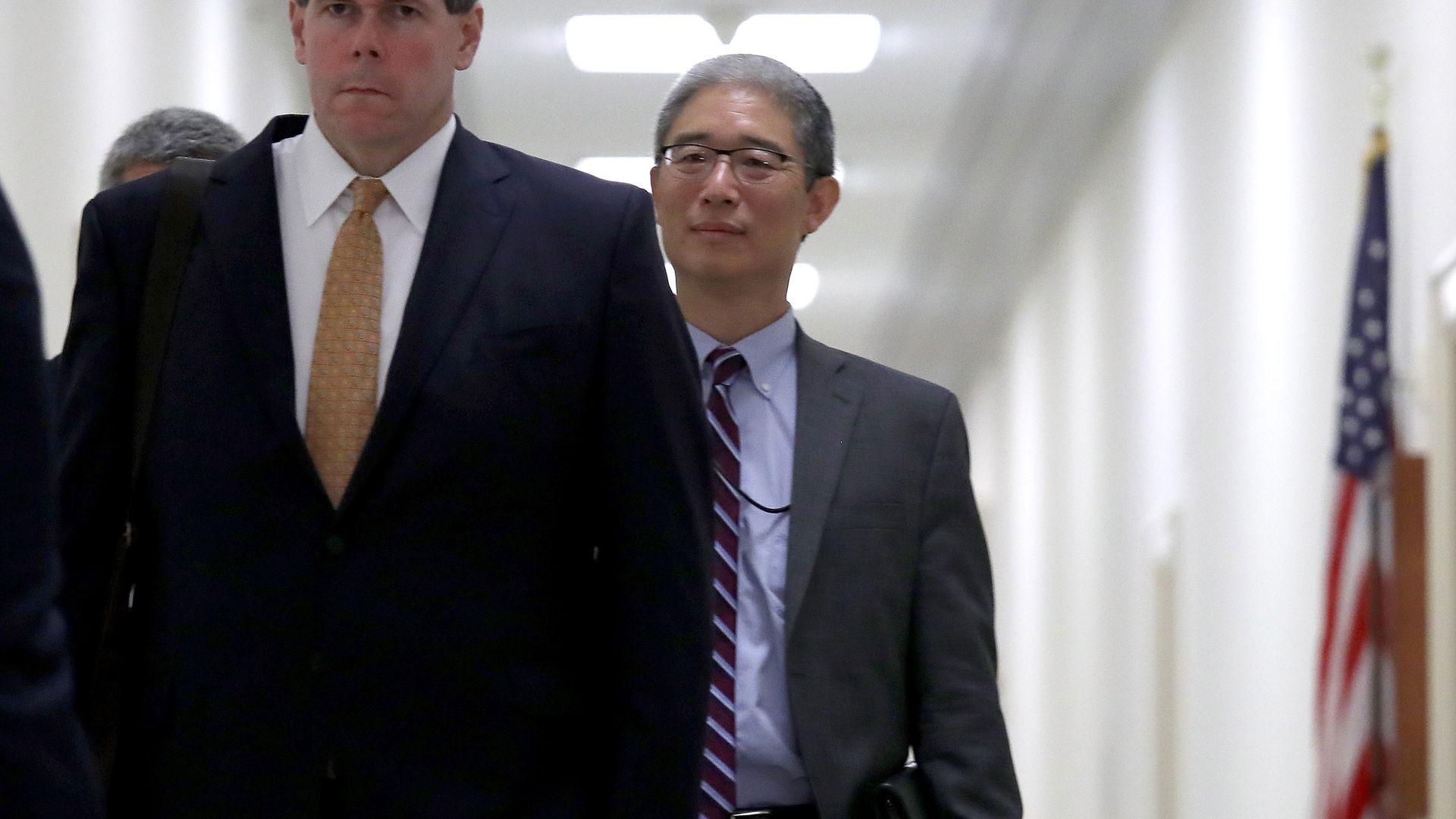
Career Justice Department official Bruce Ohr, who has drawn the ire of President Trump over his role in the Russia investigation, was questioned by Republican lawmakers Tuesday about his connections to the Steele dossier and Fusion GPS, reports Politico.
Why it matters: Ohr was an intermediary between former British spy Christopher Steele, whom he knew from his work targeting Russian organized crime, and the FBI, having helped pass along information to the Bureau in 2016 after they had terminated their relationship with Steele for speaking to the media. The GOP lawmakers who met with Ohr in today's closed-door session said his testimony raises more questions about the credibility of the dossier when the FBI applied for a surveillance warrant on Trump campaign adviser Carter Page.
Sen. Lindsey Graham (R-S.C.) said on NBC's "Today" that President Trump's relationship with Attorney General Jeff Sessions is "not working," stating that the issue is "much deeper" than Sessions' recusal from the Justice Department's Russia investigation.
Why it matters: Tensions between Trump and Sessions have escalated in recent weeks, reaching a new peak when Sessions hit back at the president in a statement that asserted that DOJ "will not be improperly influenced by political considerations."
The global esports economy will reach nearly $1 billion in 2018, according to NewZoo, a market intelligence and research firm that focuses on gaming, with a lot of that growth coming from two distinct areas: the U.S. and China.
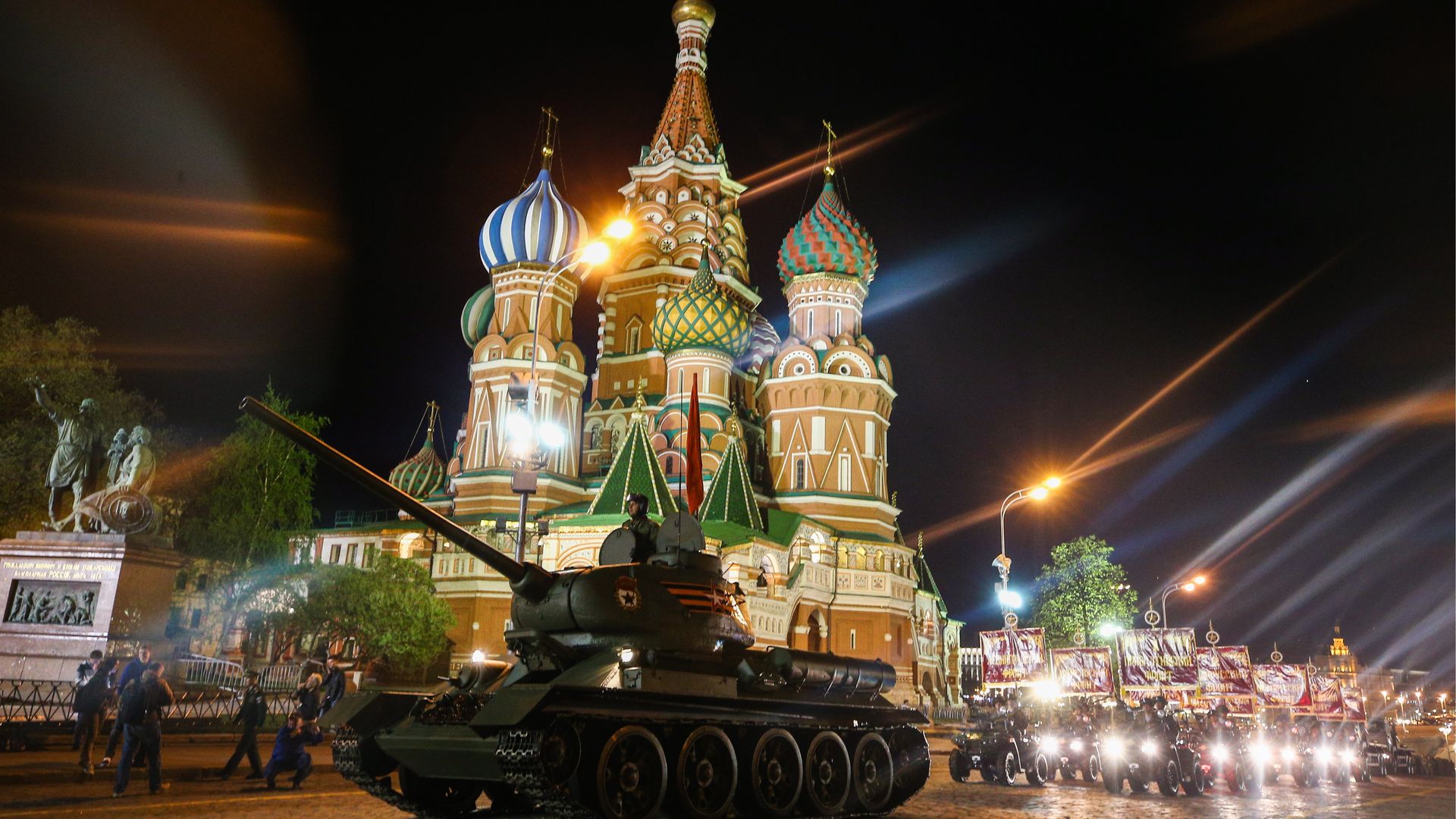
Russia will host massive military exercises from September 11 to 15 with nearly 300,000 troops, 1,000 military aircraft and two naval fleets, reports Reuters.
The big picture: The war games, which also include the Chinese and Mongolian armies, will be the largest since a Soviet military exercise in 1981 — with almost a third of Russia's troops expected to participate. Kremlin spokesman Dmitry Peskov said the exercises are a necessary response to "the current international situation, which is often quite aggressive and unfriendly to our country," per Bloomberg. NATO began to bolster its defense forces in eastern Europe after Russia annexed Crimea from Ukraine in 2014.