Wednesday's world stories

Trump's strategy on the Iran deal: force Iran to quit
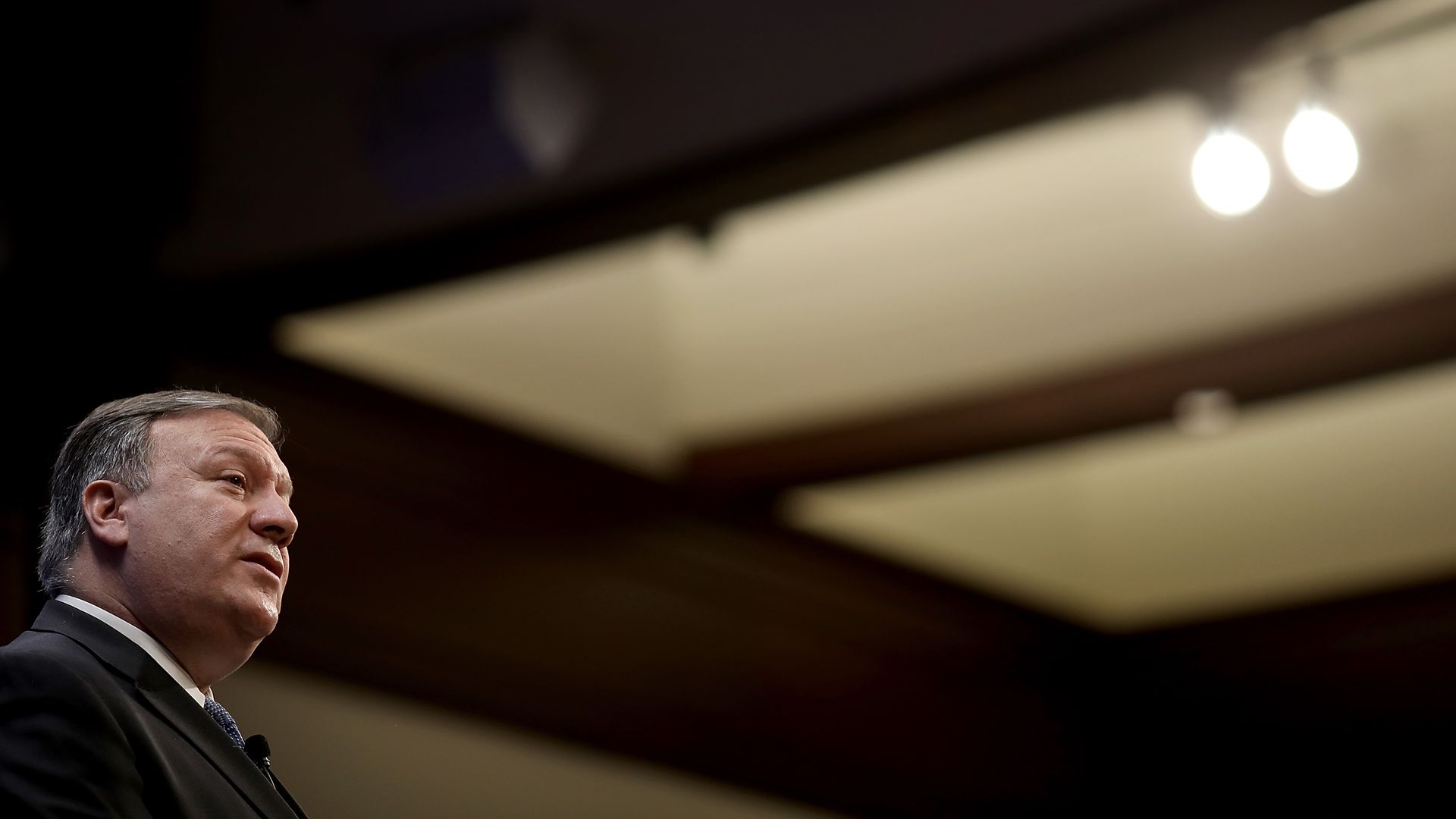
Since taking office, the Trump administration has been challenging Iran to break the terms of the nuclear deal by denying its full economic benefits and casting uncertainty over the reimposition of sanctions. Now that the U.S. has withdrawn unilaterally, Washington still appears to be counting on Iran's eventual withdrawal to apply a policy of maximum pressure on Tehran.
The big picture: Conversations with individuals familiar with administration thinking suggest that there's no real strategy for renegotiating the deal. Secretary of State Pompeo’s recent “Plan B” was a political mission impossible that Iran — absent radical regime change — could never accept. And so far, the maximum pressure strategy has met with resentment from the United States' European and Asian allies.

China's 'gale of creative destruction'

There is a new threat from Beijing, which is increasingly buying or reverse-engineering big tech breakthroughs and transforming them into cheap, commodity products, according to a Harvard professor.
Why it matters: Speaking at a conference in Dallas, Willy Shih, an economist at Harvard Business School, forecast "a gale of creative destruction," in which "whole [American] industries will be transformed, or may disappear."

Hamas announces ceasefire with Israel

Hamas said Wednesday it had reached a ceasefire agreement with Israel to end the biggest outbreak of violence between Palestinians and Israelis since the war in 2014, per the AP. While Israel has not officially recognized the ceasefire, the Gaza-Israel border has gone quiet for now, per Reuters.
Where things stand: Israel’s Cabinet minister Arieh Deri said he expected calm would be restored, and that it would halt strikes from its side if rocket fire stopped, per the AP. Israel said a renewal of attacks would bring an even stronger military response, per Reuters.

Netanyahu and Pompeo discuss possible Syria deal
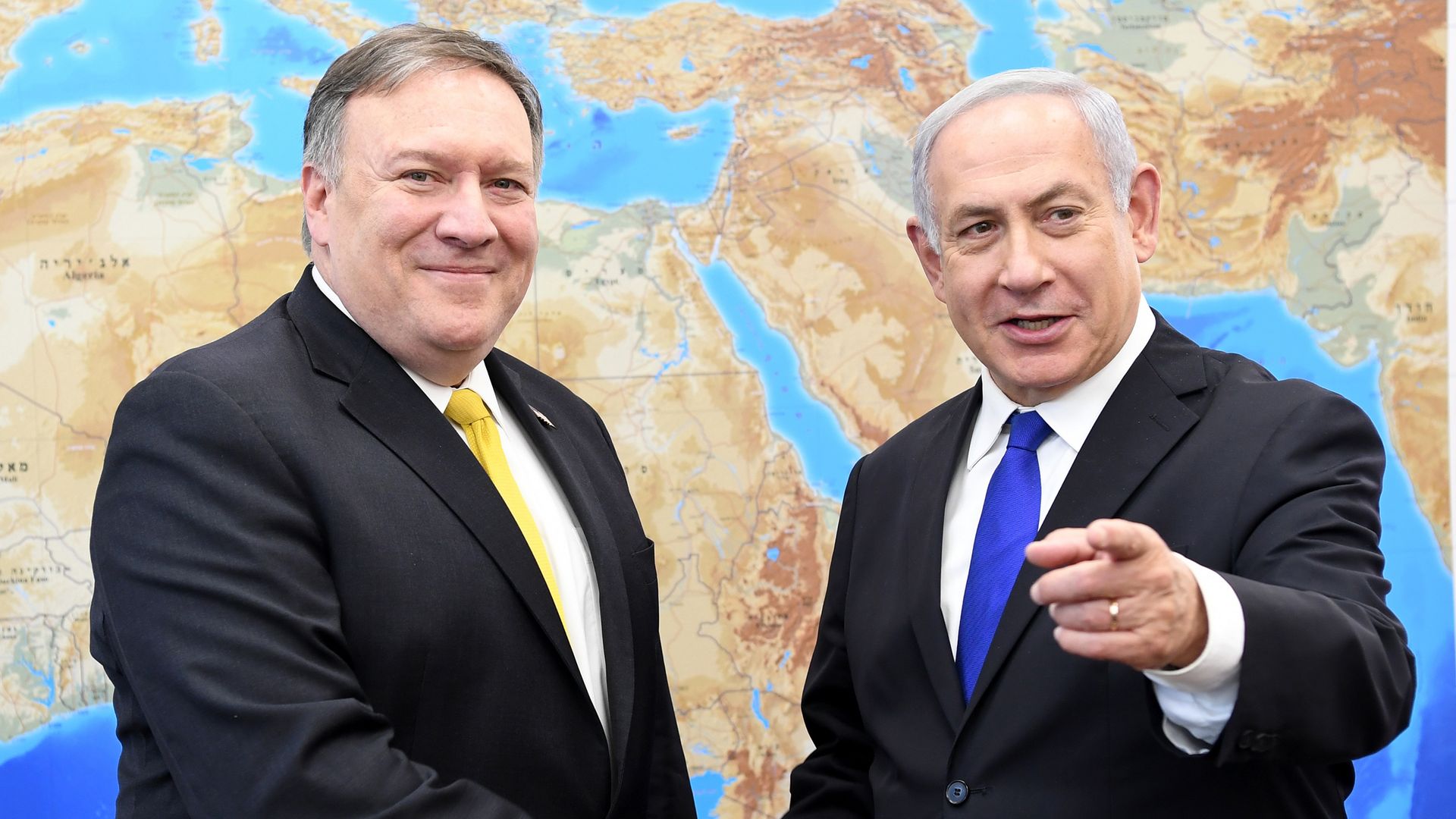
Israeli Prime Minister Benjamin Netanyahu spoke on the phone today with Secretary of State Mike Pompeo and presented him with Israel's demands and interests for any future deal between the U.S., Russia and Jordan in Southern Syria, an Israeli official tells me.
Why it matters: The Syrian army is about to start a military operation against rebels in Southern Syria near the Israeli and Jordanian borders, which would violate a ceasefire deal signed by the U.S., Russia and Jordan last July. The Russians want to update the deal because of the Syrian army operation. Israel, the U.S. and Jordan are open to the Russian proposal but want to make sure it will include a firm commitment from the Russians that Iranian forces, Hezbollah and Shia militias will not take part in the operation and will be completely removed from the areas close to the Israeli and Jordanian borders.
Russian journalist, reportedly killed, appears at news conference
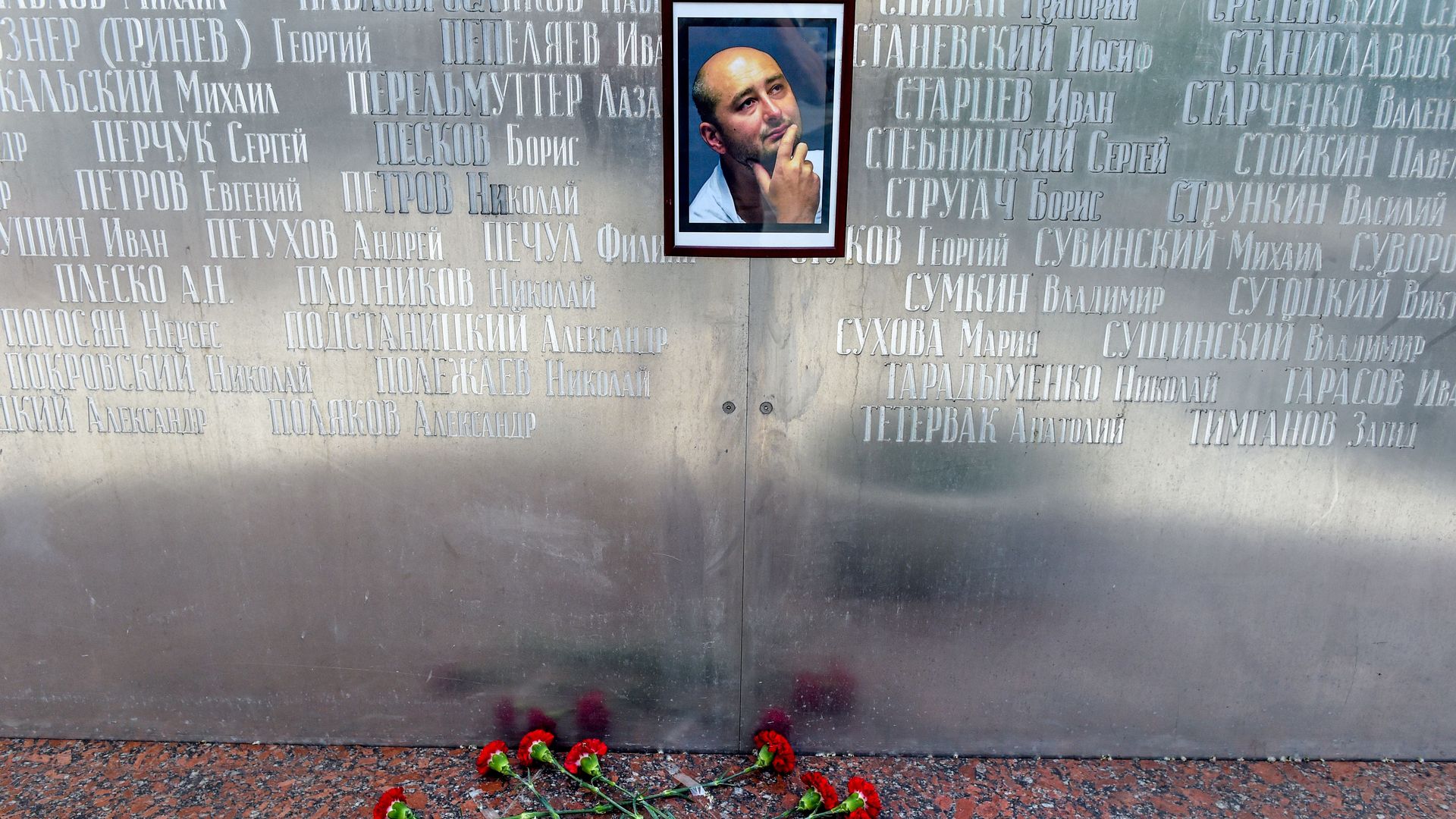
Arkady Babchenko, the prominent Russian journalist and Kremlin critic whose apparent assassination yesterday sparked an international outcry has appeared at a news conference today, the AP reports.
The backstory: Ukrainian authorities say the assassination reports were intended to "expose Russian agents," BBC's Joel Gunter reports. Per Meduza, Babchenko said at the news conference: "Special apologies to my wife. Olechka, I am sorry, but there were no options here. The operation took two months to prepare. I was told a month ago. As a result of the operation, one person has been captured, he is being held."

U.S. to limit visa terms for Chinese citizens
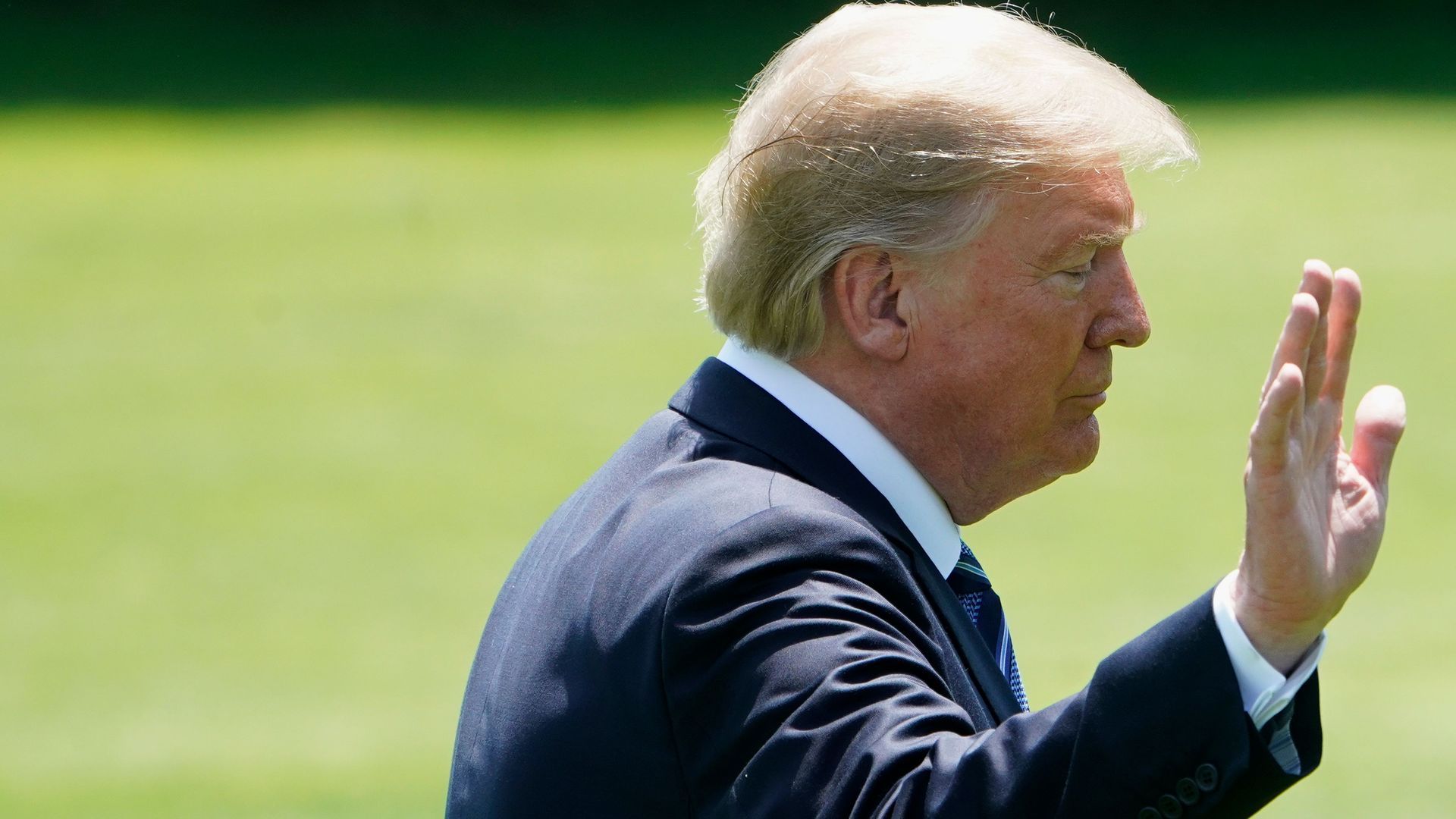
Coming this June, the U.S. State Department will begin to shorten "the length of validity" for Chinese citizens' visas, the AP reports.
The big picture: The process to apply for a visa won't change, per the AP, but instead of of issuing visas for the maximum time allowed, "U.S. consular offices may limit how long visas are valid." Chinese graduate students studying high-tech manufacturing, robotics, or aviation will have one-year visas, while other Chinese citizens will have to get clearances from "multiple U.S. agencies" if they are employed by various companies listed by the U.S. Commerce Department.
Go deeper: The disappearing Chinese student visa

CIA report: North Korea won't denuclearize
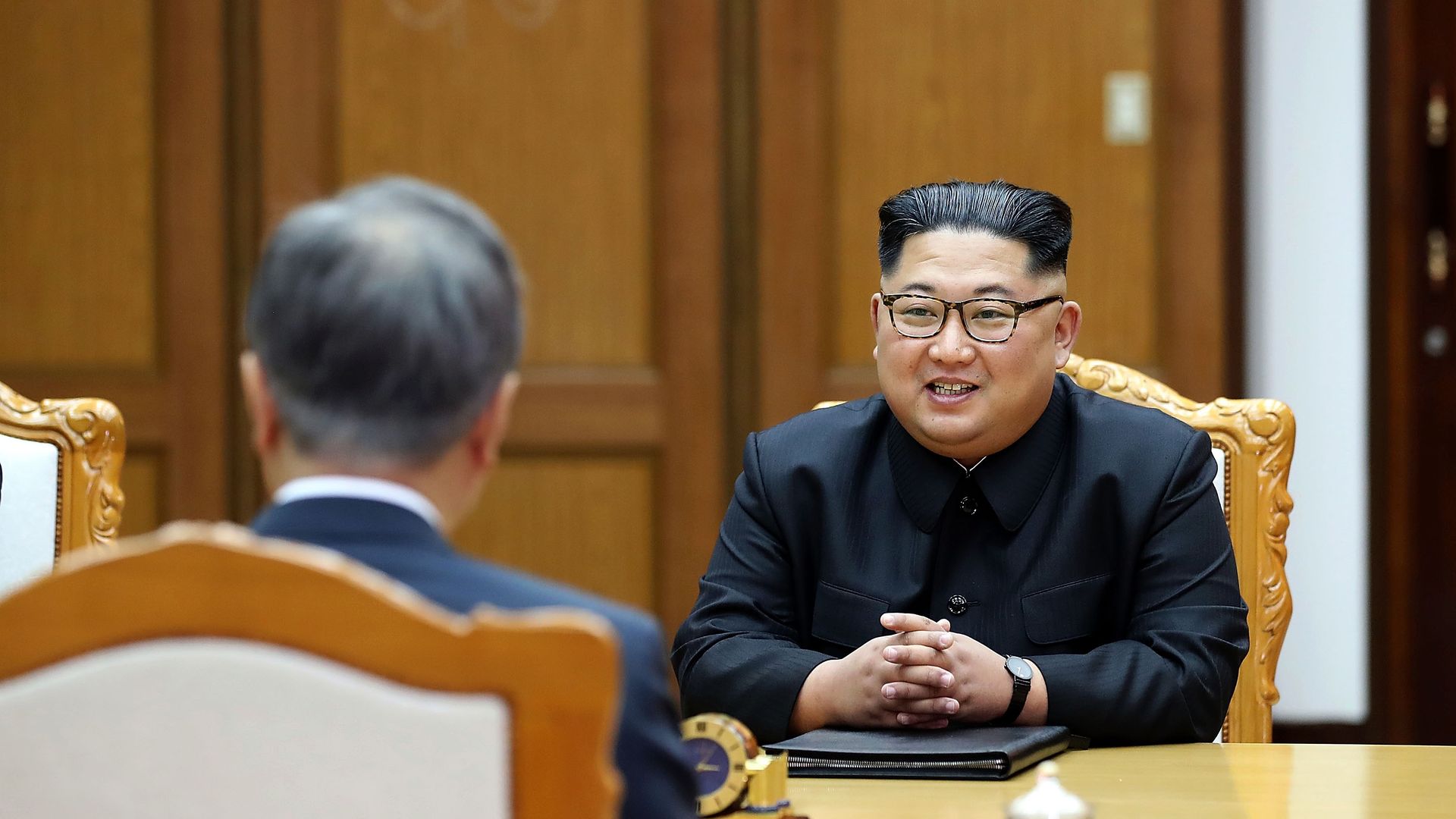
A CIA assessment has found that North Korea doesn't intend to denuclearize, NBC News reports, a finding in line with what many independent experts have said but in sharp contrast to President Trump's recent statements.
The details: The report says one intermediate option would be North Korea scaling back its recent nuclear advancements. "Potential concessions by North Korea ... included the possibility that Kim Jong-un may consider offering to open a Western hamburger franchise in Pyongyang," per NBC. As for carrots the U.S. can offer, the report mentions infrastructure and agricultural aid. North Korea is an intelligence black hole for the U.S., though, so "this is essentially some very smart analysts offering their very best guesses," an intelligence official told NBC.

U.S. attributes malware to North Korea
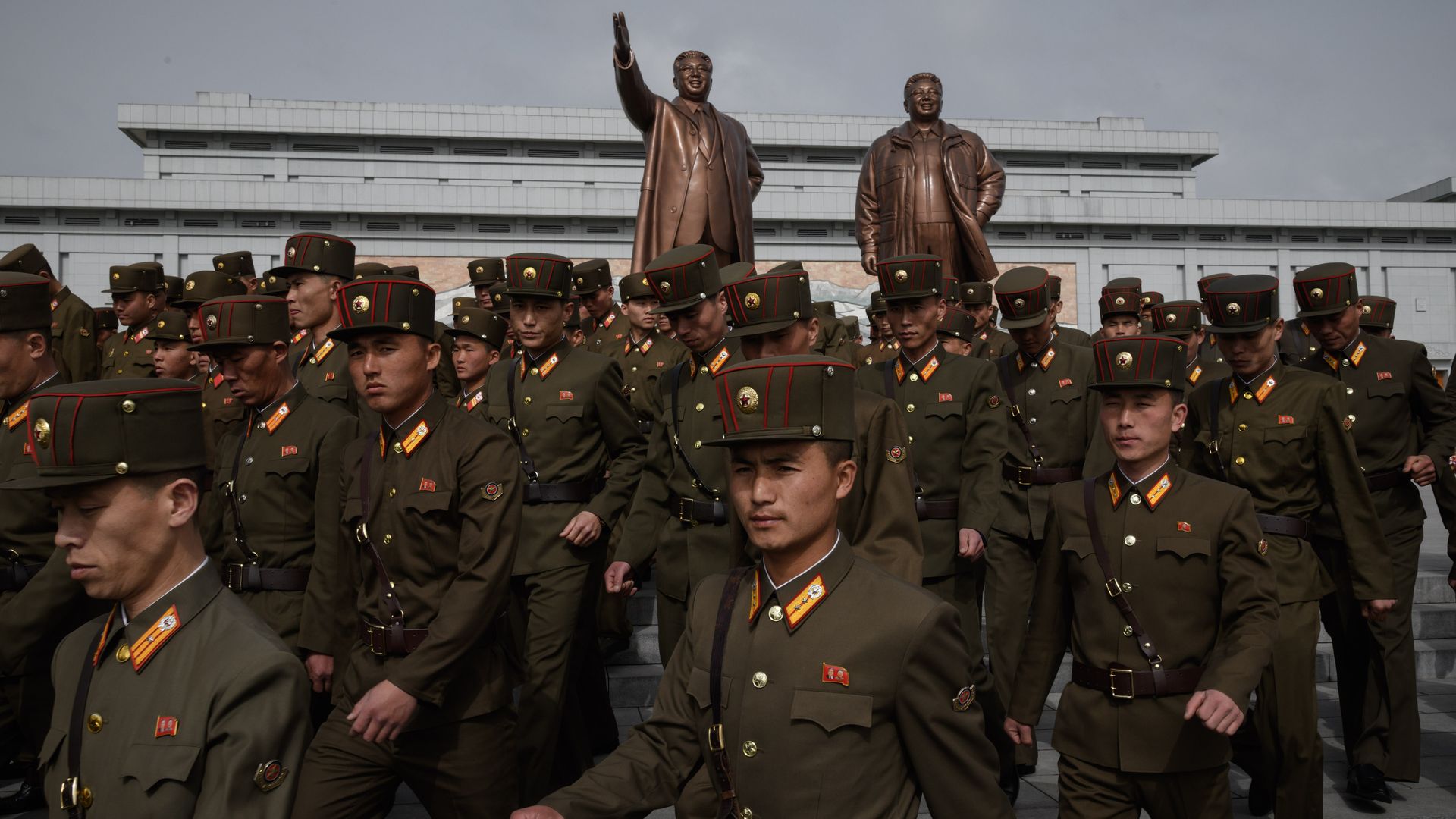
The Homeland Security Department's Computer Emergency Readiness Team warned industry stakeholders about two types of malware Tuesday. The warning attributed the Joanap and Brambul malware to the North Korean government.
Why it matters: It is uncommon for the U.S. to make any public attribution for a cyberattack. Generally, that only happens when there is both definitive evidence for the attack and a strategic reason to name who was responsible for it. While the potential strategic aspects of the attribution may raise some eyebrows — it comes out as a former North Korean official travels to New York to meet with the administration — there may be a more mundane explanation.
Update: Russian journalist reportedly shot dead is alive
UPDATE: Arkady Babchenko is alive and appeared at a news conference on Wednesday. He says his death was faked to "expose Russian agents."
Economic coercion unlikely to stop Pakistan from backing militants

Earlier this year, the Trump administration suspended most security assistance, including Coalition Support Funds (CSF), to Pakistan and led the charge to place the country on an international terrorism-financing watchlist, beginning next month.
Why it matters: The ineffectiveness of U.S. sanctions after Pakistan’s 1998 nuclear tests — coupled with China’s emergence as Pakistan’s financial benefactor — suggests coercive measures are unlikely to compel Pakistan's army to cease backing militant networks that target U.S. forces in Afghanistan.
White House expects North Korea summit to happen after all
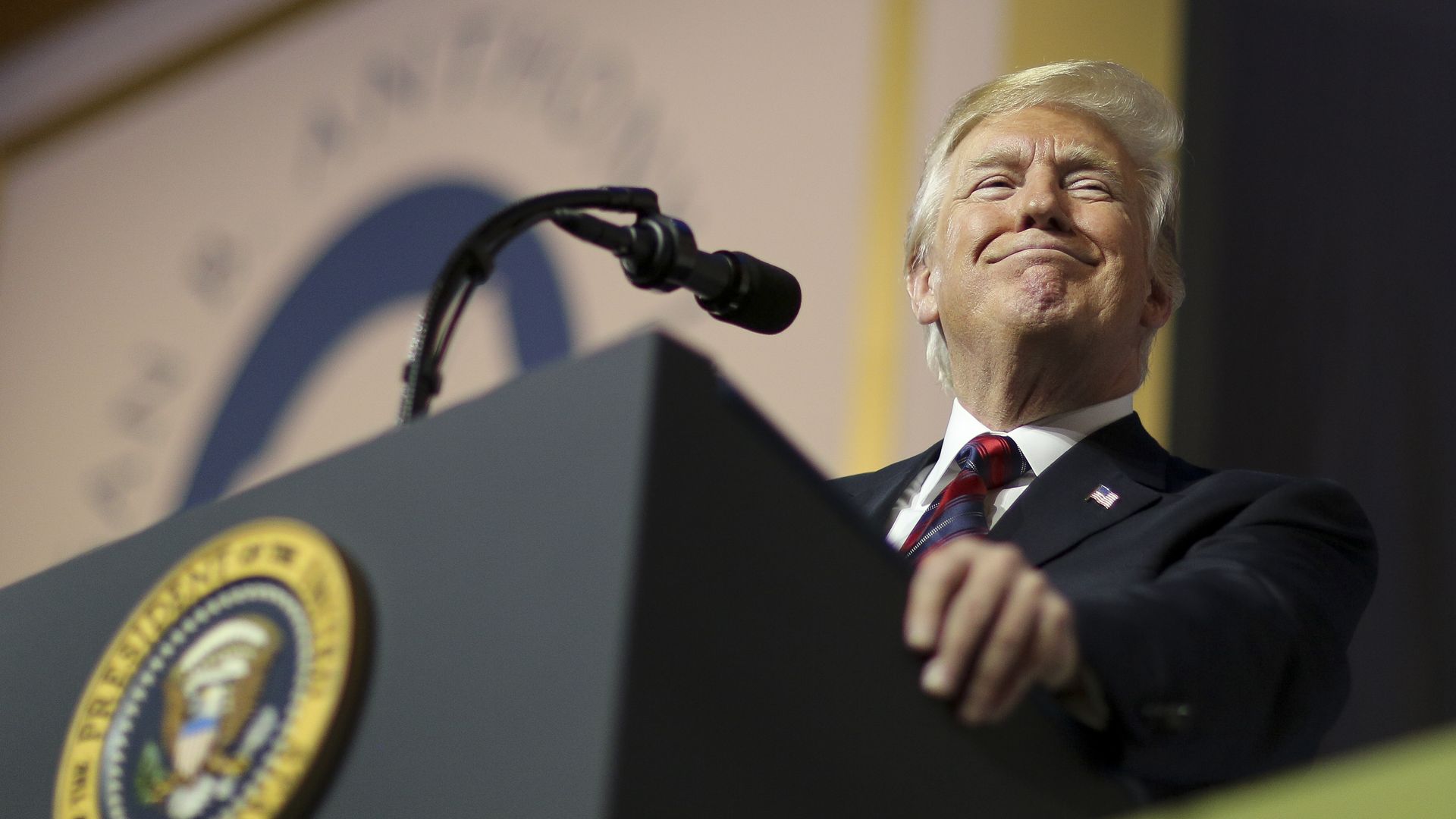
The White House believes that next month's summit between President Trump and North Korean Kim Jong-un in Singapore is still happening. A statement from Press Secretary Sarah Sanders confirmed that the administration "continues to actively prepare" for the meeting after North Korean officials "have been engaging" after Trump's letter last week effectively cancelling it.
What's happening: The statement also confirms that Secretary of State Mike Pompeo will meet with Kim Yong-chol, the vice chairman of North Korea's Central Committee, in New York this week. Additionally, in the days before his Singapore meeting with Kim, Trump will host Japanese Prime Minister Shinzo Abe at the White House on June 7.
Israeli jets bomb Gaza after wave of rocket attacks
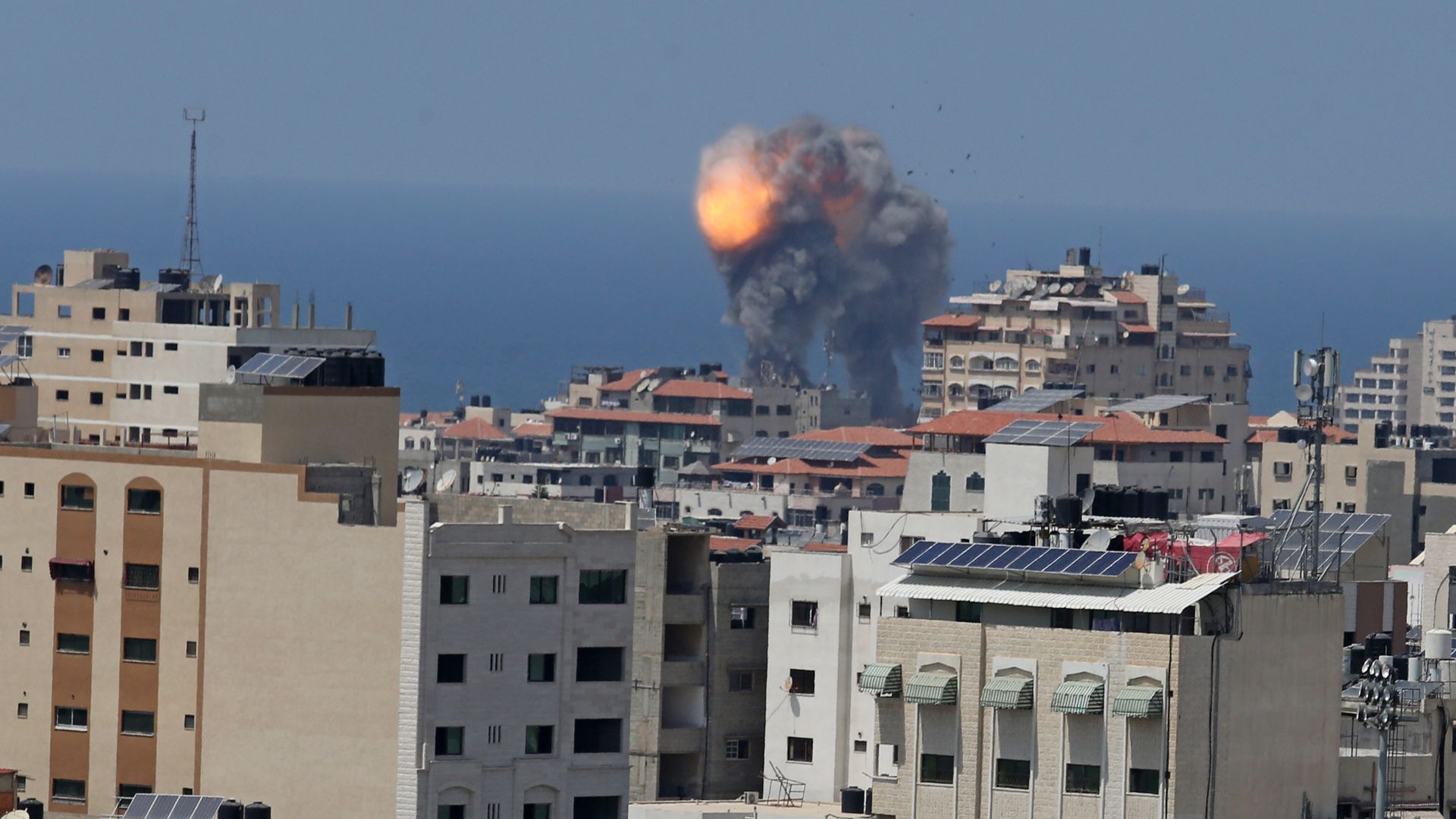
Israel launched airstrikes on militant bases in Gaza after a wave of rocket attacks from the strip hit southern Israel. At least 27 mortar shells were fired from Gaza, the biggest attack on Israel since the 2014 war with Hamas.
The bottom line: Tensions between Israel and Palestinian groups have reached new heights after Israeli troops killed 110 Palestinians during protests at the Gaza border. There were no reports on injuries in Gaza after the Israeli airstrike. No Palestinian group claimed responsibility for the mortar attacks, most of which were intercepted by the Israeli defense system. Jason Greenblatt, President Trump's special envoy for Middle East peace, called the mortar attacks "reprehensible" and blamed Hamas.
Trump confirms top North Korean official headed to U.S.
President Trump again expressed optimism surrounding the potential for a summit with North Korean leader Kim Jong-un in a Tuesday morning tweet, confirming that top North Korean official Kim Yong-Chol was on his way to the United States.
Go deeper: Trump's "great man" play on North Korea.