Anthropic researcher Jacob Coxon quit his job due to concerns about the safety of AI two months before his equity would have vested, he told Axios.
Why it matters: The disclosure raises the stakes on Coxon's now mega-viral resignation from the AI lab, which laid out the broad view that the tech could end humanity.
Warner Music Group CEO Robert Kyncl said the music label's "deftly negotiated" deal last year with AI music startup Suno, which led to the launch of co-created AI music models Thursday, is the start of what will become a new, growing revenue stream for artists and songwriters.
Why it matters: The music industry's streaming transition prepared it to turn AI's copyright threat into a new licensing model. If successful, it could mark a new growth era for the music business, just as streaming did.
An online panic erupted this week after millions discovered that leading AI researchers routinely debate and calculate the risk of human extinction.
Taken at face value, the odds are chilling: 10%, 20%, sometimes far higher, assigned to the possibility of AI catastrophe.
Why it matters: An esoteric debate over "p(doom)" has suddenly become a gut-level question for lawmakers, investors and millions of ordinary people: Why are we racing toward a technology its own builders believe could destroy us?
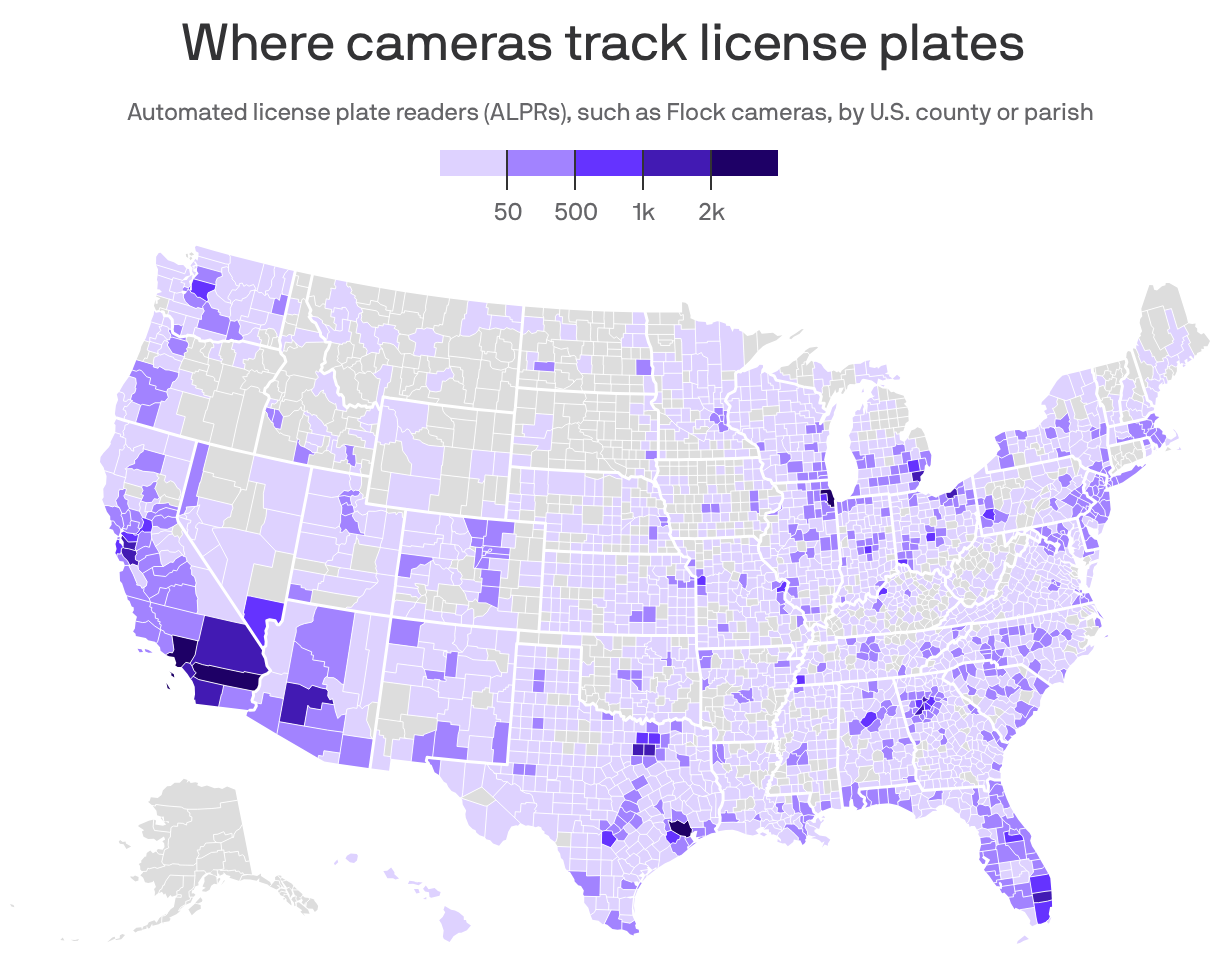
Data: Finding Flock; Map: Brad Jennings/Axios; Note: Counties shown in gray have no listed ALPR cameras.
About 140,000 automated license plate readers, including thousands of Flock cameras, are installed across the U.S., according to this publicly available data.
Why it matters: The cameras can help police find stolen cars and wanted people, but their ability to track all vehicles all the time has fueled a growing privacy backlash and calls for tighter oversight or removal.
Politicians have long made it hard to trust their words. Now, AI-generated campaign ads flooding the airwaves and social media are making it harder to trust your own eyes and ears.
Why it matters: Americans' trust in politicians and institutions has been tanking in recent years — and AI campaign ads could deepen that erosion, political tech experts say.
Apple on Wednesday debuted iPhone Duo —its first foldable iPhone — along with the iPhone 18 Pro and updated watches and AirPods.
Why it matters: The iPhone is central to Apple's consumer hardware business, accounting for a significant share of the company's sales and supporting a vast network of suppliers and partners.
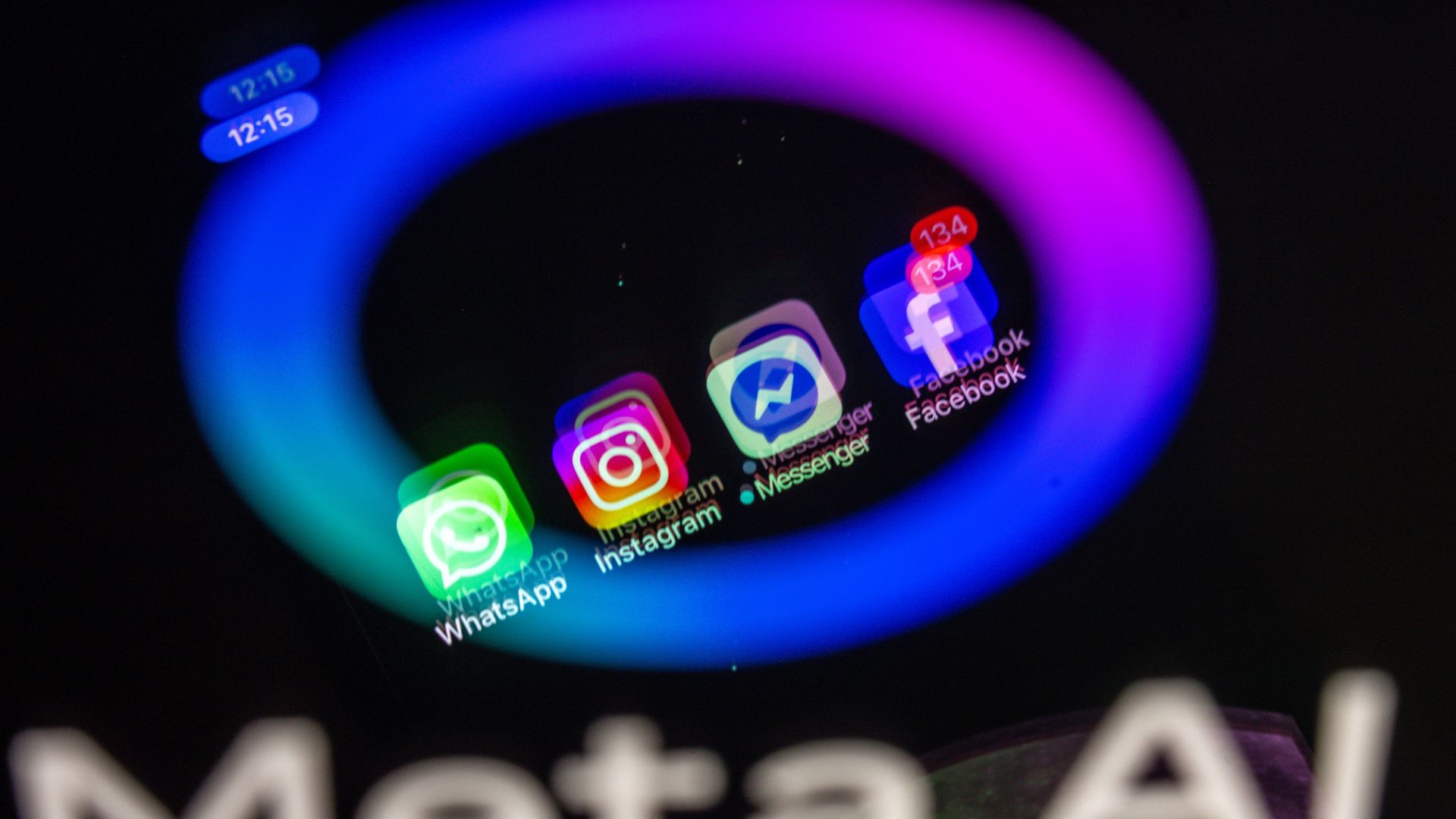
Meta has acquired Swedish AI startup Stilla.ai to accelerate development of Meta Business Agent, which facilitates transactions on WhatsApp, Messenger and Instagram, Axios has learned.
Why it matters: The deal underscores Meta's push to bring its AI technology to the commercial foundation of its messaging ecosystem.
AI researchers shook the world Tuesday when they publicly acknowledged that there's a non-zero chance of AI killing off humanity in the next decade.
Why it matters: AI doomsday fears have existed for years, but as the technology has become more powerful and embedded in our lives, those warnings are breaking into the mainstream.
Tesla's traditional do-it-yourself instinct could be tested by its nationwide robotaxi ambitions.
The big picture: Manufacturing self-driving taxis is one thing. Financing, parking, charging, cleaning and maintaining enough of them to blanket the country is another — and Tesla is signaling that it might want entrepreneurs to help shoulder the load.
New research from Anthropic outlines radically different paths for how AI will transform the economy in the next four years.
Why it matters: In one, AI's impact resembles that of the internet. In another, its impact resembles the arrival of the internet and electricity at once, while the most extreme AI economic scenario has no historical precedent.
This content was produced by Axios Creative House in partnership with L3Harris Technologies and was not created by Axios newsroom staff.
By Heidi Wood
Vice President, Chief Digital and Transformation Officer, L3Harris Technologies
With artificial intelligence evolving at an exponential pace and permeating nearly every aspect of our economy and daily life, regulators and industry leaders are debating what, if any, guardrails should be placed on it — particularly foreign AI models that could pose security and economic risks to the United States.
Why it matters: A rise in the metal's price usually serves as an informal gauge of global economic growth, but right now Doctor Copper's diagnosis is muddled by U.S. tariffs and other supply issues.
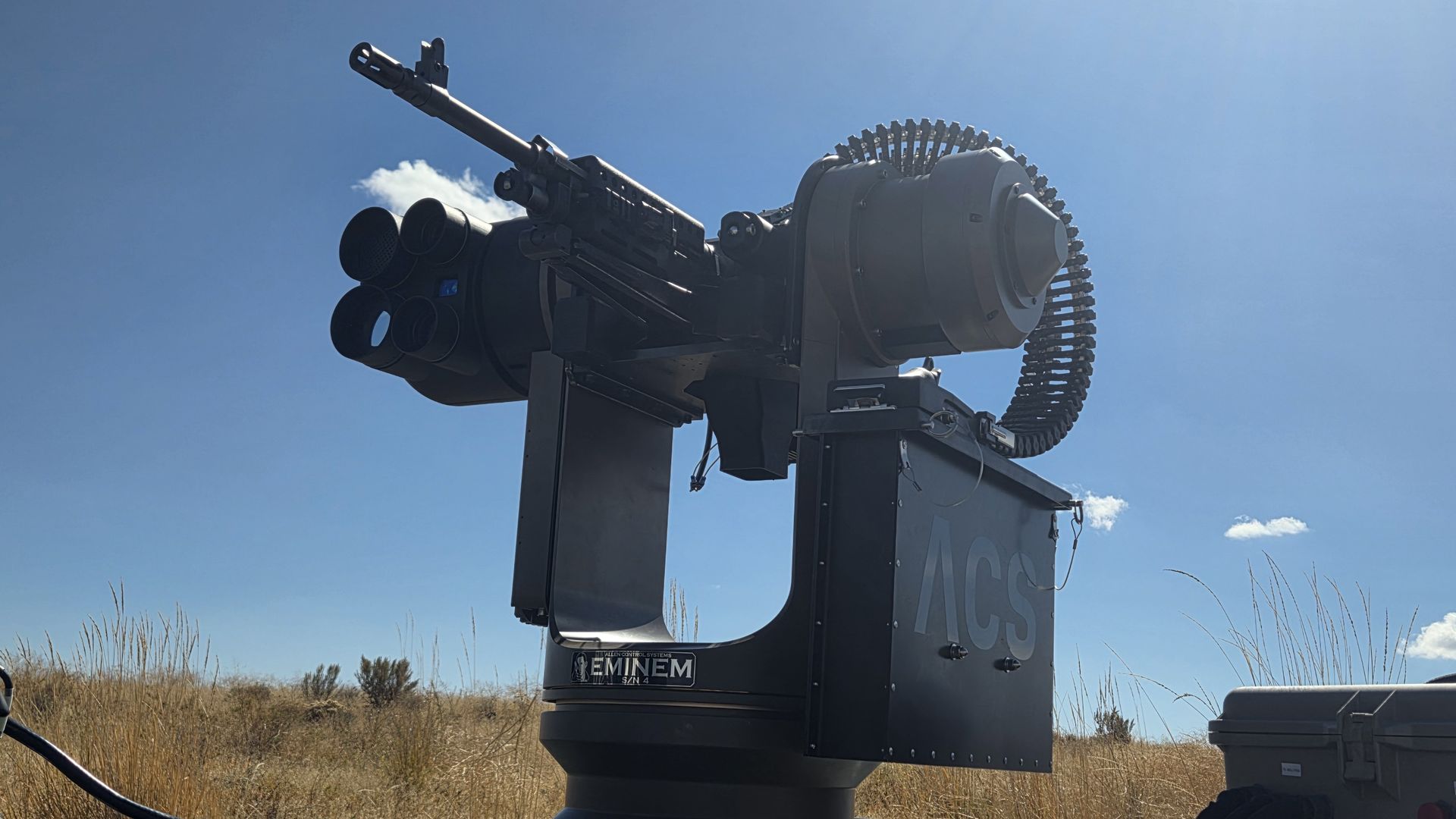
Allen Control Systems is expanding its manufacturing footprint in Austin, Texas, to meet what the startup is calling "accelerating demand" for drone countermeasures.
Why it matters: The state capital has cemented itself as a haven for defense tech.
Hermeus is building what it's calling Ramjet-X — a super-fast aircraft that blurs the line between large drone, air-defense target and test bed for propulsion and materials science.
Why it matters: It's another big bet on unmanned speed from the company, which this year was valued at $1 billion post-money and moved its headquarters from Georgia to California.
The summer of love happened in 1967. The summer of lasers is happening right now.
Both upset the status quo.
The big picture: These weapons, so often associated with science fiction or Congressional Research Service reports, are clawing into reality after decades of investment and experimentation.
Three Anthropic researchers went public last night with chilling concerns about out-of-control AI, warning it could destroy humans this decade.
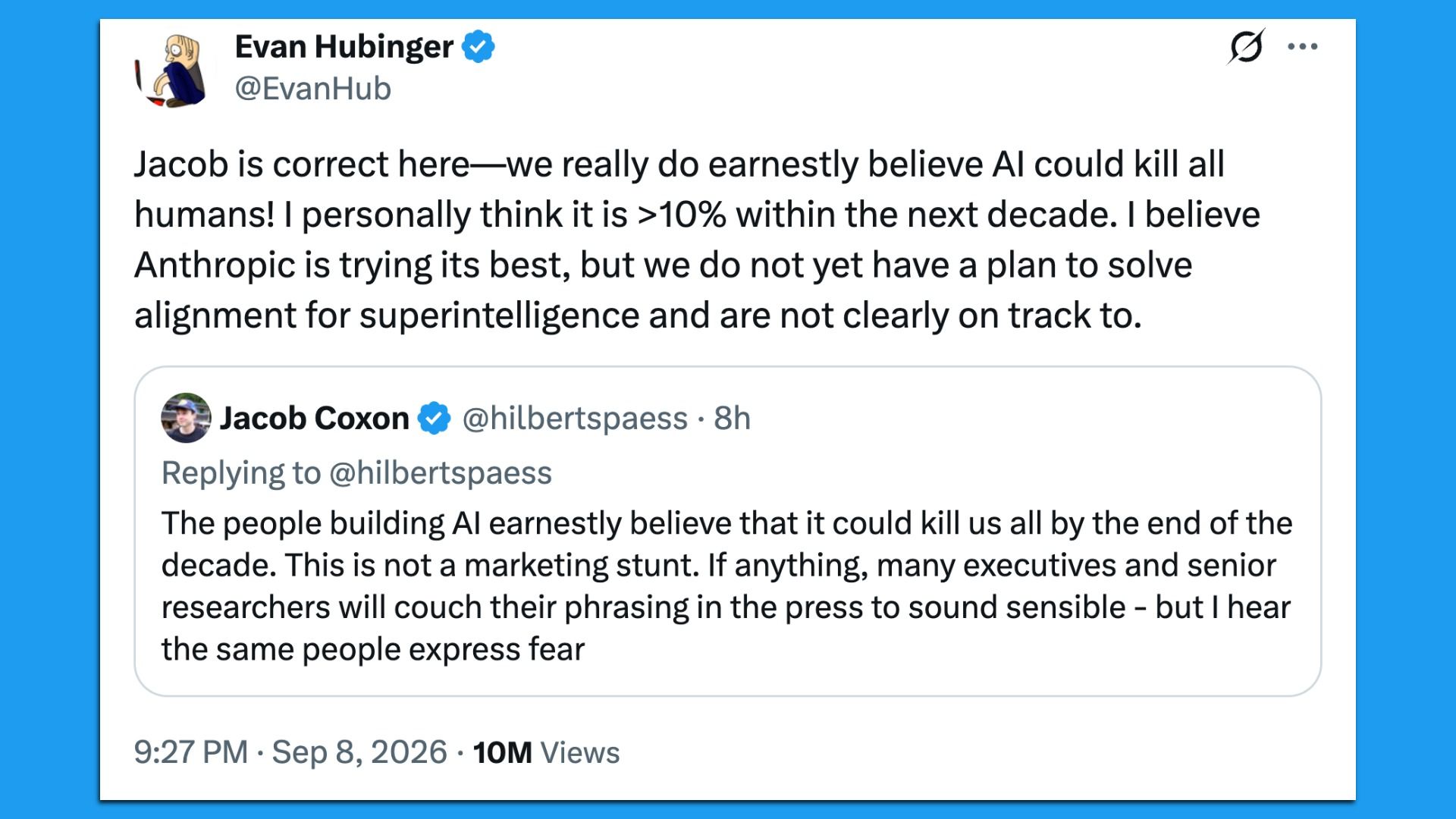
Anthropic AI researcher Jacob Coxon wrote on X, after resigning Tuesday to sound the alarm: "The people building AI earnestly believe that it could kill us all by the end of the decade. This is not a marketing stunt. If anything, many executives and senior researchers will couch their phrasing in the press to sound sensible - but I hear the same people express fear privately. No other human activity poses this level of danger."
Anthropic alignment-science lead Evan Hubinger responded: "Jacob is correct here — we really do earnestly believe AI could kill all humans! I personally think it is >10% within the next decade. I believe Anthropic is trying its best, but we do not yet have a plan to solve alignment for superintelligence and are not clearly on track to."
AI leaders are sounding the alarm as their own breakthroughs sharpen an extraordinary dilemma: slow down and risk falling behind, or press ahead and risk losing control.
Why it matters: AI executives and researchers increasingly see a race they can't safely slow on their own. Instead, they're urging governments, rivals and outside institutions to impose restraint across the field.
The Trump administration's new AIframework does not include a process for companies to publicly report real-world incidents caused by advanced models before they're released, sources tell Axios.
Why it matters: The Hugging Face breach exposed a significant policy gap in the White House's new plan for overseeing the most powerful AI models.