Nvidia projected 70% revenue growth in its next fiscal year, sending its stock up in after-hours trading, while the company defended its decision to provide capital solutions to its customers.
Why it matters: The stock is widely considered a bellwether for the health of the broader AI economy, but lately it has been trailing the broader semiconductor sector in market gains.
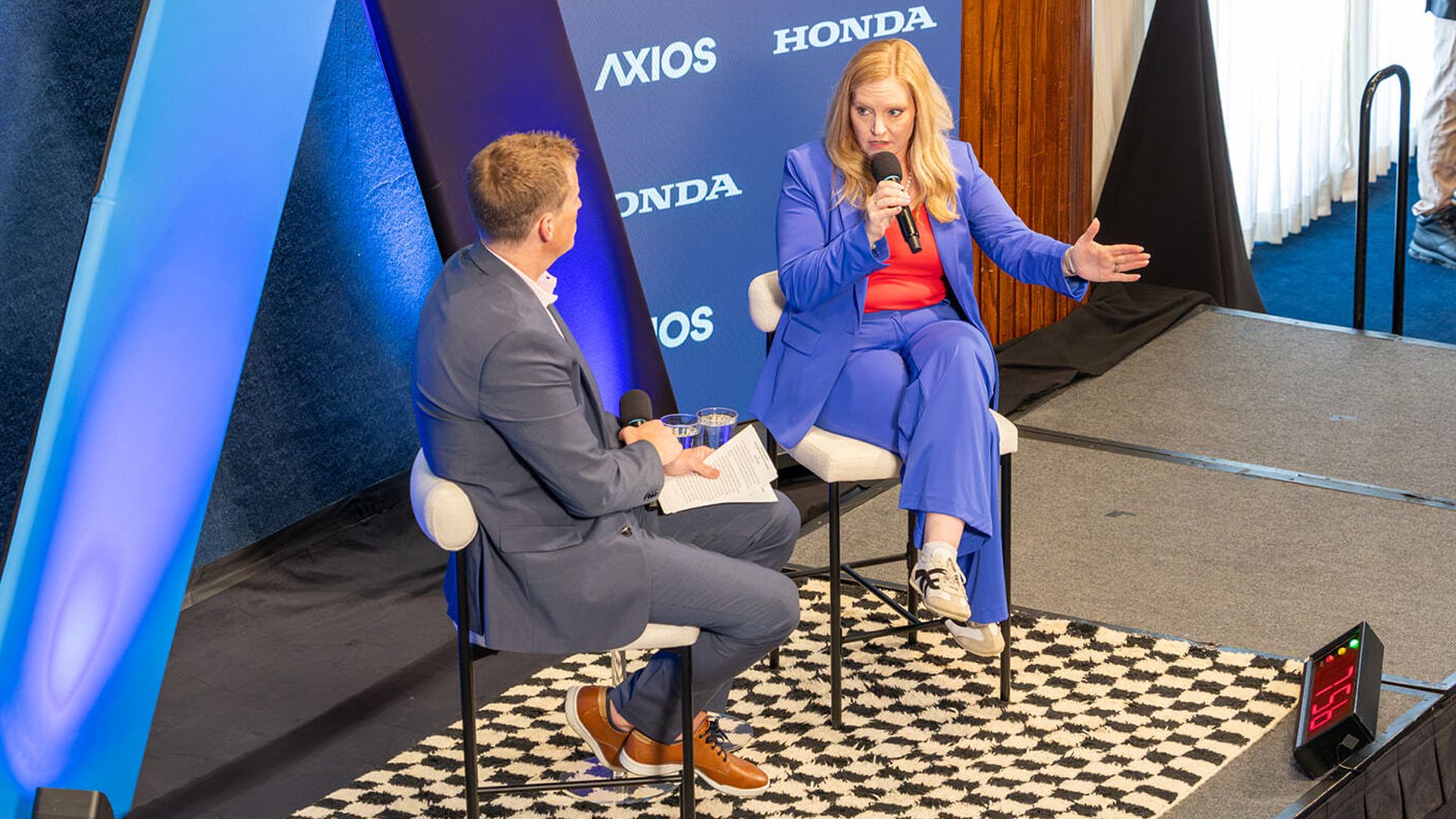
WASHINGTON — The SELF DRIVE Act could accelerate the expansion of driverless cars by providing a needed national regulatory framework, Rep. Erin Houchin (R-Ind.) said at an Axios Live event.
Why it matters: Autonomous vehicles could be a key part of the future of transportation, but the U.S. can't fully realize their potential — or compete globally — without consistent safety and design standards across state lines.
Axios' Nathan Bomey spoke with Houchin, Indianapolis Motor Speedway and IndyCar president Doug Boles, and Consumer Technology Association president and CEO Kinsey Fabrizio. The Aug. 22 event was sponsored by Honda.
The public and private sector are lining up to support emerging technologies.
What they're saying: "The roadway doesn't stop at the state line," said Houchin, who co-sponsored the bill.
This "requires a federal framework because of interstate commerce issues," she added.
The patchwork of state policies is "challenging. It's costly. It's confusing," Fabrizio said.
"Companies need to know what [the rules] are, so that they can develop their products and their services around them," Fabrizio added.
Zoom in: The SELF DRIVE Act prioritizes safety standards, sets national thresholds for testing and deploying autonomous vehicles and addresses cybersecurity concerns. However, it leaves licensing and registration to the states.
If the bill doesn't pass by December, "we're going to bring it right back up again in the 120th Congress," Houchin said.
Meanwhile, Boles sees great potential for emerging technologies in car racing.
"I see those becoming tools that help inform drivers of what's going on, help them make smarter decisions," he said.
Content from the sponsor's segment:
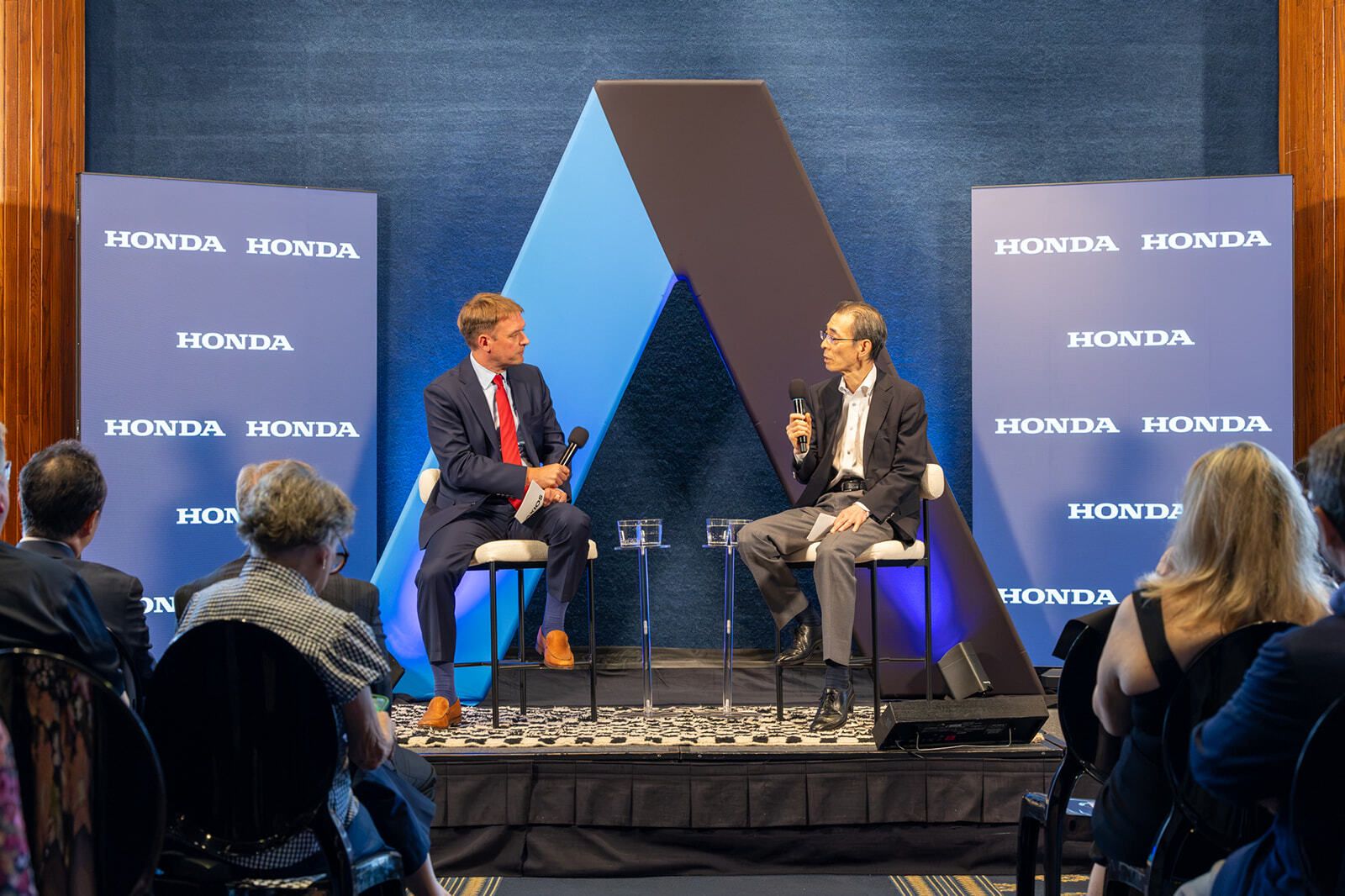
Axios publisher Nicholas Johnston (left) and Honda EVP Noriya Kaihara. Photo: Lord Made for Axios
In a View From the Top conversation, Honda executive vice president Noriya Kaihara highlighted the company's decades of investment in the U.S.
"We build the product here in America because our policy is that [we] manufacture where there is the demand. So that means: build the products where the customers are … and now we have 12 plants in America."
OpenAI missed and failed to act on several warning signs that its models were exploiting security flaws and breaking out of their testing environments before they breached Hugging Face, according to a technical report released by the company Wednesday.
Why it matters: The incident raises questions about whether AI companies' testing environments and internal safeguards can keep pace with models that are increasingly capable of finding and exploiting security weaknesses on their own.
Breakthroughs in AI are fueling hopes that more data and smarter models can provide a shortcut to self-driving vehicles. Waymo, after more than 15 years and 200 million driverless miles, says there is none.
Why it matters: The answer could determine whether the AV race is a long, expensive slog that rewards Waymo's head start — or a new track that lets newer rivals hit the road faster.
Meta's landmark settlement over claims its products harmed children underscores years of congressional deadlock over kids' online safety legislation.
Why it matters: The settlement will force Meta to make changes to its products and pay billions after Congressrepeatedlyfailed to pass federal rules to protect children online.
The drone-delivery race is taking off, setting up a real-world test of which flying machines people will tolerate buzzing around their neighborhoods.
Why it matters: Amazon, Wing and Zipline are taking dramatically different engineering approaches to drone delivery — differences that will determine how much they can carry, where they can put your package and, perhaps most importantly, how much you'll hear them.
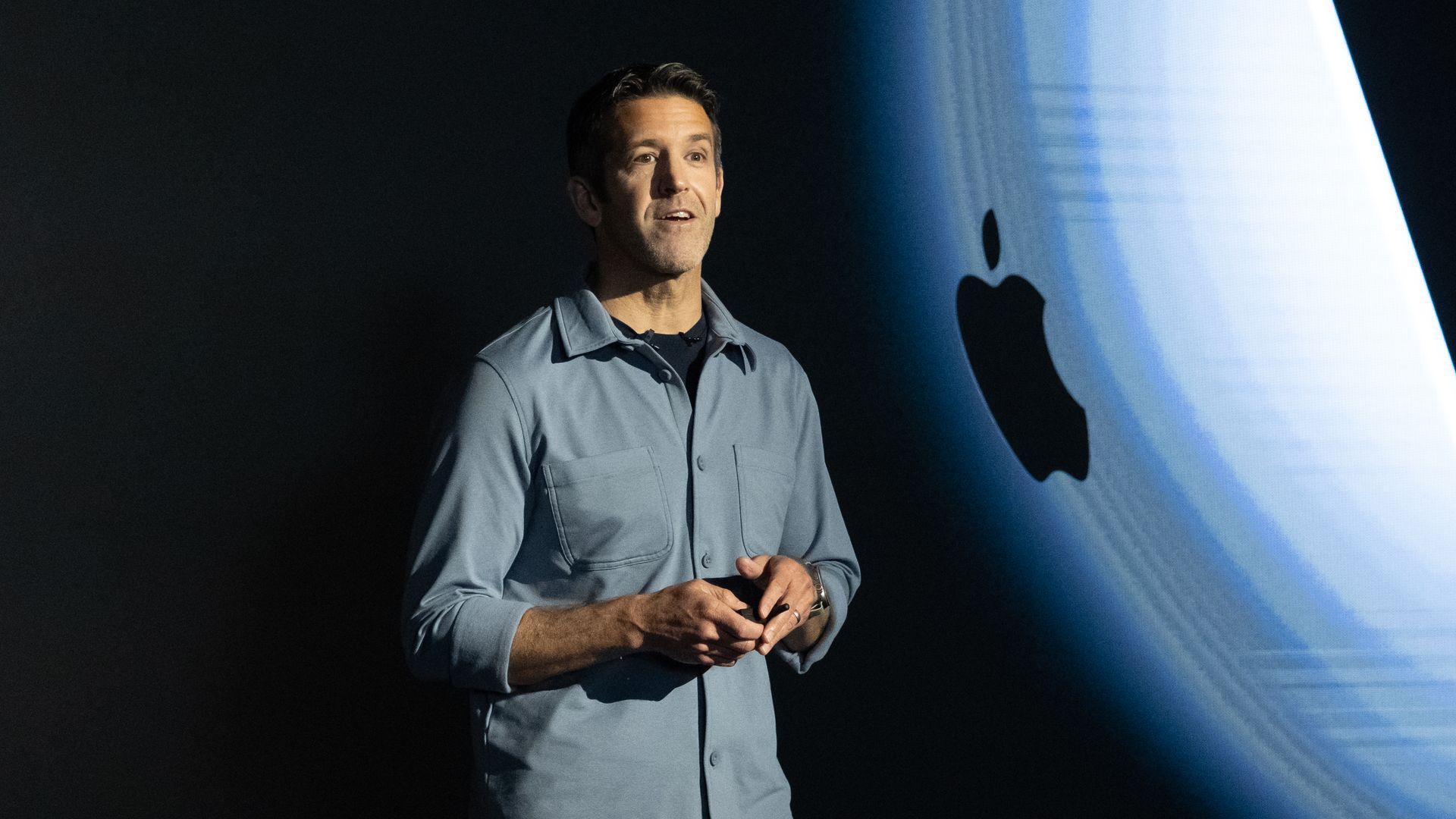
Apple on Wednesday sent invitations for a Sept. 9 event where the company is expected to unveil its first foldable iPhone and other new products.
Why it matters: The launch would push Apple into a smartphone category it has resisted, as rivals have experimented with folding screens — and give incoming CEO John Ternus an immediate opportunity to put his stamp on the company's most important product.
The Trump administration has struck data-sharing deals with major technology firms to help track how AI is affecting jobs and hiring, acting Labor Secretary Keith Sonderling told Axios.
Why it matters: AI could reshape the labor market faster than traditional government statistics can capture it. That could make it difficult for economic policymakers to see major shifts in jobs and hiring in real time.
The chair of a key Senate Judiciary subcommittee is launching an investigation into Flock Safety's "collection, retention, and dissemination of the data" from its AI-powered surveillance cameras, Axios has learned.
Why it matters: The probe represents the highest level of backlash to date towards Flock cameras, which have rapidly evolved from the target of local governments and activists to a major national political issue.
Meta agreed to settle with U.S. states for up to $16.7 billion in a landmark deal over allegations Facebook and Instagram were designed in ways that harm children.
The company is calling on its peers to sign on to the pact as well, saying it won't work unless they jointly line up behind broad reform.
Why it matters: This is social media's version of the landmark 1990s tobacco settlement, a settlement that effectively reshapes the industry and the way young Americans experience some of their favorite platforms.
Google is launching new tools to help businesses control their AI bills, as the tech giant sees an opening to compete on one of the biggest obstacles to widespread corporate AI adoption: cost.
The big picture: Google sees a second AI market opening up around offering cheaper and more governable access to AI, while insisting it's still competing on frontier model offerings.
Nvidia snapped a seven-day losing streak in the stock market on Tuesday, but its mini slump in August has called attention to questions over the AI darling's growth trajectory.
Why it matters: Nvidia is trying to use its massive pile of capital to keep the good times rolling — through a wide assortment of investments and capital deals — while continuing to feed the growing chip needs of the AI hyperscalers.
Rolls-Royce will this week mark the completion of a $1 billion investment in Indiana, where the company has expanded and renovated its manufacturing, assembly and test facilities.
The big picture: The overhaul competitively positions Rolls-Royce amid wartime-production messaging from the Pentagon and a growing portfolio of projects, including propulsion for the Army's MV-75, the Air Force's B-52J and the Navy's MQ-25A.
"If you go back to 2014, we knew that we were at an inflection point. We had aging facilities, some dating back to World War II," Adam Riddle, president of Rolls-Royce Defense, told Axios.
FORT BRAGG, North Carolina — The scrubby, scorching-hot hills of Range 63 bustled last week with soldiers and contractors. Some nursed cans of Monster. Some rocked sunglasses and sun shirts. Some handled shotgun magazines.
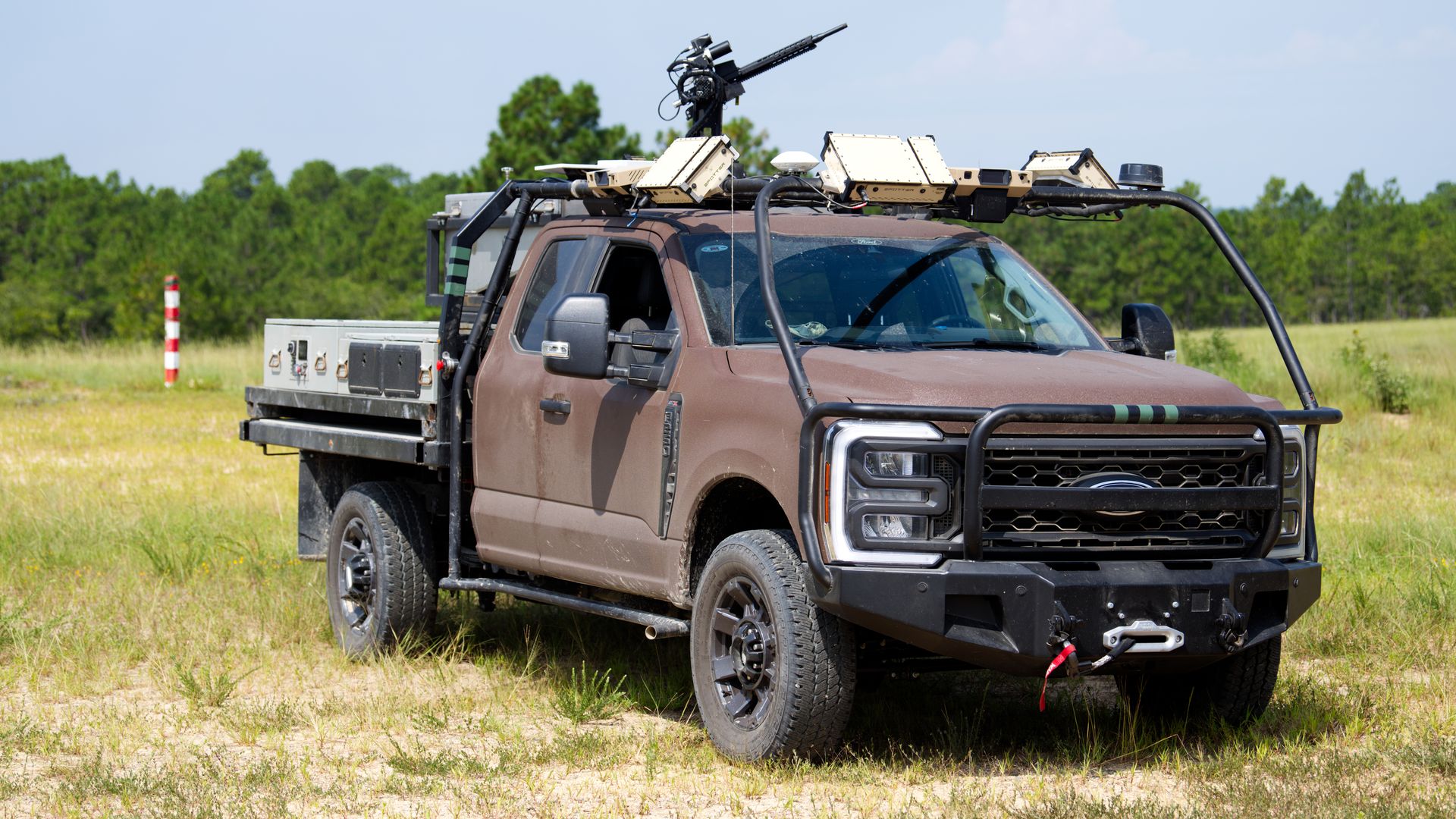
A futuristic Ford F-250 was posted at one end of the range. Atop sat a 12-gauge turret, dubbed Edda, that shredded two targets as they flew overhead. A small shipping container labeled "Bee Hive" was parked at the other end. It brimmed with Bumblebee V2 drones, which zipped toward the horizon one after the other.
In the middle, a crew with Safe Pro AI pored over aerial imagery and algorithms to identify hidden mines. And somewhere farther off, another F-250 finessed a slurry line charge into place. Its detonation, seen and felt, hurled into the air smoke and dust.
The big picture: This hourslong jam session was part of Sandhills 2.0, an ongoing experiment meant to remove U.S. troops from some of the bloodiest battlefield tasks, like breaching.
Legendary investor Stanley Druckenmiller made AI writing seem like no big deal this week, telling NOTUS reporter Jeff Stein "of course" he used it to help draft a widely shared op-ed for the Wall Street Journal.
Why it matters: The moment could mark a real cultural shift where AI writing is basically all good, at least among a certain set of influential elites.
Bill Gates says governments may eventually need to do something that runs counter to centuries of technological progress: deliberately stop machines from replacing people in some jobs.
Why it matters: Gates expects AI to eventually outperform humans at such a wide range of work that simply retraining displaced employees won't be enough.
Bill Gates, long one of technology's leading optimists, is sounding a strikingly sober warning about artificial intelligence: The technology is advancing faster than governments and society are preparing for its consequences.
Why it matters: In a new memo out Wednesday, Gates argues AI will be more consequential than virtually any previous technological change — disrupting white- and blue-collar jobs, introducing unprecedented cyber and biological risks and potentially creating systems humans struggle to control.
Bill Gates tells Axios his association with Jeffrey Epstein was a "huge mistake" but hopes it won't prevent him from influencing debates over artificial intelligence and global health.
Why it matters: Gates is launching one of his strongest public interventions yet on the societal risks posed by AI at a moment when renewed scrutiny of his past association with Epstein threatens to overshadow his message.