U.S. paves road for vehicles with no steering wheel

Add Axios as your preferred source to
see more of our stories on Google.
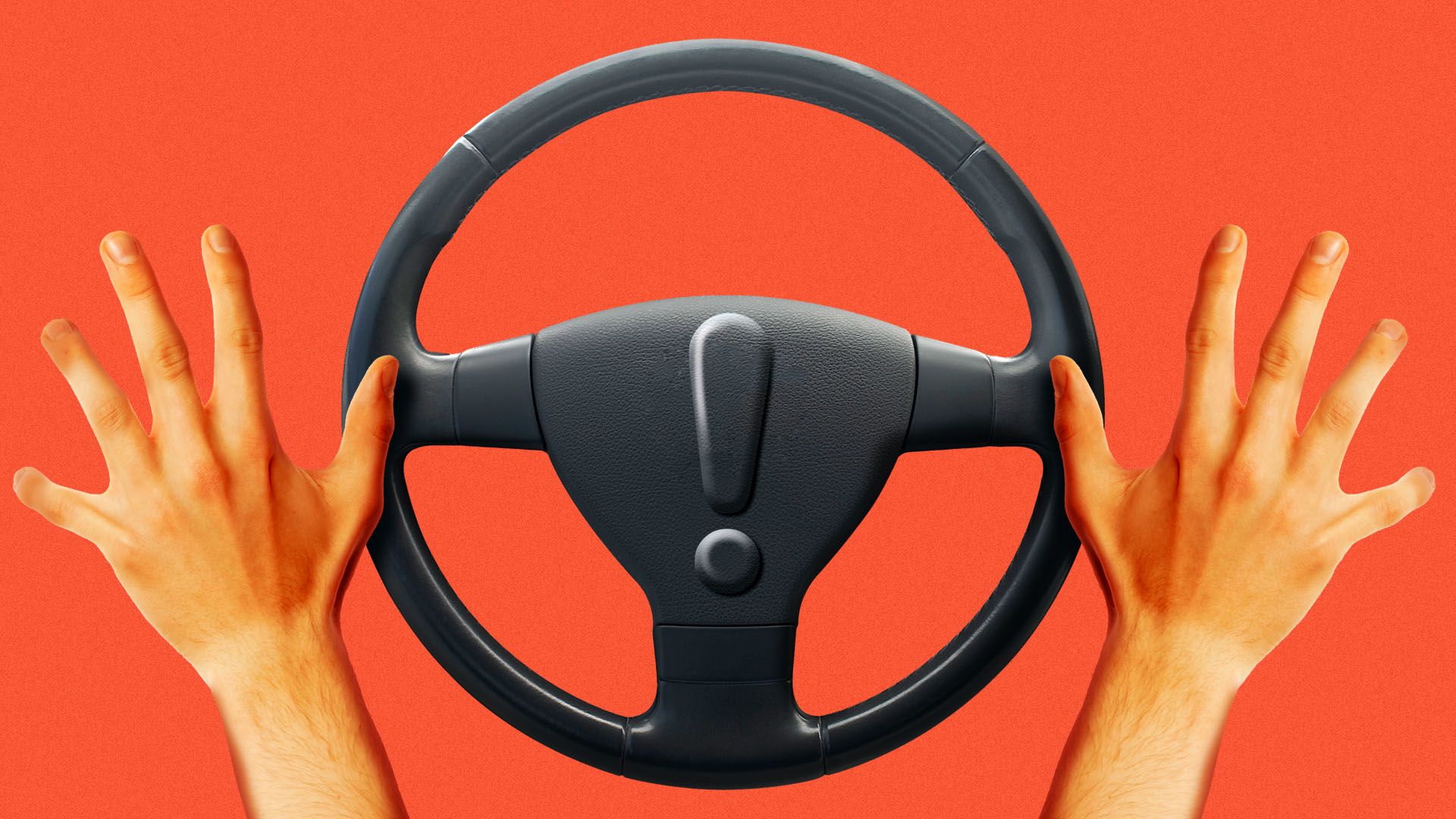
Illustration: Sarah Grillo/Axios
The federal government is trying to clear a regulatory path for new types of vehicles that drive themselves and don't have a steering wheel or pedals.
Why it matters: Fully automated robotaxis don't need driver controls, but the law still requires them. Updating federal standards could determine who leads the global race in autonomous vehicle technology.
- "We are in a race, right? Everyone is trying to have the best technology that will be deployed around the world," Transportation Secretary Sean Duffy told stakeholders at an AV safety forum in Washington, D.C., last week.
- "I want the technology to be developed in America, I want the jobs in America, and I want the rest of the world to use American technology," he said, emphasizing his concern that Chinese AVs could take over the world.
- "This is a national security issue. This is an economic issue. This is a safety issue."
Catch up quick: Robotaxis currently deployed on U.S. roads are based on conventional vehicles outfitted with self-driving technology.
- They operate under a patchwork of state laws, with minimal federal guidance.
- Efforts to pass federal AV legislation have been stalled for nearly a decade.
Driving the news: Despite the lack of federal legislation, the National Highway Traffic Safety Administration just announced several policy actions to try to advance AV technology in other ways.
- It's fast-tracking its review of a petition by Amazon-owned Zoox to deploy up to 2,500 purpose-built robotaxis with no steering wheels.
- NHTSA also wants to toss out motor vehicle standards that don't apply much to AVs, starting with requirements for windshield wipers, defrosters and defoggers.
- "You might want those, they might be nice, right?" said Duffy. "But do I need them if I don't have a driver?"
Between the lines: Getting rid of human-centric requirements would speed commercialization of robotaxis by allowing companies to focus on innovation and the latest technologies, instead of spending time and money on features not needed in an AV.
Also coming this year is new safety guidance for AV developers — the first major update to safety recommendations since NHTSA published its AV 2.0 guidelines in 2017.
- "A great deal has changed since then, and we know a lot more about technology and safety related to AVs," NHTSA Administrator Jonathan Morrison said at the AV Safety Forum.
- "Just as AV 2.0 helped set a baseline for companies, communities, law enforcement, and safety experts to work from for the last eight years, we expect the next set of guidance to shape the industry's approach to safety for years to come."
What we're watching: Two AV bills are circulating in Congress that could be folded into a mandatory highway funding bill later this year.
- The Self-Drive Act, sponsored by Rep. Bob Latta (R-Ohio), has been kicking around in some form for nearly a decade. It would create a national AV standard and would require companies to disclose more safety information.
- The Motor Vehicle Modernization Act, sponsored by Rep. Brett Guthrie (R-Kentucky), would dramatically increase the number of vehicles without human controls that manufacturers can deploy. The current cap is 2,500 vehicles a year. Guthrie's bill would allow 90,000 per year.
The bottom line: Autonomous vehicle technology is racing ahead. Policymakers are trying to keep up.
