Meta spars with states in opening arguments of child safety trial

Add Axios as your preferred source to
see more of our stories on Google.
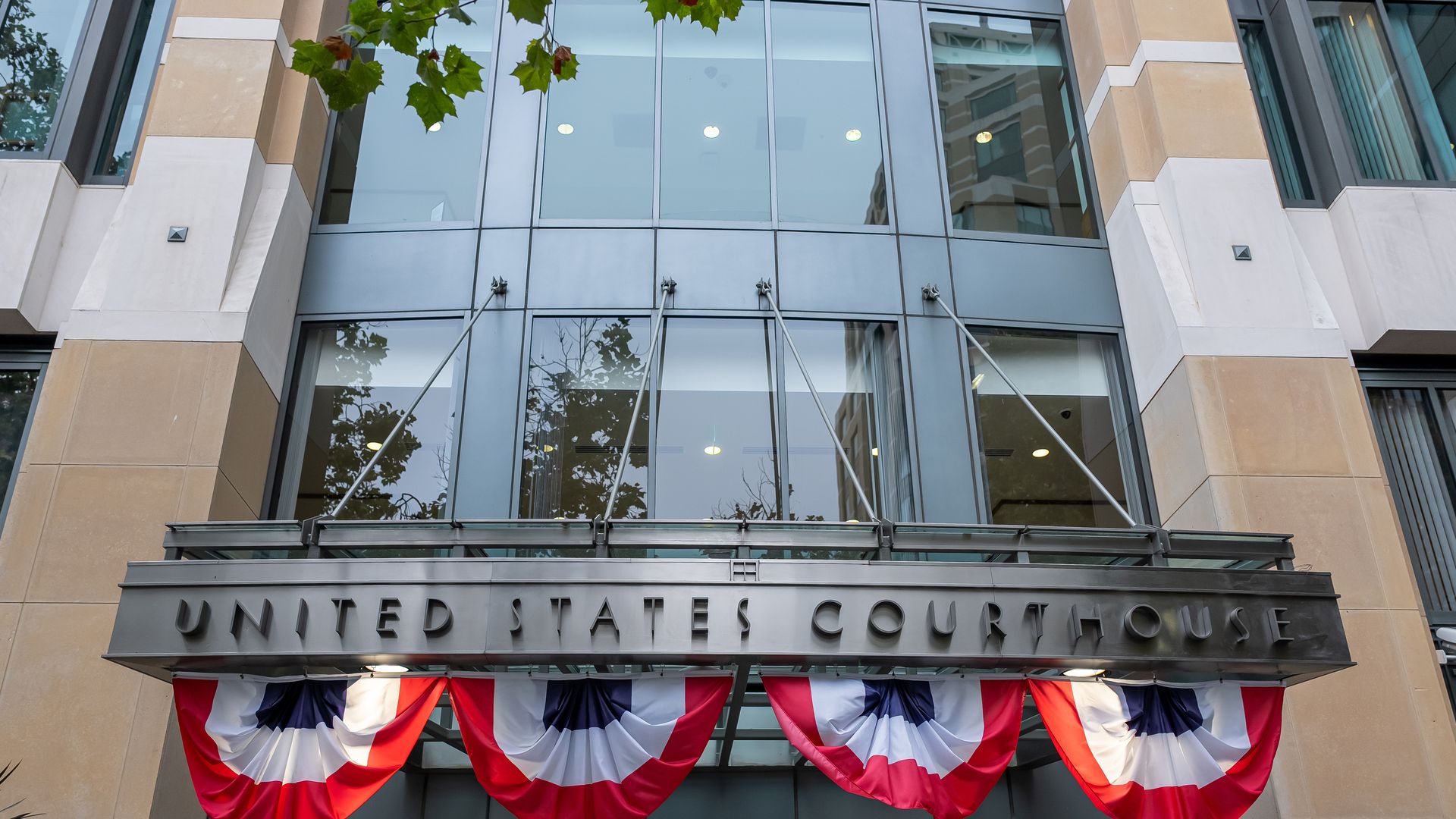
Meta's landmark social media case kicked off today at federal court in Oakland, California, on Tuesday. Photo: David Paul Morris/Bloomberg via Getty Images
Opening arguments kicked off in a landmark child safety and privacy case against Meta over allegations that Facebook and Instagram were designed in ways that harm children.
Why it matters: It's been called social media's "big tobacco moment," with plaintiffs seeking hundreds of billions of dollars in financial penalties — and changes to the design features at the core of Meta's products.
What the plaintiffs said: "What you're going to hear in this trial is how Meta hooked children on its platforms," Megan O'Neill, a deputy AG for the California DOJ, told the court Tuesday. "It designed platforms so that children would keep coming back."
Catch up quick: The federal trial underway today in Oakland, California, is being argued by California, Colorado, New Jersey and Kentucky — four of the 29 states that together sued Meta in 2023.
- The core of the states' argument is that Meta violated the law by allegedly designing platforms with features it knew to be addictive and harmful to children's mental health.
- The states also accuse Meta of violating children's privacy laws by gathering personal data from users under 13 without seeking their parents' consent.
What Meta said: Meta attorney Paul Schmidt told the court's advisory jurors that the company "strongly disagrees" with the allegations, per a live blog from the BBC.
- Schmidt sought to prepare jurors for evidence the states will present at trial, seeking to contextualize what he called "loose language" in internal communications.
- He argued that measuring user engagement is a legitimate business goal.
- He said Meta has created tools to help people seeking to manage their time on its platforms.
- He said Facebook and Instagram were not designed to be addictive and questioned whether there is sufficient scientific evidence that social media addiction is possible.
Threat level: The states have previously told the court they will seek damages of about $200 billion in the case.
- Meta has argued that total penalties could run as high as $1.4 trillion, and in a statement to Axios described the states' financial demands as "vastly disproportionate" to their claims, which the company called "limited" and "unsubstantiated."
What we're watching: A potentially bigger risk to Meta — and the other social media companies watching this case — is if the court were to compel Meta to make changes to its algorithms and product design.
- Such a move could have far more lasting consequences for the social media business model, affecting the mechanics companies use to drive engagement.
