The Trump administration has made exporting American AI a key part of its plans for global AI dominance, but ad hocpolicy decisions around the most advanced AI are threatening that effort.
Why it matters: A flagship U.S. program designed to boost AI exports could be undermined by the very administration that created it.
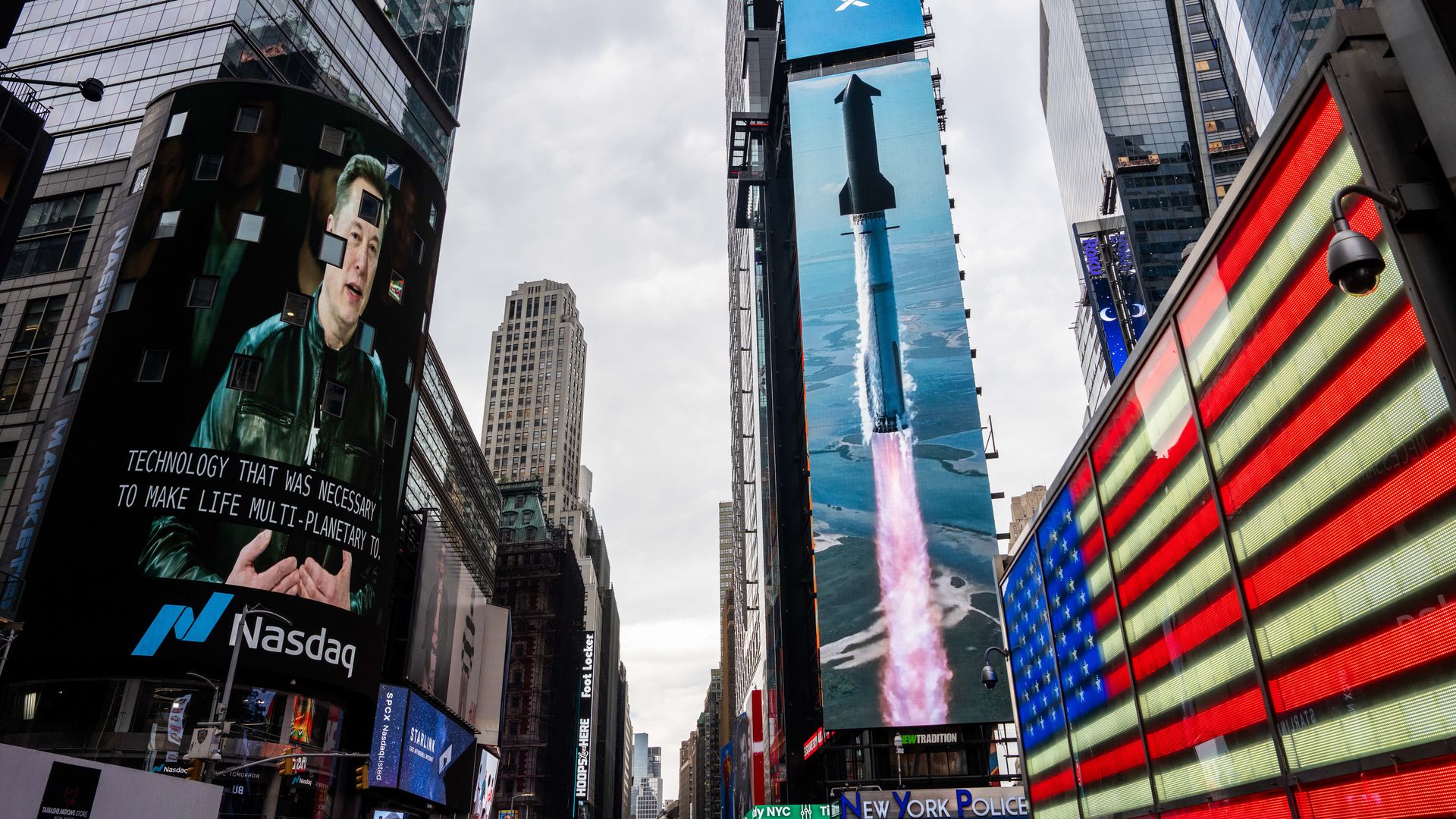
SpaceX jumped another 4.8% Tuesday, enabling Elon Musk's space launch/satellite services/AI/social media conglomerate to leapfrog Amazon.com in market value.
In just its first two full days of trading, SpaceX has added roughly $537 billion to push its market value to $2.659 trillion, according to FactSet data.
That puts it ahead of Amazon.com, which was valued at $2.646 trillion at Tuesday's close.
Snap on Tuesday unveiled its long-awaited Specs augmented reality glasses, making them available to consumers after several years of private development.
Why it matters: Snap is betting its future on Specs, but the consumer smart glasses race is getting more competitive and investors want the company to focus more on growing its core ads business.
AI researchers and cybersecurity leaders fear the U.S. government is setting a precedent that may discourage American AI companies from building tools that help defenders identify and fix vulnerabilities.
Why it matters: In trying to avert an AI hacking crisis, the Trump administration may end up making U.S. cyber defenses weaker, dozens of prominent security leaders warned.
Microsoft is moving Copilot Cowork to usage-based pricing as it expands access to the enterprise AI tool — and is considering a Microsoft-hosted version of DeepSeek as a cheaper model option.
Why it matters: Microsoft's move to add a model from a Chinese AI company could draw criticism.
Despite intense geopolitical instability, global advertising revenue has reached its highest share of nominal GDP on record, according to new data from WPP Media.
Why it matters: The attention economy has shifted advertising budgets from discretionary to essential.
USA Today is adding 1,000 Marvel digital comics and an exclusive new, vertically formatted Marvel Infinity series, "Spider-Man Today," to its consumer gaming platform USA Today Play, executives told Axios.
Why it matters: The newspaper giant is betting that content will help grow its subscriber base as comics expands USA Today Play beyond its core offerings of puzzles and games.
Disney is using custom Adobe Firefly AI models trained on its own characters to help Imagineers design concepts and prototypes for theme parks and hotels.
Why it matters: The partnership shows Disney is willing to deploy generative AI when it can control how its intellectual property is used and protected.
Databricks is launching new tools to help companies cap AI costs, after finding customers had accidentally spent tens of millions of dollars on their broader AI bills in a single month.
Why it matters: AI agents are making corporate software bills harder to predict, and Databricks wants to be the layer companies use to keep them under control.
Why it matters: Nvidia's bond sales are part of an AI-related wave of change now sweeping through both bond and stock markets, as the world's largest and most cash-rich companies find that they too need investors to finance the AI buildout.
Why it matters: The IPO on Friday was just the beginning — over the next days and weeks, Wall Street is launching all kinds of ways to invest in the company and speculate on the direction of its stock price.
Campaign ads featuring AI-generated clips and images once sounded like a laughable concept. Now they're everywhere, with attack ads that place candidates in a wide variety of compromising — and fictitious — situations.
Why it matters: This largely unregulated practice is warping the unspoken norms of political campaigns and blurring the line between truth and fiction.
Brad Smith, vice chair and president of Microsoft, slammed tech moguls for hypocritical, grandiose warnings that are alienating Americans at a time of huge workforce opportunity.
"Nobody knows for sure, but let's not panic," Smith, who has been with Microsoft for 33 years, said from the tech giant's headquarters in Redmond, Washington.
Why it matters: Smith is among the tech leaders who think dire predictions about AI's threat to entry-level white-collar jobs are souring young Americans on a miraculous technology.
The Trump administration says it wants American AI to dominate the world.
But its decision to force Anthropic to abruptly cut off access to one of its most advanced models risks sending foreign governments and companies a very different message: Don't build your future on U.S. AI.
Why it matters: As the Trump administration shapes its AI regulatory regime in real time, the precedents it sets could reverberate far beyond an individual showdown with Anthropic.