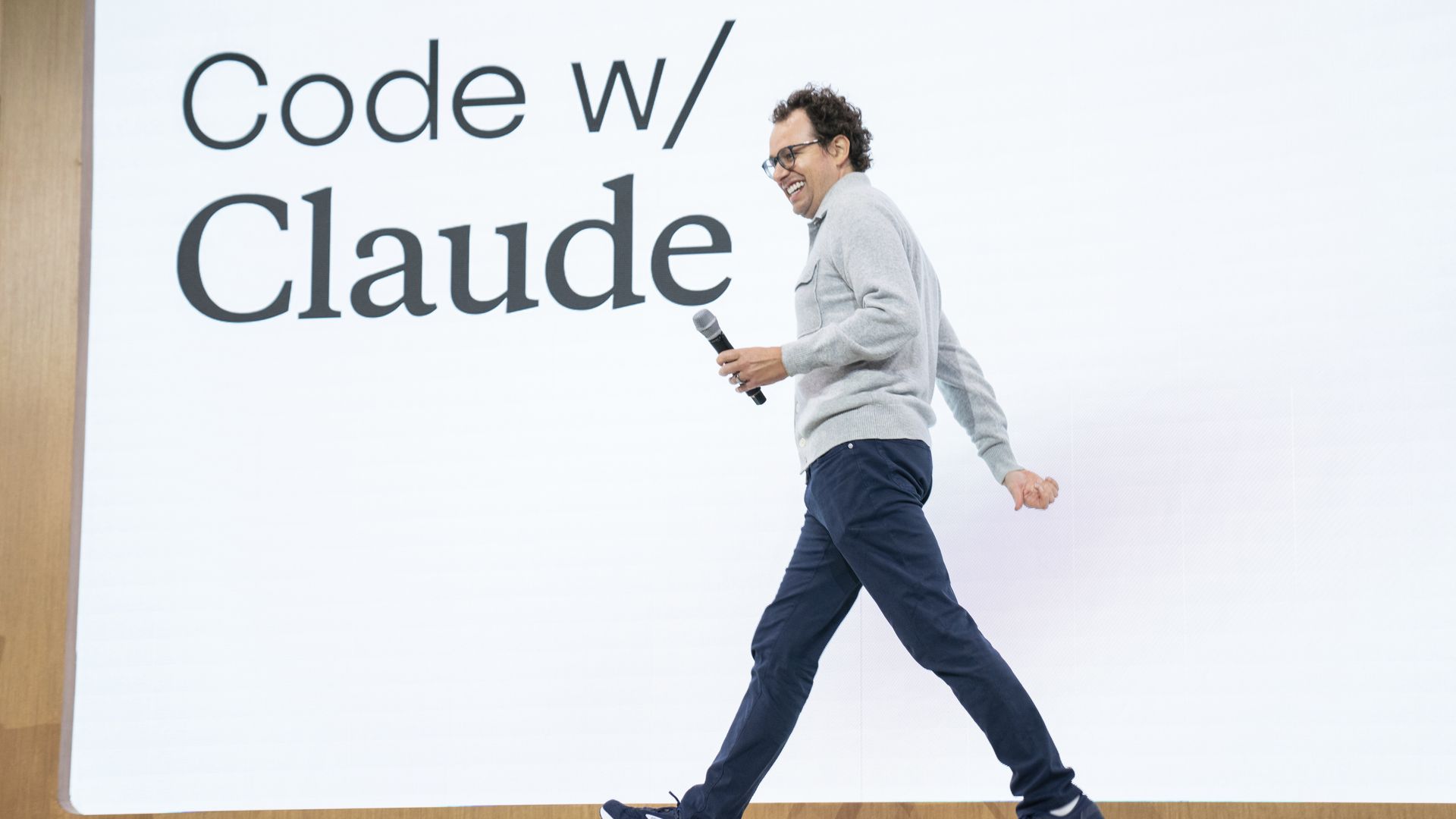
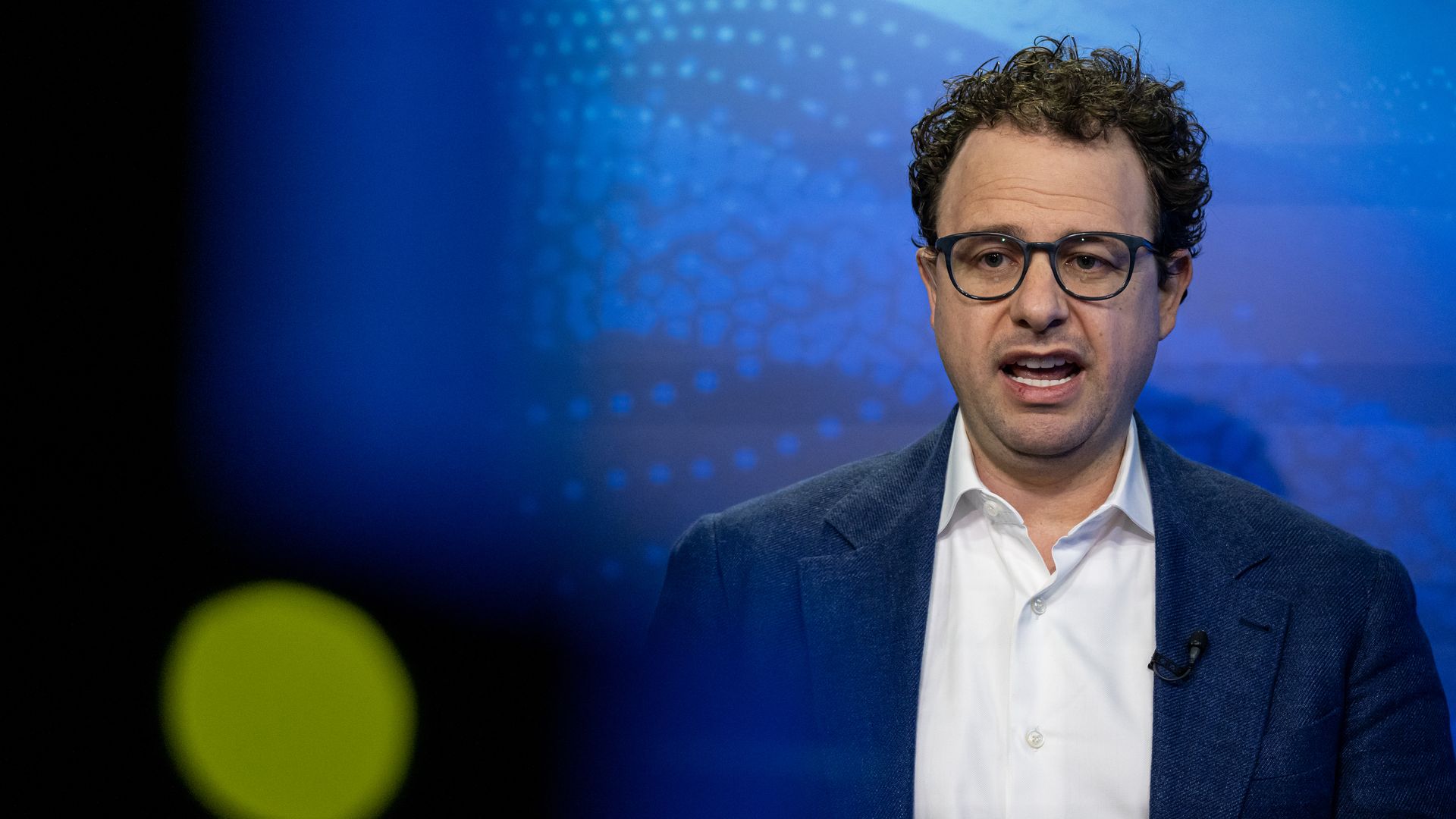
Treasury Secretary Scott Bessent joined a meeting on Friday between White House chief of staff Susie Wiles and Anthropic CEO Dario Amodei, sources briefed on the meeting told Axios.
Why it matters: Anthropic is building tools that could have enormous implications for the federal government. But that same government is currently fighting Anthropic in court after the Pentagon declared it a "supply chain risk." The meeting points to a potential thaw.
Back in the 1990s, companies could slap a ".com" on their names and watch their stocks fly — it's happening now, this time with AI and a stock with the ticker BIRD.
Why it matters: It's a sign of a frothy stock market: Small companies and investors are trying to cash in on the rise of AI and the exuberance of meme traders.
Where it stands: The stock price of the former hipster/techie sneaker company Allbirds closed at $10.91 on Thursday, up more than 300% since announcing it was getting into the AI business.
Myseum, a self-described "privacy-first social media and technology innovator," announced Wednesday afternoon that it was changing its name to Myseum.AI — its stock, valued at just a few dollars, also got a bump.
Catch up quick: Don't worry, you can still buy those wool Allbirds sneakers that used to be a thing.
The company, once valued at $4 billion, sold off all its assets — the sneakers, the brand name — in March for $39 million. The website is still there.
Between the lines: Typically, in that kind of situation, the remaining public company shell would delist and return whatever value was left to stockholders.
Allbirds is trying something else.
Zoom in: Now calling itself NewBird AI, the company says it expects to receive $50 million in financing from an unnamed investor that it will use to buy GPU compute capacity — and presumably sell that to other companies.
That is pennies in the AI infrastructure business where the barrier to entry startsin the billions of dollars. "A drop in the bucket," as William Blair analysts noted.
By the numbers: Still, investors were into it!
On Wednesday, after the pivot news broke, retail traders bought up $5.2 million worth of Allbirds stock, according to data from Vanda.
It's relatively a small amount, and observers note that trading is pretty thin. Still, it'sthe most action that stock has had since its debut, when retail bought about $5 million.
Vanda doesn't have data on automated trading or institutional dollars, but it's likely they piled in, too.
The latest: On Thursday, retail took profit — selling $950,000.
Zoom out: The stock jumped on "some combination of a very shallow float, automated momentum and unchecked hype," per William Blair's note. The firm said it was dropping its coverage.
Flashback: Back in the late 1990s, companies tried to signal that they were totally up on this new internet thing by slapping a ".com" or an "e-" or a "net" on their name. And if you already had it in your name, all the better.
Internet.com Corp, which went public in 1999, rode the dot-com wave and its shares surged from $14.
One paper from 2001, titled "A Rose.com by Any Other Name," found that the name changes did drive up stock prices. At least for a time.
The big picture: Allbirds is also likely hoping to attract some of the investor money sloshing around to to fund AI infrastructure, says Mark Malek, chief investment officer at Siebert Financial.
He notes that there was a similar rush by companies again during the dot-com era that were seeking to build the internet pipes needed for the nascent technology.
Some of them were existing public companies looking to pivot. These kinds of "reverse mergers," where a shell of a public company gets into a new business, "always existed on the fringe," he says.
There have been a few in recent years that got into bitcoin and blockchain, too.
The bottom line: AI is a real technology having a surreal moment.
Editor's note: This story has been corrected by removing a reference to Mecklermedia and to reflect that Internet.com Corp. went public in 1999.
Data centers that power the internet and support critical digital services are at the center of major debates around the country — including in Columbia County, Georgia, a suburb of Augusta.
Why it's important: Global data center demand is surging — with capacity expected to double by 2030 — as cloud services, health care technology, digital banking and AI drive rapid growth.
Communities like Columbia County are now weighing how to grow their local economies through digital infrastructure while protecting local priorities and quality of life.
A company co-founded by OpenAI's Sam Altman and known for its iris-scanning orbs announced new and expanded integrations on Friday with companies including Zoom, DocuSign, Tinder, Okta, Shopify and VanEck as it looks to grow its user base.
Why it matters:World, formerly known as Worldcoin, has struggled to convince everyday internet users to sign up for its identity verification system.
Why it matters: The vote sends the measure to President Trump for his signature, giving Congress two more weeks to try to figure out a way to pass a longer renewal.
Anthropic CEO Dario Amodei is scheduled to walk into the West Wing on Friday for a meeting with White House chief of staff Susie Wiles — a breakthrough in his effort to resolve the company's bitter AI fight with the Pentagon.
Why it matters: The Trump administration recognizes the power of Anthropic's new Claude model, Mythos, and its highly sophisticated — and potentially dangerous — ability to breach cybersecurity defenses.
Data center construction is booming nationwide, but the AI buildout is separating the friendliest states from the most resistant, with Texas and Maine on opposite ends.
Why it matters: Americans are bracing for what trillions of dollars in AI infrastructure investment will mean for them.
The White House and Anthropic are in active discussions about deploying the AI firm's powerful new model, Mythos Preview, within the federal government despite ongoing efforts to blacklist the company as a supply chain risk, sources familiar with the discussions tell Axios.
Why it matters: Anthropic is in a bitter feud with the Pentagon, but even U.S. officials who dislike the company concede that it's building tools that could aid U.S. national security — or harm it, if they fall into the wrong hands.
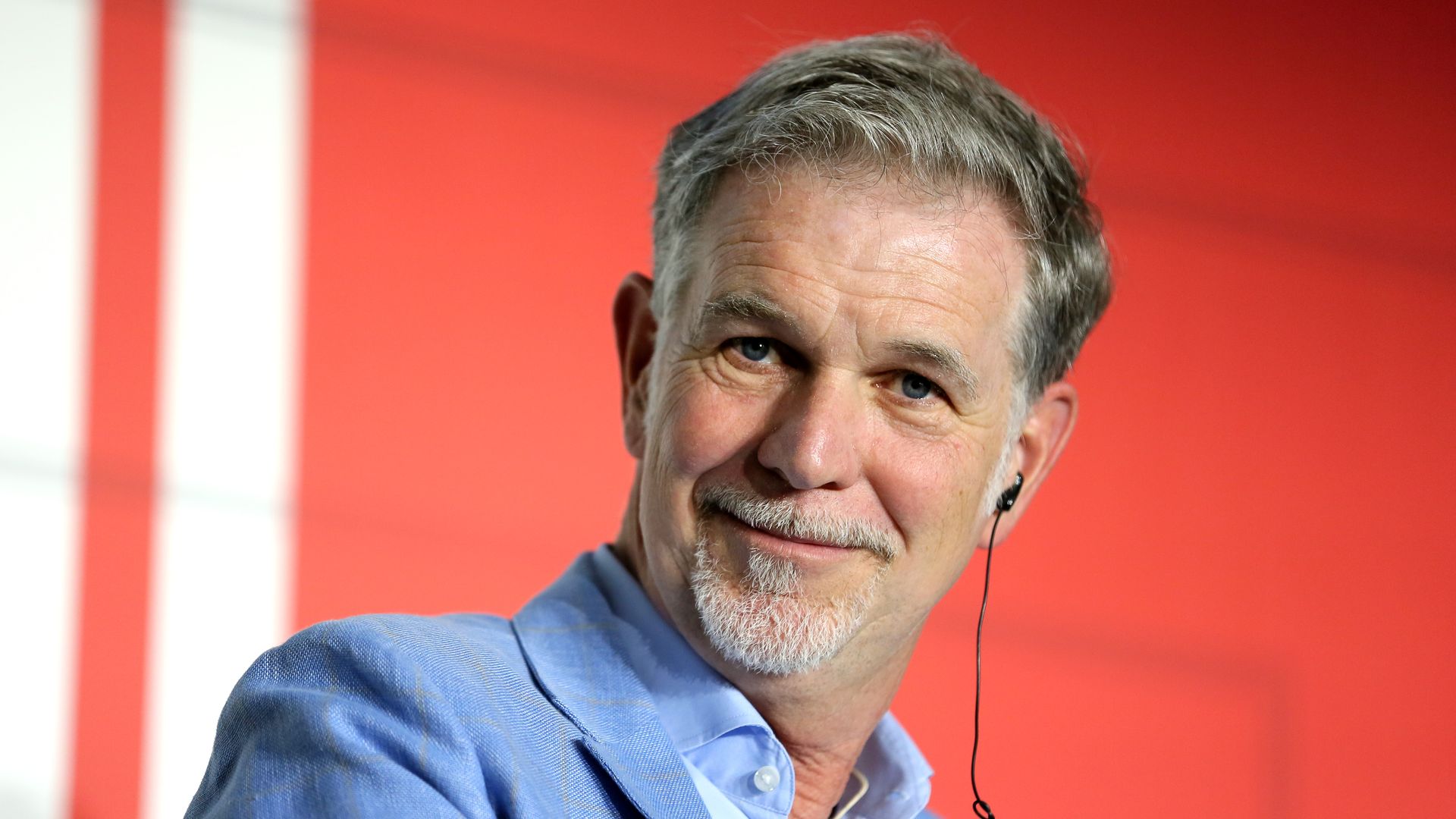
Netflix co-founder Reed Hastings, 65, will not stand for re-election to the board when his current term expires in June, the company announced Thursday.
Why it matters: Under Hastings' tenure, Netflix grew to become one of the most powerful media companies in the world.
OpenAI announced a new series of AI models built to help life sciences researchers work faster.
Why it matters:Biology research is increasingly computational, but scientists are drowning in data across fields like genomics, protein analysis and biochemistry.
Anthropic on Thursday released Claude Opus 4.7, a meaningful upgrade to its flagship AI model with better coding, sharper vision and a new ability to double-check its own work.
Why it matters: Anthropic publicly conceded that the new Opus model does not match the performance of Mythos, a highly advanced system that the company hasn't released to the public due to safety concerns.
Workers whose jobsare most vulnerable to automation — data-entry keyers, bookkeepers and more — are already using AI for three times as many of their relevant tasks as workers in less-exposed jobs, according to a new study by OpenAI.
Why it matters:The research, first seen by Axios, shows that those workers are using AI for only a fraction of what it could theoretically do.
The researchers posit a less doom-and-gloom outcome: Workers might not automatically be on the frontlines of a jobs bust, even as AI use expands.
Paradoxically, it could ultimately expand demand for certain types of work.
By the numbers: OpenAI sorts the 900+ occupations that cover nearly all of U.S. employment into four buckets.
18% face the highest near-term automation risk, relative to other groups (think data-entry, bookkeeping, customer service)
24% of roles could see employment shrink, even as those jobs are still human-led (HR specialists)
12% of jobs could see employment expand because of AI (software developers, for one)
46% face the least threat of immediate change (teachers, home-health aides)
The intrigue: Signs of disruption aren't evident in unemployment data yet.
Workers in the highest-automation-risk jobs have seen a smaller rise in unemployment than have workers in the "less immediate change" category, OpenAI finds.
The paper cautions: "These categories are not job loss forecasts. They are a map for understanding where near-term labor market pressure may emerge first."
Zoom in: Workers in the most vulnerable categories are using AI more than those in any other bucket for the tasks most central to their work. Yet they've barely closed the gap between current usage and what AI could hypothetically do in their jobs.
AI could theoretically handle 90% of tasks in the highest-risk occupations. But those workers are currently using it for less than a quarter of that, according to OpenAI usage data.
Yes, but: Whether AI ultimately destroys or creates jobs hinges on a critical tension — when AI makes a task easier to perform, people may simply consume more of it.
"When coding tools first came out, people assumed maybe we would always write a fixed amount of code," OpenAI chief economist Ronnie Chatterji tells Axios.
"Now I'm writing code, you're writing code — you produce more of something, and more people might demand it and pay for it."
"Now I am awake in the middle of the night and pissed, and thinking that I have underestimated the power of words and narratives," OpenAI CEO Sam Altman wrote in a blog post over the weekend, following an arson attack on his home.
Why it matters: The narrative around artificial intelligence — and those who are viewed as controlling it — has reached a crescendo.
AI super PACs are stockpiling cash ahead of the midterms and laying the groundwork for competitive races, according to new Federal Election Commission filings.
Why it matters:AI players flush with cash are now a significant force in campaign finance, building a deep network to raise and deploy money as the technology becomes a key election issue.
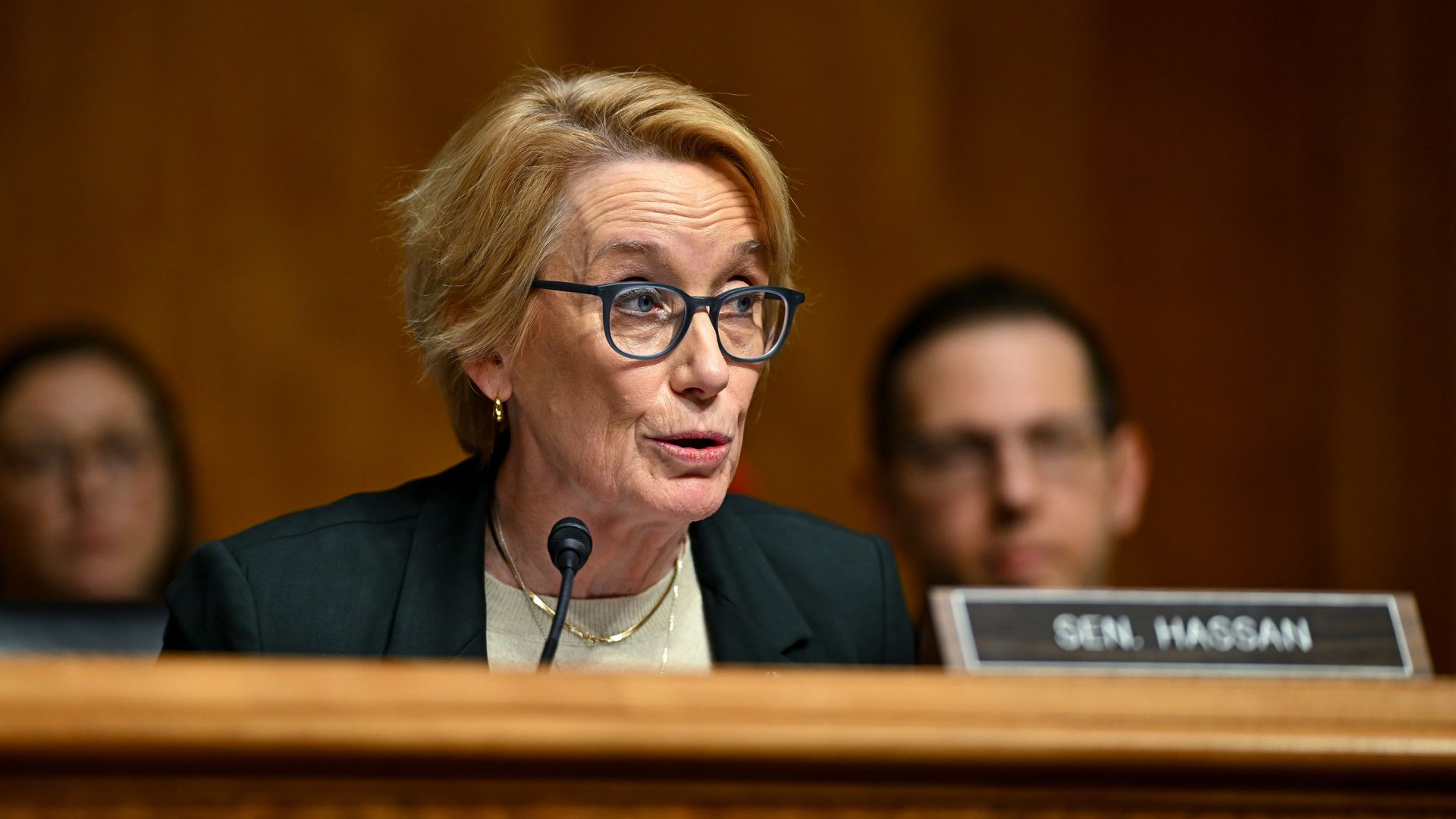
Sen. Maggie Hassan (D-N.H.) is pressing four leading AI voice cloning companies for details about how they're preventing scammers from abusing their tools in their schemes, according to letters first shared with Axios.
Why it matters: Congress is considering new laws to rein in the growing number of scams targeting Americans, and letters like these can signal where lawmakers may take action.
BNY, America's oldest bank, has early access to OpenAI's and Anthropic's advanced cyber capability models, according to CEO Robin Vince, making the bank one of few vetted enterprises with early access.
Why it matters: Wall Street is working overtime to win the AI security race.
America, we have a problem: Young adults are scared and unprepared for the AI revolution upending their early career choices and prospects.
They tell pollsters they're frightened, even angry, about AI's fast arrival. They're rightly unnerved by a tough job market for college grads. And most aren't remotely equipped by schools to be AI-savvy.
Why it matters: This is a growing problem for just about everyone — kids, educators, employers and politicians.
Anthropic users across online forums are raising the same complaint: Claude suddenly feels ... bad.
Why it matters: The backlash lands just as Anthropic is testing a more powerful model, Mythos — raising questions about whether cutting-edge AI is becoming less accessible even as it gets more capable.