Exclusive: Senator presses AI voice cloning companies on stopping scammers

Add Axios as your preferred source to
see more of our stories on Google.
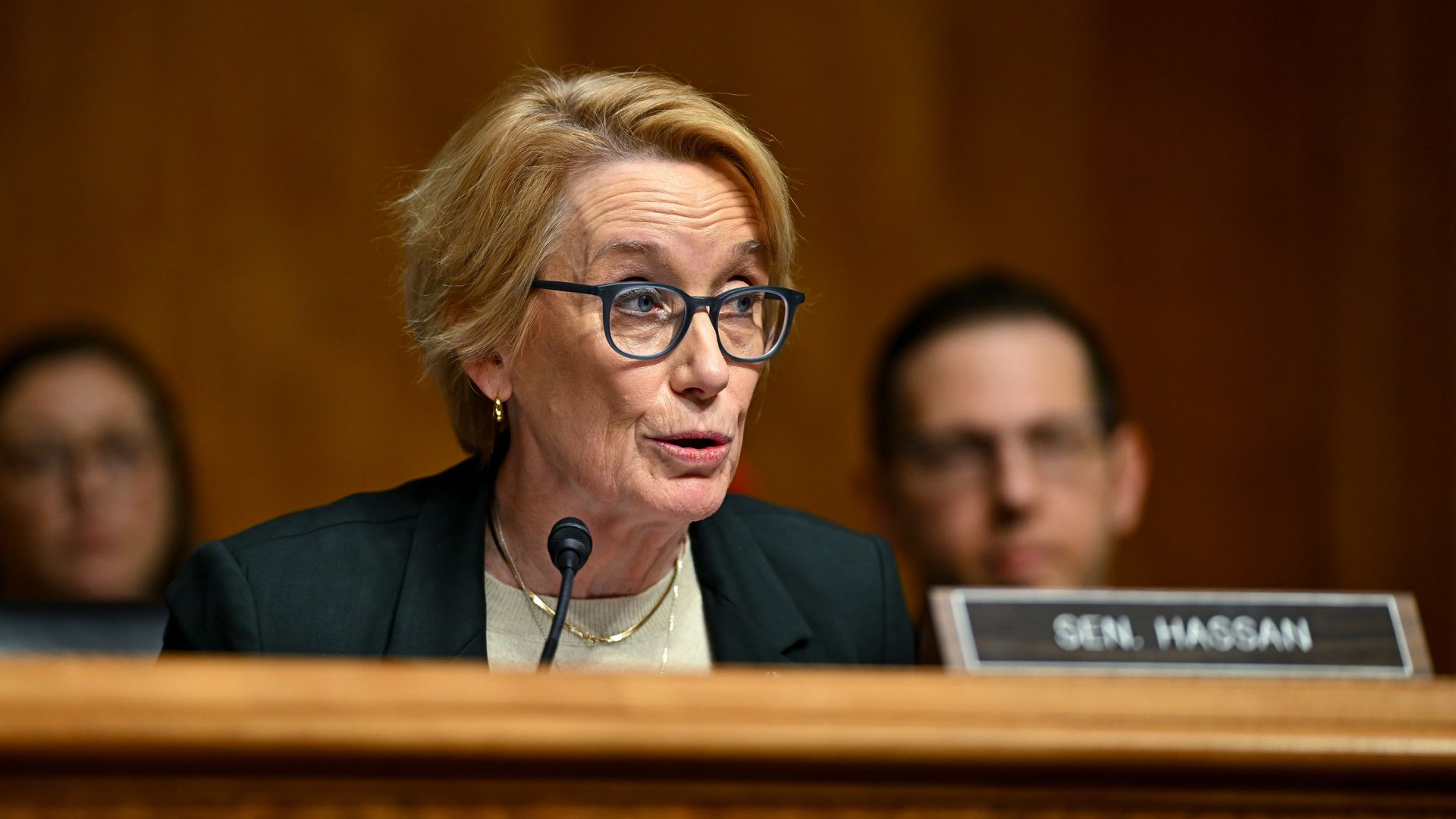
Senator Maggie Hassan (D-N.H.) during a Senate hearing in February. Photo: Graeme Sloan/Bloomberg via Getty Images
Sen. Maggie Hassan (D-N.H.) is pressing four leading AI voice cloning companies for details about how they're preventing scammers from abusing their tools in their schemes, according to letters first shared with Axios.
Why it matters: Congress is considering new laws to rein in the growing number of scams targeting Americans, and letters like these can signal where lawmakers may take action.
Driving the news: Hassan, ranking member of the Joint Economic Committee in Congress, sent letters to ElevenLabs, LOVO, Speechify and VEED.
- Many of these companies allow users to pick from a vast library of pre-created AI voices for their various use cases, including tutorials, podcast and audiobook narrations and social media marketing.
- In her letters, Hassan is asking the companies to detail their strategies for spotting and preventing scammers from abusing these voice clones in phony calls.
- The companies have not been accused of any wrongdoing.
The big picture: AI voice cloning technology has made it easy for scammers to replicate the voices of celebrities, government officials or a victim's loved one. Scammers only need about three seconds of someone's voice to make a full clone of it, according to McAfee.
- Victims lost $893 million to AI-related scams last year, according to the FBI's internet crime report.
- Scammers have already used AI-generated voices to pose as employees of government agencies, banks and utilities to request payments or login credentials from victims. These voices are also used to carry out romance scams.
- "Protecting Americans from these financial losses will require collaboration between the public and private sectors, and AI companies [including yours] are on the frontlines of this effort," Hassan wrote in her requests.
Zoom in: Hassan's letters ask the four companies to share, in detail, how they're each monitoring user activity and taking action against users who violate policies prohibiting the models' use for scams and fraud.
- Companies are also asked to provide metrics on how many users have been flagged for violating these policies, including what share were detected before generating a nonconsensual voice and how many were found after.
- Hassan is also requesting details about the mechanisms companies have in place to ensure people whose voices are cloned have consented to it.
What they're saying: In a statement, an ElevenLabs spokesperson told Axios that the company has "a comprehensive set of safeguards to prevent misuse of our technology," including blocking voice-cloning of celebrities and public figures and both automated and human reviews to find policy violations.
- LOVO, Speechify and VEED did not immediately respond to requests for comment.
The bottom line: The new batch of letters is part of the senator's ongoing efforts to crack down on scams, including a committee hearing last month with federal investigators and industry experts.
Go deeper: AI video apps are a scammer's goldmine
