Source material powering Anthropic's Claude Code leaked for the second timein just over a year, publicly exposing the AI coding tool's full architecture, unreleased features and internal model performance data.
Why it matters: The leak hands competitors a detailed unreleased feature roadmap and deepens questions about operational security at a company that sells itself as the safety-first AI lab.
OpenAI is beginning to let individual investors access its stock, months before the ChatGPT maker is expected to launch its IPO.
Driving the news: OpenAI said Tuesday that its shares will soon be included in several exchange-traded funds (ETFs) offered by ARK Invest, the Cathie Wood-led firm that previously invested via its venture capital arm.
Suspected North Korean hackers are believed to be behind an ongoing compromise of the widely used open-source package Axios, which is downloaded millions of times per week, researchers at Google said Tuesday.
Why it matters: Hackers briefly turned a widely trusted developer tool into a vehicle for credential-stealing malware that could give attackers ongoing access to infected systems.
Iranian hackers are now taking their psychological warfare tactics directly to government officials and employees at major companies.
Why it matters: Even unproven threats from Iranian hackers can create fear, uncertainty and doubt — draining attention and forcing targets to divert time and resources from their own operations.
Meta's average revenue per employee has jumped 85% over the past three years, thanks to sweeping employee cuts combined with AI-driven ad and content improvements that boosted the top line.
Why it matters: Once seen as a sign of strain, layoffs have become a key Wall Street indicator that tech giants are invested in efficiency as they pour billions into AI infrastructure to support long-term growth.
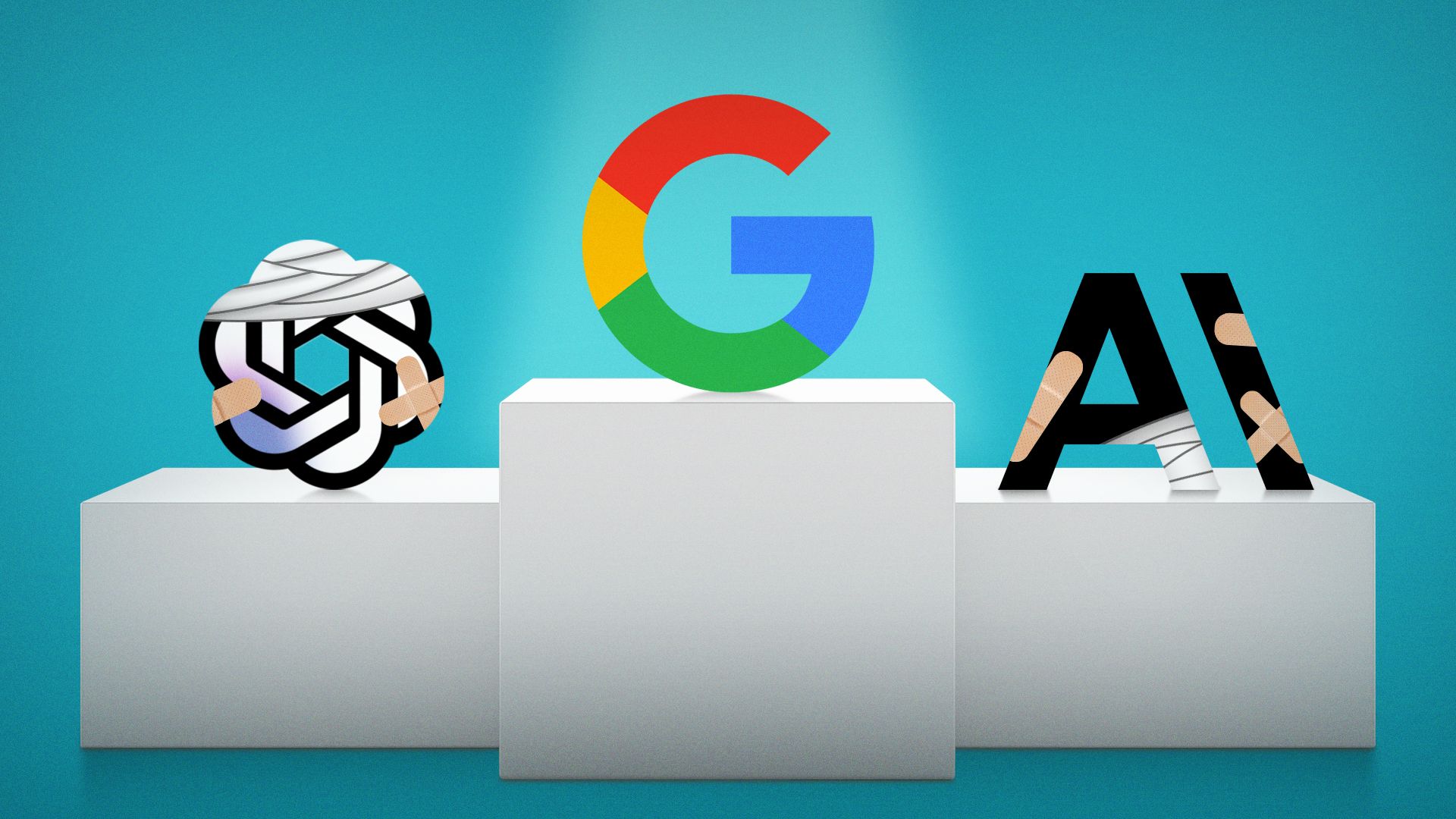
The AI race won't be won by who builds the best model, but by who can afford to keep the lights on.
The big picture: DeepMind CEO Demis Hassabis knew that when he sold his AI lab to Google, according to a new biography by Sebastian Mallaby, senior fellow at the Council on Foreign Relations.
President Trump on Tuesday attacked European allies for not doing more to support the U.S. in its war with Iran and signaled they will have to reopen the Strait of Hormuz on their own.
Why it matters: This was the third time in recent days that Trump signaled publicly he could end the war in Iran without reopening the Strait of Hormuz.
Rahm Emanuel wants to shift billions of dollars from building new ICE facilities to funding community colleges — arguing they'll become more critical as AI disrupts the job market.
Why it matters: It's Emanuel's latest attempt to get ahead of other potential 2028 candidates with early policy proposals, especially on AI, tech and education.
Microsoft said Monday it has revamped one of its AI research tools to use models from both OpenAI and Anthropic, the clearest sign yet that the future of AI may be multi-model.
Why it matters: AI companies are increasingly pairing models together — having them cross-check, evaluate or specialize — in a bid to boost accuracy and reduce errors that any one model might miss.
HOUSTON — As nuclear energy industry deals pile up, executives are turning their focus to what many describe as a huge challenge: How to build multiple plants quickly.
Why it matters: Nuclear energy is seen as critical to supplying enough power for AI data centers' massive electricity needs.
Nearly two-thirds of Americans now use AI regularly and want stronger oversight, but are conflicted on how far regulation should go, according to a new national survey from AI governance nonprofit Fathom shared exclusively with Axios.
Why it matters: Americans are growing more comfortable with AI as Washington struggles to regulate it, but people still want guarantees on safety and job security.
Heavy social media users are less likely to think democracy is the best form of government and more likely to stray from democratic norms, according to a newly released study from the Charles F. Kettering Foundation and Gallup.
The big picture: New research suggests social media is reshaping how people engage with democracy, expanding access to ideas while also contributing to a more fractured media environment.
Welcome back to our mini-series on cleaning your social media feeds. See part one (TikTok), two (Instagram) and three (YouTube).
Your X feed is designed to make you emotional.
📱Why it matters: X's algorithm intentionally pushes posts that spark strong reactions, making your feed feel angrier and more chaotic. AI chatbot Grok makes this worse by frequently surfacing misleading content.
Understanding that the platform's algorithm rewards posts that spark emotion and engagement can help you stay more vigilant in seeking accuracy or nuance.