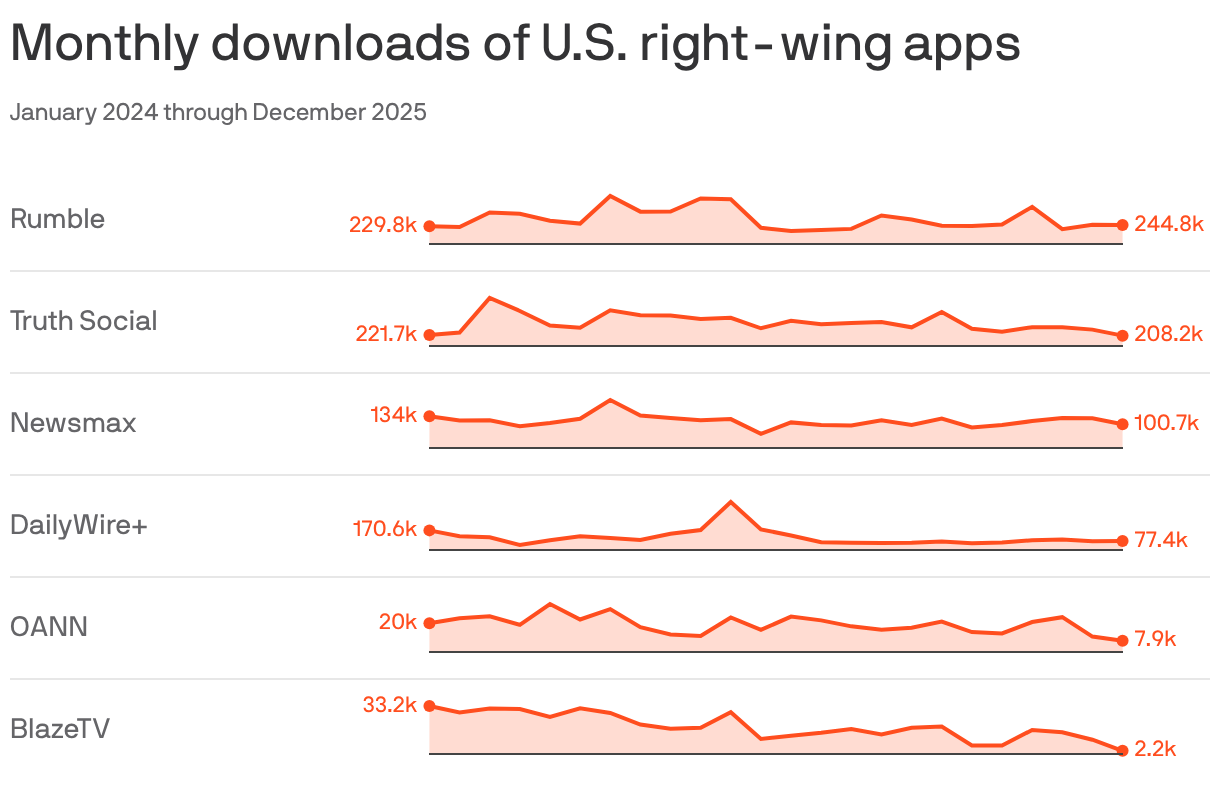
Most major conservative news apps have seen little to no growth in monthly traffic or app downloads over the past one to two years, according to data from Apptopia and Similarweb.
Why it matters: The splintering of the MAGA media movement — combined with broader media market challenges — has impacted the ability of many outlets within the once-unified coalition to grow.
Meta CEO Mark Zuckerberg on Tuesday announced that C.J. Mahoney, formerly a senior legal executive at Microsoft and deputy U.S. trade representative during President Trump's first term, will join Meta as its new chief legal officer, according to an internal post seen by Axios.
State of play: Mahoney replaces Jennifer Newstead, who announced late last year that she would be leaving Meta after more than five years to become the general counsel at Apple.
New research shows how little we understand about how tariffs are rippling through the economy — and sheds light on how they may affect the landscape in 2026.
Why it matters: The tariffs caused historic uncertainty for businesses in 2025, but with more muted overall economic effects than many forecasters predicted.
A trio of companies including Nvidia announced Tuesday that they're using AI to accelerate the development of fusion that's eluded innovators for decades.
Why it matters: Fusion, the energy that powers stars, has long had unrealized potential to provide vast swaths of clean, stable electricity for the AI boom and to cut emissions.
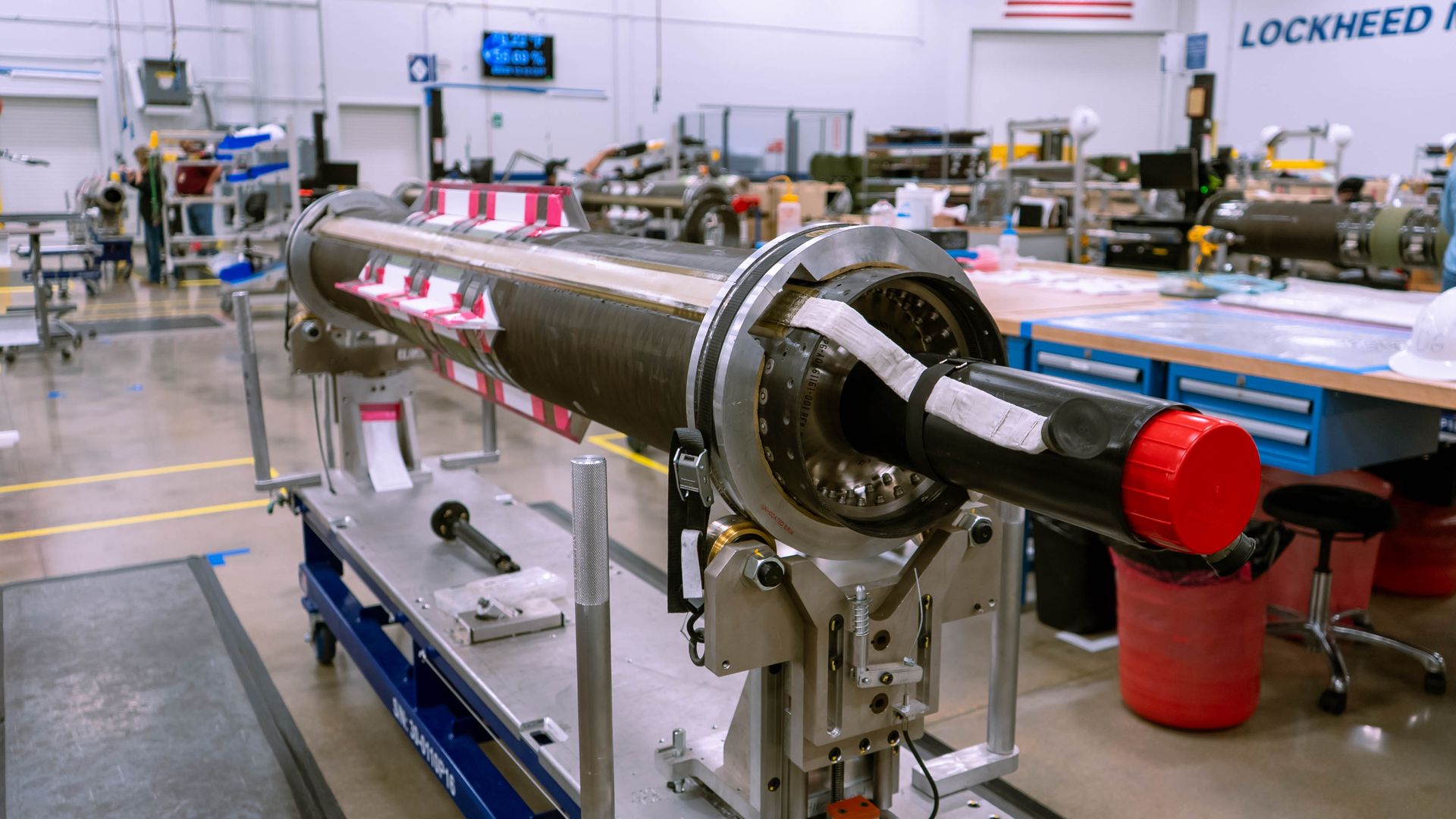
Lockheed Martin plans to more than triple its annual production of advanced Patriot missile interceptors under an agreement struck with the Pentagon.
Why it matters: Air defense demand across the world — in Ukraine, Europe, the Middle East — often outstrips output.
The pinch is especially felt at the higher end of the spectrum, where interceptors cost millions of dollars a pop and stockpiles take months or years to replenish.
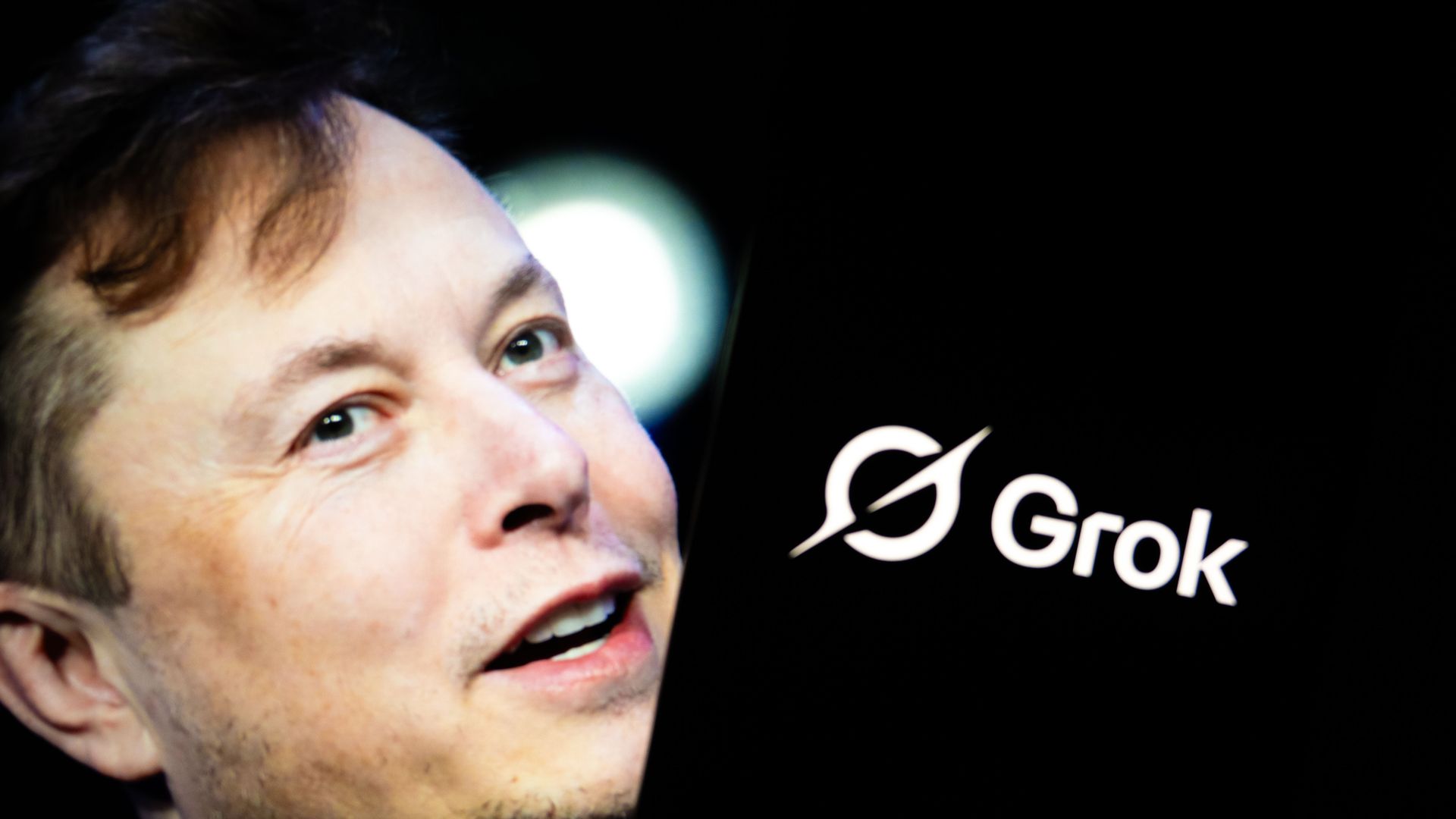
Elon Musk's Grok chatbot continues to generate image edits that put people in bikinis even as regulators and lawmakers in the U.S. and abroad warn of legal risk.
Why it matters: Public X feeds feature Grok's AI creations, openly revealing images to the world that many other users may be creating and sharing in private.
President Trump has offered a variety of reasons for his intense, pugilistic ambitions in Venezuela, Greenland and other hemispheric players.
But one tie binds them all: They hold many of the critical minerals essential to AI and defense technology — and therefore future global dominance.
Why it matters: Within two days of snatching Venezuela's leader, Trump administration officials and financial analysts began discussing that nation's vast array of mineral riches.
AI is making my life more convenient and my job more efficient, but it's also tempting me to think less — and sparking new frustrations.
Why it matters: AI is infiltrating daily life faster and more aggressively than any modern technology. We're all living experiments in its effects: the good, the bad and the unknown.
Nvidia CEO Jensen Huang announced the launch of AI models for autonomous vehicles and new chips during a presentation at the Consumer Electronics Show on Monday.
Why it matters: The strategy underscores where the next wave of AI and computing is headed, given Nvidia's dominance in the chip market.
Why it matters: Insider trading on the stock market is illegal, while insider trading on prediction markets is generally not — at least for now — and critics say that's a problem.
It sounds like a scene from a science fiction movie: Hyundai Motor Group plans to mass-produce humanoid robots in Georgia, and put them to work helping real humans build cars in the same factory.
Why it matters: Hyundai, through its Boston Dynamics subsidiary, is already a leader in robotics — it now says it is ready to take humanoids from the lab to the factory floor, signaling a new phase in the AI revolution.
A House Democrat is introducing legislation that would make it illegal for government officials to use online prediction markets to make bets on political events based on privileged information.
Why it matters: The bill comes in response to the huge profits some traders on Polymarket made betting on Nicolás Maduro's ouster shortly before the Venezuelan president was extradited to the U.S. on Saturday.
Tariff drama and tax cuts! AI spending and AI-spurred job losses! New Federal Reserve leadership! It is on track to be a big year across all the key policy areas of interest to economy-watchers.
The big picture: Seismic changes have been set in motion by the Trump administration's sweeping policy agenda and a mega-wave of investment in artificial intelligence — likely to determine the fate of the economy in 2026.
1. The AI economy
The biggest macro questions are whether the alarm bells about AI and the labor market will start to ring true — and whether the productivity effects move from just anecdotes to the economic data.
Last year, much evidence pointed to AI as a marginal part of the labor market slowdown. Some economists (and officials inside the White House) argue that broader adoption of the technology would boost the labor market, at least in the short term.
Of note: AI spending buoyed economic growth, at least in the first nine months of 2025. It is also lifting the stock market, which might help support spending among wealthier consumers.
Whether this turns out to be a bubble that pops — and the extent such a risk poses to the broader financial system as the Fed rolls back regulations — is the related theme to watch.
That said, any correction in AI investment looks more likely to be a down-the-road story than a 2026 issue.
2. Tax cut boost
The One Big, Beautiful Bill Act, signed into law in July, is set to have its maximum economic punch in the early months of 2026, a likely tailwind for overall economic growth.
But how large, how broad-based and how sustained that boost will turn out to be remains to be seen.
Zoom in: Fiscal policy is on track to add about 2.3 percentage points to first-quarter GDP growth, per data from the Hutchins Center Fiscal Impact Measurefrom the Brookings Institution.
On the individual tax side, beneficiaries of policies like a deduction for tip income, Social Security payments and expanded deductibility of state and local tax are on track to generate super-sized tax refunds this spring,
On the corporate side, businesses are enjoying new tax incentives for capital spending, especially on factories.
Federal spending on immigration enforcement, meanwhile, is ramping up due to the legislation.
3. Trade uncertainty (maybe) resolving
Any day now, the Supreme Court will hand down a decision that might scramble the centerpiece of President Trump's economic agenda: the ability to impose huge tariffs unilaterally.
If the court strikes down the bulk of Trump's tariffs, fiscal revenues could be put at risk, resulting in a chaotic refund process.
That said, the ruling will help create some guardrails on what kinds of legal authority the president has to impose unilateral tariffs. That, in turn, could lead to a more stable tariff picture (albeit with much higher rates than pre-2025).
While there are other authorities the president can use to enact tariffs besides the sweeping authority under the International Emergency Economic Powers Act he has claimed, they require a more deliberative process than the kind of whipsawing that importers faced last year.
4. Future of the Fed
Fed chair Jerome Powell's term is up in May, and Trump's selection of his successor is imminent, with Kevin Hassett and Kevin Warsh the leading job candidates.
Zoom out: Whoever takes the reins will face immense pressure from Trump to lower interest rates to rock-bottom levels — amid continued high inflation — and how they handle that pressure may determine the future of the central bank's independence from the White House.
Trump expects the future Fed chair to consult with him on rates, while casting the intention to lower rates as a key qualification for the next leader.
The question is whether the next Fed chair can resist that political pressure and whether financial markets believe that is the case. If bond markets lose confidence that the Fed will raise short-term rates if necessary to combat an inflation surge, it could paradoxically drive up long-term rates.
Another huge question: the makeup of the influential Fed board, with the Supreme Court also set to decide whether Trump can fire governor Lisa Cook and, by extension, other Biden-appointed governors.
5. Affordability and the midterms
With voters going to the polls in November, the cost of living is emerging as a core battleground.
Democrats seeking to take control of Congress are making political hay about the affordability crisis.
Trump has called the term affordability a "con job," but said recently that he believes "pricing" will be a major election issue.
Flashback: The Consumer Price Index is up a moderate 2.7% over the last 12 months, but that increase came on top of the Biden-era inflation surge.
The index is up 23.7% since January 2021, even more for some often-purchased subcategories, including groceries (up 24.6%).
Over the holiday break, the administration quietly shelved plans to impose levies on imported pasta and furniture.
It's a hint that the White House is eager to avoid trade levies that might flow directly to prices consumers pay, as opposed to affecting input costs for businesses.
Silicon Valley's congressman is facing a revolt from some of his wealthiest constituents, and even could get primaried.
Why it matters: This is ground zero for the thorny politics of income inequality, which will become pervasive as the AI revolution mints more billionaires and costs "normies" their jobs.
If you invested in the AI narrative — through Big Tech stocks, exposure to China, or allocation to precious metals that may benefit from expansion of the technology — you struck gold in 2025.
Why it matters: Investors are betting that the AI bubble won't pop in 2026, and stocks tied to the narrative can still rally.
Ian Bremmer — president and founder of Eurasia Group, a top global political-risk research and consulting firm — says the top geopolitical risk for 2026 is the "U.S. Political Revolution," with President Trump "so committed to and so capable of changing the political system."
Why it matters: Eurasia Group's annual "Top Risks" report — out Monday, 48 hours after Trump shook the world by snatching Venezuela's Nicolás Maduro — isolates the "biggest threats to the trajectories of nations, industries and institutions," to help leaders and investors prepare for the year.
We're locked in the fastest, broadest, most consequential reordering of politics, tech and business of our lifetimes — and it's a global phenomenon.
Why it matters: The conventional wisdom is that everything is being disrupted everywhere. But we're actually experiencing the aftershocks of a decade of disruption in America and other advanced economies.
The era of post-disruption society has begun. The new, unfolding era is being shaped by rising inequality, mass migration and immigration, surging populism, fading trust and emerging AI.
The good news: This is navigable for leaders, and everyone, if you understand this shared global phenomenon.
If 2025 delivered shock waves to public health and federal health programs, this year promises more chaos as providers, payers, consumers and policymakers deal with the repercussions.
Why it matters: The sweeping changes to Medicaid and the Affordable Care Act, the upending of the vaccine system, and new ways people purchase drugs foreshadow the most significant changes to health markets since the passage of Obamacare.