Italian pasta makers get a break from Trump tariffs

Add Axios as your preferred source to
see more of our stories on Google.
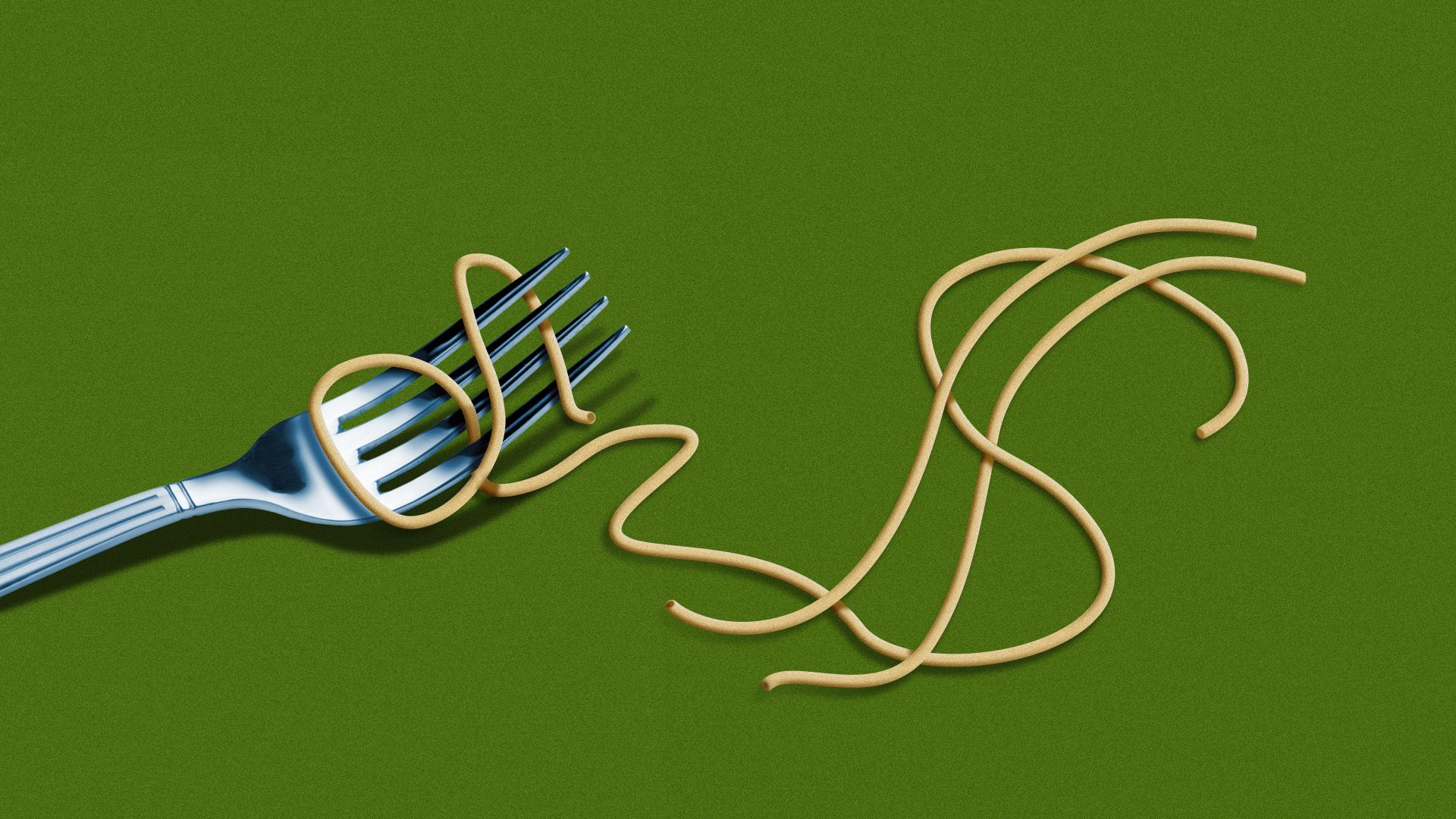
Illustration: Sarah Grillo/Axios
The U.S. is scaling back threatened tariffs on Italian pasta that could have pushed duties as high as 107%, easing pressure on grocery shoppers and stepping back from a trade dispute.
Why it matters: For U.S. consumers who feared that their favorite box of spaghetti would spike in price, the news will be a relief — and it comes as the Trump administration faces political pressure over affordability issues.
Driving the news: The U.S. Department of Commerce and Italy's foreign ministry confirmed the reduction of proposed duties on 13 Italian pasta makers, with revised rates putting total levies between 24% and 29%.
- Final tariff rates are expected to be announced by mid-March, when Commerce completes its review.
Between the lines: The tariffs stemmed from an antidumping complaint filed by two U.S. food companies, which accused Italian producers — including Barilla, La Molisana and Pastificio Lucio Garofalo — of selling pasta in the U.S. at unfairly low prices.
By the numbers: Italian pasta exports to the U.S. totaled roughly $700 million to $800 million last year, according to U.S. and Italian officials.
- The Commerce review covers 13 Italian pasta companies, which account for about 16% of Italy's pasta shipments to the U.S., government documents show.
- Initial antidumping duties — stacked on existing EU tariffs — threatened to push total pasta tariffs above 100%.
What they're saying: Italy's foreign ministry said in a statement that the revised duties show U.S. officials recognize Italian producers' willingness to cooperate with the review process.
- A Commerce Department spokesperson said the lower rates reflect an evaluation of additional information submitted after the preliminary determination, per CBS News.
Zoom out: The pasta pullback comes as the White House has softened or delayed several other consumer-facing tariffs, reflecting growing sensitivity to how trade policy affects prices at the checkout line.
What we're watching: Whether Commerce locks in the lower pasta tariffs in March — or reopens a trade fight that briefly put spaghetti at the center of U.S.–EU tensions.
More from Axios:
