OpenAI just announced a suite of new products designed for health care professionals that will roll out to leading medical institutions on Thursday, a company spokesperson told Axios.
Why it matters: Although over 40 million users already use ChatGPT for health information daily, providers using the tab must be careful to ensure that the sometimes hallucinatory chatbot gives professionals accurate advice and maintains patient privacy laws.
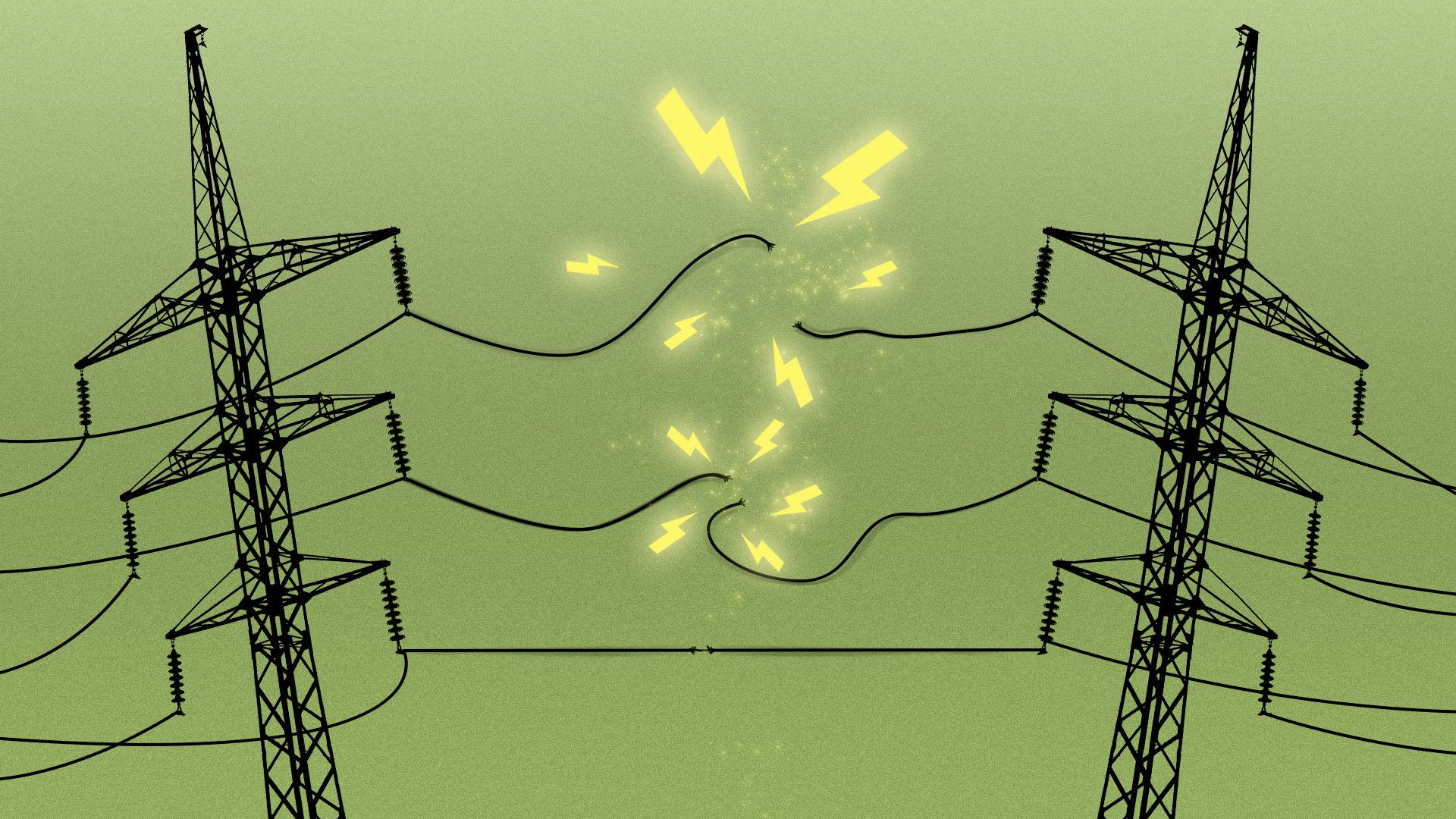
Disrupting Venezuela's power grid is well within the reach of U.S. military hackers — not only because they're among the world's most capable cyber operators, but because the country's electrical infrastructure is exceptionally fragile.
Why it matters: Trump said that ahead of the raid to capture Nicolás Maduro, "the lights of Caracas were largely turned off due to a certain expertise we have." Former officials and cybersecurity experts tell Axios the blackouts had several telltale signs of a military-led cyber operation.
President Trump's decision to yank the U.S. from UN climate change agencies will set back international progress on addressing the climate, observers say.
Why it matters: The U.S. is the world's second-largest emitter of greenhouse gases after China and provides much of the scientific heft addressing the problem.
A Reddit post by a user masquerading as a food delivery app developer drew millions of views and forced CEOs to go on the record, revealing how AI-generated misinformation is reshaping modern reputational crises.
Why it matters: AI-assisted mis- and disinformation are already fooling audiences and threatening corporate reputations.
Microsoft is pushing shopping and checkout directly into its Copilot assistant, a move that could reshape where e-commerce transactions happen and who controls the funnel.
Why it matters: Big Tech is racing to turn AI assistants into the front door of the internet.
Sens. Todd Young (R-Ind.) and Maria Cantwell (D-Wash.) on Thursday will introduce legislation to reauthorize the National Quantum Initiative for five years, according to a bill summary shared first with Axios.
Why it matters: The program is meant to boost quantum research and development — which experts say could lead to scientific breakthroughs and keep the U.S. globally competitive — but Congress let it expire in 2023.
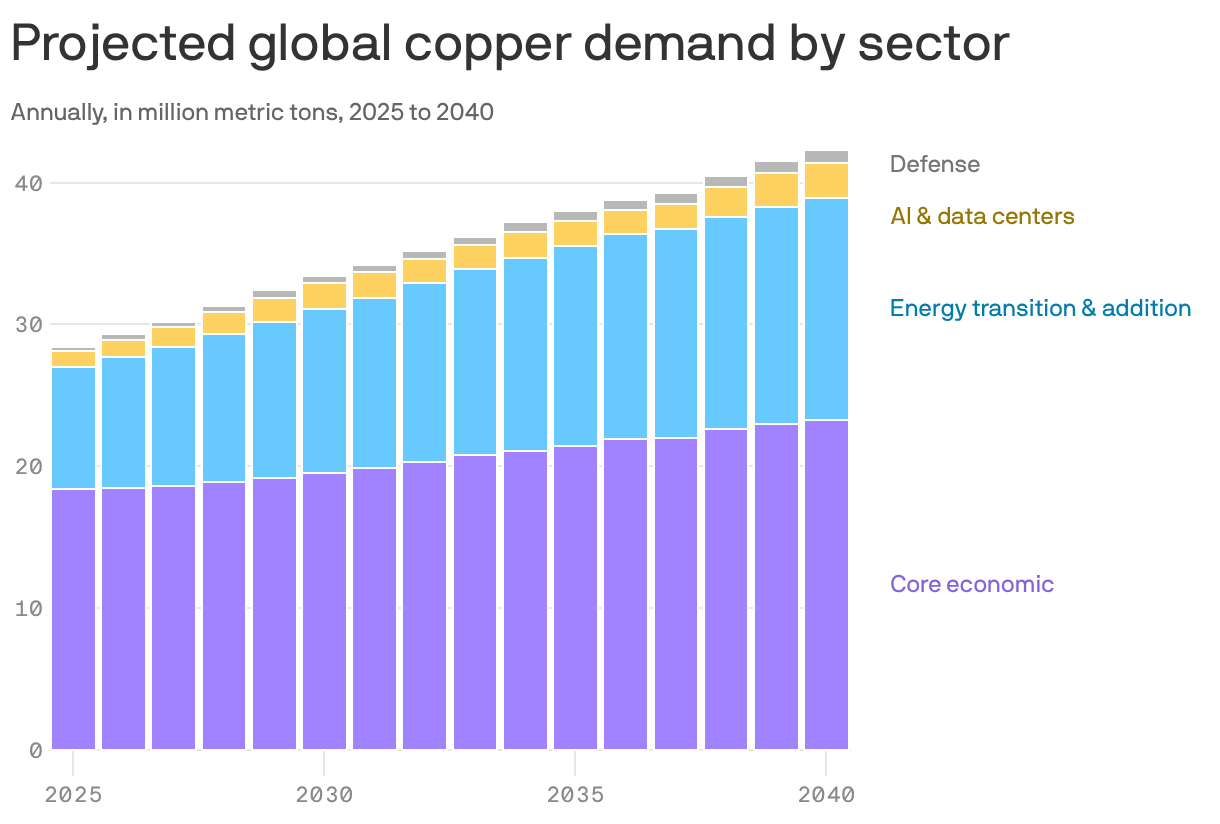
Data: S&P Global; Note: "Core economic" includes construction and fossil power generation; Chart: Axios Visuals
AI and military needs could worsen what's already shaping up as a looming copper supply gap in coming decades, new analysis finds.
Why it matters: Copper supply is foundational to energy transition including EVs and renewables — even as traditional uses like construction and machinery grow, as you can see above.
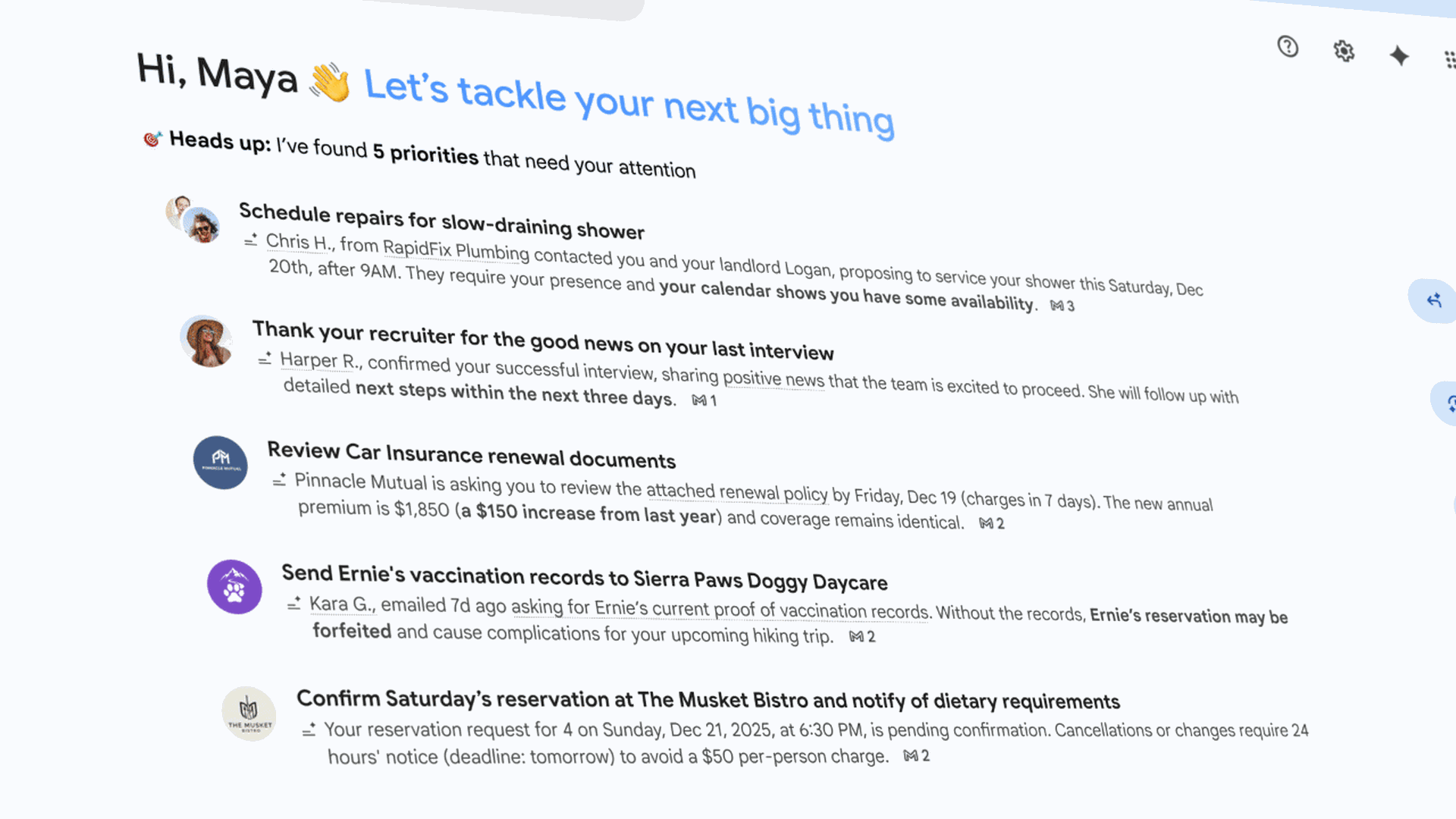
Google is giving Gmail a big AI boost with a built-in proofreader, an automated summary of long e-mail threads and an "AI Inbox" that plows through your e-mail to suggest tasks that need follow-up.
Why it matters: The new features are part of an effort to make finding information in e-mail more like talking with a chatbot.
President Trump's embrace of AI could be a political gift to Democrats. Instead, it's exposing a major split in the party.
Why it matters: As the tech industry aligns with the White House, Democrats are weighing whether to lean into a populist message aimed at protecting workers, challenging tech billionaires and pushing back on data centers — or embrace a more innovation-friendly approach.
Mixed reactions to OpenAI's new ChatGPT Health feature highlight demand for more personalized medical help tempered by chatbot safety and privacy concerns.
Why it matters: Health has become a go-to topic for chatbot queries, with more than 40 million people consulting ChatGPT daily for health advice and hundreds of millions doing so each week.