Character.AI and Google have agreed to settle multiple lawsuits brought by families of teens who harmed themselves or died by suicide after interacting with Character.AI's chatbot online, per court documents made public this week.
Why it matters: The settlements would mark the first resolutions in the wave of lawsuits against tech companies whose AI chatbots encouraged teens to hurt or kill themselves.
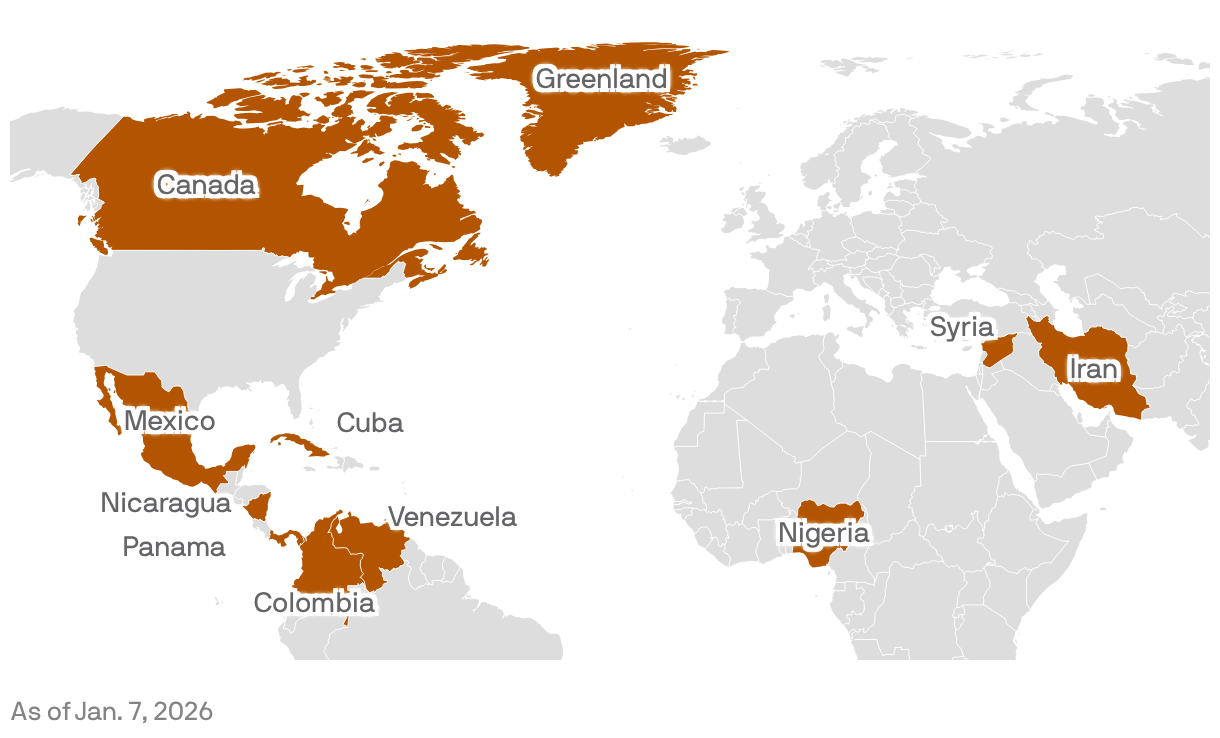
President Trump has put the world on alert as he's threatened countries across the globe with possible U.S. military action.
The big picture: Following the U.S. capture of Venezuelan leader Nicolás Maduro last weekend, President Trump has suggested multiple Latin American countries might be next, citing the so-called Donroe Doctrine, a play on the Monroe Doctrine.
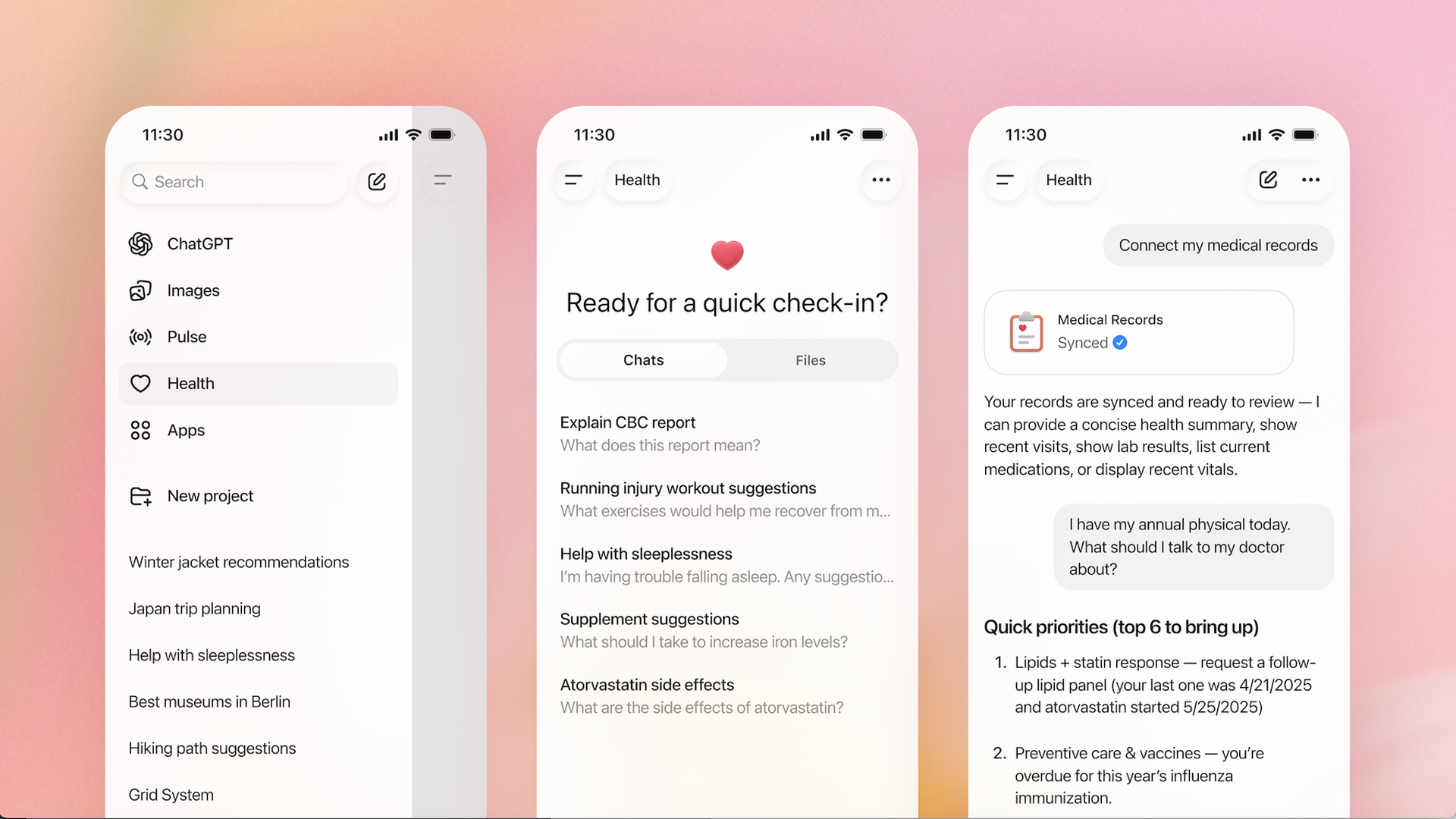
OpenAI is expanding its capabilities by adding a dedicated health tab to ChatGPT, allowing people to bring in electronic medical records and other data from apps like Apple Health and MyFitnessPal.
Why it matters: Seeking answers for health-related queries is already a top use of ChatGPT, with more than 40 million people using it daily for medical and health insurance questions.
Kalshi's CEO on Wednesday endorsed a prediction markets ban on insider trading by government officials, saying his company already disallows it.
Why it matters: Prediction markets have come under scrutiny after multiple recent examples of traders apparently making a fortune by betting on markets with inside information.
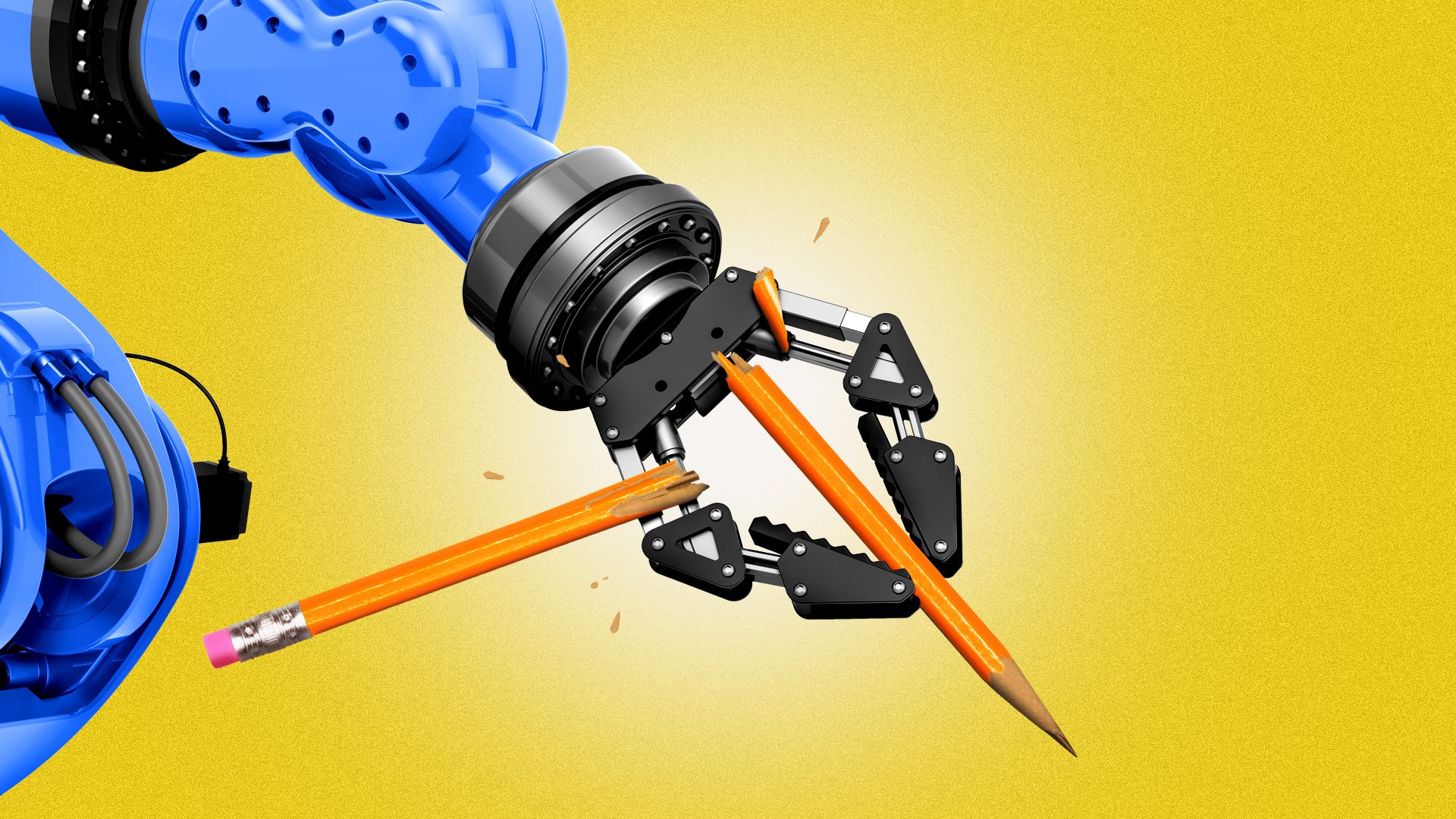
My dog is smart, but without an opposable thumb, he still can't open the door to let himself out. Humanoid robots have a similar problem.
Why it matters: Despite huge breakthroughs in artificial intelligence that enable these clever machines to learn from human feedback or their environment, their clawlike hands are still too clumsy for most jobs.
Grok's continued posting of nonconsensual images on X highlights a key unsettled legal issue around artificial intelligence: just who — if anyone — is liable for harm caused by a chatbot's outputs.
Why it matters: Businesses, individuals and society are increasingly reliant on AI, but there's little clarity over who bears responsibility when things go wrong.
Hunger is breeding creativity in the race to fuel AI data centers and meet rising U.S. power demand — with repurposed naval reactors and aircraft engines among the latest examples.
Why it matters: Companies are exploring fresh ways to repurpose existing tech used in other sectors, even as more familiar sources — like traditional gas, solar, and nuclear plants — play starring roles in the data center boom.
What do you get when you craminto the same room years of experience from inside the Pentagon, Defense Innovation Unit, Marine Corps, Air Force, SpaceX, Unity and Virgin Hyperloop? Gambit.
The big picture: The dual-use software company wants to make coordination across machines — aerial drones, ground robotics and more — smart and seamless, no matter the brand or builder.
"As a kid growing up in the '90s, very influenced by the Trinity scene in 'The Matrix' where she's like, 'Tank, I need a helicopter program,' how do you create the helicopter program?" CEO Josh Giegel told Axios.