Grok's bikini-clad images raise legal red flags


Add Axios as your preferred source to
see more of our stories on Google.
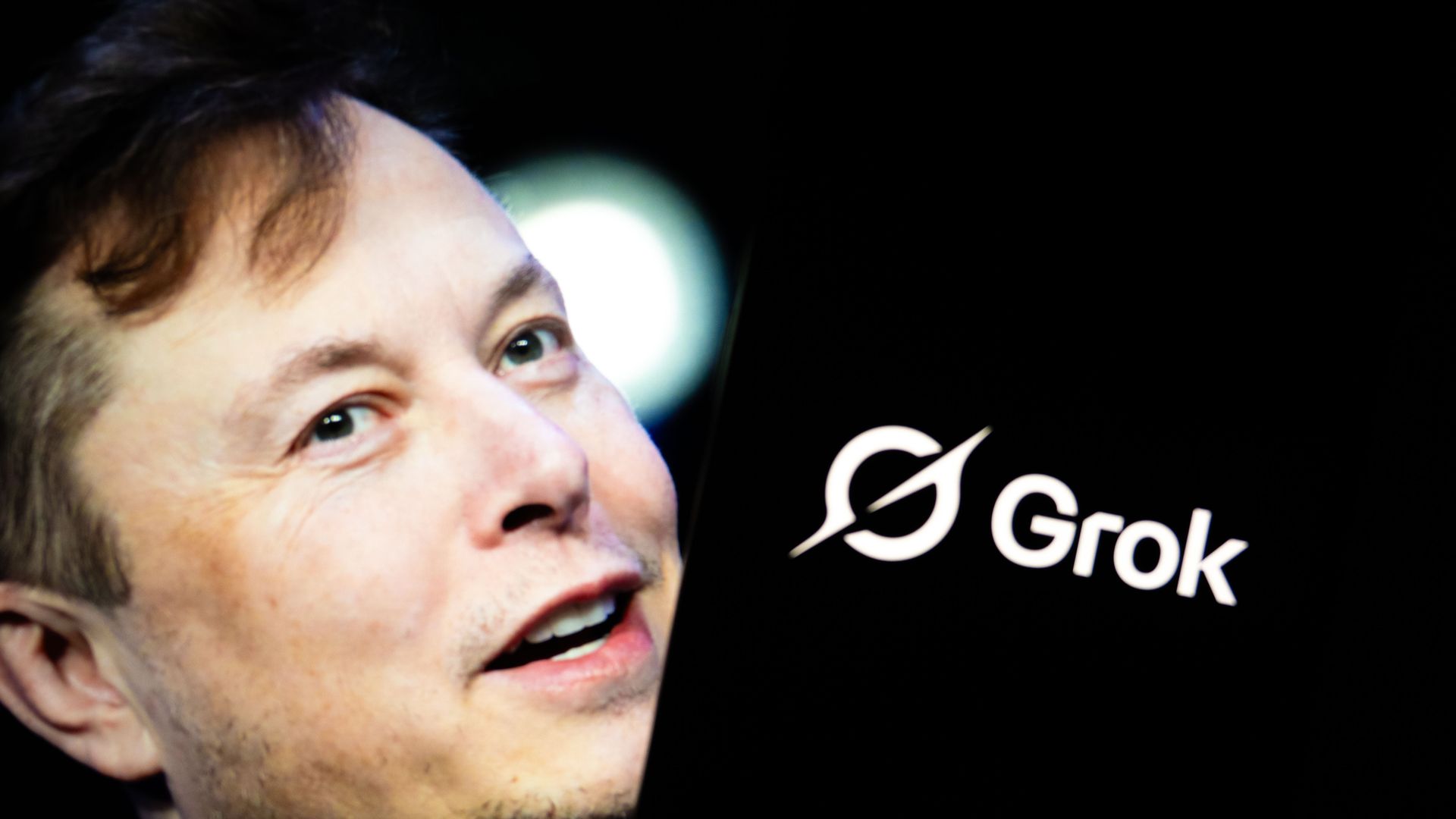
The Grok logo displayed on a mobile phone screen in front of a picture of Elon Musk. Photo illustration: Didem Mente/Anadolu
Elon Musk's Grok chatbot continues to generate image edits that put people in bikinis even as regulators and lawmakers in the U.S. and abroad warn of legal risk.
Why it matters: Public X feeds feature Grok's AI creations, openly revealing images to the world that many other users may be creating and sharing in private.
Driving the news: In recent days, Grok's feed on X has filled with responses to requests to edit photos by replacing the clothing of women — and in some cases girls — with bikinis.
- Regulators in the U.K., France, India and elsewhere have warned of potential investigations and other action in response.
- In the U.S., legislators in both houses of Congress are also expressing concern.
- Meanwhile, a look at Grok's public "replies" feed on Monday showed the chatbot continuing to put women, men and even objects into bikinis.
What they're saying: U.S. lawmakers are sharply criticizing X and other tech companies for failing to curb harmful and illegal AI-generated content.
- "AI chatbots are not protected by Section 230 for content they generate, and companies should be held fully responsible for the criminal and harmful results of that content," Sen. Ron Wyden (D-Ore.) said in a statement to Axios. "States must step in to hold X and Musk accountable if Trump's DOJ won't."
- "The Department of Justice takes AI-generated child sex abuse material extremely seriously and will aggressively prosecute any producer or possessor of CSAM," a DOJ spokesperson told Axios. "We continue to explore ways to optimize enforcement in this space to protect children and hold accountable individuals who exploit technology to harm our most vulnerable."
- "This grotesque behavior will only get worse," Rep. Jake Auchincloss (D-Mass.) told Axios. "My bipartisan legislation — the Deepfake Liability Act — will make hosting sexualized deepfakes of women and kids a board-level problem for Musk and [Meta CEO Mark] Zuckerberg."
Zoom in: In the U.K., regulators say they've contacted X about the child sex abuse material and the images of undressed adults
- "We have made urgent contact with X and xAI to understand what steps they have taken to comply with their legal duties to protect users in the U.K.," British telecom regulator Ofcom said in a statement posted to X.
- "Based on their response we will undertake a swift assessment to determine whether there are potential compliance issues that warrant investigation," the statement said.
The big picture: Musk and the X Safety team have warned users that they will be held accountable if they ask Grok to create illegal images, while also touting Grok's abilities and reportedly record traffic on X.
- Lawyers tell Axios that Grok also bears liability because it generates the images itself with its AI.
- "The company is creating this new material, so it's not mere instruction by the user," Ari Waldman, a law professor at the University of California at Irvine, told Axios.
- "It doesn't mean that it's user-generated material; it is generated by the platform. So you can have criminal and civil liability for all of the parties involved, one does not preclude the other," Waldman says.
- "So Elon Musk saying that he's going to hold someone responsible is fine, but as with many things that he does, he's not telling the whole story. He can also be liable."
Between the lines: Grok is also unique among chatbots in that it is not only generating images but also, in many cases, sharing the generations publicly to the Grok X feed.
What to watch: In the U.S., the TAKE IT DOWN Act was signed into law last year, prohibiting the nonconsensual online publication of intimate visual depictions of individuals of all ages, to be enforced by the Federal Trade Commission.
- The law does not fully go into effect until May 2026. The FTC did not respond to a request for comment.
