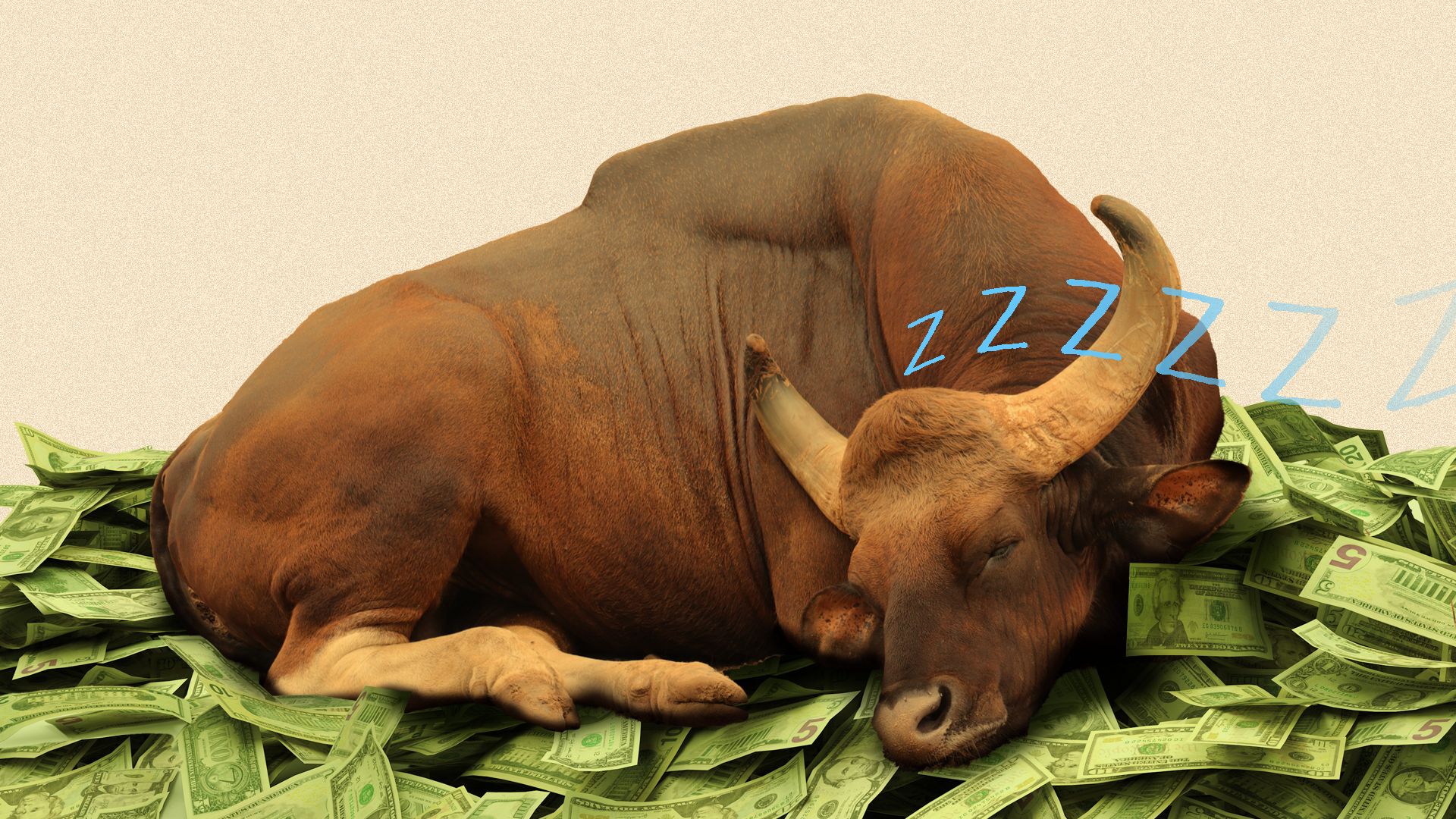
Market bulls, briefly roused Thursday morning, have slipped back into a fall hibernation.
Why it matters: The world's largest retailer, world's most valuable company and world's largest economy all showed signs of life — but not enough to shift the mood of increasingly jittery investors.
Companies are spending more on CEO security — everything from bodyguards to home security systems and armored cars, per a report out Thursday on executive pay.
Why it matters: High-profile shootings have executives on alert, a simmering fear that jumped considerably last year after the deadly shooting of UnitedHealthcare's Brian Thompson.
NEW YORK — Artificial intelligence and shifting markets were top of mind at the Axios BFD summit on Nov. 18, as was adapting to changing political headwinds.
Why it matters: Rates, regulations and AI are transforming how money moves, with decisions by power players playing an outsized role in determining market stability and economic opportunity in the United States and beyond.
The event was sponsored by Bayer and the Center for Audit Quality.
Here are seven key takeaways:
Sequoia Capital's Roelof Botha told Axios' Dan Primack that SpaceX has a "bigger chance of being the most valuable company" than OpenAI. "SpaceX, by itself, is responsible for 80% of all mass moved into orbit last year. It dominates that particular industry," whereas OpenAI has trade competition.
Coinbase President and COO Emilie Choiexclusively told Axios' Dan Primack her company contributed to President Trump's White House ballroom project to "keep good relations with" the administration.
Private credit is less susceptible to hidden problems than public markets, Blue Owl Capital's Marc Lipschultz said, and isn't as likely to be spooked by hidden "cockroaches." "Our documents, our covenants, our restrictions on what that company can do are far, far tighter than the public market equivalent," he said.
Investors shouldn't worry about sports gambling scandals, said Gerry Cardinale, founder and managing partner of RedBird Capital Partners, despite NBA and MLB investigations and arrests involving athletes and games.
Hugging Face CEO Clem Delangue warned it is large language models, and not AI, that are the bubble waiting to burst in the year ahead.
Affirm's Max Levchin shared the company's mindset toward its prospective and existing borrowers: "You behave like an adult, and we'll treat you like one, and if you can't play by the rules, we're not interested in transacting with you."
The Center for Audit Quality CEO Julie Bell Lindsay told Axios publisher Nicholas Johnston that CAQ expects the Securities and Exchange Commission to issue a proposal soon on quarterly reports and whether they will remain mandatory.
"Auditors are not one-trick ponies," she said. "It's the data analysis. It's the professional skepticism. It's the independence."
Bayer Pharmaceuticals worldwide COO and Bayer U.S. president Sebastian Guth shared that the corporation is focused on cancer, cardiovascular and women's health care because those conditions affect almost everyone.
"The biopharmaceutical industry is the crown jewel of American industries," Guth said, but "China is catching up."
House members in both parties are groaning about what they say is the out of control use of censure as a partisan tool — with one member even floating a proposal to raise the threshold for censuring his colleagues.
Why it matters: Censure was once the gravest rebuke the House could give to its members short of expulsion, but its use has exploded in recent years and it has become little more than a slap on the wrist.
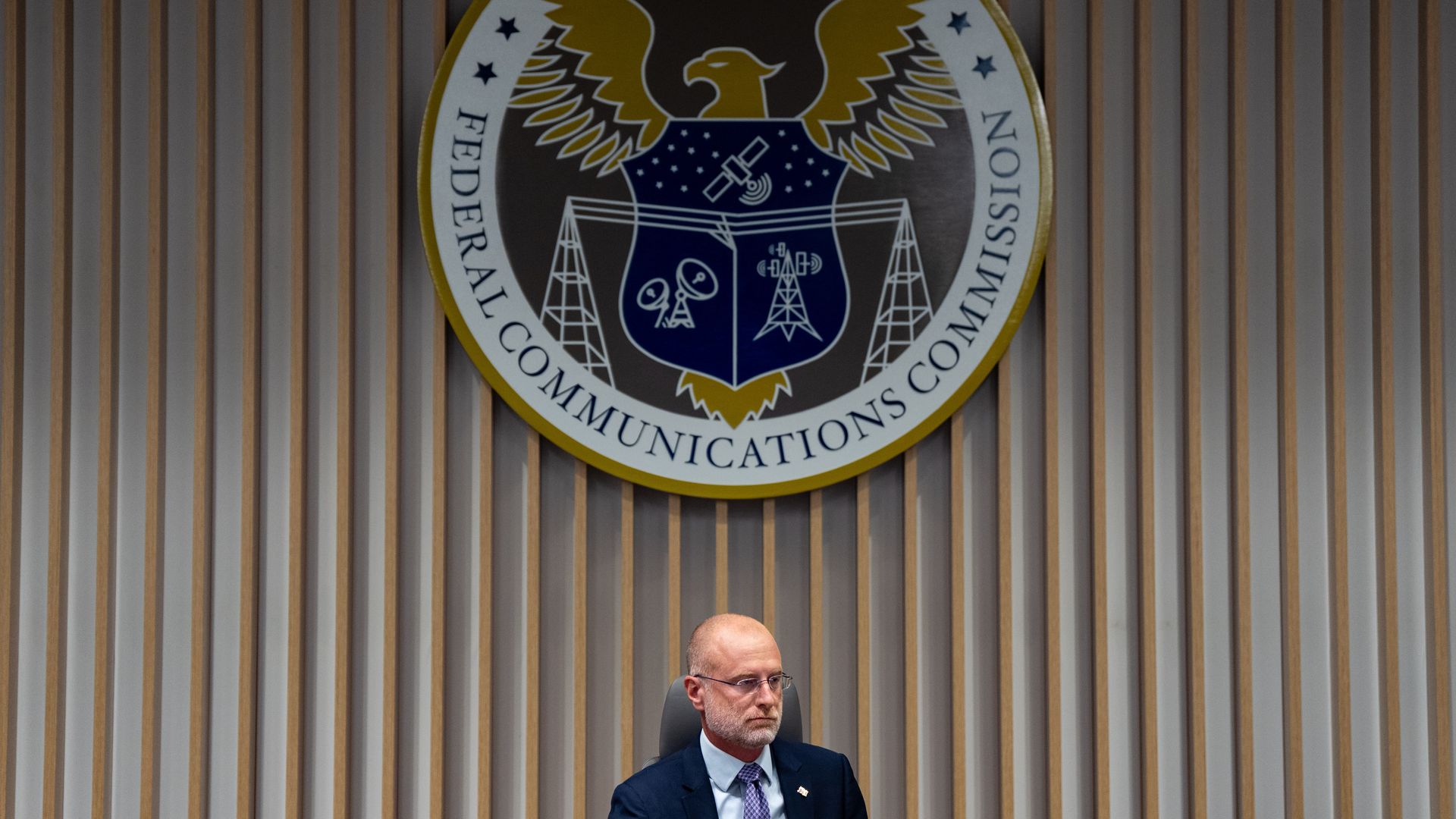
The Federal Communications Commission voted to rescind cybersecurity rules for telecommunications providers a year after the U.S. government discovered a wide-reaching, China-backed hack of their networks.
Why it matters: The agency is now relying on industry collaboration to ensure that major telcos can prevent another nation-state cyberattack.
Big Tech has defeated its bipartisan critics, setting itself up to get even bigger.
The big picture: There is widespread agreement in D.C. that a small handful of companies have become uncomfortably powerful.
But almost all efforts to stem the tide have failed, leaving politicians with few deliverables beyond viral videos of CEOs being berated during congressional hearings.
Nvidia, the most valuable company in the world, delivered record earnings results for the third quarter, with revenue up 62% year over year, impressing even the lone analyst on Wall Street with a sell rating on the stock.
Why it matters: The results, and the market reaction thus far, indicate that nothing is stopping the Nvidia train.
What they're saying: "It was a good quarter, I give them full credit for that," Jay Goldberg, the lone bear and senior analyst at Seaport Research Partners, told Axios after the earnings release Wednesday.
"Honestly, I thought it was going to be a much stronger guide. But this is still a decent guide," he said, adding the guidance beat may not be enough for investors forget the recent tech headwinds.
On the call, Nvidia CFO Colette Kress said the firm expects half a trillion dollars of revenue from its Blackwell and Rubin chips through 2026.
"Blackwell sales are off the charts, and cloud GPUs are sold out," Nvidia CEO Jensen Huang said in a statement in the earnings release.
Zoom out: The broader question of whether the market is heading full speed ahead into an AI bubble lies on Nvidia's back, given that it makes up 8% of the S&P 500 and 1% of the global market.
Huang addressed this at the top of his remarks on the call: "There's been a lot of talk about an AI bubble. From our vantage point, we see something very different."
He then talked about examples of returns on AI investment, mentioning everything from Meta's advertising business to expansion opportunities for OpenAI.
Reality check: The results are still not enough to make Goldberg change his sell rating, he said, since he is still concerned about how long customers can keep spending billions on Nvidia chips.
He is concerned about the path forward for neocloud players in particular.
"The sort of growing looming question is how long can they keep this up?"
What to watch: Whether the results lift the broader market.
Headwinds facing Nvidia and the broader AI ecosystem were "not put to rest" with these results, Dan Morgan at Synovus Trust wrote in a note.
Everywhere Republicans look, they see big political trouble. Worse, they think things will get much bleaker before better as AI spreads through 2026.
They see it in the top November races, where they got cooked.
They see it in rising internal MAGA drama and division.
And they increasingly see it in private and public polls showing President Trump's persistently plummeting popularity on key issues.
Why it matters: Step back and survey the political landscape. Republicans aren't only losing elections, they're consistently losing support on prices and the economy, in all polls, big or small, Republican or Democrat, over a several-month period. You can't spin yourself out of reality.
All major chatbots are "fundamentally" unsafe for teen mental health support, children's advocacy group Common Sense Media said Thursday in a report showing systemic issues across the board.
Why it matters: People of all ages are turning to chatbots for therapy and mental health help, even as experts disagree on whether that's safe.
The Middle East is fast becoming not just a deep-pocketed investor in AI but a hot spot for data centers, highlighted by a new wave of Saudi deals announced Wednesday.
Why it matters: Allowing these deals is part of a strategic effort to ensure Saudi Arabia and other countries in the Middle East adopt U.S. technology rather than AI systems from China.
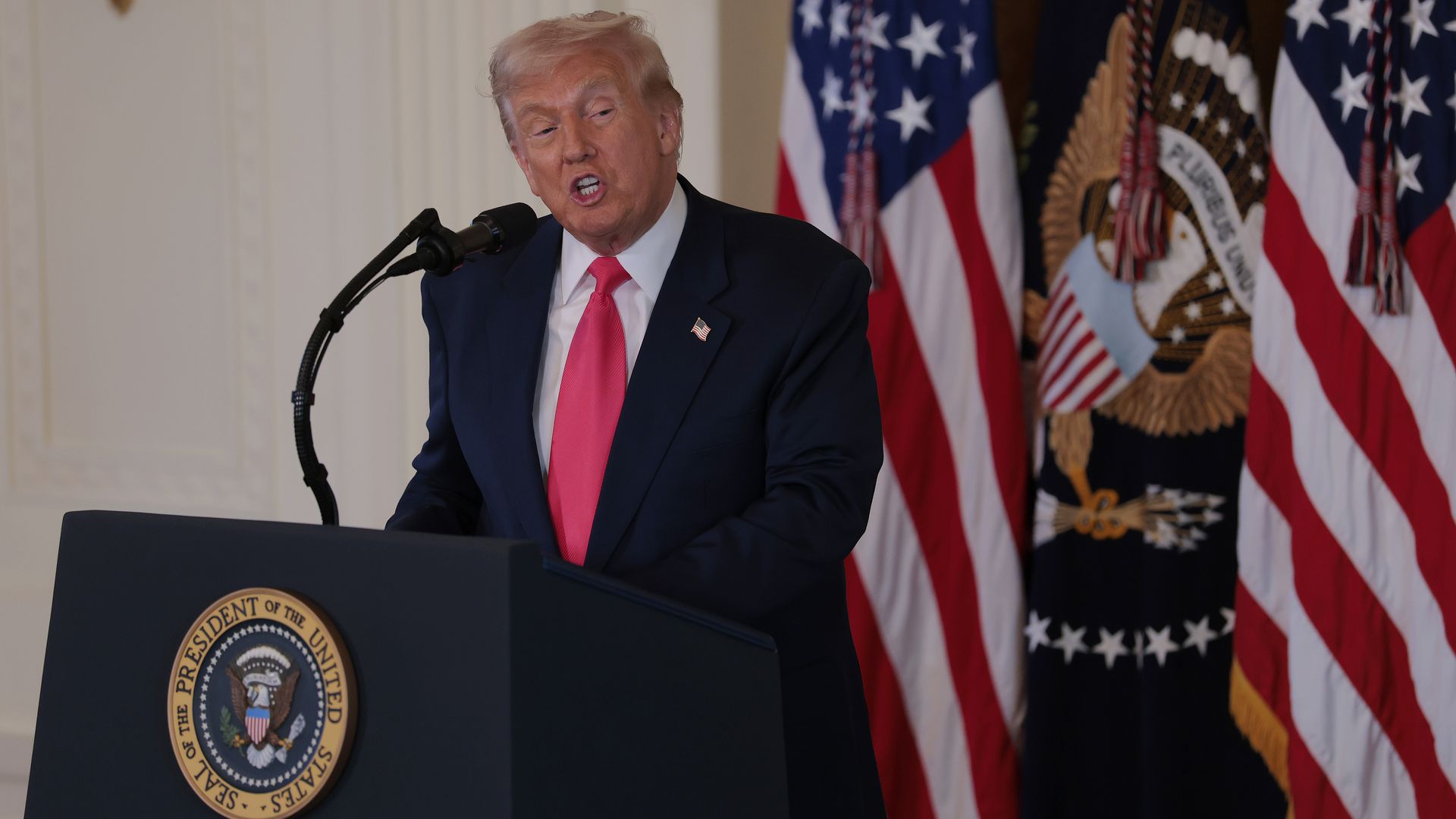
President Trump signed a bill ordering the Department of Justice to release all of the files related to the late sex offender Jeffrey Epstein, he announced on Wednesday night.
Why it matters: The bill that passed in Congress on Tuesday requires the DOJ to "make publicly available" within 30 days "a searchable and downloadable format all unclassified records, documents, communications, and investigative materials in the possession" of the department, including the FBI and U.S. attorneys' offices, that relate to Epstein.
Consumers scrambling to take advantage of expiring tax credits for electric cars drove a record-breaking quarter of U.S. clean-energy investments, according to a new report.
Why it matters: It shows that policy matters, especially if it's coming or going.