ByteDance investor Jeff Yass is the biggest donor so far to outside spending groups in the 2024 election cycle, donating more than $46 million to conservative causes and PACs.
Why it matters: Yass beat out the second-highest donor by what Open Secrets reported is more than $11 million, while TikTok, owned by ByteDance, is currently at the center of a heated effort in Congress to crack down on the popular app.
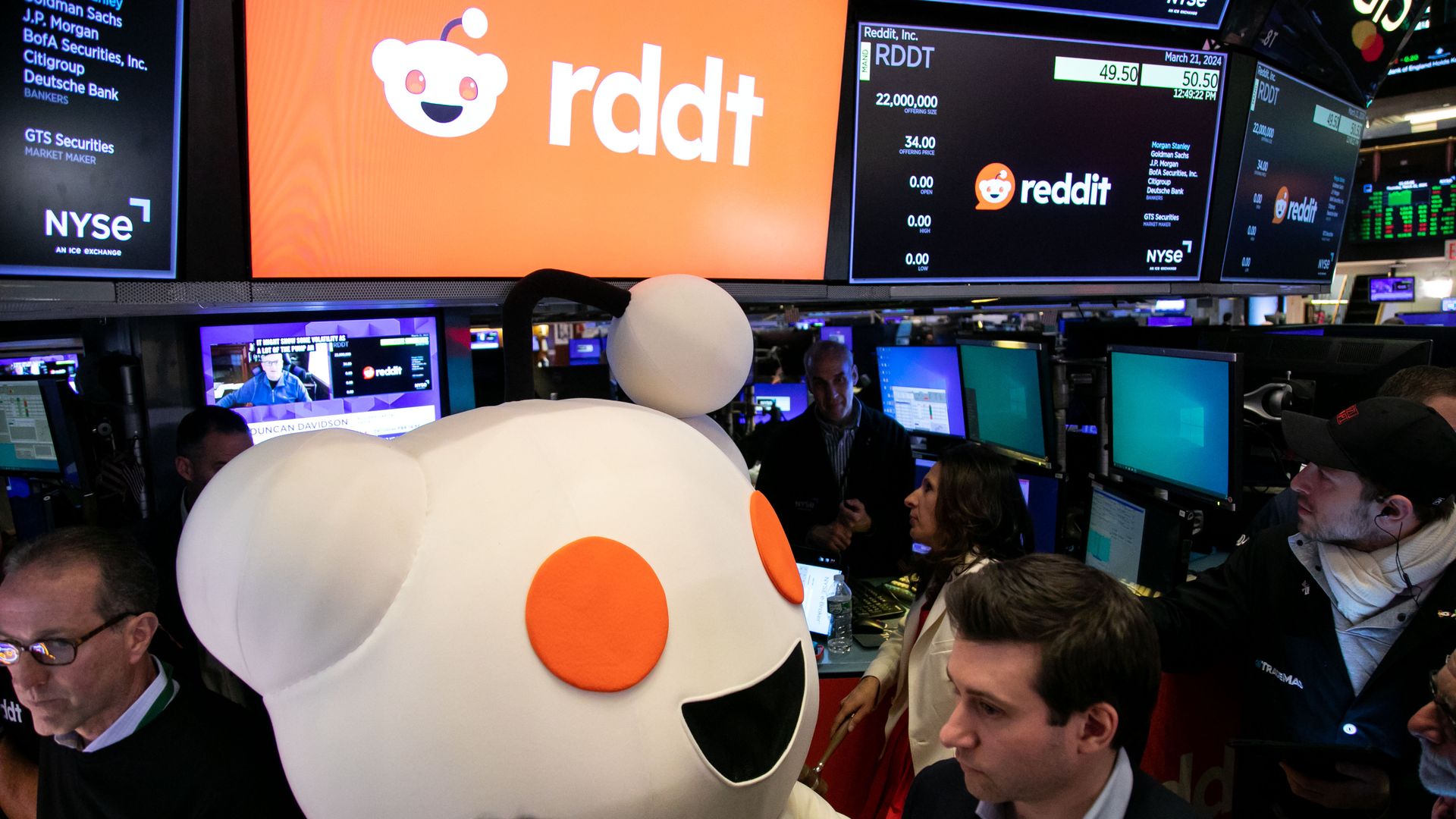
Reddit believes having an IPO in registration for more than two years "was one of the best things that's happened to the company," chief financial officer Drew Vollero told Axios, shortly after shares began trading.
Why he matters: Vollero is no stranger to social media IPOs, having served as CFO for Snap when it went public in 2017.
The Department of Justice's sweeping new antitrust suit against Apple threatens the iPhone maker's core practice — integrating hardware, software and services.
Why it matters: That approach has delighted customers and made the iPhone a global standard — but it also arguably locks users in and unfairly enriches Apple at the expense of potential rivals.
Department of Motor Vehicle facilities nationwide experienced a disruptive network outage on Thursday.
The big picture: DMVs could not conduct driver's license or motor vehicle title transactions during an hours-long loss in cloud connectivity, the American Association of Motor Vehicle Administrators told Axios.
The U.S. has scored a rare diplomatic victory at the United Nations — signing up China as co-sponsor of the first ever AI resolution voted on by the U.N. General Assembly.
Why it matters: The race to develop powerful AI has been a source of geopolitical tension — China's move to co-sponsor American efforts hints at further cooperation on AI safety, and is a win for U.S. diplomats.
The Justice Department and over a dozen state attorneys general filed a civil antitrust lawsuit against Apple in federal court Thursday, accusing it of illegally maintaining a monopoly in the smartphone market.
Why it matters: The suit takes the Biden administration's efforts to limit Big Tech's power to a new level, coming on top of major cases against Google, Meta and Amazon.
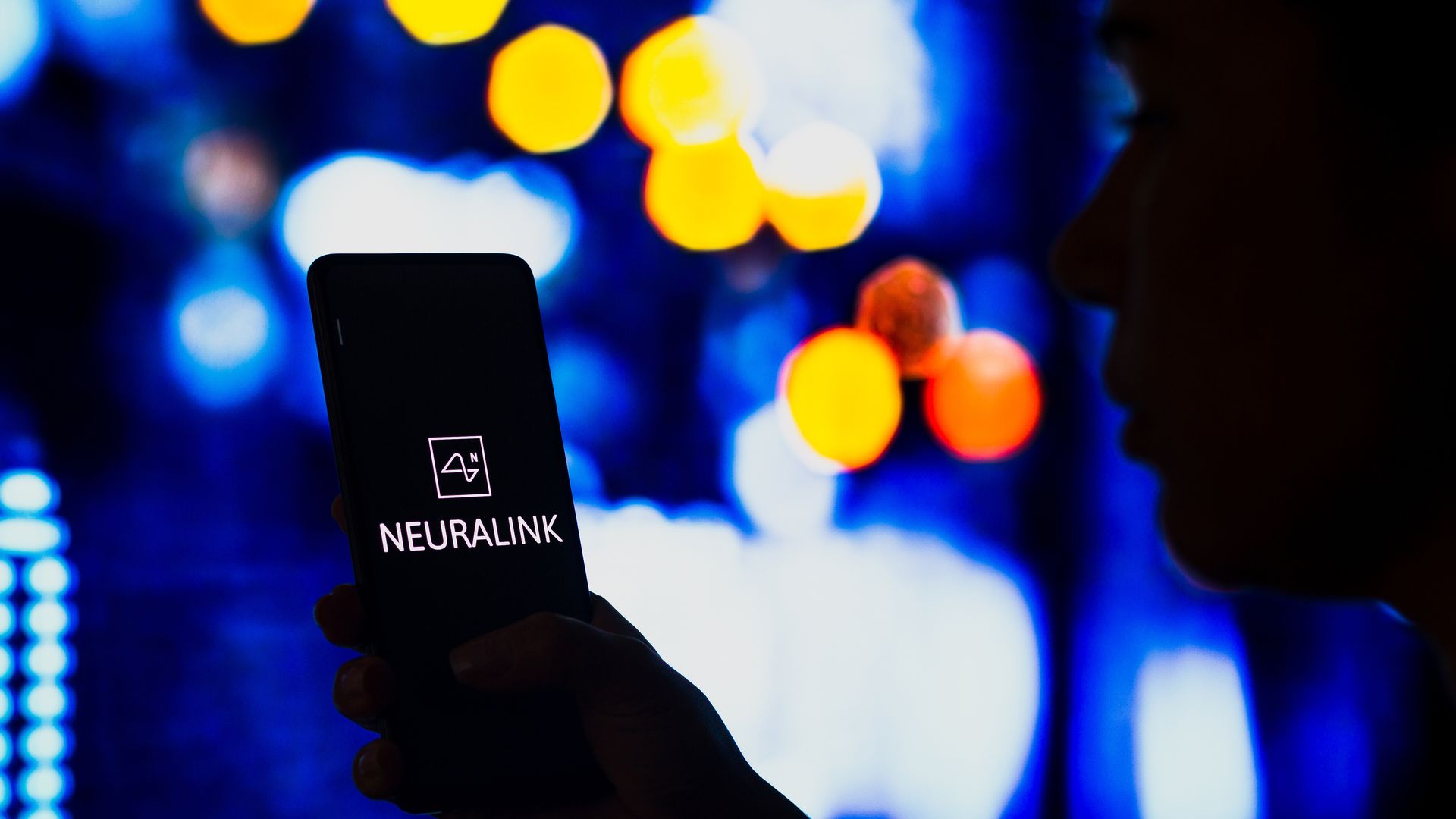
Elon Musk shared video from his computer-brain interface company Neuralink announcing the "first-ever" human user of its brain implant, a 29-year-old man with quadriplegia who said the device has enabled him to play online chess and video games.
The big picture: It's one of several brain-computer interface devices being developed that companies hope will someday treat neurological disorders.
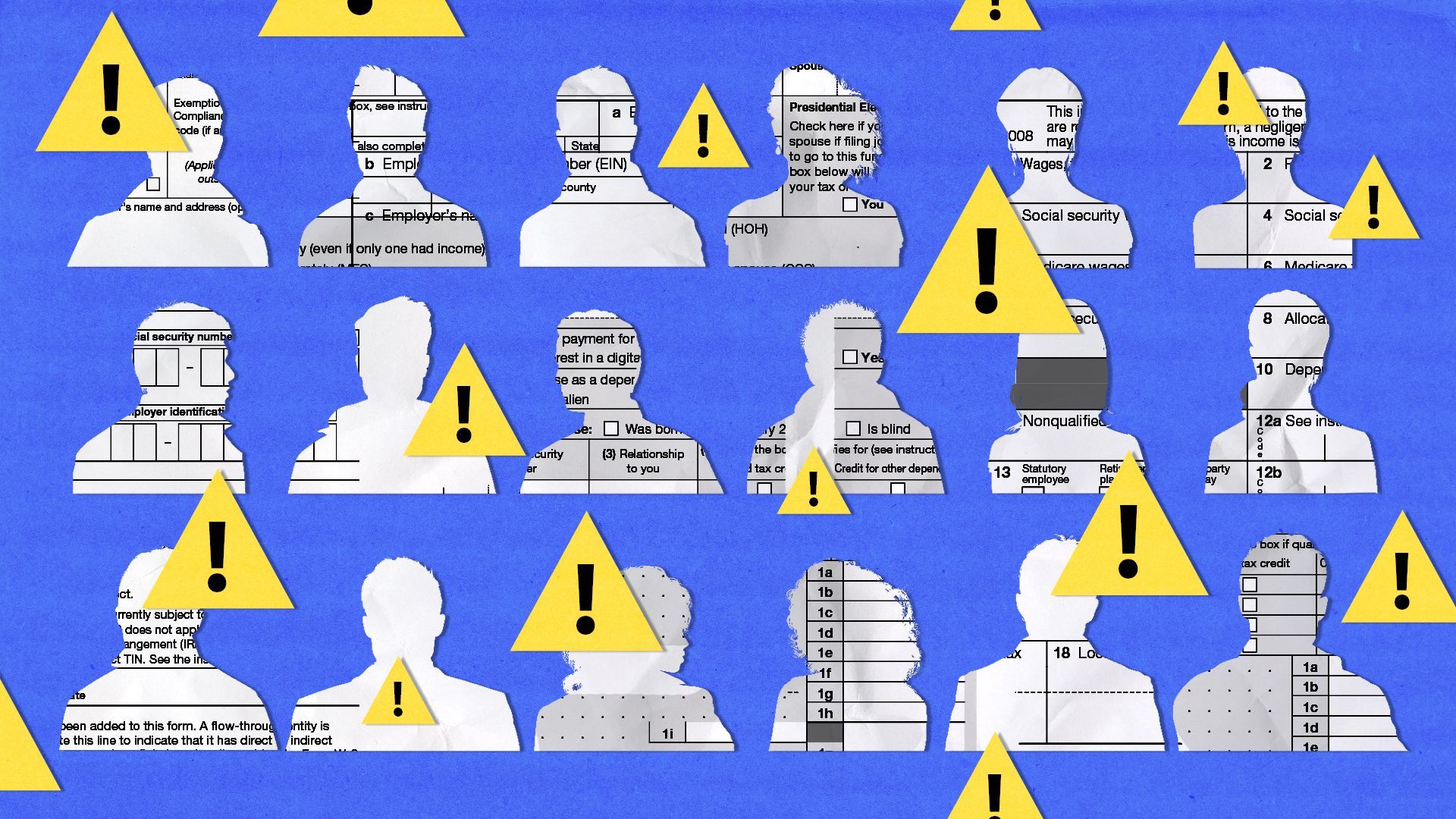
Tax season fraud is set to spike in 2024 as AI enables cybercriminals to generate lifelike images and make convincing videos that impersonate taxpayers to steal their refunds.
Why it matters: Victims of tax-related identity theft wait an average of 19 months for the IRS to correct and send their refunds.
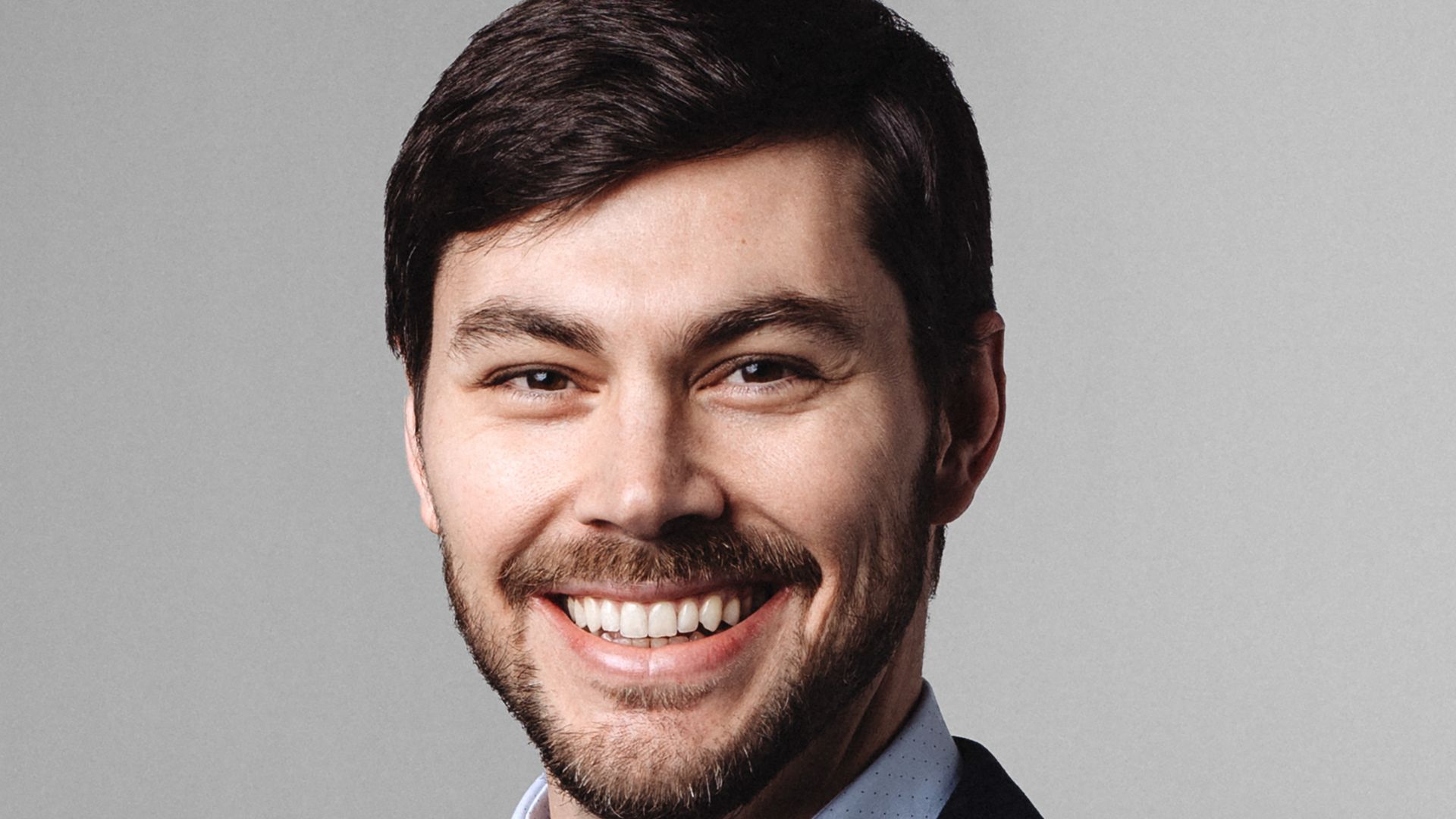
Diogo Mónica, co-founder of crypto custodian Anchorage Digital, is joining Haun Ventures as only its second general partner.
Why it matters: Haun Ventures is one of crypto's most active investors, and Mónica's background should give the firm added credibility with entrepreneurs.
Getting a carton of eggs delivered flawlessly by drone is impressive — in fact, it's downright miraculous! — but behind the scenes there are still a lot of inefficiencies to work out.
Why it matters: Drone delivery isn't a fantasy anymore. It's already happening in certain neighborhoods near Dallas, Salt Lake City, Tampa and Phoenix, among others. And it's going to expand in a huge way starting this year.
Big AI is just going to keep getting bigger: that's the takeaway from this week's onslaught of AI news — and it's barely Wednesday.
Why it matters: Generative AI's disruptive force once looked like it might open a door to new players on the Big Tech chessboard. But AI's high cost and the incumbents' strong hands have dimmed that prospect, and instead we're seeing the industry's giants concentrate more power.



/2024/03/21/1711049088217.gif?w=3840)









/2024/03/19/1710875127318.gif?w=3840)