U.S. lawmakers are trying to regulate TikTok over long-standing alleged national security concerns, but it's unlikely the app is going anywhere anytime soon.
The big picture: Although Washington surprised even TikTok with its accelerated recent attempt to potentially ban the wildly popular video app, the efforts still face hurdles.
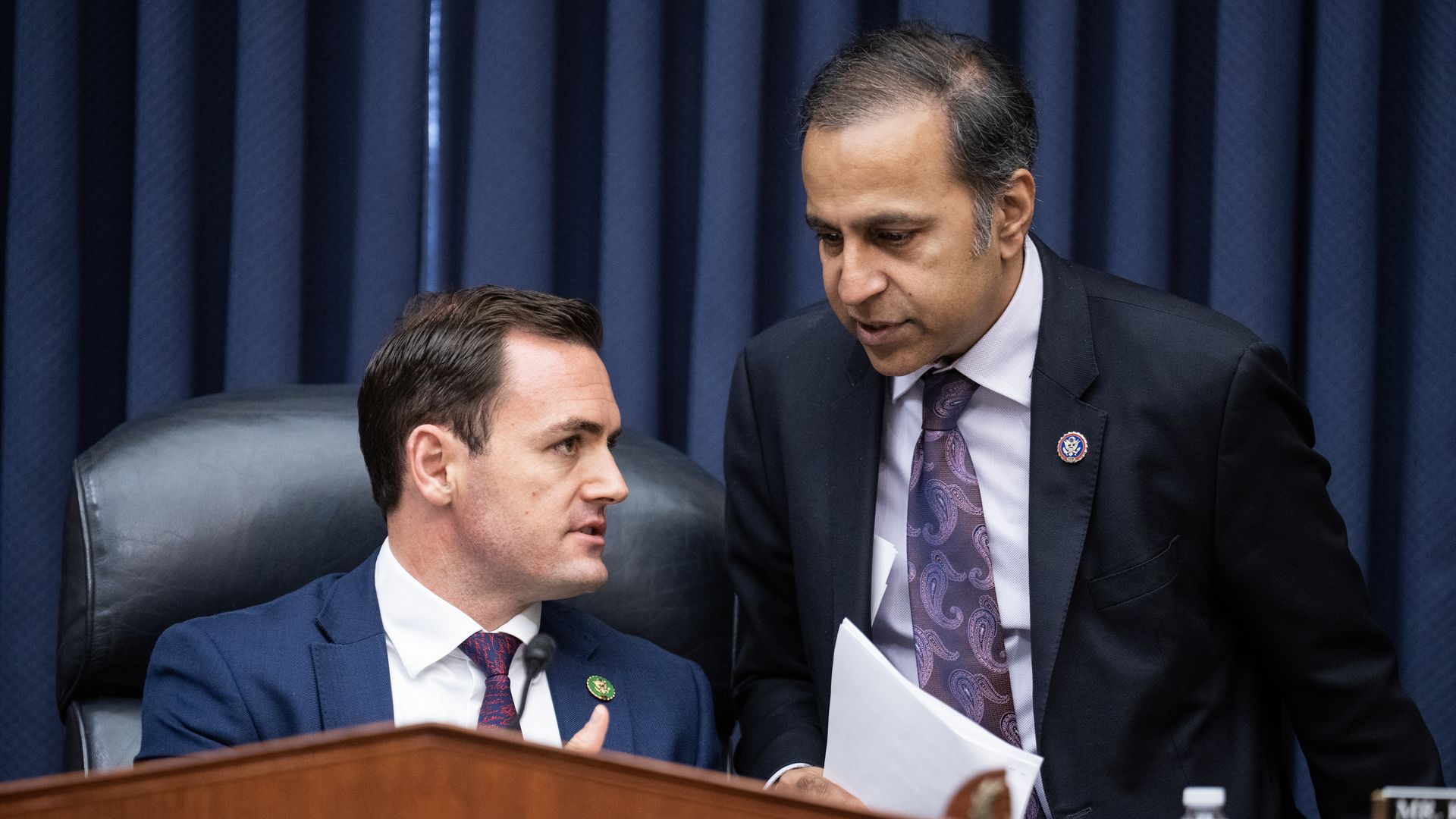
House Democrats are warning that legislation that could lead to a ban of TikTok risks intensifying their party's problems with young voters heading into the 2024 election.
Why it matters: Young voters have made up the backbone of the Democratic coalition in recent elections, but both parties have ramped up their courtship of the critical voting bloc this year.
A years-long battle over TikTok's fate in the U.S. is escalating this week, as the popular video-sharing platform campaigns against the threat of a ban.
State of play: Following threats from the Trump and Biden administrations, Congress is advancing federal legislation to force China's ByteDance to sell its stake in the U.S. version of TikTok or ban the platform from U.S. app stores. Here's a timeline of how we got here.
The House on Wednesday passed a bipartisan bill that would force China-based ByteDance to sell TikTok or face a ban in the U.S.
Why it matters: Lawmakers passed the bill in a 352-65-1 vote, raising the stakes in a battle that imperils the app for its millions of users across the country.
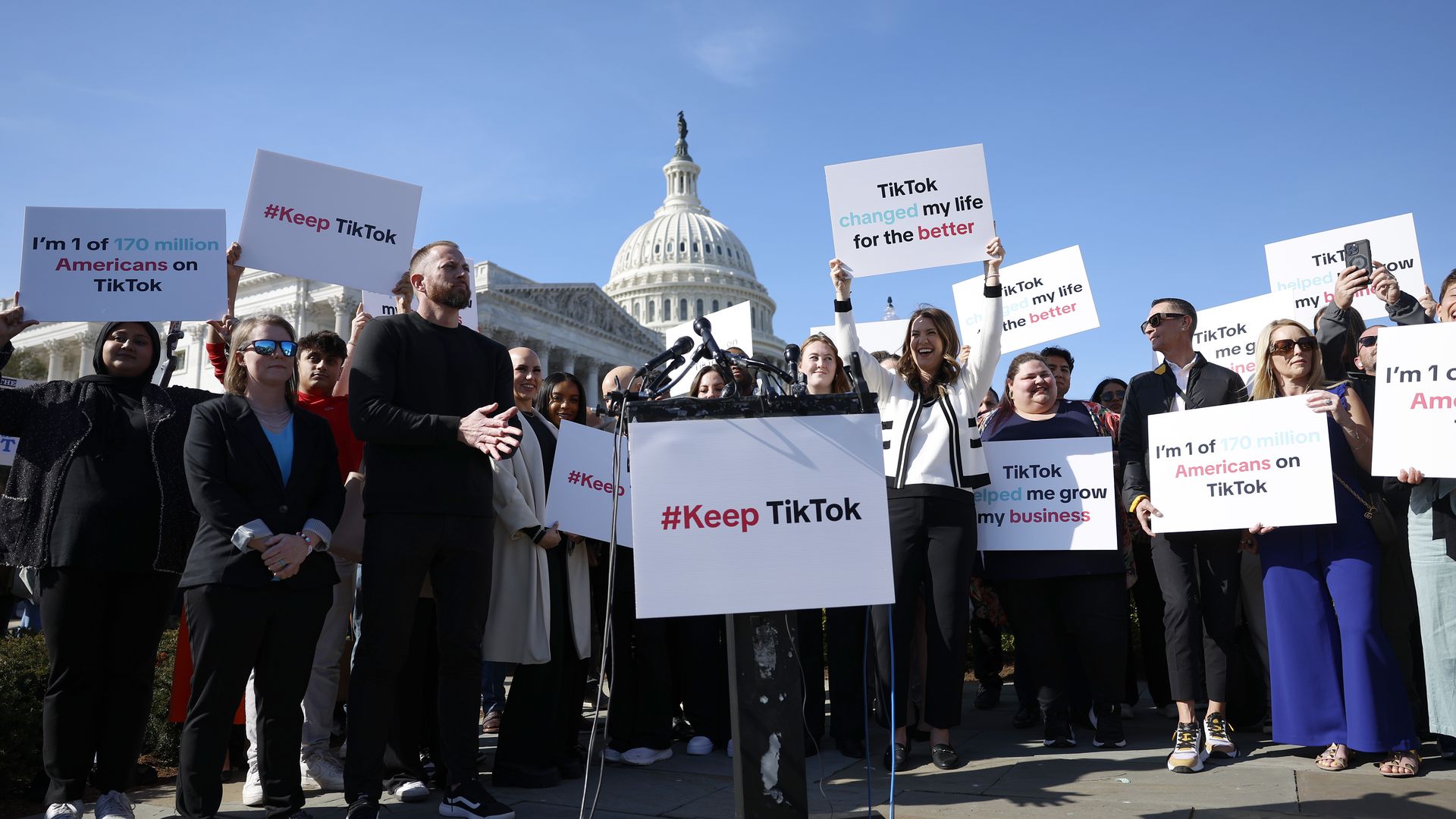
TikTokers are going offline to protest a bill advancing through Congress that could lead to the popular video app's demise.
Why it matters: After the platform's unusual call urging users to contact their representatives, creators have been speaking out about the app's financial and communal benefits and role as a major source of news.
The path to artificial general intelligence (AGI) requires a different approach than today's generative AI models, one inspired by natural ecosystems, argues a newly out-of-stealth-mode firm that's hatched such a project.
Why it matters: Digital intelligence based on a web of intelligent agents is potentially cheaper, more environmentally sustainable, and more geopolitically defensible than one vast system trained on billions of data points.
The Federal Aviation Administration audit of Boeing's 737 Max jet production line found a plethora of issues with the production process.
Why it matters: Boeing, one of the world's largest aerospace manufacturers, has been under intense scrutiny in recent months after one of its 737 MAX 9 jets experienced a mid-flight door plug blowout while at an altitude of nearly 16,000 feet.
Communication leaders spoke about the renewed focus of communication at companies and the strategies they are implementing to adapt to today's shifting cultural landscape at Axios House at SXSW in Austin, TX.
Why it matters: Communicators are vital in today's climate where companies are having to navigate innovations like AI in a world where misinformation is prevalent while staying true to their mission around social and cultural issues.
When it comes to misinformation in GoFundMe fundraisers, chief corporate affairs officer Margaret Richardson says the "social proof"– where people are mainly donating to people they know rather than strangers– helps deter misinformation and drive trust among donors.
She says scammers using AI for misinformation can also help be prevented through that social proof aspect.
GoFundMe is also deploying AI as a trust and safety defense mechanism.
Also, AI will "never replace the dignity and the authenticity" of humans being able to tell their stories their platform, according to Richardson.
What he's saying: Corporate communicators are the "new coders" of their company, Aneesh Raman, vice president and workforce expert at LinkedIn, told Axios' Eleanor Hawkins.
"You [communicators] are doing some of the most important work at your company," says Raman.
Raman added that AI, its impact on work and the uncertainty of today's social climate makes "storytelling matter the most."
Sponsored content:
In a View From the Top sponsored conversation, Jim O'Leary, CEO of Weber Shandwick North America, stressed the need for companies to be "knowledgeable about what's actually going on" in order to mitigate the risk of potentially being misconstrued with political issues.
Thank you to Weber Shandwick for sponsoring this event.
Congress seems to relish its new role as TikTok antagonist, almost as if it's the exasperated parent of an app-addled teenager.
The big picture: This was supposed to be job of CFIUS, the federal inter-agency committee charged with evaluating the national security risks of foreign investments in the U.S. But CFIUS has been missing in action.
The intelligence community's annual global threats report is a stark reminder of what the fast-moving TikTok debate is actually about: China's advancing cyber prowess.
Why it matters: TikTok is activating a group of lobbyists and creators this week to convince lawmakers to vote against a bill aimed at forcing Chinese parent company ByteDance to divest its ownership in the platform.
Empathy, a New York-based support platform for employees and life insurance beneficiaries who've lost loved ones, raised $47 million in Series B funding led by Index Ventures.
Why it matters: Employers often provide bereavement leave and life insurers pay settlements, but neither assist with death's emotional and logistical hardships.
A new startup called Atomic Canyonis harnessing artificial intelligence to help nuclear developers navigate complex federal licensing processes.
Why it matters: The firm's emergence from stealth comes as developers — including small modular reactor companies — will increasingly seek Nuclear Regulatory Commission approvals.
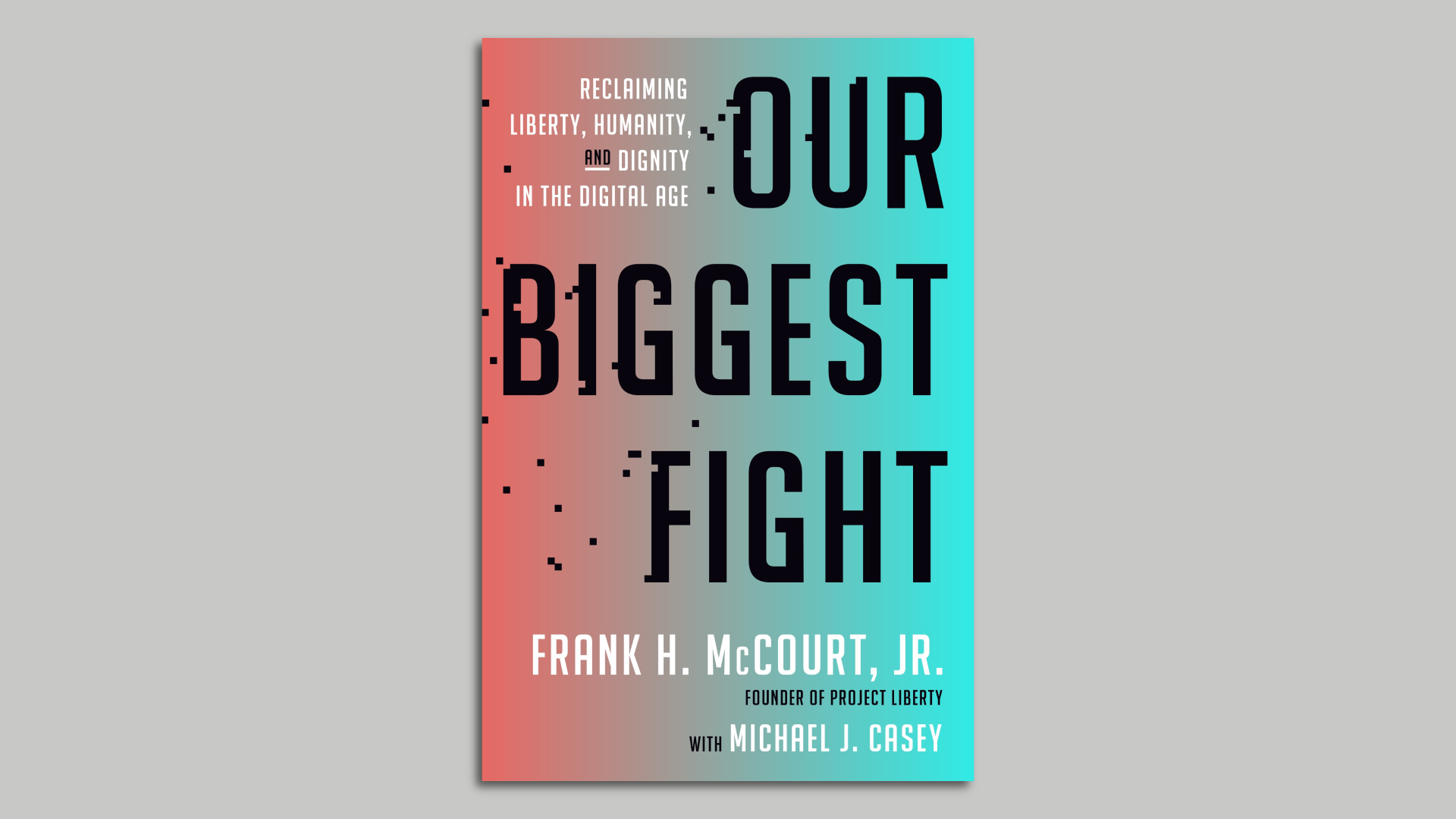
In a world where accelerating global warming and worries of nuclear war fill the public daily with existential dread, infrastructure billionaire (and former L.A. Dodgers owner) Frank McCourt Jr. is here to warn us that one threat in particular dwarfs all others — the power of big technology companies.
Why it matters: McCourt doesn't just have a diagnosis of the problem, he also comes bearing a weirdly simple solution in the form of a new computer networking protocol.
Unionized bus drivers have negotiated an unprecedented labor deal with a local transit agency that gives them veto power over autonomous vehicles (AVs).
Why it matters: It's one way labor unions hope to protect drivers' jobs, even amid driver shortages — and part of a broader backlash against self-driving vehicles.
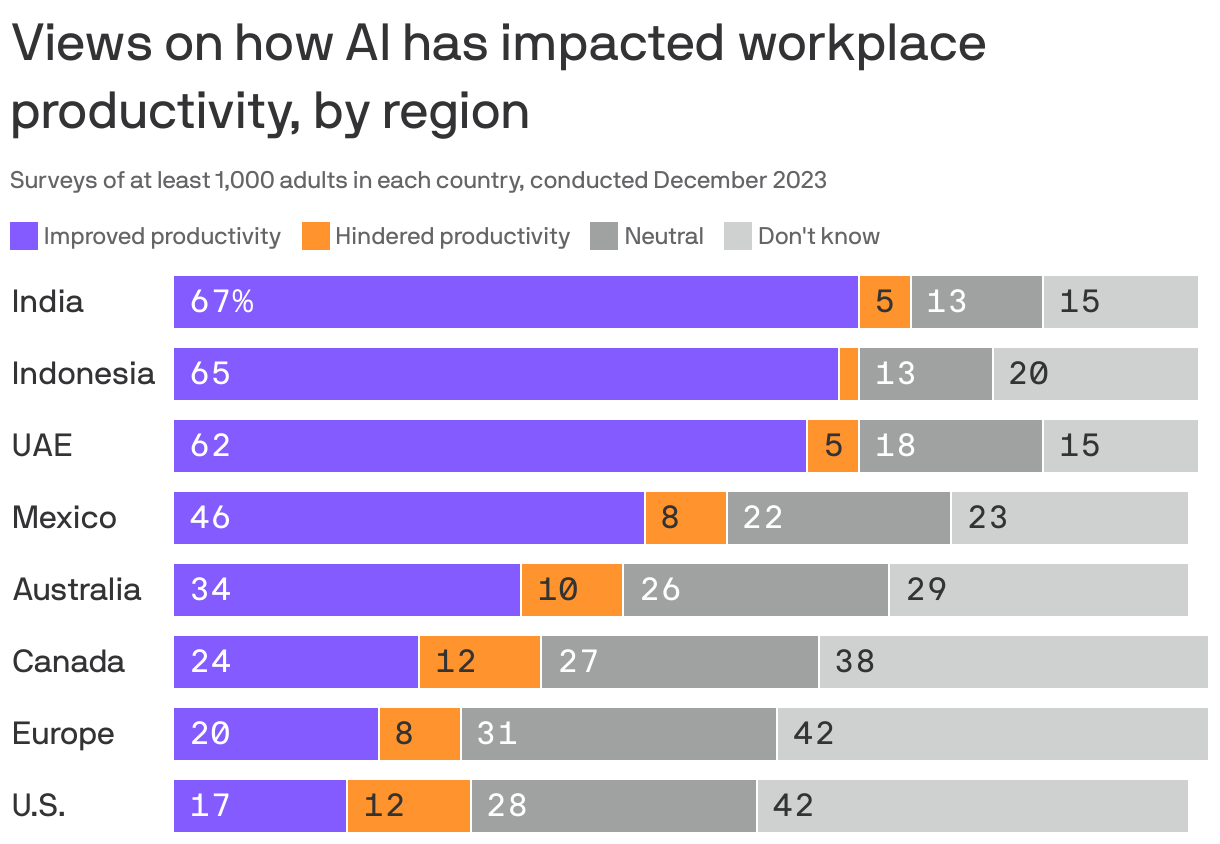
Data: YouGov; Note: The "Europe" group includes Spain, Italy, France, Germany, Denmark, Poland, the U.K. and Sweden; Chart: Erin Davis/Axios Visuals
New data from 17 countries shows workers in Asia are embracing generative AI tools for productivity to far greater degrees than Western workers — with Americans among the least positive about AI's workplace uses.
Why it matters: Business leaders fear that pessimism about AI in the West could make the U.S. and allied countries less competitive.
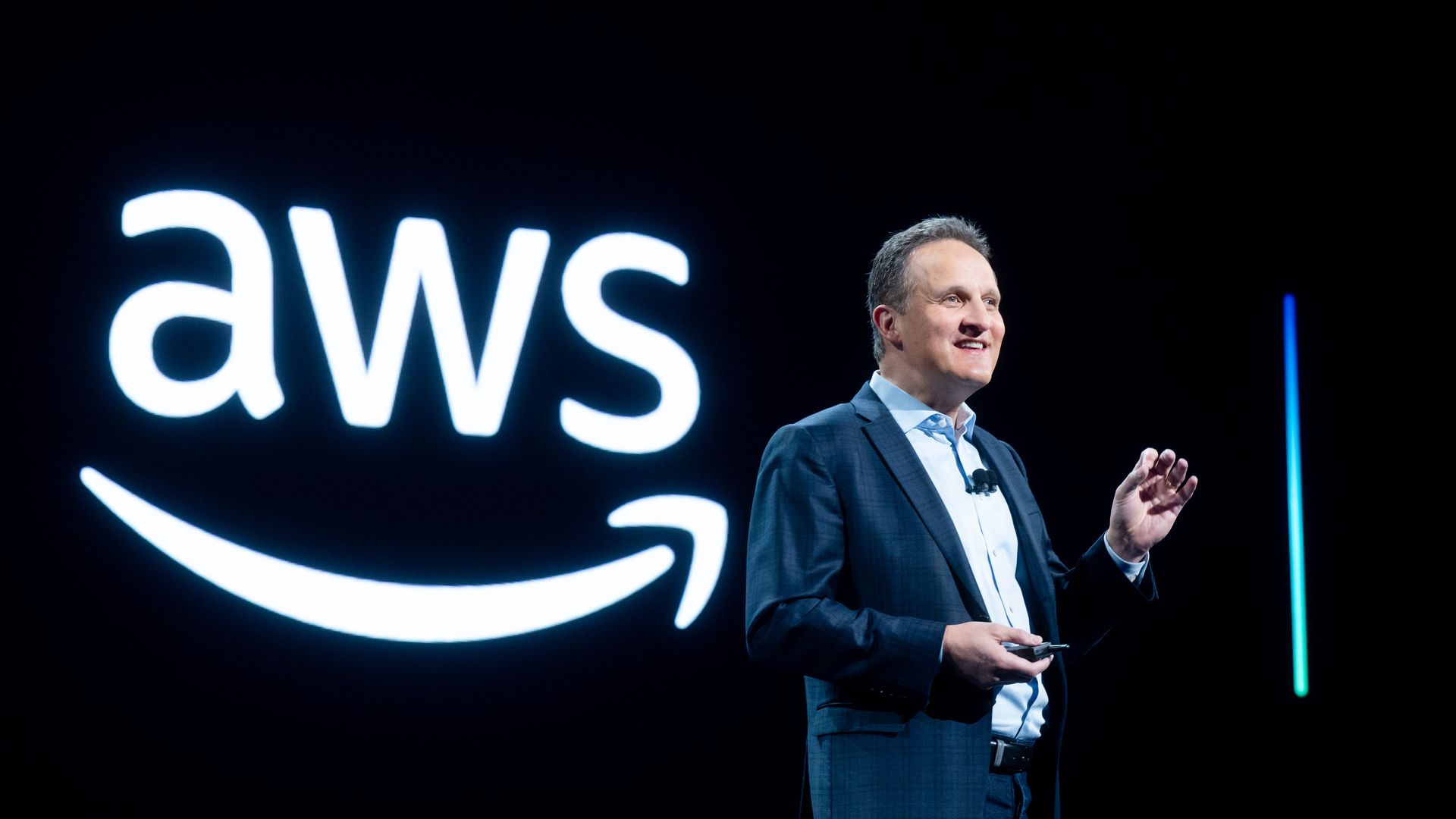
Amazon Web Services CEO Adam Selipsky has more than 10,000 organizations using his Bedrock service to build their AI applications — but that's only around 1% of the potential market, he told Axios.
Why it matters: AWS aims to expand from cloud computing market leader to running the world's biggest AI playground.
TikTok didn't hold back in replying to a letter from the House China Select Committee Monday, defending its right to engage users to advocate against a fast-moving House bill that could lead to a ban of the Chinese-owned app.
Why it matters: TikTok is gearing up for an ugly fight with Congress, escalating its communications strategy at a moment when its existence in the U.S. is under greater threat than ever.
OpenAI shot back at Elon Musk's lawsuit in a court filing on Monday, saying his claims "rest on convoluted — often incoherent — factual premises."
The big picture: The move is the latest in a longstanding feud between Musk and OpenAI CEO Sam Altman over how generative artificial intelligence should be used as the company's ChatGPT revolutionizes its use.

/2024/03/13/1710358104062.gif?w=3840)










/2024/03/11/1710194795211.gif?w=3840)