Senate Majority Leader Chuck Schumer (D-N.Y.) intends to put bipartisan tech antitrust legislation up for a vote by early summer, a Democratic source familiar with the situation tells Axios.
Twitter on Thursday introduced a new policy aimed at making sure the social network doesn't amplify or recommend disinformation during an international armed conflict and crisis.
Why it matters: False material proliferated on Twitter and other social networks in the early days of Russia's invasion of Ukraine.
Campbell Brown, the veteran news anchor who has served as Meta's vice president of news partnerships since 2017, is being promoted to oversee a new global media partnerships team at the company, Meta sources tell Axios.
Why it matters: The new role will allow Brown to focus on broader media partnerships in addition to news. New regulations around the globe are forcing tech firms like Meta and Google to pay to host news content.
The Biden administration has charged the Federal Communications Commission with prohibiting digital discrimination — but without a third Democratic commissioner to break the agency's partisan deadlock, those plans are in trouble.
Why it matters: One of President Biden's key domestic priorities, improving internet access and affordability, can't advance unless the Senate confirms his FCC nominee.
The Federal Trade Commission on Thursday will vote on a measure meant to warn companies the agency will prioritize taking action against children's online privacy violations by education technology companies.
Why it matters: Remote schooling during the pandemic led to an explosion in the use of ed tech services, raising concerns about whether those companies are safeguarding children's data.
Department of Homeland Security said it will pause on the agency's weeks-old Disinformation Governance Board.
Why it matters: The board — which had stated it's intended goal was to "coordinate countering misinformation related to homeland security.” — was widely criticized by Republicans and right-wing media outlets.
Global Switch, a London-based data center operator, is expected to soon launch a formal sale process that could fetch more than $10 billion, per Bloomberg.
Why it matters: Private equity and infrastructure fund interest in data centers isn't new, but macro economic instability could turn this auction into a feeding frenzy, given the sector's (relatively) predictable cash flows.
The creator of Ampleforth, Evan Kuo, really resists his company's chief product, the ampleforth (AMPL) token, getting lumped in with "stablecoins." Yet even when he talks about it, he slips into using the term from time to time.
Details: Stablecoins try to maintain an exact price parity with something, usually the U.S. dollar. Meanwhile, ampleforth simply targets a dollar (sort of, read on), but no one worries if it veers off that price pretty far. It's not a stablecoin. It's sort of a "chillcoin."
Aave Companies, the shop behind a protocol built for crypto lending and borrowing, wants to fix social media.
Driving the news: Lens Protocol launched today on Polygon’s blockchain, inviting developers to build social media apps, marketplaces and recommendation engines that could provide a new decentralized alternative to the social media behemoths.
Twitter bots are a big problem for Elon Musk, or so he claims — so big that he says he'll blow up his deal to acquire the social media platform if the company doesn't agree with his diagnosis.
Yes, but: Whether Musk really means it or he's just got buyer's remorse, his bot-phobia is a head-scratcher for many Twitter veterans, who see bots as a big part of what makes the platform useful and fun.
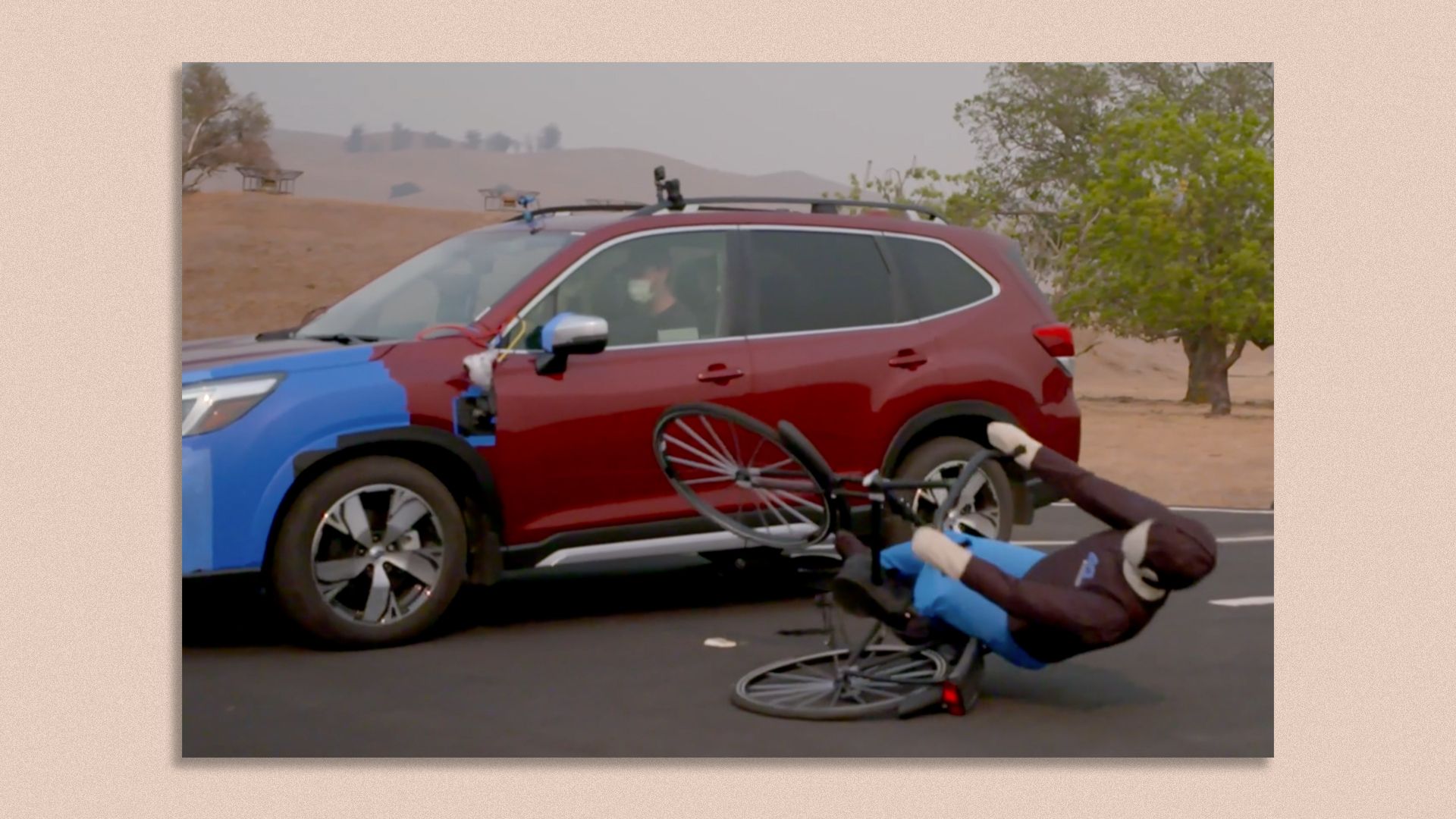
Assisted-driving systems don't perform well enough to consistently avoid collisions, new testing by AAA shows, underscoring why most drivers are skeptical about autonomous vehicles.
Why it matters: Althoughyou still can't buy a self-driving car, a growing number of new cars and trucks are equipped with Automated Driver Assistance Systems, or ADAS technology, that helps cars steer, stay in their lane and brake in an emergency.
NASA's Artemis missions, which aim to send a human crew — including a woman and a person of color — to the moon by 2025, will shoot female dummies into space first to test the effects of radiation on them.
Why it matters: Artemis is a prelude to sending human astronauts to Mars, NASA says, and "women appear to be at a greater risk of suffering from the harmful effects of space radiation" than men, Gizmodo reports.
Self-driving cars are now tooling around in a growing number of cities — even giving rides to the public, in some instances — but it'll be years before summoning a robotaxi is routine.
One big obstacle: Teaching them the rules of the road in each city, which must be done block by block and street by street.
Why it matters: Despite high-profile efforts to get autonomous vehicles on the road, the obstacles — including engineering challenges, capital requirements, regulatory issues and liability questions — are immense, raising questions about how quickly the market can move forward.







/2022/05/16/1652732449581.gif?w=3840)