Department of Homeland Security said it will pause on the agency's weeks-old Disinformation Governance Board.
Why it matters: The board — which had stated it's intended goal was to "coordinate countering misinformation related to homeland security.” — was widely criticized by Republicans and right-wing media outlets.
Global Switch, a London-based data center operator, is expected to soon launch a formal sale process that could fetch more than $10 billion, per Bloomberg.
Why it matters: Private equity and infrastructure fund interest in data centers isn't new, but macro economic instability could turn this auction into a feeding frenzy, given the sector's (relatively) predictable cash flows.
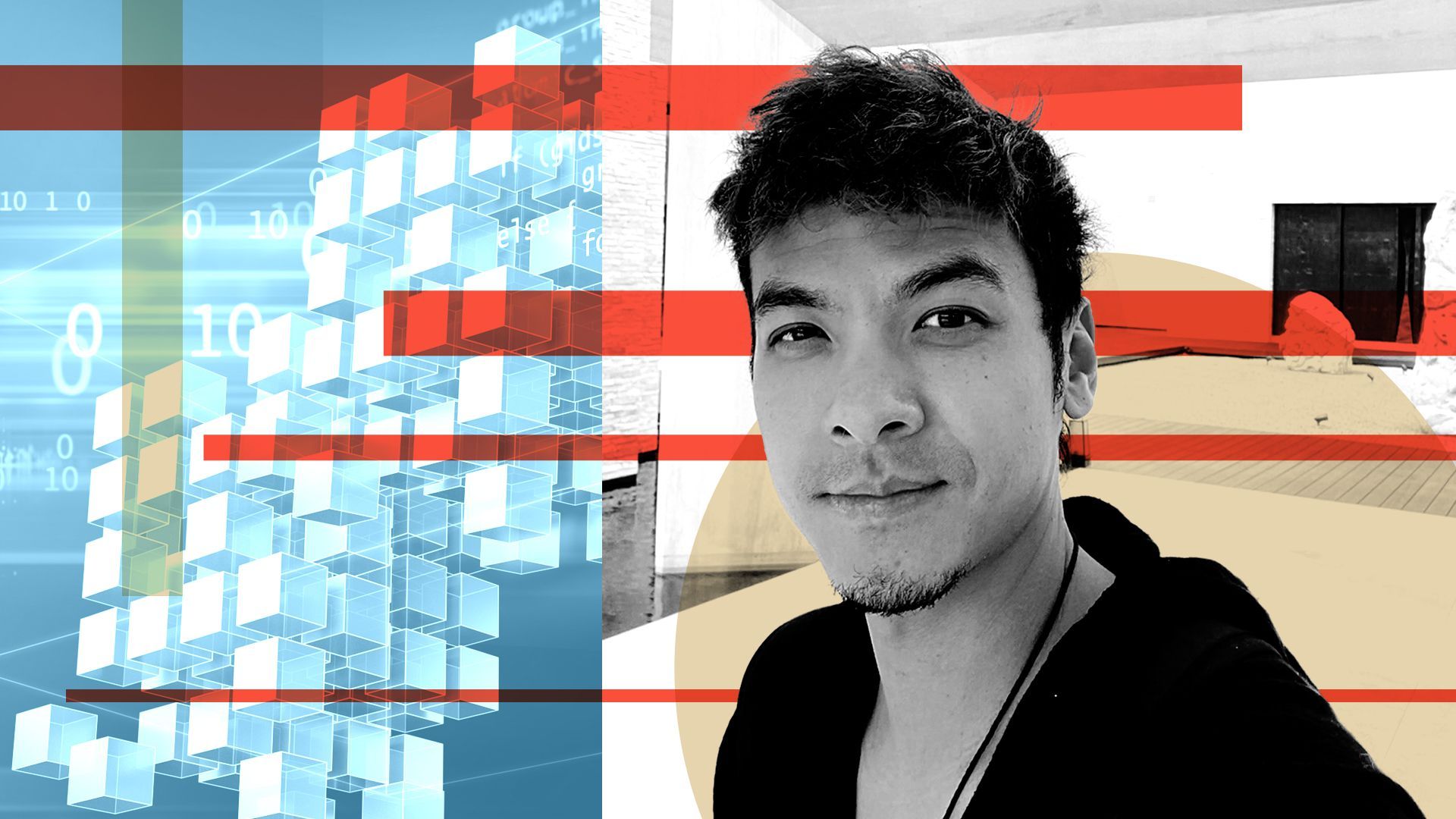
The creator of Ampleforth, Evan Kuo, really resists his company's chief product, the ampleforth (AMPL) token, getting lumped in with "stablecoins." Yet even when he talks about it, he slips into using the term from time to time.
Details: Stablecoins try to maintain an exact price parity with something, usually the U.S. dollar. Meanwhile, ampleforth simply targets a dollar (sort of, read on), but no one worries if it veers off that price pretty far. It's not a stablecoin. It's sort of a "chillcoin."
Aave Companies, the shop behind a protocol built for crypto lending and borrowing, wants to fix social media.
Driving the news: Lens Protocol launched today on Polygon’s blockchain, inviting developers to build social media apps, marketplaces and recommendation engines that could provide a new decentralized alternative to the social media behemoths.
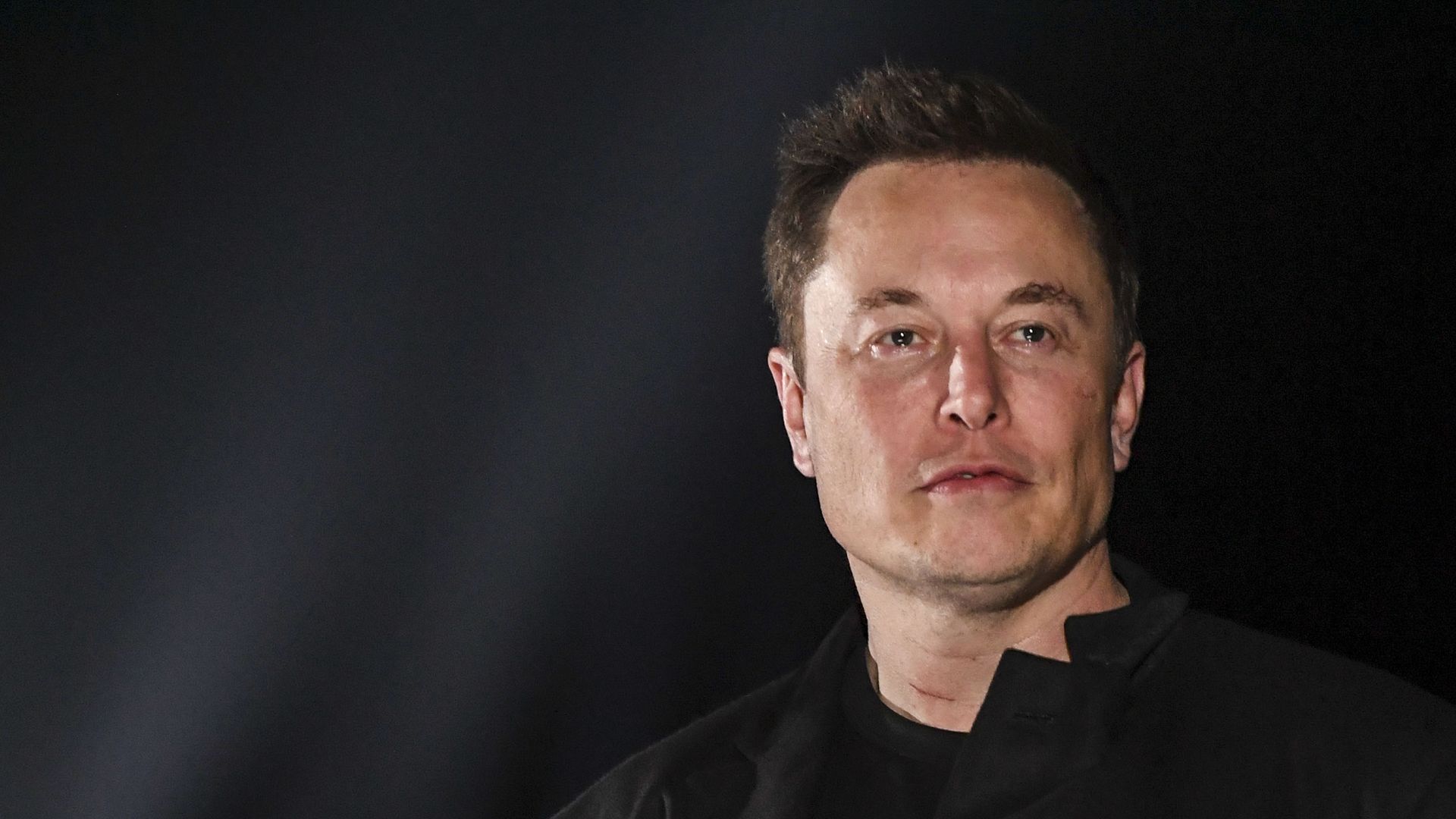
Twitter bots are a big problem for Elon Musk, or so he claims — so big that he says he'll blow up his deal to acquire the social media platform if the company doesn't agree with his diagnosis.
Yes, but: Whether Musk really means it or he's just got buyer's remorse, his bot-phobia is a head-scratcher for many Twitter veterans, who see bots as a big part of what makes the platform useful and fun.
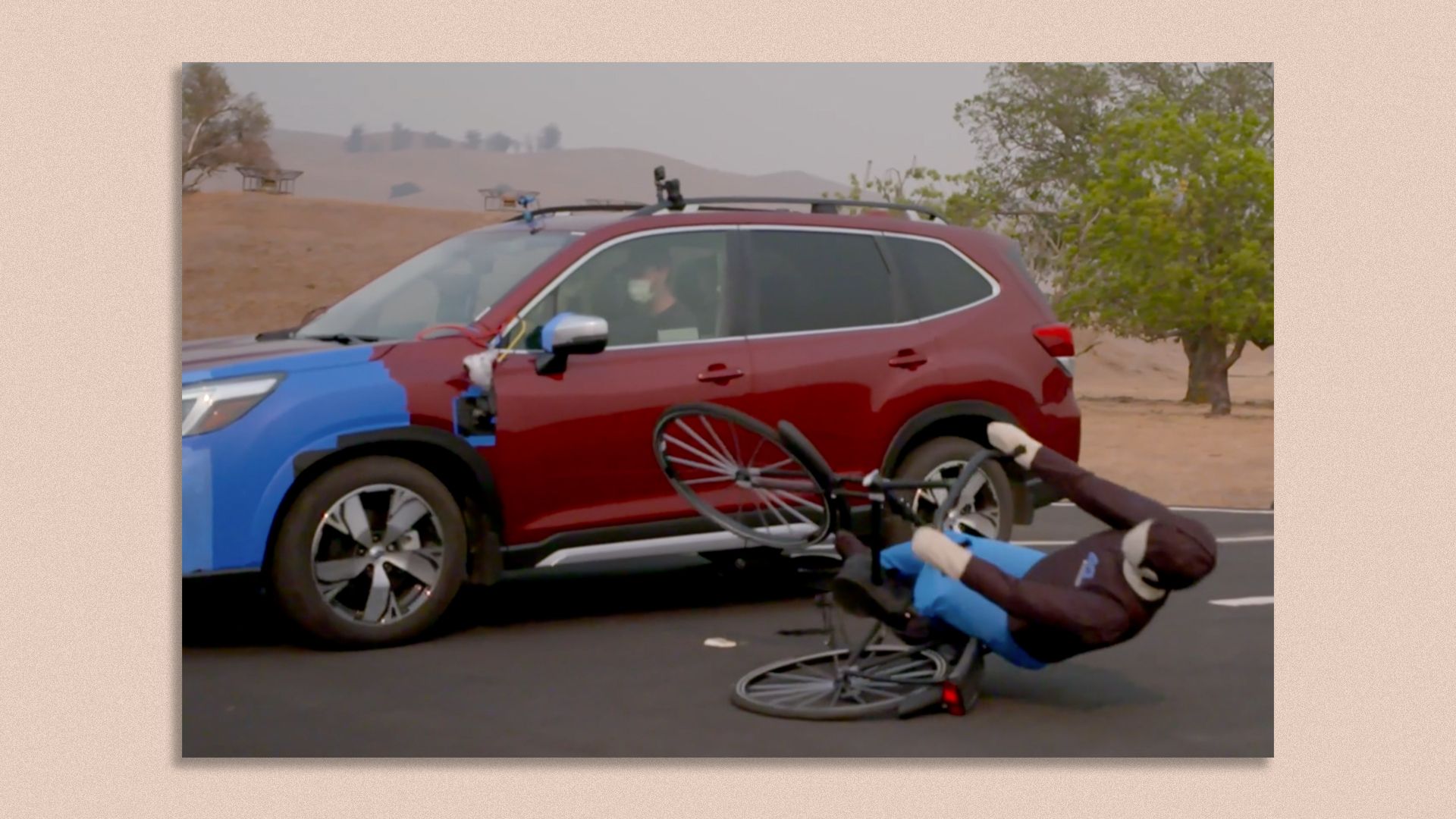
Assisted-driving systems don't perform well enough to consistently avoid collisions, new testing by AAA shows, underscoring why most drivers are skeptical about autonomous vehicles.
Why it matters: Althoughyou still can't buy a self-driving car, a growing number of new cars and trucks are equipped with Automated Driver Assistance Systems, or ADAS technology, that helps cars steer, stay in their lane and brake in an emergency.
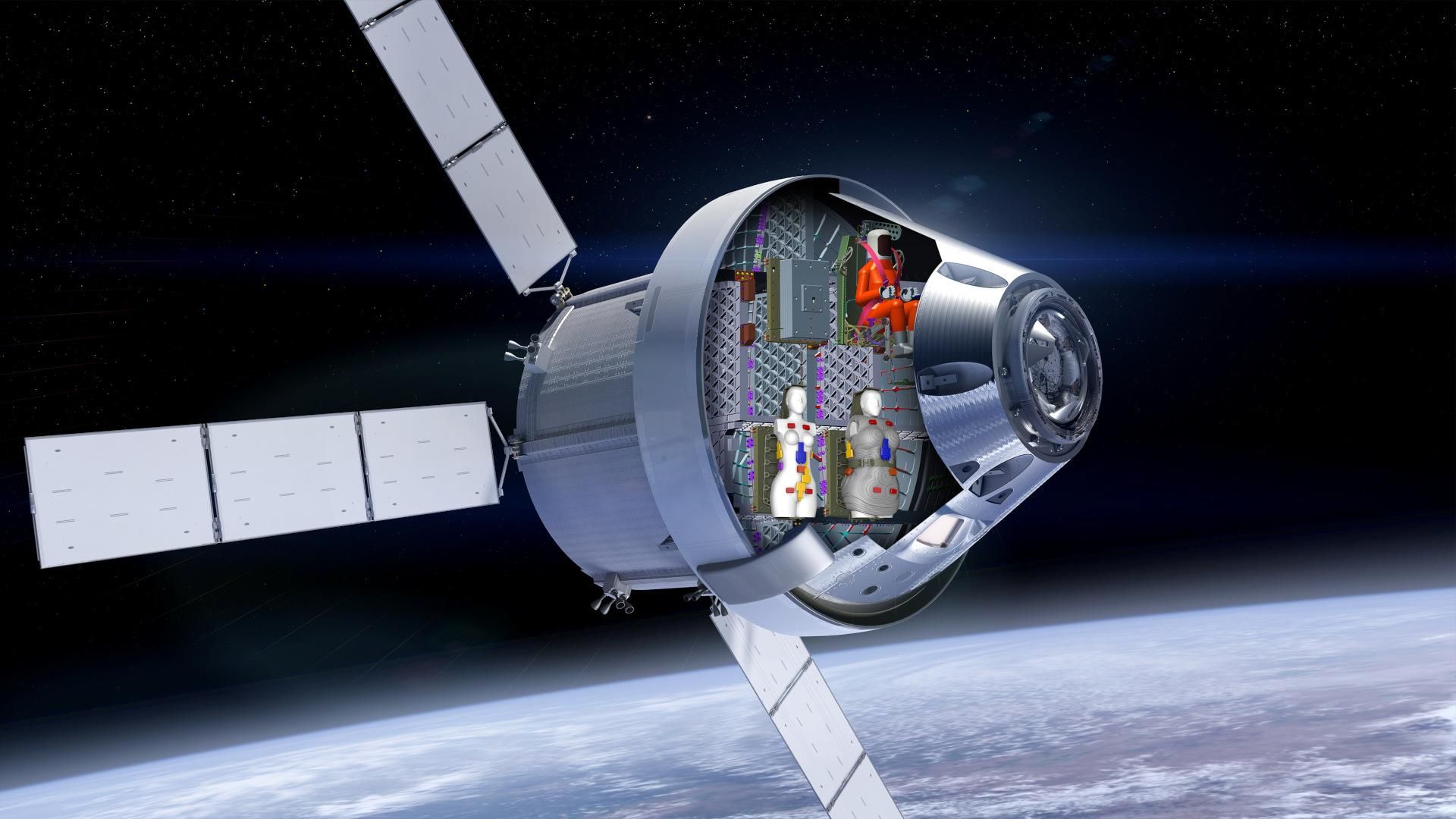
NASA's Artemis missions, which aim to send a human crew — including a woman and a person of color — to the moon by 2025, will shoot female dummies into space first to test the effects of radiation on them.
Why it matters: Artemis is a prelude to sending human astronauts to Mars, NASA says, and "women appear to be at a greater risk of suffering from the harmful effects of space radiation" than men, Gizmodo reports.
Self-driving cars are now tooling around in a growing number of cities — even giving rides to the public, in some instances — but it'll be years before summoning a robotaxi is routine.
One big obstacle: Teaching them the rules of the road in each city, which must be done block by block and street by street.
Why it matters: Despite high-profile efforts to get autonomous vehicles on the road, the obstacles — including engineering challenges, capital requirements, regulatory issues and liability questions — are immense, raising questions about how quickly the market can move forward.
Twitter's board said Tuesday that it plans to "close the transaction and enforce the merger agreement" between Elon Musk and Twitter, The New York Times reports.
Driving the news: "The board and Mr. Musk agreed to a transaction at $54.20 per share," Twitter's board said in a statement to The New York Times. "We believe this agreement is in the best interest of all shareholders. We intend to close the transaction and enforce the merger agreement.”
Venture capital giant Andreessen Horowitzargues that what seems like a boom-and-bust cycle in crypto has an underlying logic.
Driving the news: In a blog post accompanying the first of what it promises will be an ongoing series of annual reports on cryptocurrency, several members of the firm explained why crypto is different.
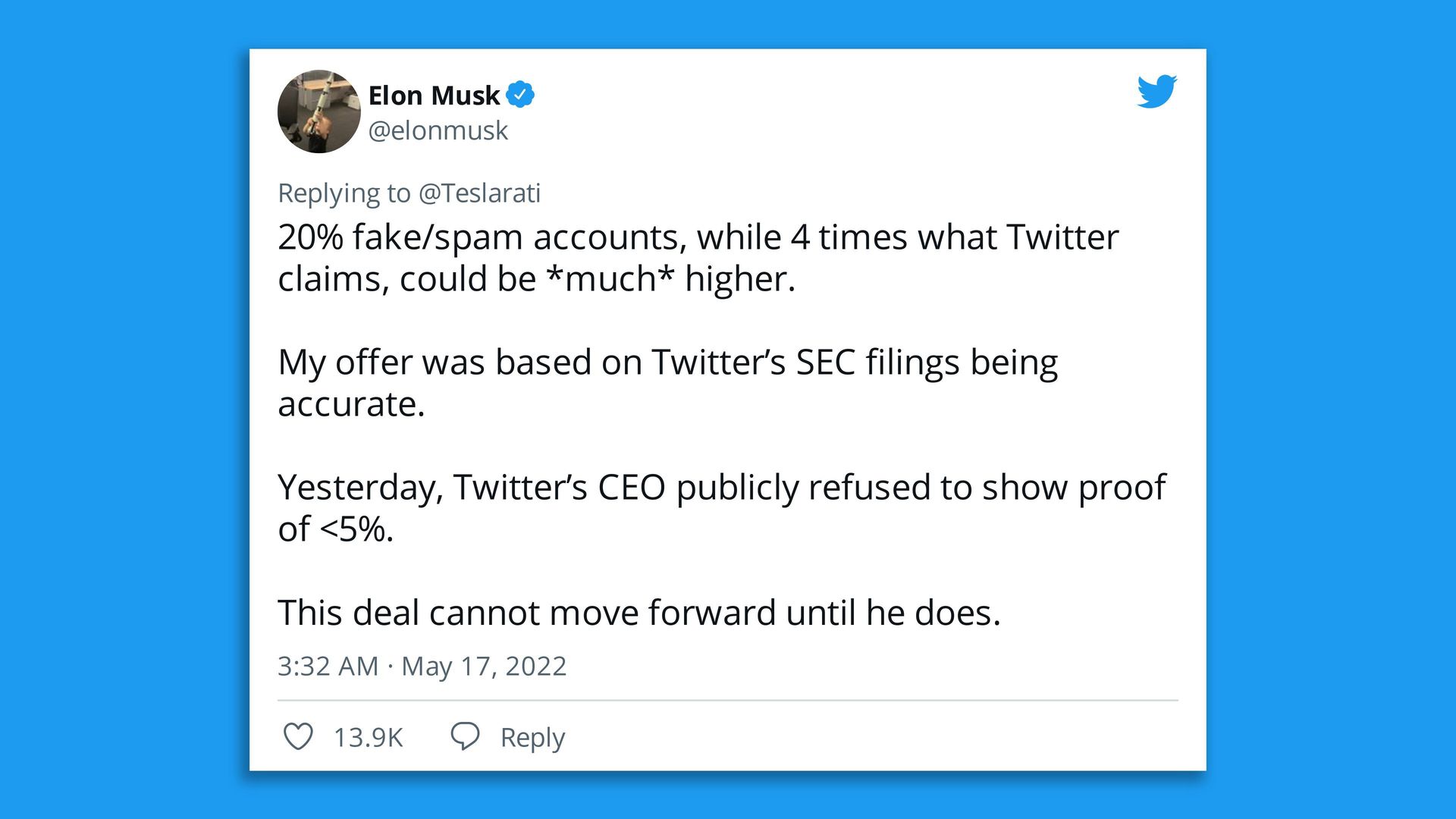
Elon Musktweeted at 3:32am ET Tuesday that his bid to buy Twitter "cannot move forward" unless CEO Parag Agrawal provides proof for his estimate that less than 5% of users are bots or spam accounts.
Why it matters: Analysts believe Musk is using allegations that Twitter's user base has more bots than the company claims to either back out of the deal or negotiate down a price, especially now that Twitter's stock price has plummeted amid a broader market downturn.
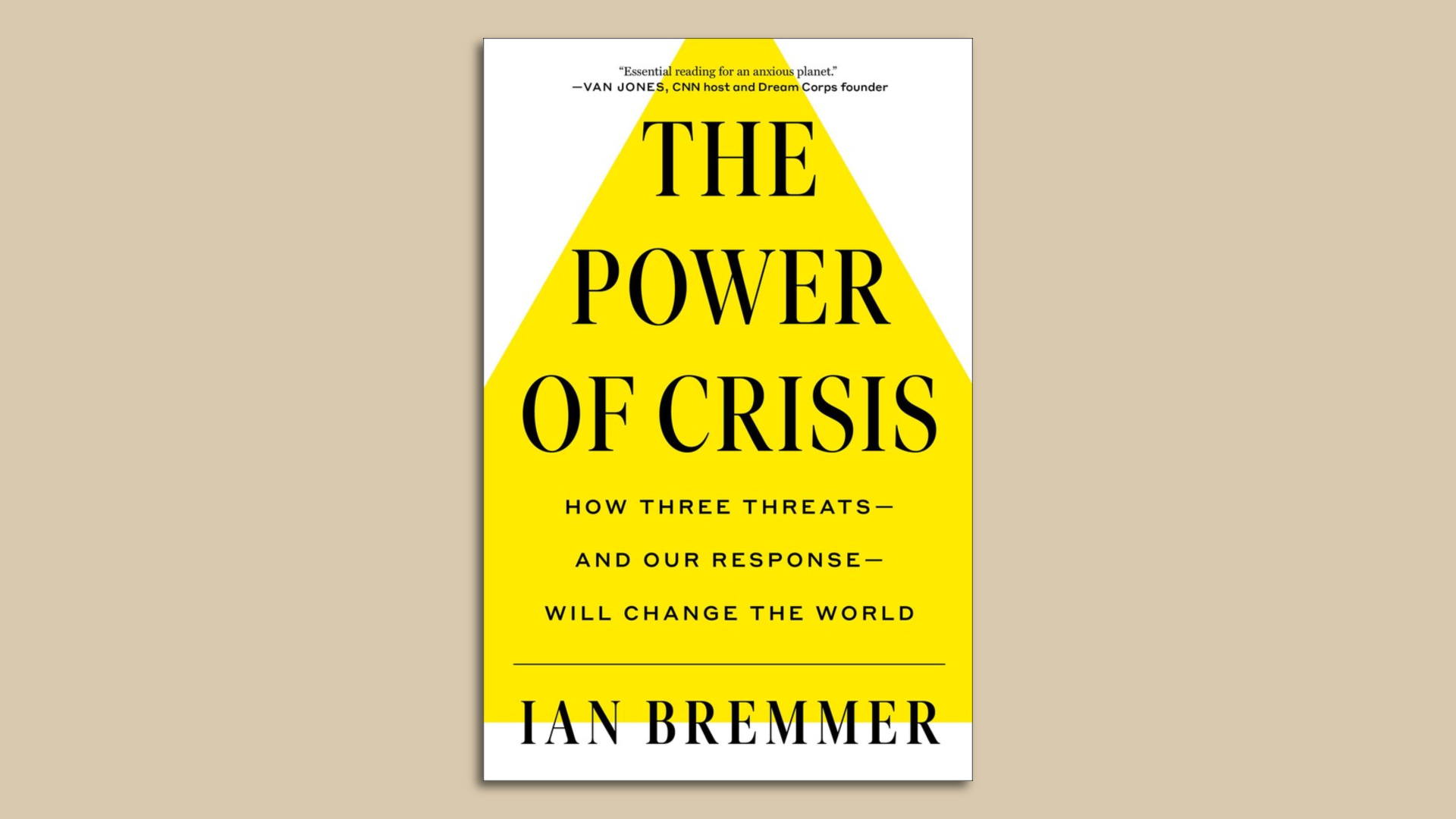
Ian Bremmer writesin "The Power of Crisis," out Tuesday, that the globe's three great threats are the next pandemic ... the climate emergency ... and the unexpected impact of disruptive technologies:
"The speed of technological change is the biggest risk of all," writes Bremmer, president and founder of Eurasia Group. "Companies are now using artificial intelligence to figure out the most efficient ways to change human behavior in ways that profit them."
The new CEO of Arm says that the designer of microprocessors is growing again — following its failed sale to Nvidia — thanks to a strategy to move beyond the stagnant smartphone market.
Why it matters: With the Nvidia deal scuttled by opposition from regulators and competitors, cash-strapped parent company SoftBank is now looking to spin out Arm as a separate public company.