Valve designer Greg Coomer hopes the ambitious new Steam Deck can fill a void in the “insufficient” portable PC gaming landscape.
Driving the news: The Deck now makes Valve, already a highly influential company in gaming, a hardware platform owner with all the responsibility that comes with it.
Apple on Tuesday introduced a sweeping set of measures in response to Russia’s escalating war with Ukraine, including pausing product sales in the country and removing Russian state media outlets RT and Sputnik News from its App Store.
Why it matters: Apple has taken some of the most aggressive measures in response to the war of any American tech company so far.
From camps for girls to networking events for grownups, organizations all over the country are working to promote Latinos in tech.
Why it matters: The numbers of Latinos and Latinas in the industry has been rising gradually in the past few years, but they're still disproportionately low in most companies.
A small group of Latino U.S. House members recently expressed "extreme concern" about a plan to potentially dispatch robot dogs along the U.S.-Mexico border.
Driving the news: A letter obtained by Axios Latino shows that U.S. Reps. Veronica Escobar (D-Texas), Adriano Espaillat (D-NY) and Nanette Diaz Barragán (D-CA) are seeking a meeting with U.S. Customs and Border Protection about the robots.
Crypto exchanges are at the center of U.S. efforts to carry through with sanctions, but most are refusing calls to block Russian addresses en masse.
Why it matters: Ukrainian Vice Prime Minister Mykhailo Fedorov asked major crypto exchanges to go beyond sanctions and block the addresses of all Russian users. But Binance, Coinbase and Kraken say it goes against their core beliefs.
Crypto-focused venture firm Electric Capital has raised a $400 million for its third early stage fund, as well as a $600 million digital token-fund.
Why it matters: Raising huge pools of capital to invest in crypto is becoming the norm as the industry's boom continues—despite regulatory uncertainty and ongoing concerns over scams.
A company called PORTL that lets you beam a lifelike, real-time image of yourself into its vending-machine-size box has introduced a lower-budget miniature version, potentially bringing video calls to American living rooms.
Why it matters: For consumers seeking better alternatives to Zoom and FaceTime, there's the PORTL M — or mini — a 2-foot-tall rectangular device that can receive a curiously intimate (if tiny) walking, talking image of a faraway loved one.
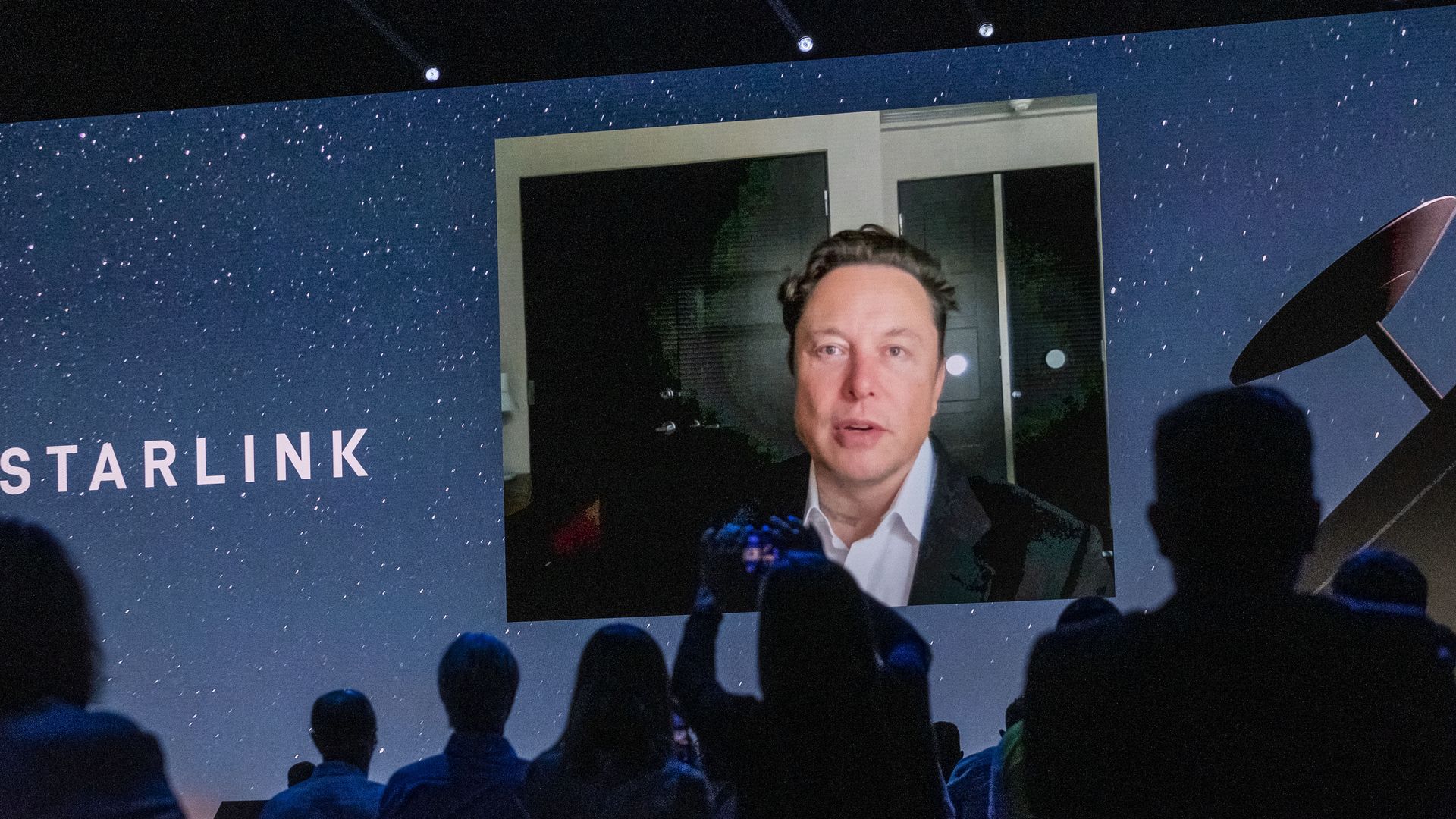
A Ukrainian government official thanked Elon Musk after a promised shipment of terminals from SpaceX's satellite internet service Starlink arrived in Ukraine Monday.
The big picture: Musk responded to Ukraine digital minister Mykhailo Fedorov's request Saturday, saying the satellites had been activated in Ukraine and more terminals were en route. He replied to Fedorov's tweet confirming the terminals' arrival: "you are most welcome."
Facebook parent Meta will restrict access to Russian state media on its platforms across the EU in response to Russia's unprovoked invasion of Ukraine, Facebook's vice president of global affairs Nick Clegg announced Monday.
Why it matters: European Commission President Ursula von der Leyen a day earlier said the EU will ban Russian state media to stop their "toxic and harmful disinformation."
Microsoft president and vice chair Brad Smith wrote in a blog post Monday that recent cyberattacks on Ukraine's civilian digital infrastructure "raise serious concerns under the Geneva Convention."
Why it matters: U.S. officials have warned that cyberattacks will play a key role in Russia's invasion, but Smith's words hint that targeting civilian infrastructure could amount to war crimes under the convention, which sets limits on traditional warfare, CNN's Brian Fung notes.
Tech giants that provide services around the world prefer not to take sides in conflicts where they operate in both combatants' territory, but Russia's invasion of Ukraine is making that stance tough to maintain, writes Axios' Sara Fischer.
State of play: Smith said that Microsoft's Threat Intelligence Center detected a "new round of offensive and destructive cyberattacks" targeting Ukraine's digital infrastructure hours before Russian military movement on Feb. 24.
The company notified the Ukrainian government and has since provided "threat intelligence and defensive suggestions" relating to attacks on targets including Ukrainian military institutions and other government agencies.
What he's saying: "These recent and ongoing cyberattacks have been precisely targeted, and we have not seen the use of the indiscriminate malware technology that spread across Ukraine's economy and beyond its borders in the 2017 NotPetya attack," Smith wrote.
"But we remain especially concerned about recent cyberattacks on Ukrainian civilian digital targets, including the financial sector, agriculture sector, emergency response services, humanitarian aid efforts, and energy sector organizations and enterprises," he added.
"These attacks on civilian targets raise serious concerns under the Geneva Convention," he said. The convention considers it a war crime to intentionally direct attacks against civilian populations or civilian objects.
Worth noting: Microsoft has removed state-sponsored RT and Sputnik content from its platform and is de-ranking their search results on Bing so links will only show up when a user is looking for those pages directly, according to Smith.
Twitter on Monday said it will start labeling all tweets that contain content from Russian state-affiliated media websites.
Why it matters: Twitter says most of the Russian state media content being shared on its platform comes from individuals sharing links to their websites, not the state media accounts themselves.
LinkedIn says it has entered an agreement to acquire Oribi, a six-year-old analytics company, to bolster its ad business and to establish a presence in Israel.
Why it matters: The deal will make it easier for LinkedIn's ad clients to measure how well their ads perform.
Much of the misinformation spreading around Russia's war with Ukraine doesn't involve AI-generated deepfakes or expertly-edited videos but originates when everyday social media users take and share images out of context.
Why it matters: "Especially in a war, there is a human cost to false info going viral," said Graham Brookie, director and managing editor of the Digital Forensic Research Lab within the Atlantic Council.
An entire cottage industry has sprung up around Tesla's proposed Cybertruck, with crowd-funded entrepreneurs designing accessories for an outlandish pickup truck that doesn't yet exist.
What's happening:Jalopnik provided a fun rundown the other day of all the budding engineers eager to capitalize on the Cybertruck — if and when it ever goes on sale.
There's the CyberLandr (above), a pop-up camper that claims $110 million in "pre-orders" and features a bedroom, living room, kitchen, bathroom, and office when fully deployed.
Its designer claims to have raised $540,000 in a crowd-funding campaign and said it is opening an R&D center near Tesla's planned factory in Texas.
Form Camper, another would-be Cybertruck RV, has perhaps wisely designed its unit to work with other electric trucks as well.
Where it stands: Tesla CEO Elon Musk said in January that production of the Cybertruck, first shown in 2019, has been delayed again — this time until at least 2023. Skeptics wonder if it'll ever come to market.
What they're saying: Lance King, CEO and founder of CyberLandr, remains optimistic.
"Tesla always takes the time it needs to ensure its new vehicle models are not just competitive, but class leading," he said in a statement after the latest delay.
CyberLandr will use the extra time, he said, to continue testing and improve the design.
For now, he has to simulate the concept using a flat-bed pickup truck.
Facebook parent Meta said Sunday it removed two disinformation campaigns from its platforms that targeted Ukraine.
Why it matters: Security officials have warned that efforts to manipulate online conversation, from Russian state actors or pro-Russian groups, could be used to help justify Russia's invasion of Ukraine.
A Ukrainian startup that sells NFTs and virtual items for games such as Counter-Strike: Global Offensive will block Russian and Belarusian customers as part of its response to Russia’s invasion.
Why it matters: As companies around the worldshift policies in response to Russia's invasion, the Ukrainian-owned DMarket has been figuring out how to help its home country.
Google Maps has temporarily disabled some of its tools in Ukraine following the Russian military's invasion of the country, a spokesperson confirmed Sunday.
Driving the news: Following consultation from local authorities, the tech giant disabled tools that provide live details on traffic conditions and how busy places like stores are in order to help ensure the safety of Ukrainian communities, Reuters first reported.