Data: Forbes, Wall Street Journal; Images: Getty; Table: Thomas Oide/Axios
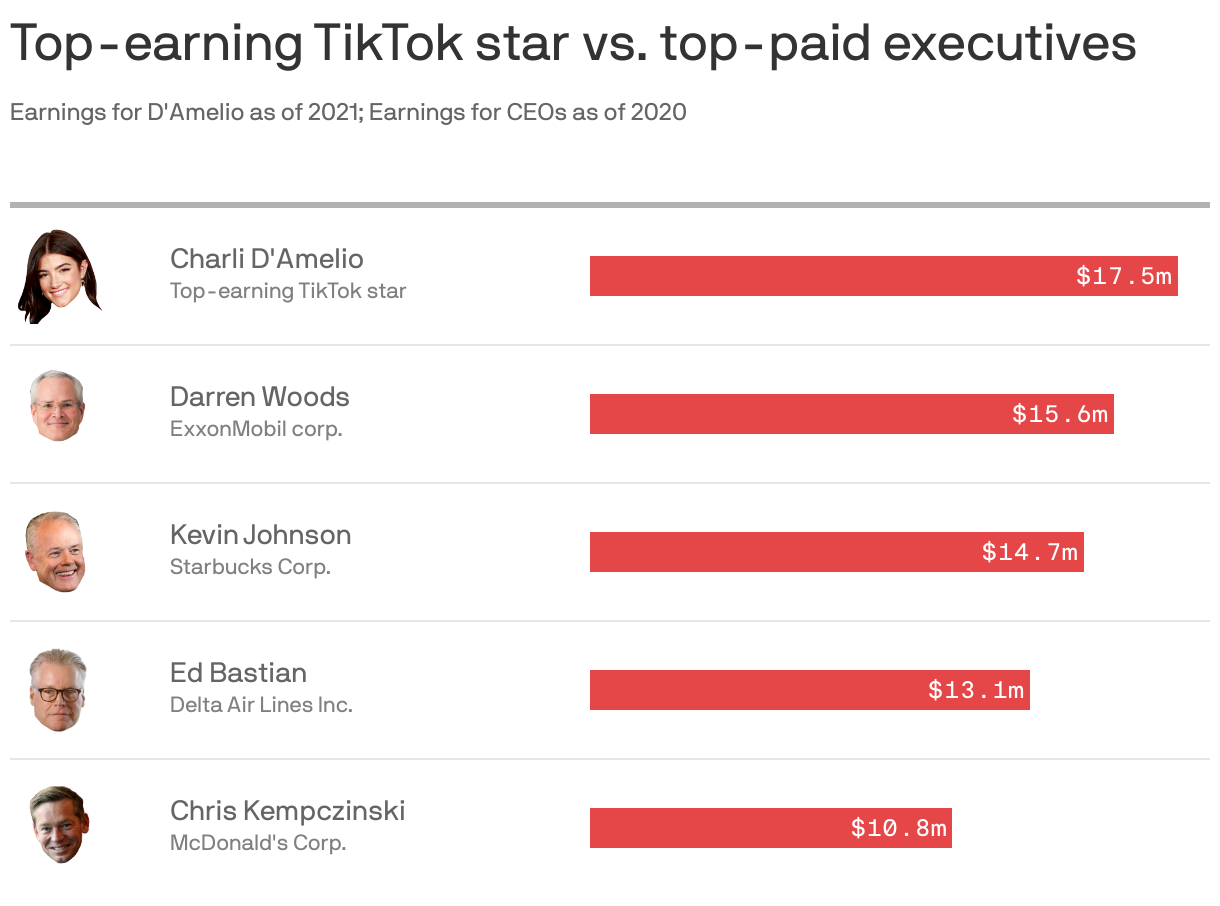
Charli D’Amelio is bringing home more than some top CEOs, per The Wall Street Journal.
Why it matters: TikTok — now more popular than Google — has propelled creators like D’Amelio, 17, into a new class of business empires driven by follower count.
The Jan. 6 select committee on Thursday subpoenaed Alphabet, Meta, Reddit and Twitter for records as part of its investigation of the Capitol insurrection.
Why it matters: The four social media companies have key information related to the spread of misinformation, efforts to overturn the 2020 election and domestic violent extremism, the panel said.
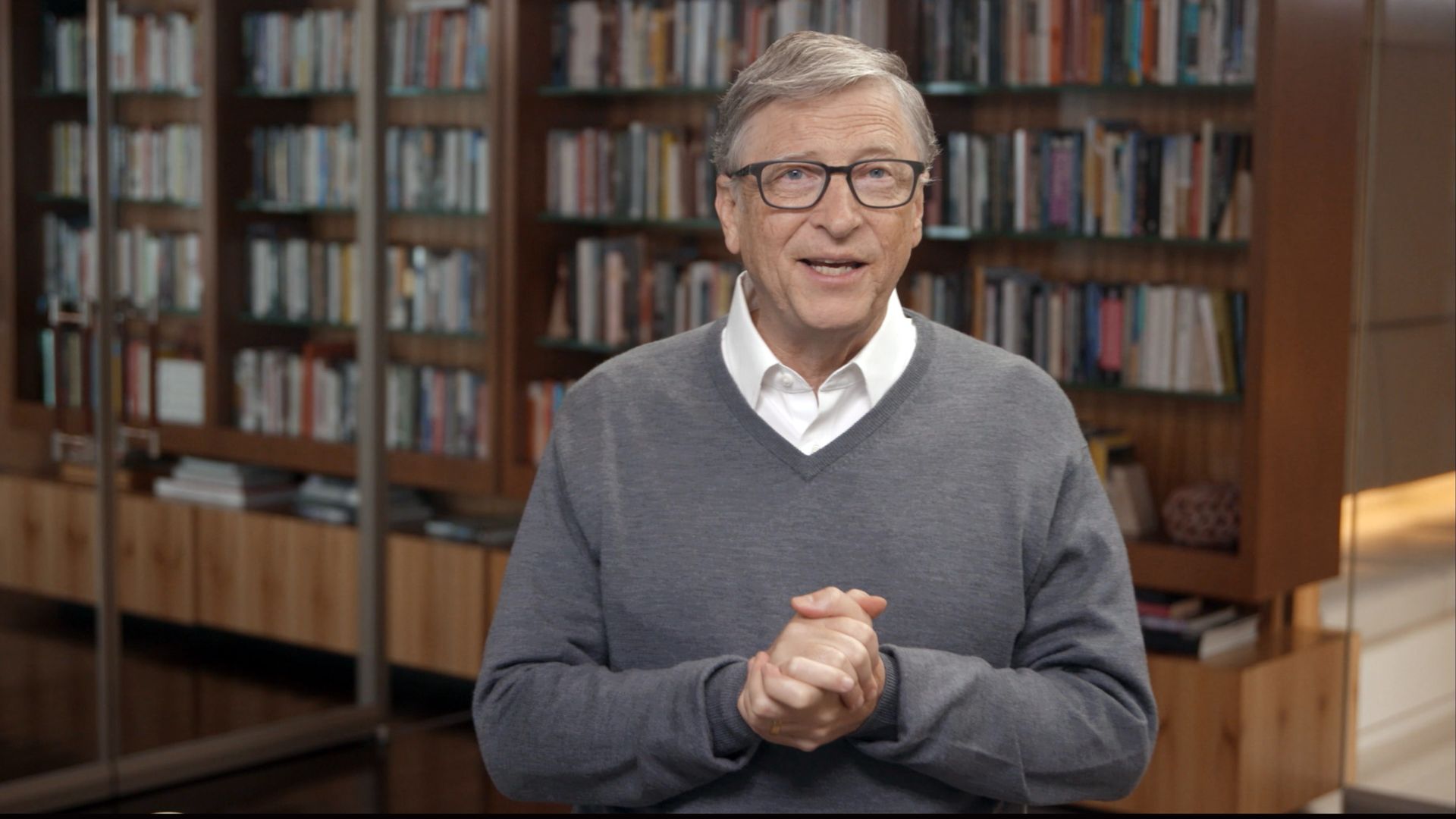
Microsoft said on Thursday that it is launching a review of its policies and practices regarding sexual harassment and gender discrimination, with plans to issue a public report expected this spring.
Of note: Microsoft says the report will summarize the results of any investigations of potential sexual harassment by board members and senior executives — including the board's look into allegations made against co-founder Bill Gates.
A coalition of New York businesses, along with Sen. Charles Schumer (D-N.Y.), is making its case that the Empire State should be a prime beneficiary of federal funding for the domestic semiconductor industry.
State of play: Congress's push to pass funding for the U.S. chip industry remains stalled, but regions of the country are already trying to make their case for a share of the money.
Second Life's creator, Philip Rosedale, is returning as an adviser to its parent company, Linden Lab. The move is part of a partnership with Rosedale's current startup, High Fidelity, which is making an investment in Linden Lab and transferring several employees and a number of patents.
Why it matters: While largely seen today as a relic, Second Life — the virtual world that took the mid-aughts by storm — has continued to operate, remaining at roughly the same size as it was years ago.
In the year it took the Federal Trade Commission to get a judge to green-light its antitrust suit against Facebook this week, Facebook has already changed its name and shifted its focus.
Why it matters: Tech firms and Beltway regulators not only see issues differently but also operate on wildly different scales of time — with DC's glacial pace often leaving it at a deep disadvantage in its quest to limit tech giants' power.
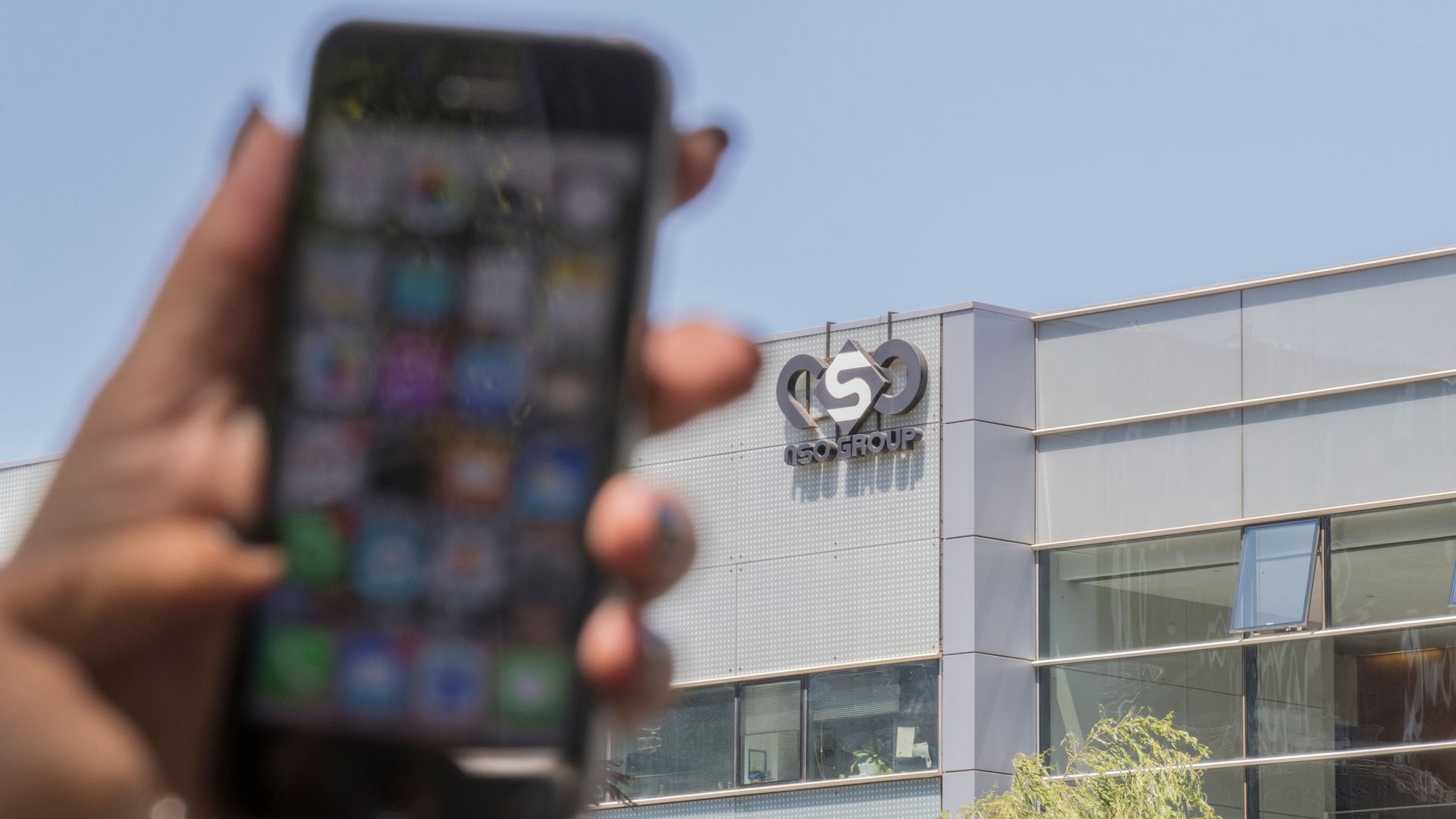
Pegasus software accessed the phones of at least 35 journalists and other citizens in El Salvador in a hack attack on news outlet El Faro and other targets in the country, per a new report.
Why it matters: Wednesday's report by cybersecurity watchdogs Citizen Lab and Access Now comes some two months after the U.S. government added NSO Group, the Israeli firm that produces Pegasus, to its black list of companies engaging in activities contrary to the national security or foreign policy interests of the United States.
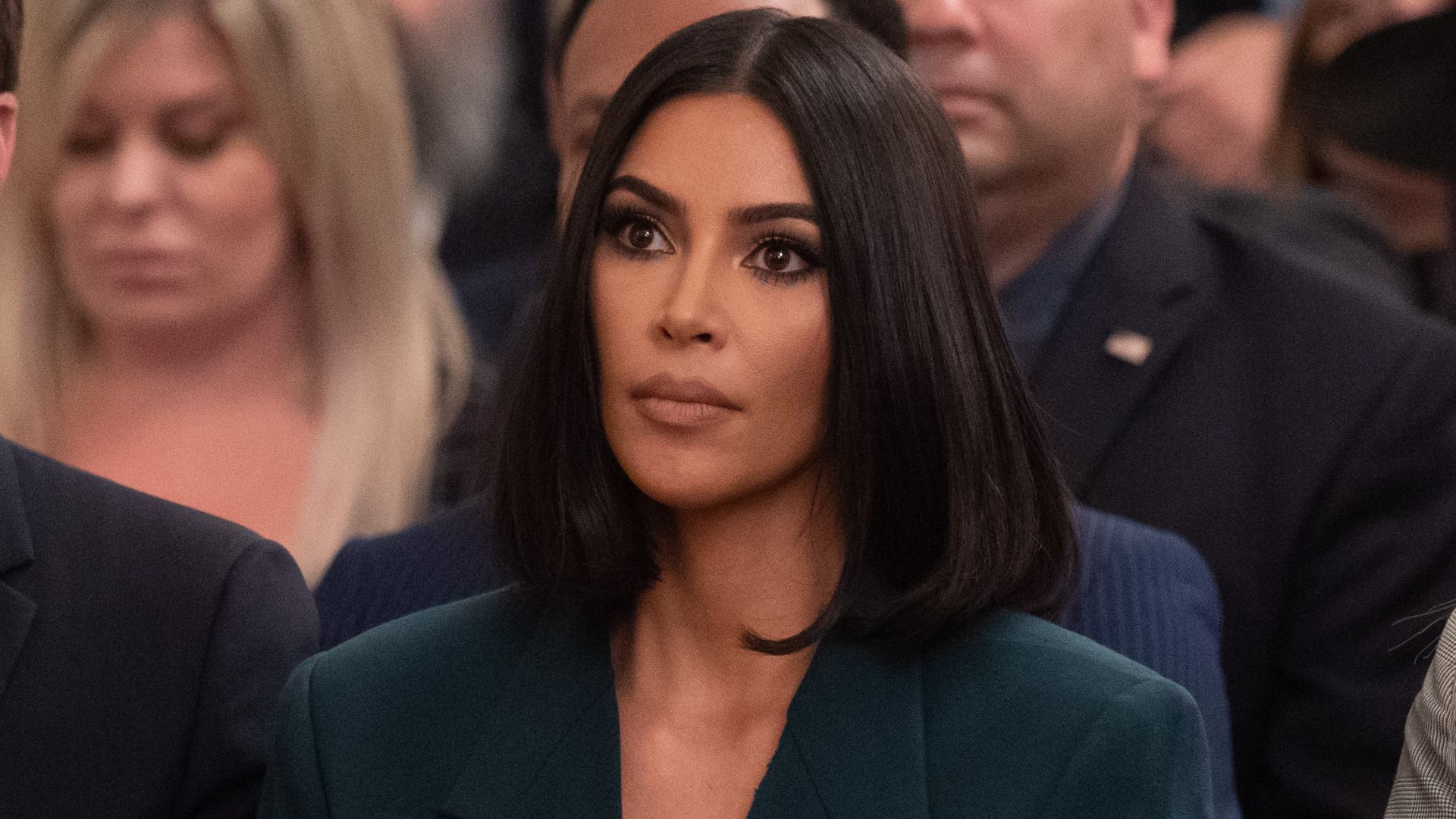
Kim Kardashian has been accused of taking part in a "pump and dump" crypto scheme.
Catch up quick: In a class-action lawsuit, a group of investors claims that Kardashian, Floyd Mayweather, NBA star Paul Pierce and others hyped EthereumMax tokens on social media to lure new buyers.
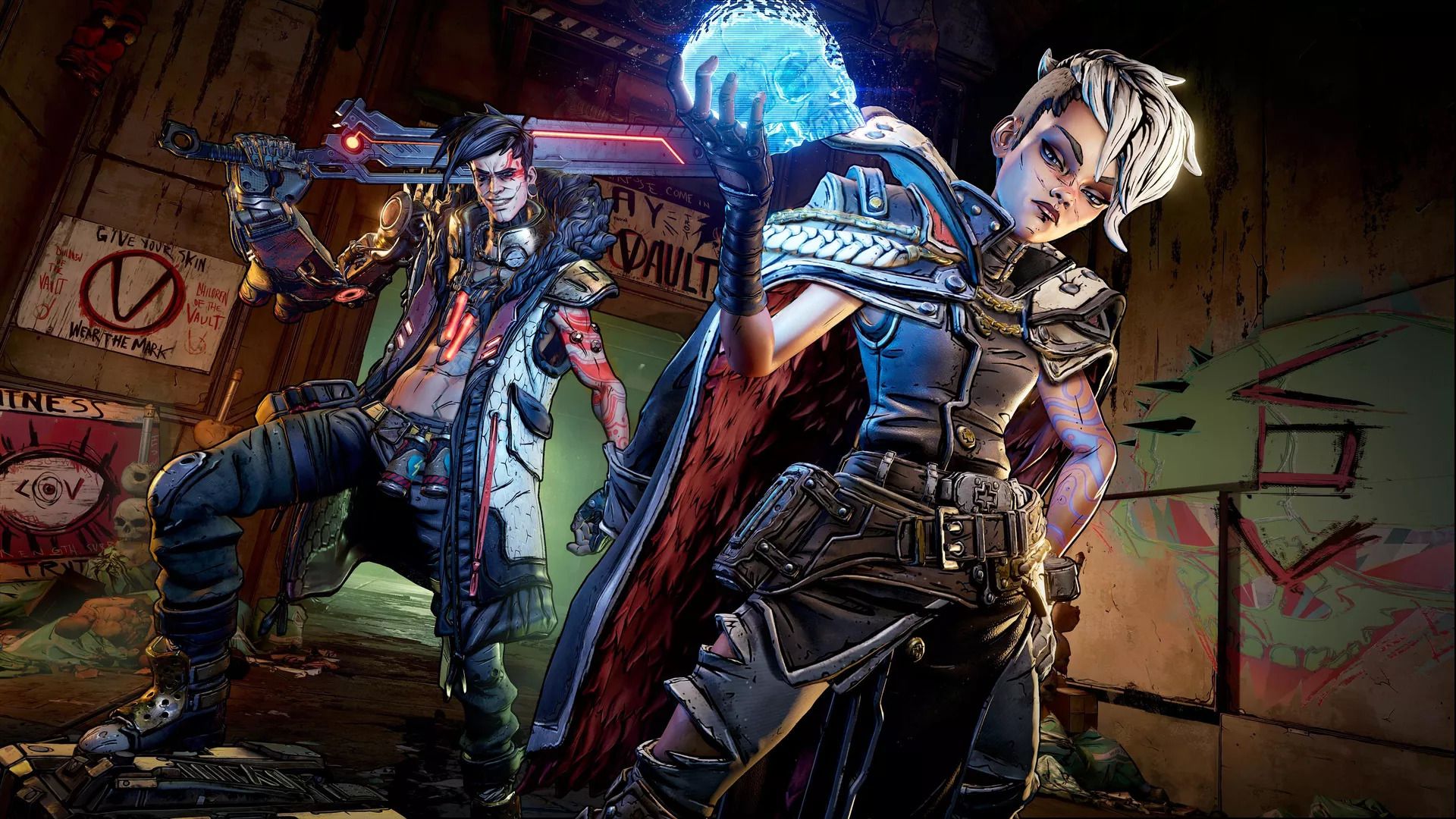
There were more than 1,100 acquisitions, investments and other financial deals in the games industry in 2021, making it a “landmark year for gaming,” according to a new report by industry tracker Drake Star.
Why it matters: Gaming’s COVID-driven player boom in 2020 was followed by an investment boom a year later, resulting in an industry flush with people who want it to thrive.
State of play: Rexing sells her half-pound and five-pound cookies at retailers throughout the Midwest, including her two storefronts in the Twin Cities metro, and she's developed a major social media following.
Her TikToks documenting the process of mixing new flavors have racked up tens of millions of views in just a few months.
Some of the most innovative electric vehicles we've test-driven in the past year were snubbed as 2022 North American Car, Truck and Utility of the Year, announced on Tuesday.
Driving the news: The Lucid Air sedan, Rivian R1T pickup and Hyundai Ioniq 5 crossover utility were all finalists for best vehicles in their category, but they lost out to traditional models from well-known brands.
The winners: Honda Civic (car), Ford Maverick (truck) and Ford Bronco (utility).
The jury: 50 leading automotive journalists from the U.S. and Canada (including yours truly).
My thought bubble: The winners stood out for their value for the money and, in the case of the Bronco, technology that enabled even me to excel at off-roading.
Starting at $19,995, the small and efficient Maverick hybrid finally makes pickup trucks affordable for entry-level buyers, and the 11th-generation Civic is rock solid as always.
Yes, but: I was impressed by all three EV finalists, especially since Lucid and Rivian are newcomers to the industry.
The $169,000 Lucid Air Dream is a game-changer that could unlock more affordable electric vehicles for the masses.
Rivian's fresh and surprisingly capable R1T opens up a new market for electric pickup trucks.
And Hyundai's spacious Ioniq 5, which can charge to 80% in just 18 minutes, shows how EVs can easily fit into our lives.
The bottom line: These futuristic EVs hold promise, but it's too early to declare them winners.
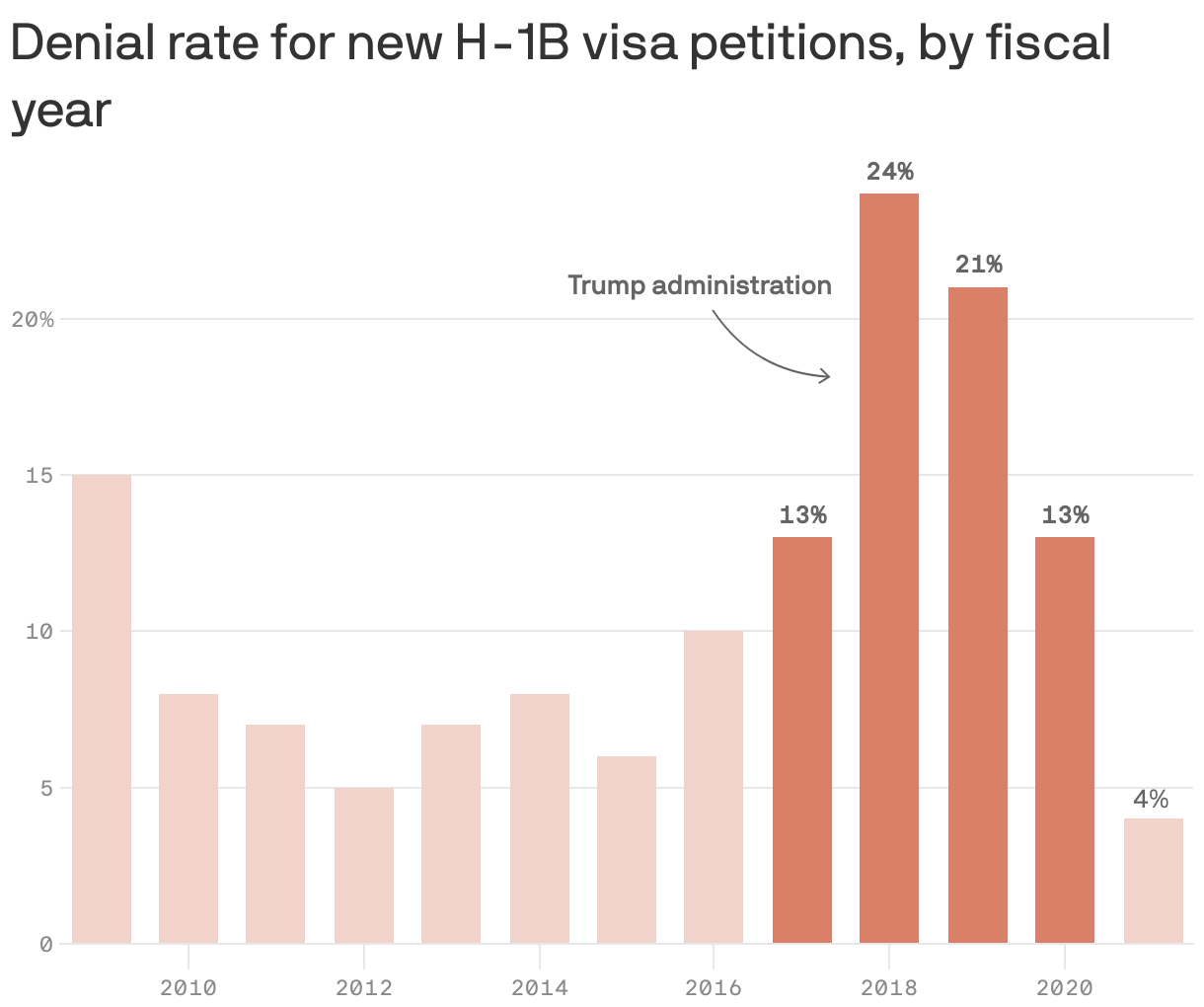
The Biden-era approach to visas used by skilled foreign workers is injecting more certainty into the hiring process for large tech employers after four tumultuous Trump administration years.
Driving the news: Biden's first year saw a record low in the denial rate of high-skilled foreign worker visa petitions, according to an analysis of government data by the National Foundation for American Policy shared exclusively with Axios.
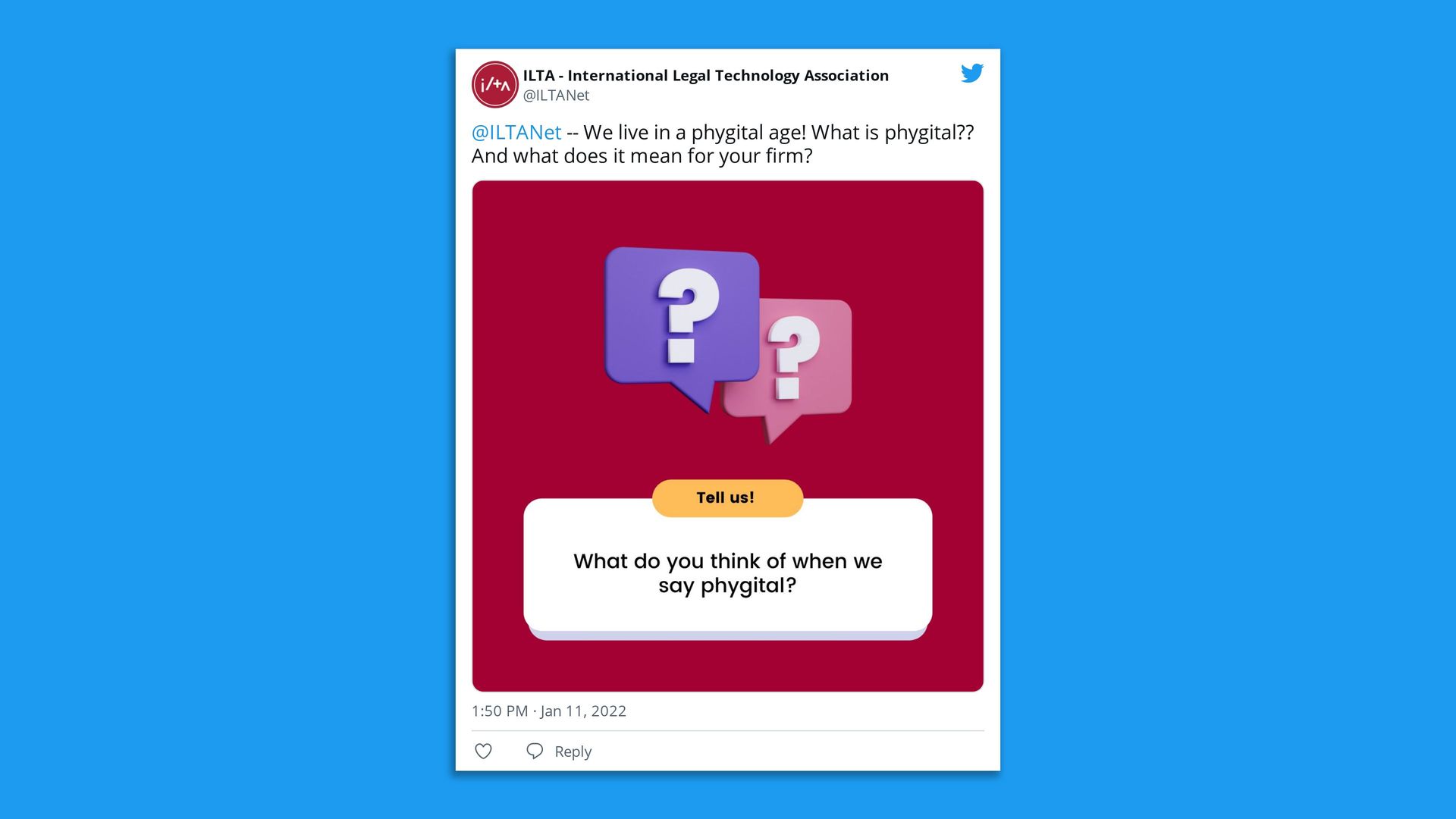
The term "phygital" — a portmanteau of "physical" and "digital" — refers to a marketing strategy in which brands use bricks and clicks to entice customers.
Why it matters: While the term is far from new — an Australian ad agency called Momentum copyrighted it in 2013 — the word is cropping up more and more as digital marketers expand and enhance the concept.
While "phygital" used to be a cool way to describe selling stuff through a blend of brick-and-mortar stores and e-commerce sites, the word gains new relevance in an era of NFTs and the metaverse.
The big picture: Marketers say we're fully immersed in the phygital era, given that consumers expect the same levels of personalization and customer service wherever they shop.
Cashierless stores like Amazon Go and the growing popularity of BOPIS (buy online, pick up in-store) are symbolic of this trend.
"The line — however slim — that existed between in-store and online retail experiences was eliminated during the COVID-19 pandemic," writes Inge De Bleecker in CMSWire.
"We have entered the age of 'phygital' shopping, in which digital enhances the in-store shopping experience."
What's next: Expect to see more blending of the virtual and physical space in the shopping realm, like phygital displays in retail stores that point you to virtual fitting rooms, online product reviews, etc.
Some carmakers and tech companies say they're preparing to deliver self-driving cars to consumers within just a few years, a fresh promise that makes it seem like 2016 again. But beware the hype.
Why it matters: Your car might be capable of driving itself in the not-too-distant future, but only under certain conditions, like favorable weather or within certain geographic limits. And the timetable is squishy at best.
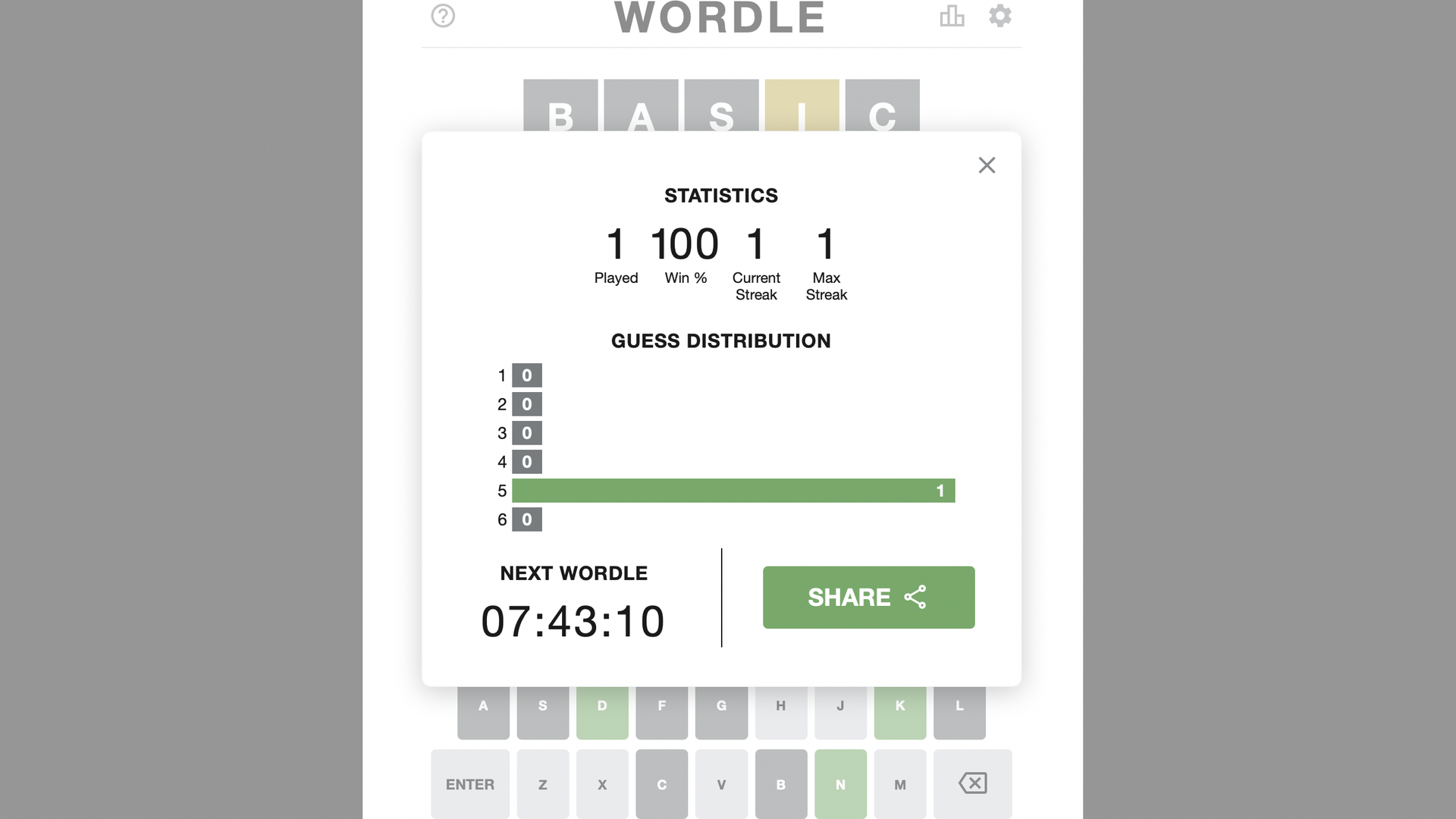
Wordle, the viral once-daily online word game, has started to attract copycats, including some that charge hefty subscription prices or sell items online.
Why it matters: The popular game has a simple premise, making it easy to duplicate. Also, it's web-based, and that leaves a gap in app stores that imitators are quickly filling.