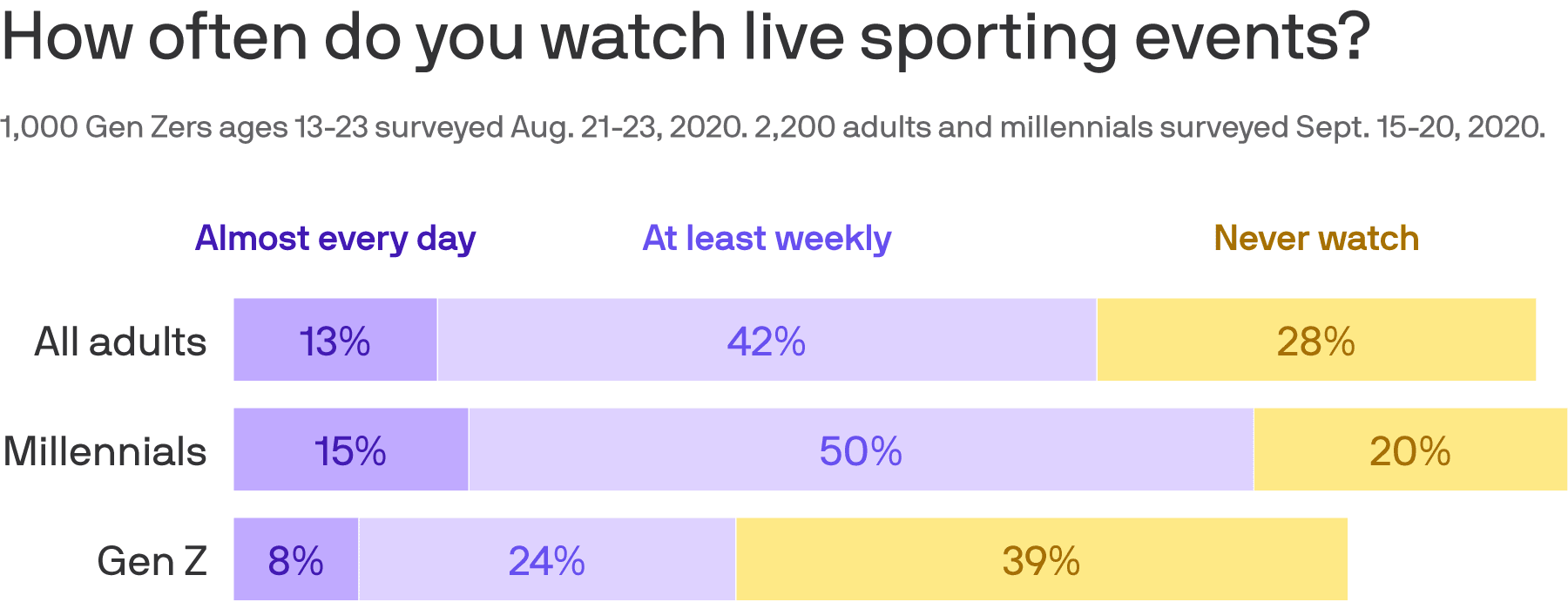
Reproduced from Morning Consult; Note: Gen Z survey margin of error ±3%, adults and millennials ±2%; Chart: Axios Visuals
Endless articles have examined how young sports fans consume content. But here's the real question we ought to be asking: What content do they consume?
Driving the news: Young sports fans don't follow sports the way their parents did. And that change in fandom gets more extreme with each generation.
Cable TV is dying a slow death, and after years of mostly denying that reality, America's major media companies are beginning to hedge their bets and prepare for what comes next.
By the numbers: 25 million homes have cut the cord since 2012, and another 25 million are expected to do so by 2025.
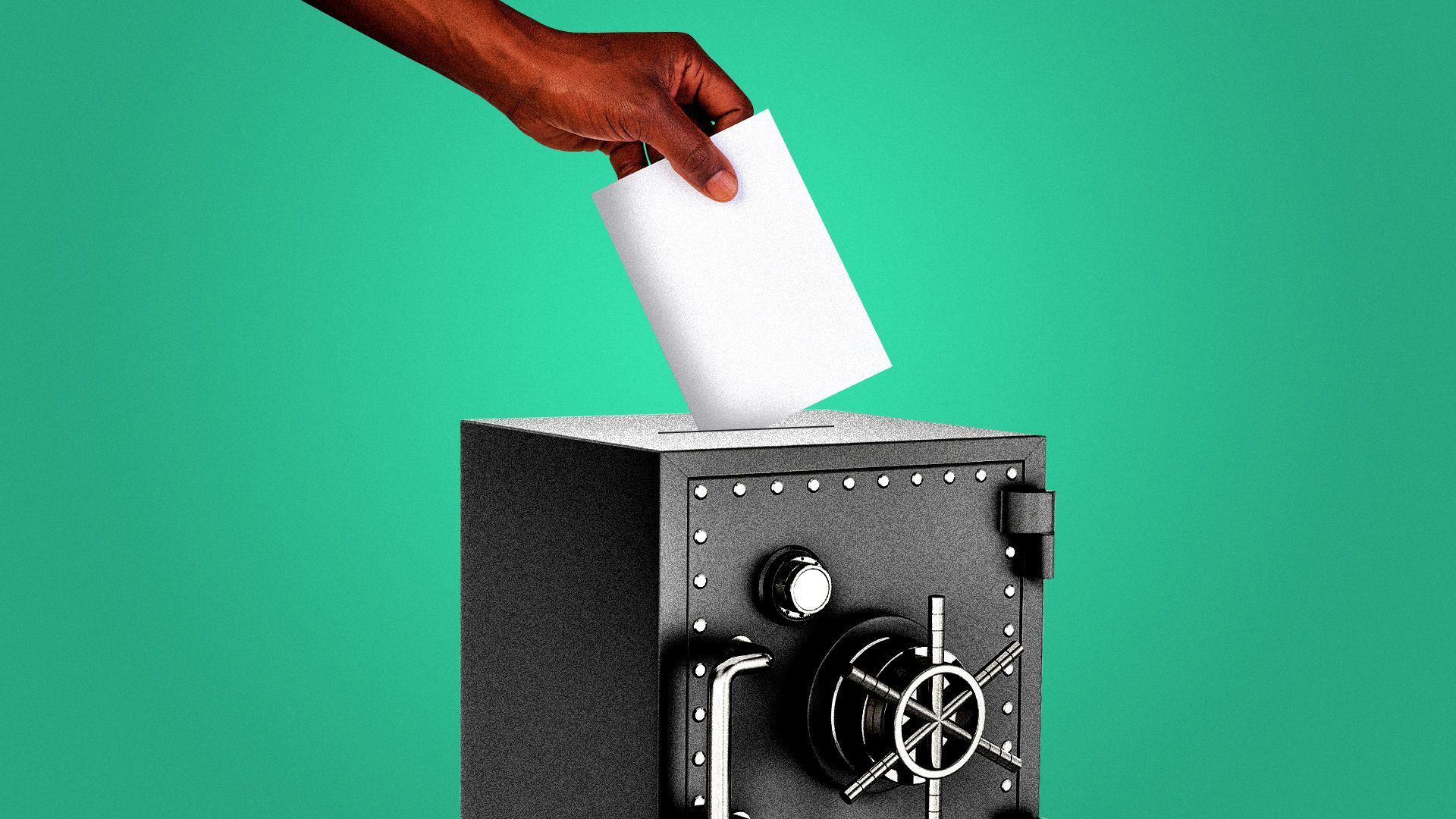
America's electoral infrastructure survived and thrived last week, despite pandemic complexities and President Trump's unfounded claims of widespread fraud. Yes, including software and machines made by Dominion Voting Systems.
Axios Re:Cap goes deeper with Mike Hanmer research director for the University of Maryland's Center for Democracy and Civic Engagement.
Massachusetts, Colorado and California top a list of U.S. stateswith the greatest "capacity for achieving prosperity through scientific discovery and technological innovation," according to the Milken Institute's 2020 State Technology and Science Index released today.
Why it matters: Addressing the factors that allow states to create more jobs and economic growth could help them recover from the pandemic's economic fallout and adapt to future downturns and disruptions.
Microsoft said Friday it has detected at least seven attacks on companies working to develop a COVID-19 vaccine or treatments.
Details: The company said attacks by three nation-state actors — two from North Korea and one from Russia — have targeted companies in Canada, France, India, South Korea and the United States.
President Trump is pushing the Senate to confirm his hand-picked nominee for a seat on the Federal Communications Commission, but people familiar with the state of play on Capitol Hill don't expect him to get his wish.
Why it matters: The FCC oversees broadband internet rules, media ownership regulation and other policies that hold special importance to the president. A Trump-aligned commissioner could likely agitate for greater agency involvement in how online platforms moderate speech and otherwise extend Trump's influence into the Biden administration.
Parler has become the social network refuge for Trump supporters who believe that legacy platforms like Facebook and Twitter have become too restrictive, helping it shoot to the very top of the app store charts.
Axios Re:Cap digs into Parler's popularity, process and controversies with Parler chief policy officer Amy Peikoff.
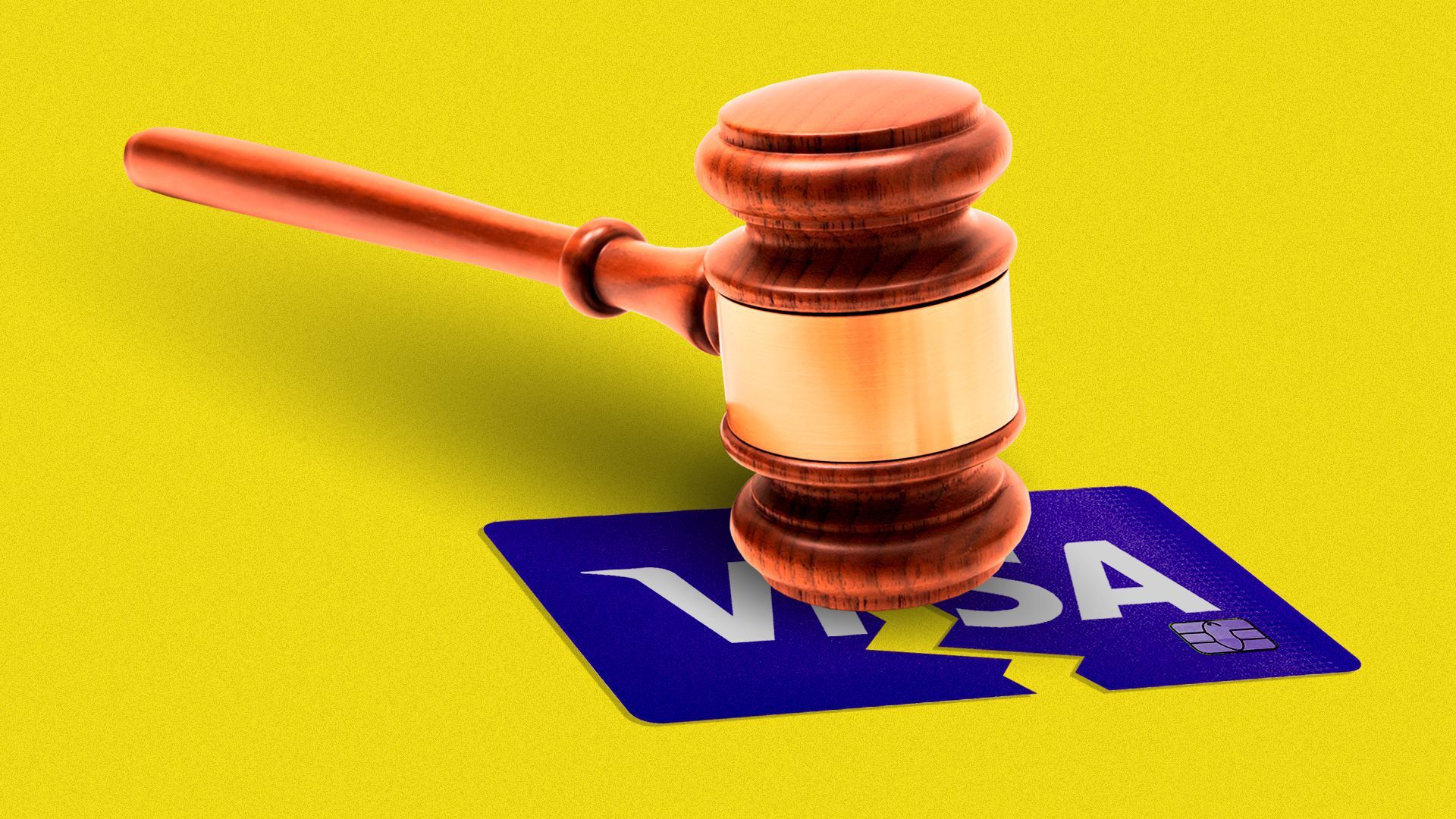
The Department of Justice antitrust lawsuit against Visa is important, not just for the outcome of a $5 billion fintech acquisition, but for the whole future of the industry.
Why it matters: While there are a lot of financial startups, very few of them are genuinely disruptive. In fact, many of them implicitly rely upon the Visa and Mastercard duopoly. The DOJ wants to ensure that there's still a chance that duopoly could face real competition.
The Swiss intelligence service has known since at least 1993 that Switzerland-based encryption device maker Crypto AG was actually a front for the CIA and its German counterpart, according to a new report released by the Swiss Parliament, but Swiss leaders were in the dark until last year.
Why it matters: Switzerland’s intra-governmental information gap is unlikely to be welcome news in Europe, which already looks warily upon the U.S.’ expansive surveillance practices. Still, Crypto AG provided information of incalculable value to U.S. policymakers over many decades.
As the dust settles on the 2020 presidential election, it's becoming clear that the process proved sturdy, with no known attacks on voting infrastructure and no 2016-style vast foreign meddling campaigns to disrupt American democracy.
Yes, but: The ongoing disinformation campaign from President Trump and his allies, as they refuse to accept his loss, illustrates that the country does not need outside intrusions to undermine the integrity of our elections.
The Trump administration's existential threat to TikTok is again going down to the wire, as today is the deadline for when its Chinese parent company ByteDance must unwind a 2018 merger that helped create the app.
The big picture: There's no precedent for what might be coming after the stroke of midnight, and so far Treasury is turtling.
Google announced Wednesday it will stop offering unlimited free photo storage on June 1, 2021. However, photos uploaded before then won't count against the new 15 GB free limit.
Why it matters: Thanks to its free storage, as well as excellent search and ease of use, Google Photos has been the ideal backup option for many users — and drove many paid competitors out of the space.
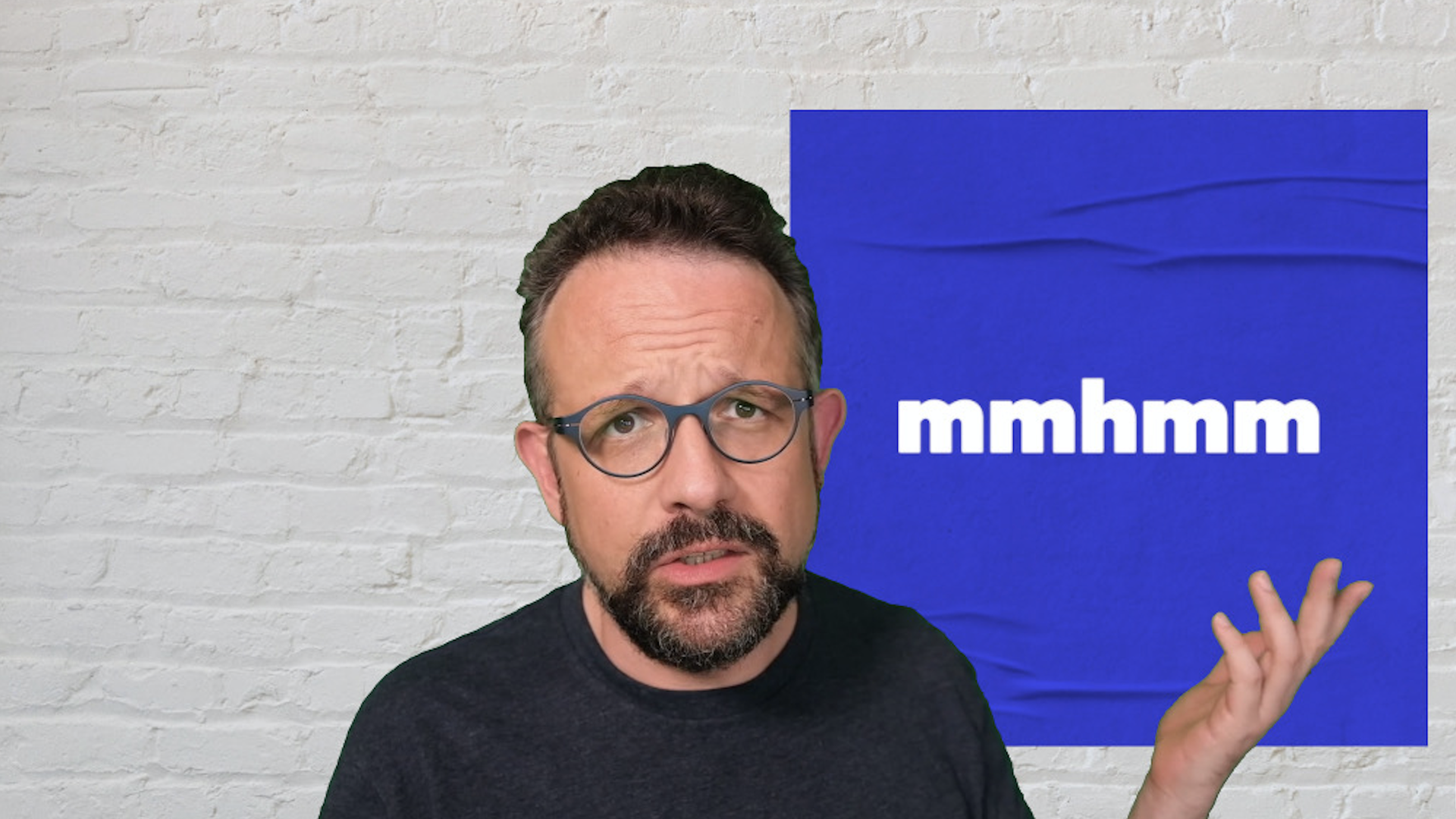
Mmhmm, the video startup from former Evernote CEO Phil Libin, is ready for prime time. The service is launching publicly today after a private beta involving tens of thousands of testers.
Why it matters: The difficult-to-pronounce startup is one of a number of efforts designed to make video conferencing more interesting than it is today.
Solv Health, a startup that sells health care providers digital tools to manage patients, has raised $27 million in new funding led by Acrew Capital, with MultiCare Health System, Light Street Capital, Benchmark and Greylock Partners also participating.
Why it matters: Overnight, the ongoing pandemic significantly altered how people interact with the health care system, creating a need to reduce unnecessary in-person contact that has sped up the digital transformation of medical practice.
The Trump administration's fight to question the election's outcome is providing a massive field test of the effectiveness of online echo chambers and filter bubbles.
The state of play: So far, the evidence from the Trump universe shows partisan delusion winning out over objective reality.
Spotify's $235 million acquisition of podcast monetization company Megaphone on Tuesday is the latest in an acquisition frenzy that's stirring up the podcast industry.
Why it matters: The past year has seen several key companies invest hundreds of millions of dollars in podcast acquisitions, including Spotify, iHeartMedia, Apple, SiriusXM and others.










/2020/11/12/1605198726757.gif?w=3840)