A new working paper finds that as high-level AI research began to require huge amounts of computing resources, large tech firms and elite universities increasingly dominated the field's most important conferences.
Why it matters: If only the most well-funded researchers are able to drive the direction of AI, the diversity of voices will narrow at the very moment when AI is poised to transform how we live and work.
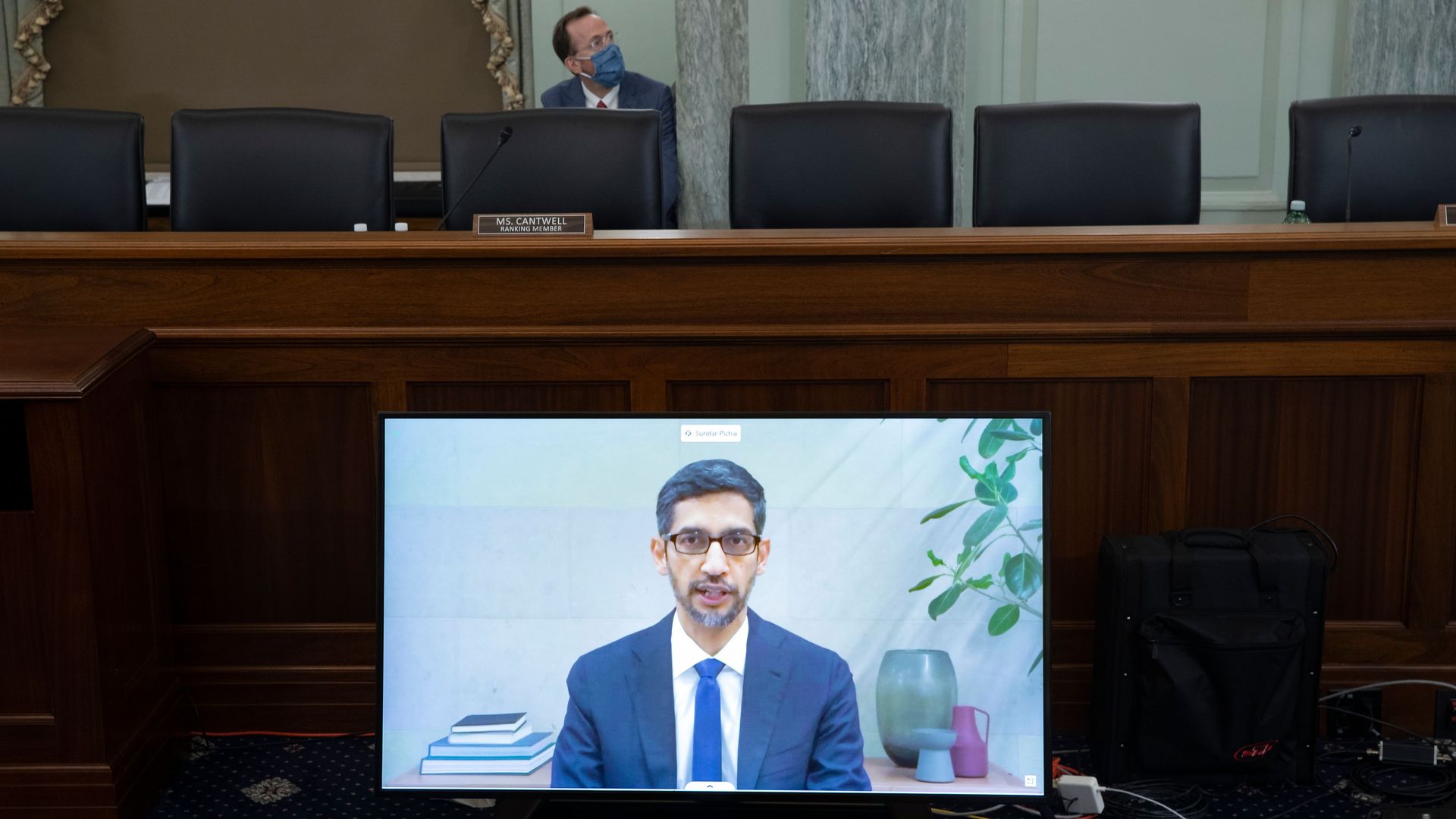
A Senate hearing Wednesday with Big Tech CEOs became the backdrop for Democrats and Republicans to swap accusations of inappropriate electioneering.
Why it matters: Once staid tech policy debates are quickly becoming a major focal point of American culture and political wars, as both parties fret about the impact of massive social networks being the new public square.
As online platforms and intelligence officials get more sophisticated about detecting and stamping out election meddling campaigns, bad actors are increasingly seeing the appeal of instead exaggerating their own interference capabilities to shake Americans' confidence in democracy.
Why it matters: It doesn't take a sophisticated operation to sow seeds of doubt in an already fractious and factionalized U.S. Russia proved that in 2016, and fresh schemes aimed at the 2020 election may already be proving it anew.
Twitter CEO Jack Dorsey said Twitter does not have the ability to influence elections because there are ample additional sources of information, in response to questioning from Republican Sen. Ted Cruz during a hearing Wednesday.
Between the lines: The claim is sure to stir irritation on both the right and left. Conservatives argue Twitter and Facebook's moderation decisions help Democrats, while liberals contend the platforms shy from effectively cracking down on misinformation to appease Republicans.
About half of Americans on both sides of the aisle back the Justice Department's antitrust lawsuit against Google, while fewer than a third oppose it, according to a new poll from progressive groups Demand Progress and Data for Progress shared exclusively with Axios.
Why it matters: There's a growing pile of evidence that regulatory action against Big Tech has bipartisan support, as state and federal antitrust action circles companies like Google and Facebook.
Silicon Valley CEOs used to be a rare sight on Capitol Hill, but that's changing due to rising pre-election anger at Big Tech, along with a pandemic-spurred shift to video testimony.
Why it matters: The shift means Congress hears more from the CEOs of powerful companies that are shaping our world. But the hearings' partisan rancor tends to drowns out the policy debate.
With less than a week until the 2020 election, researchers have expressed concern that the information ecosystem today is ripe for an unprecedented level of exploitation by bad actors, particularly hyper-partisan media and personalities on the right.
Why it matters: The misinformation-powered right-wing media machine that fueled Donald Trump's 2016 victory grew stronger after that win, and it's set to increase its reach as a result of the upcoming election, whether Trump wins or loses.
The Trump campaign website briefly went down and its "About" page was modified after hackers attacked the site Tuesday evening — just seven days before the election.
The big picture: The hackers emulated the FBI and declared on the "About" page that "this was seized. the world has had enough of the fake-news spreaded [sic] daily by president donald j trump. it is time to allow the world to know truth." Two addresses linked to the cryptocurrency Monero appeared on the site. Trump campaign spokesperson Tim Murtaugh in a statement said no sensitive data had been exposed in the attack.
Facebook warned Tuesday that bad actors are increasingly taking to social media to create the false perception that they’ve pulled off major hacks of electoral systems or have otherwise seriously disrupted elections.
Why it matters: "Perception hacking," as Facebook calls it, can have dire consequences on people's faith in democracy, sowing distrust, division and confusion among the voters it targets.
Airbnb on Tuesday announced that it plans to list its shares on the Nasdaq, but didn't provide any additional information about its upcoming IPO.
Timing: The hospitality giant continues to target a 2020 offering, as its long-term rental and domestic business have helped offset some pandemic-related slowdowns.
Advanced Micro Devices (Nasdaq: AMD) agreed to buy rival U.S. chipmaker Xilinx (Nasdaq: XLNX) for $35 billion in stock.
Why it matters: AMD is expanding at the same time that rival Intel is divesting, using the nearly $40 billion in market cap it's gained so far in 2020. The deal also reflects rapid growth of the data center market, due to increased demand from cloud computing giants like Amazon, Google, and Microsoft.
The Artist Rights Alliance, a non-profit advocating for music creators, has sent a letter to the Justice Department, the Federal Trade Commission and the state Attorneys General of Vermont and California, calling for an investigation into Facebook for refusing to take action on a fraudulent concert on its platform.
Details: The letter, obtained by Axios, asks policymakers to investigate Facebook for "participating in a scheme to defraud cellist Zoe Keating, an unknown number of her fans, and undoubtedly thousands of other working artists."
A new machine-learning-based writing companion called Wordtune aims to help users edit and improve written text as it's being composed.
Why it matters: Natural language processing is one of the most active areas in AI today. If tools like Wordtune work well, it would demonstrate AI is getting closer to really understanding what we're saying.
Tech platforms are no longer satisfied with debunking falsehoods — now they're starting to invest in efforts that preemptively show users accurate information to help them counter falsehoods later on.
Why it matters: Experts argue that pre-bunking can be a more effective strategy for combating misinformation than fact-checking. It's also a less polarizing way to address misinformation than trying to apply judgements to posts after they've been shared.
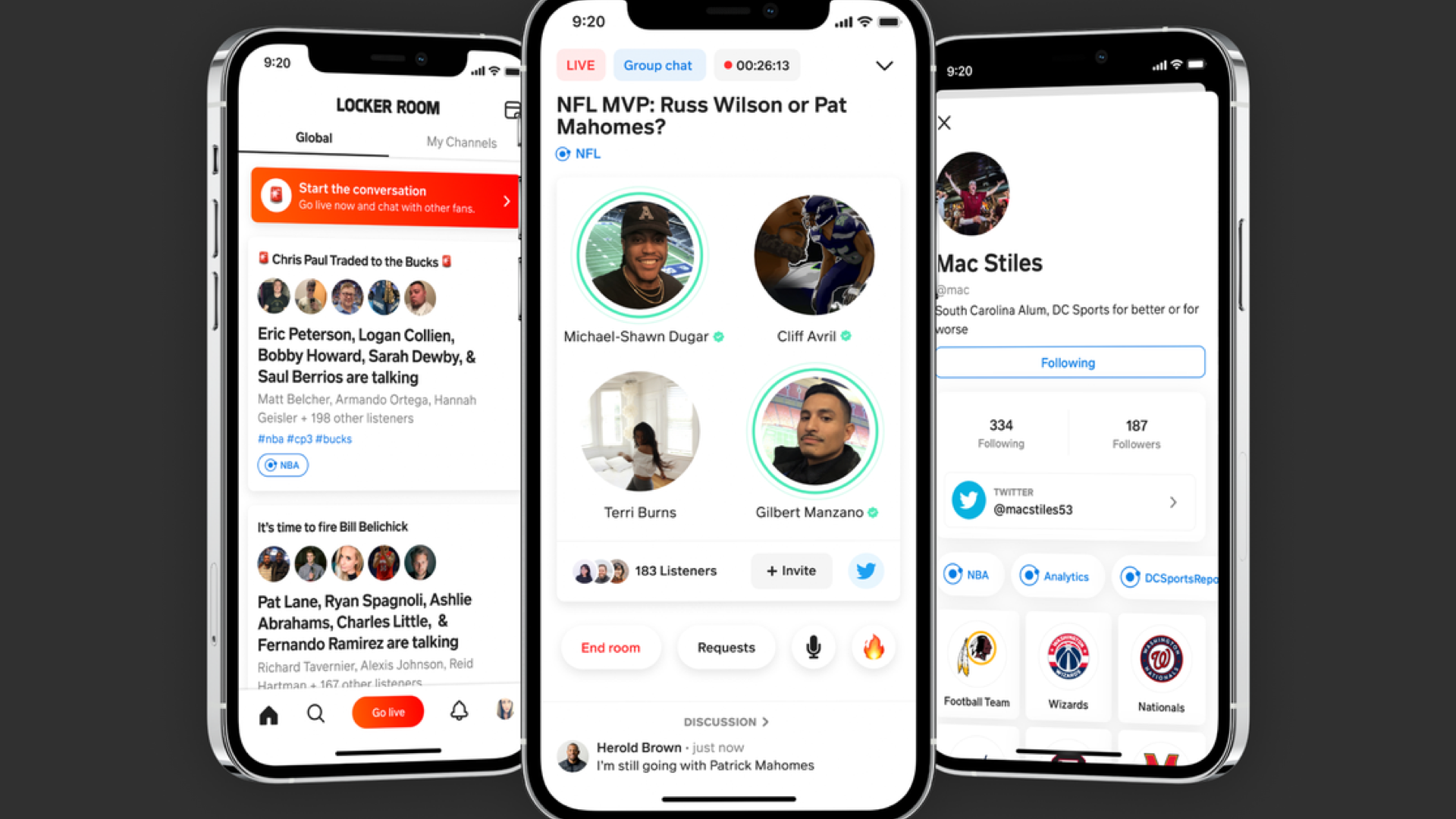
Locker Room, a social audio app where fans can talk sports and spontaneously join live conversations, launches Tuesday on the App Store.
The state of play: The company behind Locker Room, Betty Labs, has raised $9.3 million in seed funding led by Google Ventures with participation from Lightspeed Venture Partners and the Alexa Fund, Axios has learned.
Facebook on Monday launched its free cloud gaming platform on desktop and Google's Android mobile operating system but said it it couldn't offer the service on Apple's iOS because of Apple's "arbitrary" policies on applications that act like app stores.
The big picture: It's the latest example of the complex interrelationships among tech's biggest companies, which cooperate with one another in some areas while competing and fighting in others.
A week out from Election Day, online platforms are bracing for impact, making announcements and conducting internal tests to show they're ready for chaos.
Why it matters: The internet is guaranteed to be awash in misinformation and superheated rhetoric in the days before and after the election, and digital gatekeepers hope to avoid shouldering blame for "undermining democracy" as happened after 2016.
Facebook clarified Monday to Axios that its pre-Election Day ban on new political ads, going into effect Tuesday at midnight, applies to any political content with ad spend behind it — including boosted posts as well as ads created in Facebook's ad manager system.
Catch up quick: A boosted post is a regular Facebook post whose owner has paid Facebook to distribute it more widely. This approach is often used by smaller advertisers with less to spend.


















/2020/10/27/1603758014621.gif?w=3840)