Facebook warned Tuesday that bad actors are increasingly taking to social media to create the false perception that they’ve pulled off major hacks of electoral systems or have otherwise seriously disrupted elections.
Why it matters: "Perception hacking," as Facebook calls it, can have dire consequences on people's faith in democracy, sowing distrust, division and confusion among the voters it targets.
Airbnb on Tuesday announced that it plans to list its shares on the Nasdaq, but didn't provide any additional information about its upcoming IPO.
Timing: The hospitality giant continues to target a 2020 offering, as its long-term rental and domestic business have helped offset some pandemic-related slowdowns.
Advanced Micro Devices (Nasdaq: AMD) agreed to buy rival U.S. chipmaker Xilinx (Nasdaq: XLNX) for $35 billion in stock.
Why it matters: AMD is expanding at the same time that rival Intel is divesting, using the nearly $40 billion in market cap it's gained so far in 2020. The deal also reflects rapid growth of the data center market, due to increased demand from cloud computing giants like Amazon, Google, and Microsoft.
The Artist Rights Alliance, a non-profit advocating for music creators, has sent a letter to the Justice Department, the Federal Trade Commission and the state Attorneys General of Vermont and California, calling for an investigation into Facebook for refusing to take action on a fraudulent concert on its platform.
Details: The letter, obtained by Axios, asks policymakers to investigate Facebook for "participating in a scheme to defraud cellist Zoe Keating, an unknown number of her fans, and undoubtedly thousands of other working artists."
A new machine-learning-based writing companion called Wordtune aims to help users edit and improve written text as it's being composed.
Why it matters: Natural language processing is one of the most active areas in AI today. If tools like Wordtune work well, it would demonstrate AI is getting closer to really understanding what we're saying.
Tech platforms are no longer satisfied with debunking falsehoods — now they're starting to invest in efforts that preemptively show users accurate information to help them counter falsehoods later on.
Why it matters: Experts argue that pre-bunking can be a more effective strategy for combating misinformation than fact-checking. It's also a less polarizing way to address misinformation than trying to apply judgements to posts after they've been shared.
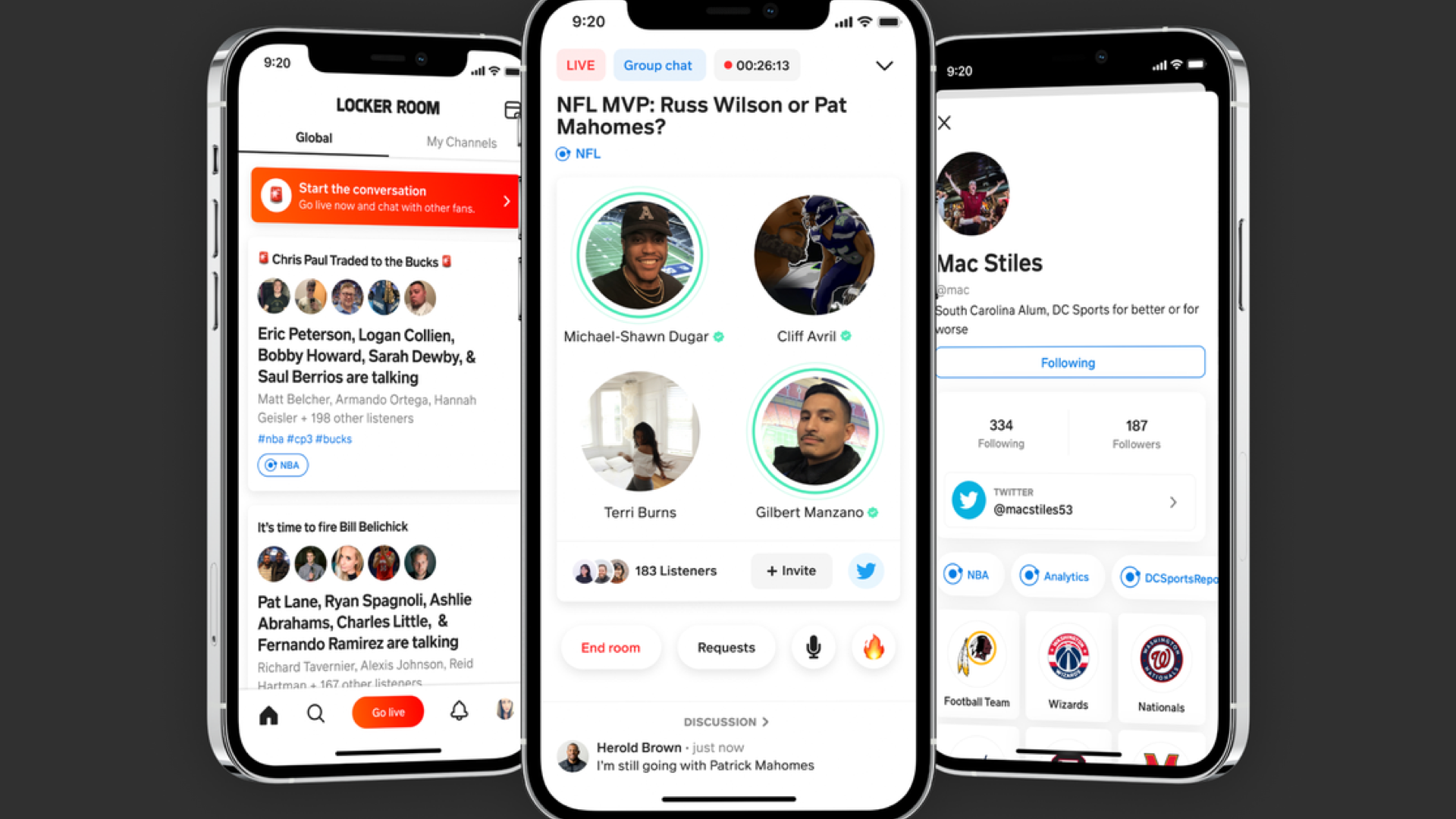
Locker Room, a social audio app where fans can talk sports and spontaneously join live conversations, launches Tuesday on the App Store.
The state of play: The company behind Locker Room, Betty Labs, has raised $9.3 million in seed funding led by Google Ventures with participation from Lightspeed Venture Partners and the Alexa Fund, Axios has learned.
Facebook on Monday launched its free cloud gaming platform on desktop and Google's Android mobile operating system but said it it couldn't offer the service on Apple's iOS because of Apple's "arbitrary" policies on applications that act like app stores.
The big picture: It's the latest example of the complex interrelationships among tech's biggest companies, which cooperate with one another in some areas while competing and fighting in others.
A week out from Election Day, online platforms are bracing for impact, making announcements and conducting internal tests to show they're ready for chaos.
Why it matters: The internet is guaranteed to be awash in misinformation and superheated rhetoric in the days before and after the election, and digital gatekeepers hope to avoid shouldering blame for "undermining democracy" as happened after 2016.