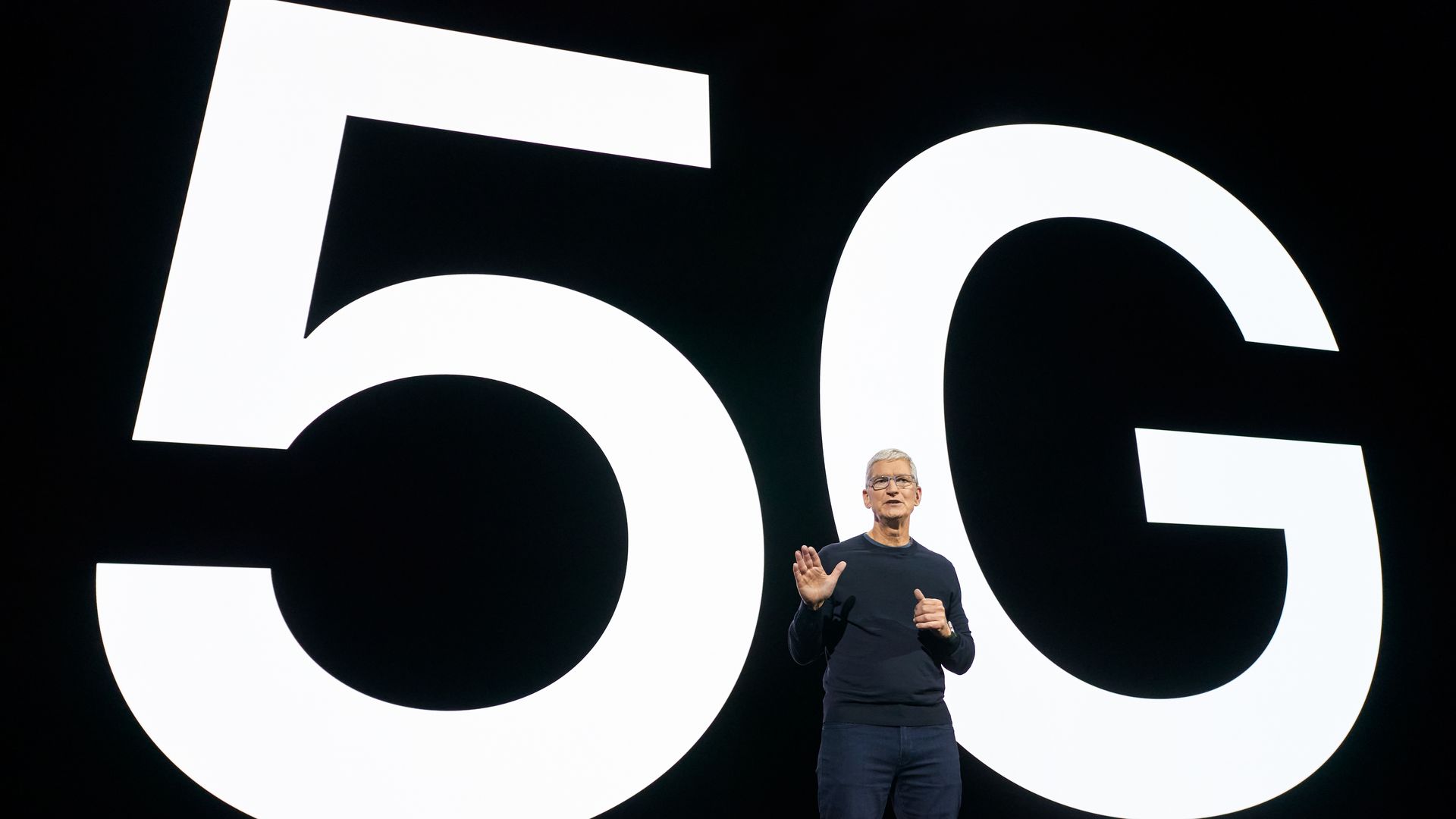
Apple on Thursday reported quarterly sales and earnings that narrowly exceeded analysts estimates as the iPhone maker continued to see strong demand amid the COVID-19 pandemic.
What they's saying: The company said response to new products, including the iPhone 12 has been "tremendously positive" but did not give a specific forecast for the current quarter.
In earnings for the 2020 third quarter released Thursday, Facebook reported modest user growth but revenue increases that beat Wall Street expectations.
Why it matters: Facebook's business looks resilient and thriving despite — or maybe because of — the pandemic.
Google parent company Alphabet beat Wall Street expectations in the third quarter of 2020, announcing total revenues of $46.2 billion with its shares rising more than 9% in after-hours trading.
Why it matters: The company rebounded with its revenue up 14% after a tough second quarter, when its saw its first-ever revenue decline attributable to a lowered advertising growth rate amid the COVID-19 pandemic.
Here's a thought that occurred to a few people while weaving their cars through double-parked Amazon trucks and Ubers: Let's find a way to monetize those scofflaws.
Why it matters: Video cameras mounted on city streets — and connected to the right software and technology — could one day be a gold standard for urban traffic management.
Netflix announced Thursday it will charge customers $14 for its standard monthly subscriber plan and $18 for the premium plan, the Verge reports.
The big picture: The business model behind Netflix's strategy is to accumulate as many users worldwide with as much original and licensed content as possible, and then hike the monthly subscription prices on those users once they are hooked.
Trash systems that use vacuum suction and pneumatic tubes to whoosh garbage from people's homes and sidewalk bins have been around for decades, but are gaining new traction in the U.S.
Why it matters: These systems — which currently serve Disney World and Manhattan's Roosevelt Island — get municipal garbage trucks off the streets and offer a cleaner and more environmentally friendly waste removal.
Two restaurant owners have filed a potential class action lawsuit against Grubhub, saying that the online food delivery service added their establishments without permission.
Why it matters: While intermediary services have touted their role in supporting independent restaurants and businesses during the pandemic, many have gone to great lengths to grab business that otherwise might have gone direct to the establishment.
Apple, Facebook, Google and Amazon are all slated to report earnings after the markets close today, and that should give us a much better sense of how the tech industry is faring through the pandemic.
Why it matters: The reports should offer a clue of how sustainable tech's "new normal" is. That's especially important given that experts predict another and stronger wave of coronavirus in the U.S. that could force continued reliance on remote work for office employees.
A new working paper finds that as high-level AI research began to require huge amounts of computing resources, large tech firms and elite universities increasingly dominated the field's most important conferences.
Why it matters: If only the most well-funded researchers are able to drive the direction of AI, the diversity of voices will narrow at the very moment when AI is poised to transform how we live and work.
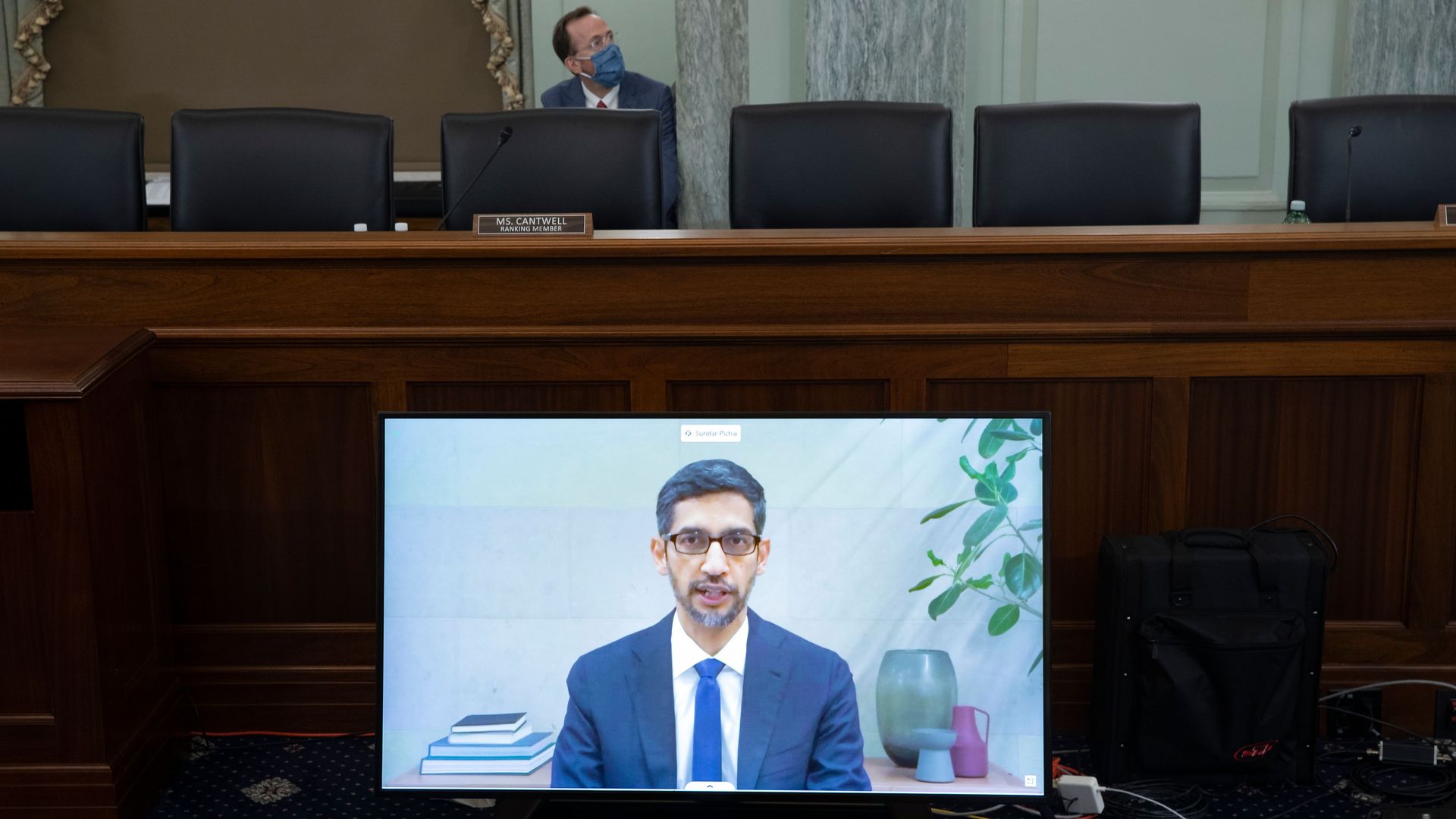
A Senate hearing Wednesday with Big Tech CEOs became the backdrop for Democrats and Republicans to swap accusations of inappropriate electioneering.
Why it matters: Once staid tech policy debates are quickly becoming a major focal point of American culture and political wars, as both parties fret about the impact of massive social networks being the new public square.
As online platforms and intelligence officials get more sophisticated about detecting and stamping out election meddling campaigns, bad actors are increasingly seeing the appeal of instead exaggerating their own interference capabilities to shake Americans' confidence in democracy.
Why it matters: It doesn't take a sophisticated operation to sow seeds of doubt in an already fractious and factionalized U.S. Russia proved that in 2016, and fresh schemes aimed at the 2020 election may already be proving it anew.
Twitter CEO Jack Dorsey said Twitter does not have the ability to influence elections because there are ample additional sources of information, in response to questioning from Republican Sen. Ted Cruz during a hearing Wednesday.
Between the lines: The claim is sure to stir irritation on both the right and left. Conservatives argue Twitter and Facebook's moderation decisions help Democrats, while liberals contend the platforms shy from effectively cracking down on misinformation to appease Republicans.
About half of Americans on both sides of the aisle back the Justice Department's antitrust lawsuit against Google, while fewer than a third oppose it, according to a new poll from progressive groups Demand Progress and Data for Progress shared exclusively with Axios.
Why it matters: There's a growing pile of evidence that regulatory action against Big Tech has bipartisan support, as state and federal antitrust action circles companies like Google and Facebook.
Silicon Valley CEOs used to be a rare sight on Capitol Hill, but that's changing due to rising pre-election anger at Big Tech, along with a pandemic-spurred shift to video testimony.
Why it matters: The shift means Congress hears more from the CEOs of powerful companies that are shaping our world. But the hearings' partisan rancor tends to drowns out the policy debate.
With less than a week until the 2020 election, researchers have expressed concern that the information ecosystem today is ripe for an unprecedented level of exploitation by bad actors, particularly hyper-partisan media and personalities on the right.
Why it matters: The misinformation-powered right-wing media machine that fueled Donald Trump's 2016 victory grew stronger after that win, and it's set to increase its reach as a result of the upcoming election, whether Trump wins or loses.
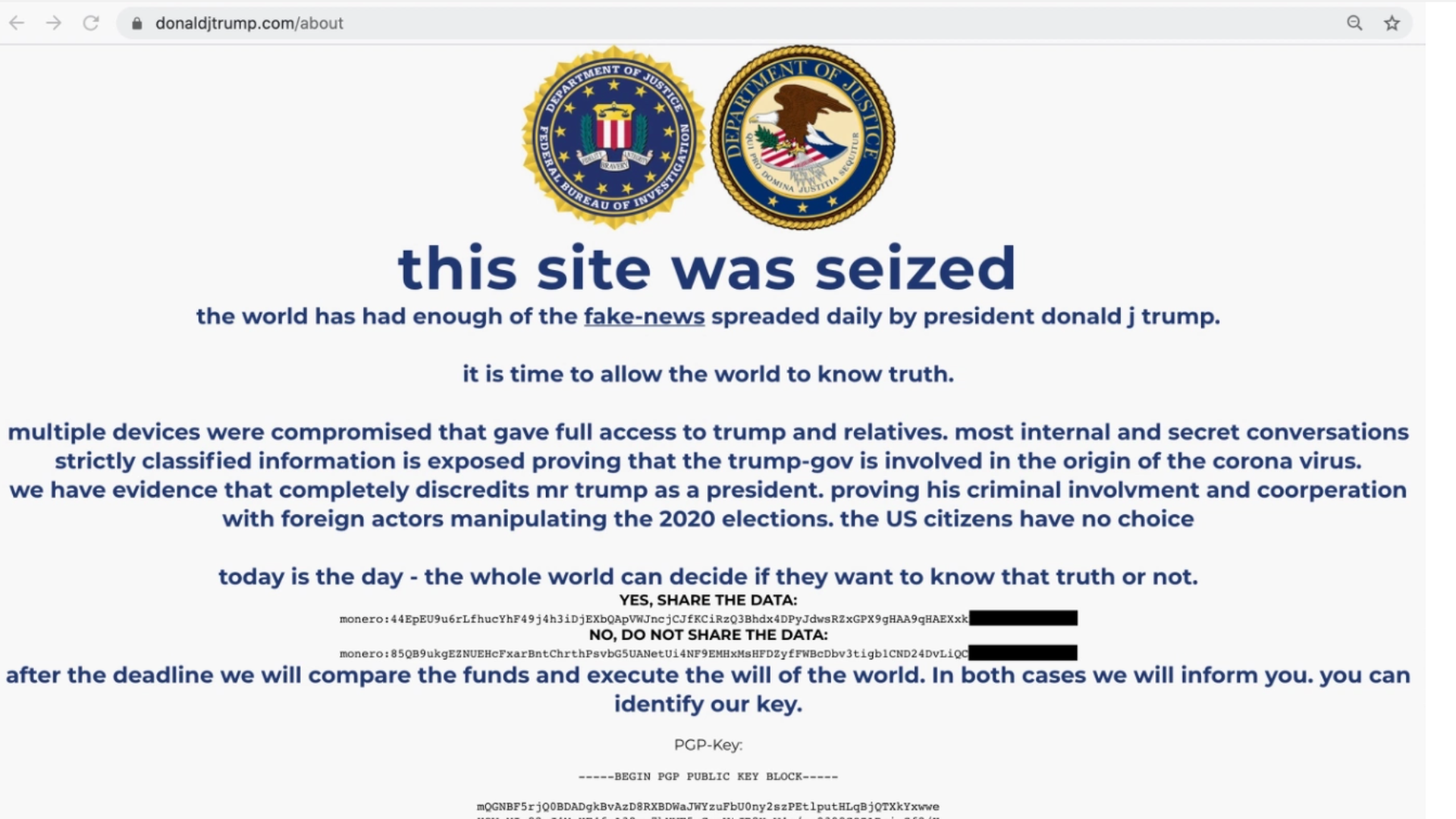
The Trump campaign website briefly went down and its "About" page was modified after hackers attacked the site Tuesday evening — just seven days before the election.
The big picture: The hackers emulated the FBI and declared on the "About" page that "this was seized. the world has had enough of the fake-news spreaded [sic] daily by president donald j trump. it is time to allow the world to know truth." Two addresses linked to the cryptocurrency Monero appeared on the site. Trump campaign spokesperson Tim Murtaugh in a statement said no sensitive data had been exposed in the attack.





/2020/10/29/1603999009982.gif?w=3840)