Space cargo delivery startup Momentus has agreed to go public via a reverse merger that would value the company at just over $1.5 billion, Axios has learned from a source familiar with the situation.
Details: The company would become listed on the Nasdaq under ticker symbol MNTS, and would secure a simultaneous $175 million investment from Capital Group, D.E. Shaw, Lerner Enterprises, Tribe Capital, and Axon Capital.
Republicans on the House Judiciary Committee are offering two reports of their own as alternatives to the sprawling tech antitrust report from panel Democrats.
Why it matters: They say the majority ignored anti-conservative bias in Silicon Valley and tacked too far left in its proposals — and their decision not to sign the majority report signals how tough it will be to pass any bipartisan legislation on this issue.
Facebook announced on Tuesday it would ban all accounts, pages and groups representing the fringe conspiracy theory QAnon from its platforms.
Why it matters: Facebook previously banned or restricted hundreds of groups, pages and Instagram accounts that "demonstrated significant risks to public safety" due to their ties to QAnon, but the latest update goes even further — removing all accounts "even if they contain no violent content."
The House Judiciary Committee on Tuesday laid out Democrats' vision of a U.S. antitrust policy built to rein in Google, Apple, Amazon and Facebook and other giant tech firms.
Why it matters: The long-awaited staff report on antitrust and Big Tech, which sprawls over 450 pages, outlines legislative and enforcement fixes that Democrats could enact should they hold the White House and both houses of Congress after November.
The Labor Department has been probing whether Microsoft's goal of increasing Black representation in its ranks constitutes racial discrimination, the software maker disclosed Tuesday. In a blog post, Microsoft says it believes it is complying with all applicable laws.
Why it matters: The Labor Department move comes as the Trump administration is also trying to use an executive order to block government contractors from offering certain types of diversity training.
Last month, one of America's largest hospital chains was hit by a type of cybercrime known as a ransomware attack. Then, just days later, the same thing happened to a Philadelphia company called eResearch Technology, whose software is used in COVID-19 vaccine trials.
Axios Re:Cap digs into the growing threat with Nicole Perlroth, a New York Times cybersecurity reporter who broke the ERT news.
Instead of just one report coming out of the House Judiciary Committee's year-long tech antitrust probe, there will likely be one from the Democratic majority and two from Republicans.
Why it matters: The latest developments blunt the likelihood that the parties can come together to rewrite antitrust laws for the digital economy, which Republican and Democratic policymakers alike have said they want to do.
Scientists have used artificial intelligence to spot small, newly formed craters on Mars for the first time.
Why it matters: This use of AI could cut down on the time scientists spend combing through images of the Red Planet's surface taken by orbiters to find interesting features worthy of study.
Apple on Tuesday announced it's holding an Oct. 13 press event where it is expected to introduce several new iPhone models supporting 5G wireless networks.
Why it matters. The iPhone is Apple's biggest product. This year’s announcement is the latest it has ever debuted the new crop, following production delays as the coronavirus pandemic snarled supply chains in Asia earlier this year.
House Judiciary Democrats will brief Joe Biden's team today on their findings from a year-long tech antitrust investigation, a source familiar with the matter confirmed to Axios.
Why it matters: Democrats and Republicans both agree that big tech giants need to be reeled in, but often disagree on the means to do so. Looping the Biden team in signals House Democrats want the policy recommendations in their report to get plenty of attention in a potential Biden administration.
Facebook on Tuesday removed a post from President Trump in which he falsely claimed that COVID-19 is less deadly "in most populations" than the flu. Twitter labeled the tweet for violating its rules about "spreading misleading and potentially harmful information," but left it up because it may be "in the public's interest."
Why it matters: Facebook has been criticized for not removing posts that violate community guidelines in a timely manner, yet the company sprung to action when Trump posted misinformation about the virus that "could contribute to imminent physical harm." Twitter took action about 30 minutes later.
One of the biggest news publishing companies in the world has slowly backed away from its harsh public criticism of Big Tech platforms, as companies like Google and Facebook have begun to open up their wallets to news companies.
Why it matters: News Corp. has for years been the driving force behind much of the regulatory scrutiny of Big Tech and its impact on the publishing industry. Now it's becoming a beneficiary of the massive pockets of several of the largest tech companies.
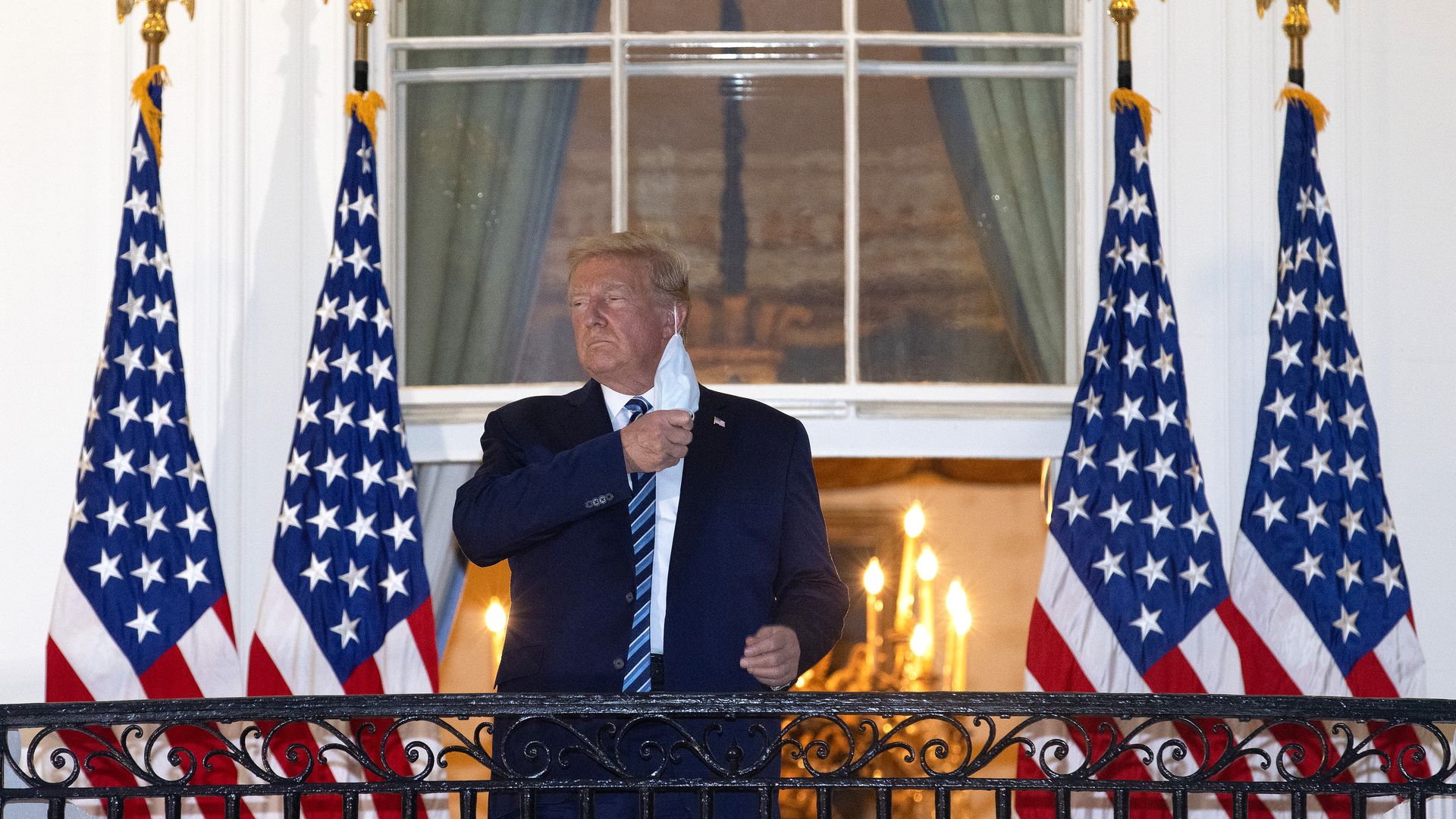
Misinformation related to President Trump's COVID-19 diagnosis has swarmed social media and the broader web since Friday, with claims that Trump is faking his illness gaining particular traction, according to data provided to Axios by social intelligence firm Zignal Labs.
Why it matters: Moments of national urgency are now becoming flashpoints in digital information wars, with misinformation being spread far and wide by malicious actors, conspiracy theorists and earnest dupes.
Oracle and Google will have their day at the Supreme Court Wednesday, tangling via teleconference in oral arguments aimed at resolving a decade-long battle over whether common interfaces between software programs can be protected by copyright.
Why it matters: The case lies at the heart of how modern software development works, and each side says a ruling in the other's favor will chill innovation. More narrowly, the Supreme Court may settle the question of whether Google owes Oracle nearly $9 billion in damages, as Oracle claims.
To try to revive the online frenzy of 2014's Ice Bucket Challenge, Joe Biden's campaign today launches the #ImVotingFor social media campaign, led by high-profile surrogates who have a combined 150 million followers.
How it works: The partners — elected leaders, digital creators and celebrities — will tag three people with #ImVotingFor, and ask them to do the same.
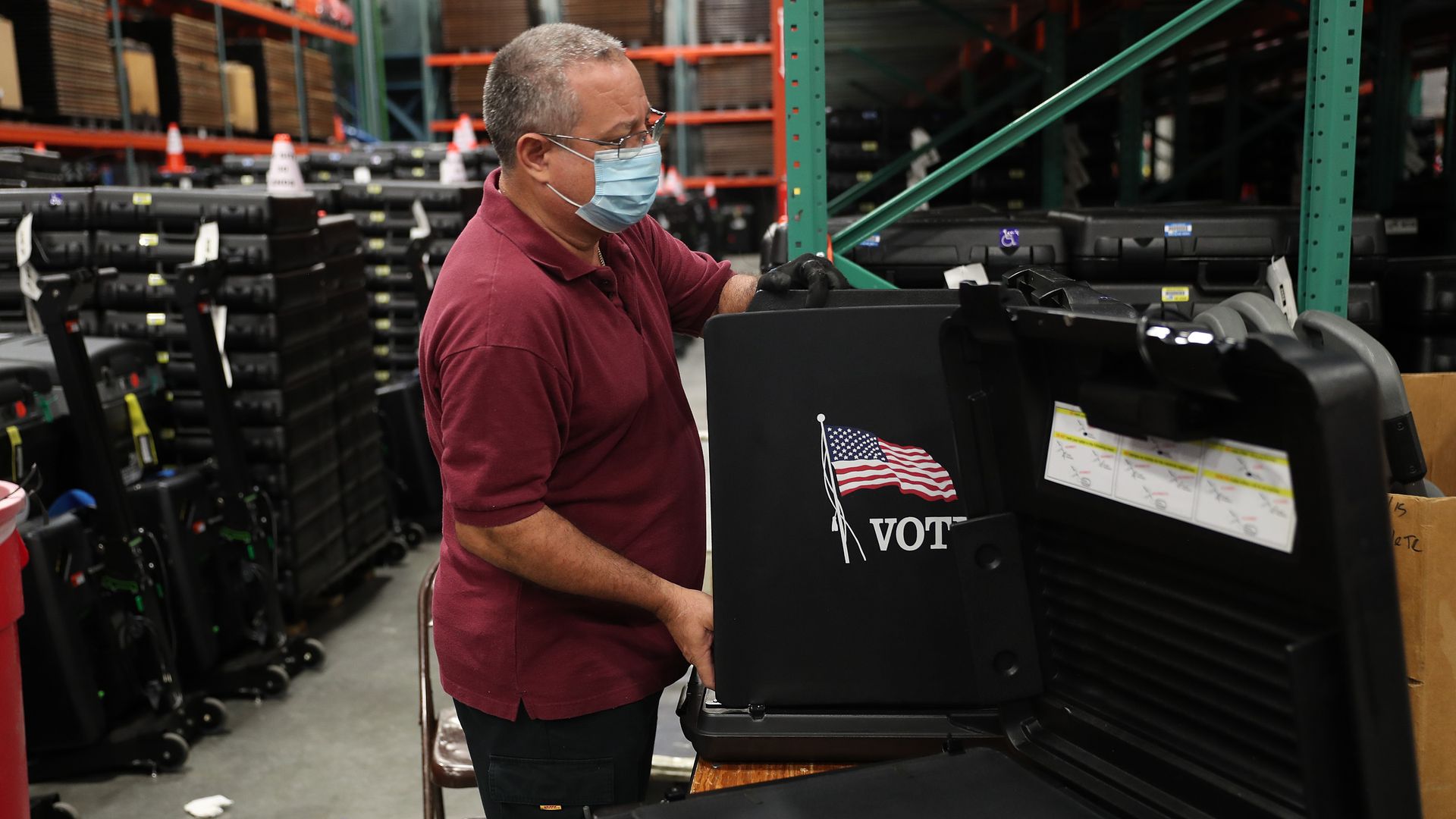
Florida Democrats are demanding Gov. Ron DeSantis (R) launch an investigation after the state's voter registration website for November's election crashed Monday hours before enrollment closed at midnight.
Driving the news: Florida Secretary of State Laurel Lee tweeted Monday evening, "Due to high volume, for about 15 minutes, some users experienced delays while trying to register. We have increased capacity." Several people replied to her post saying the site was still down and asked for the deadline to be extended.
Adam Mosseri, the head of Instagram, told Axios in an interview Monday that President Trump's efforts to ban TikTok may have already dealt irreversible damage to the digital world.
Driving the news: "The damage might have already been done in terms of normalizing this type of policy," Mosseri said. He and others have previously cautioned that nations targeting individual apps could chill innovation and free expression and encourage authoritarian governments to further extend their reach online.












/2020/10/05/1601937566076.gif?w=3840)