Sinclair Broadcast Group agreed to pay a record $48 million to settle three Federal Communications Commission investigations into its practices, the agency said Wednesday.
Why it matters: Despite the big penalty, the conservative-leaning broadcaster will keep its licenses after accusations the company misled regulators in its failed bid to buy Tribune Media.
Food delivery company GrubHub's stock dropped by more than 5% in after-hours trading after it delivered mixed Q1 results, with strong revenue, widening losses and a year-on-year decrease in daily average orders.
Why it matters: The coronavirus pandemic is expected to help delivery services as Americans remain home and shift how they interact with restaurants. Yet tech companies that enable them also face mounting costs relating to their workers' health and safety, and GrubHub's Q1 results suggest existing headwinds going into the crisis.
Lyft's stock price shot up by 15% in after-hours trading after the company beat Q1 revenue estimates yet also posted a loss per share more than double what analysts expected.
Why it matters: With the coronavirus keeping most Americans home, Lyft is in crisis mode, cutting 17% of its workforce just last week. The report indicates the company was making solid progress getting more revenue out of its riders before the pandemic hit.
Facebook's independent Oversight Board will be led by two U.S. constitutional scholars, a former prime minister of Denmark and a former official with the Organization of American States.
The big picture: The board is a first-of-its-kind internet governance body, which Facebook spent $130 million to fund to provide independent review of its content moderation decisions.
The future of a major nuisance for millions of Americans hangs in the balance Wednesday as the Supreme Court weighs whether federal limits on robocalls are unconstitutional.
Why it matters: A decision barring restrictions on robocalls could open the floodgates to many more than the tens of billions Americans already endure — and expand the treatment of corporate activities and political organizations' expenditures as constitutionally protected speech.
Google's philanthropic arm is doubling its planned coronavirus response donations to a total of $100 million, Google.org head Jacquelline Fuller told Axios.
Why it matters: The effort is in addition to coronavirus-related moves by the corporate side and, in some cases, also comes with hands-on technical support from Google employees to help organizations with the technical aspects of their efforts.
Zoom has hired a tech trade association veteran to lead its policy work as its pandemic-driven surge in popularity invites increased scrutiny from Washington.
Why it matters: The videoconferencing provider has become the go-to app for work meetings and virtual happy hours in a time of social distancing, but privacy and cybersecurity concerns have drawn lawmakers' interest.
Airbnb is laying off a nearly 1,900 employees, or a quarter of its global workforce, as it tries to weather the near total halt of travel amid the coronavirus pandemic.
Why it matters: Despite raising $2 billion in debt and equity last month, cutting marketing expenses and freezing hiring, the company couldn't escape having to cut a significant number of jobs.
California's attorney general, along with city attorneys for San Francisco, Los Angeles and San Diego, is suing Uber and Lyft over the companies' classification of drivers are independent contractors instead of employees.
Why it matters: This is the latest move in a long-running effort to get the companies to reclassify their drivers. It follows multiple lawsuits from individual drivers over the years, as well as last year's new California law codifying a state supreme court decision that makes it harder to classify workers are contractors.
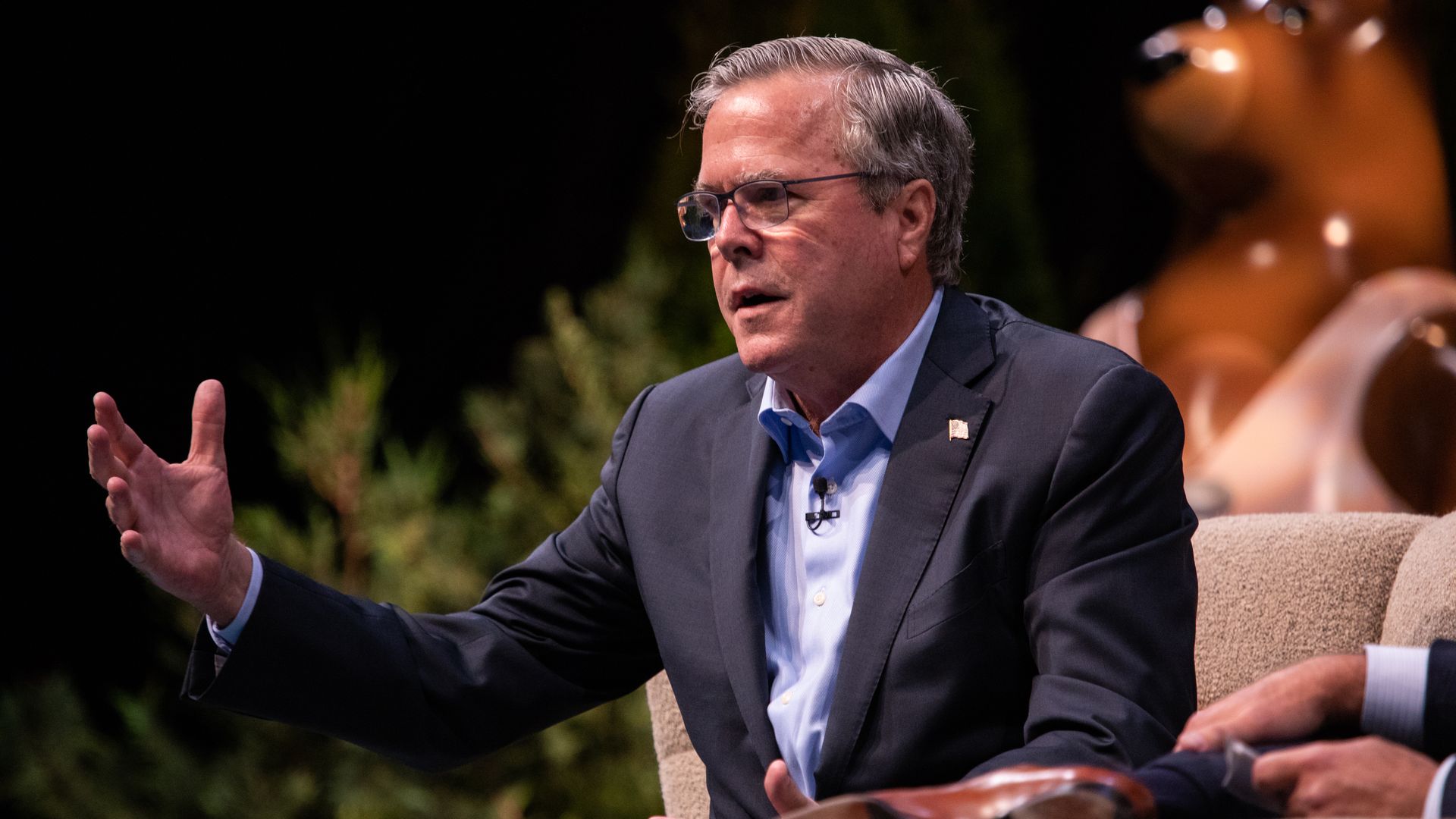
The U.S. should work to develop a national education strategy to address any technological or resource gaps confronting students, former Florida Gov. Jeb Bush said Tuesday at an Axios event.
What he's saying: "The access to education when you can't get to the classroom is limited or nonexistent for some and works for others. It seems to me we should have a national strategy using infrastructure monies that may come through Congress, the E-rate monies, which are in the billions of dollars, local and state technology budgets — all of this put together to create a national strategy is necessary to make sure every child has access to learning during these times."
Of all the conspiracy theories floating around the internet related to the coronavirus, disinfectant has by far gone the most viral.
Why it matters: Unlike some of the other conspiracy theories gaining traction on the internet, the disinfectant theory has gone viral online in large part because it's so obviously nonsensical that it quickly became an internet meme after President Trump suggested it could be used as a cure for coronavirus.
ATTN:, the progressive social media-based news outlet aimed at millennials, is launching a video series on Facebook and Instagram, in partnership with Poynter's groundbreaking digital literacy project "MediaWise."
How it works: Facebook came to ATTN: to produce the series because it's already proven that it knows how to capture millennials' attention with video, especially on Instagram.
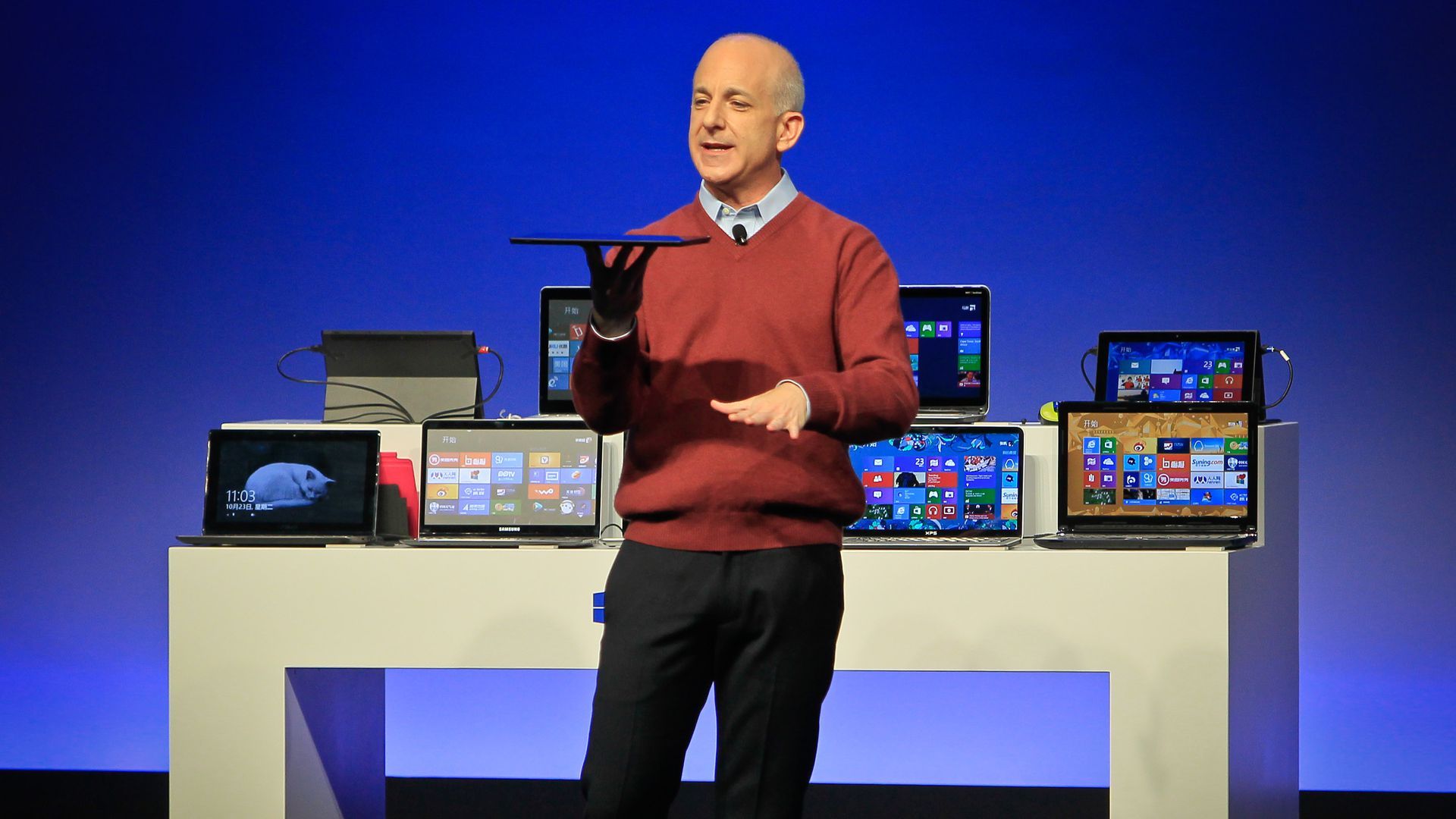
Steven Sinofsky, the former Microsoft executive and current Andreessen Horowitz board partner, has been working on a book chronicling what he learned during his decades at Microsoft, including his time leading the Office and Windows teams.
Why it matters: There are a lot of lessons today's tech giants can learn from Microsoft's experiences — and Sinofsky was at Microsoft for many of its most crucial moments.
As the coronavirus pandemic heightens tensions between the U.S. and China, policymakers and industry are promoting a new, software-driven approach to build next-generation cellular networks without using Chinese equipment.
Why it matters: It's a tall order to replace the wireless ecosystem's hardware-powered status quo, but designing 5G more around software could make it cheaper and easier to deploy — and give hawks a way to lock out China's products.














/2020/05/04/1588620511487.gif?w=3840)