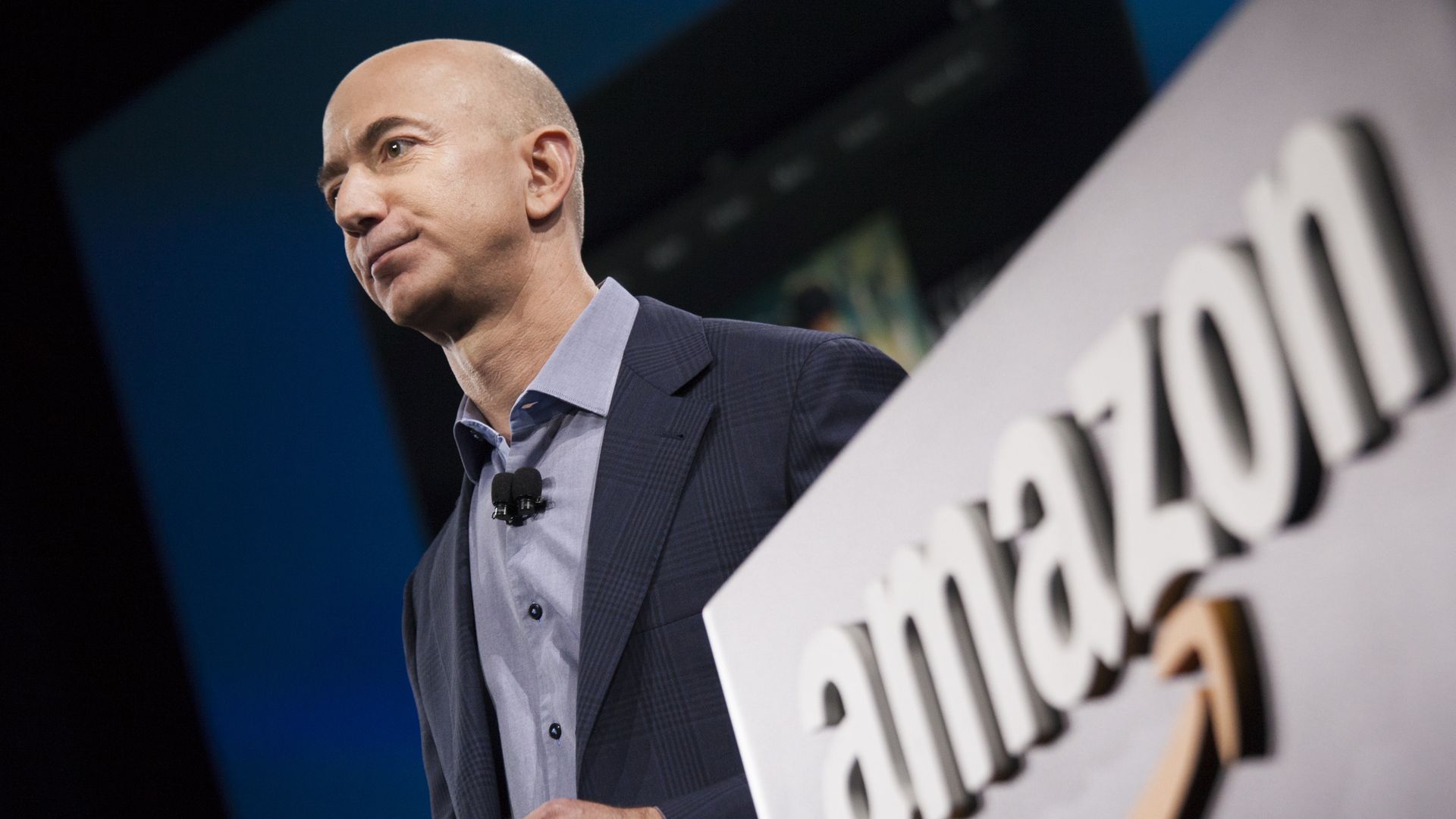
Singles Day sales for Chinese e-commerce giant Alibaba smashed Amazon's Prime Day sales in less than 10 minutes, Business Insider reports.
By the numbers: The company logged $6.5 billion in sales in its opening 20 minutes. Amazon's Prime Day sales are estimated to have eclipsed $4.2 billion over a 36 hour period.
Concern about antitrust action from Washington may be influencing how Amazon selects its much-sought new headquarters — specifically pushing it to favor the D.C. area. We asked legal scholars whether the government actuallyhas a case against Amazon — as President Trump has threatened — and what antitrust action would look like.
The backdrop: One of the leading thinkers on an Amazon breakup is Lina Khan,author of a seminal paper called "Amazon's Antitrust Paradox" while at Yale Law School. Khan argues that antitrust laws that focus on prices are ill-equipped to address Amazon's market power.
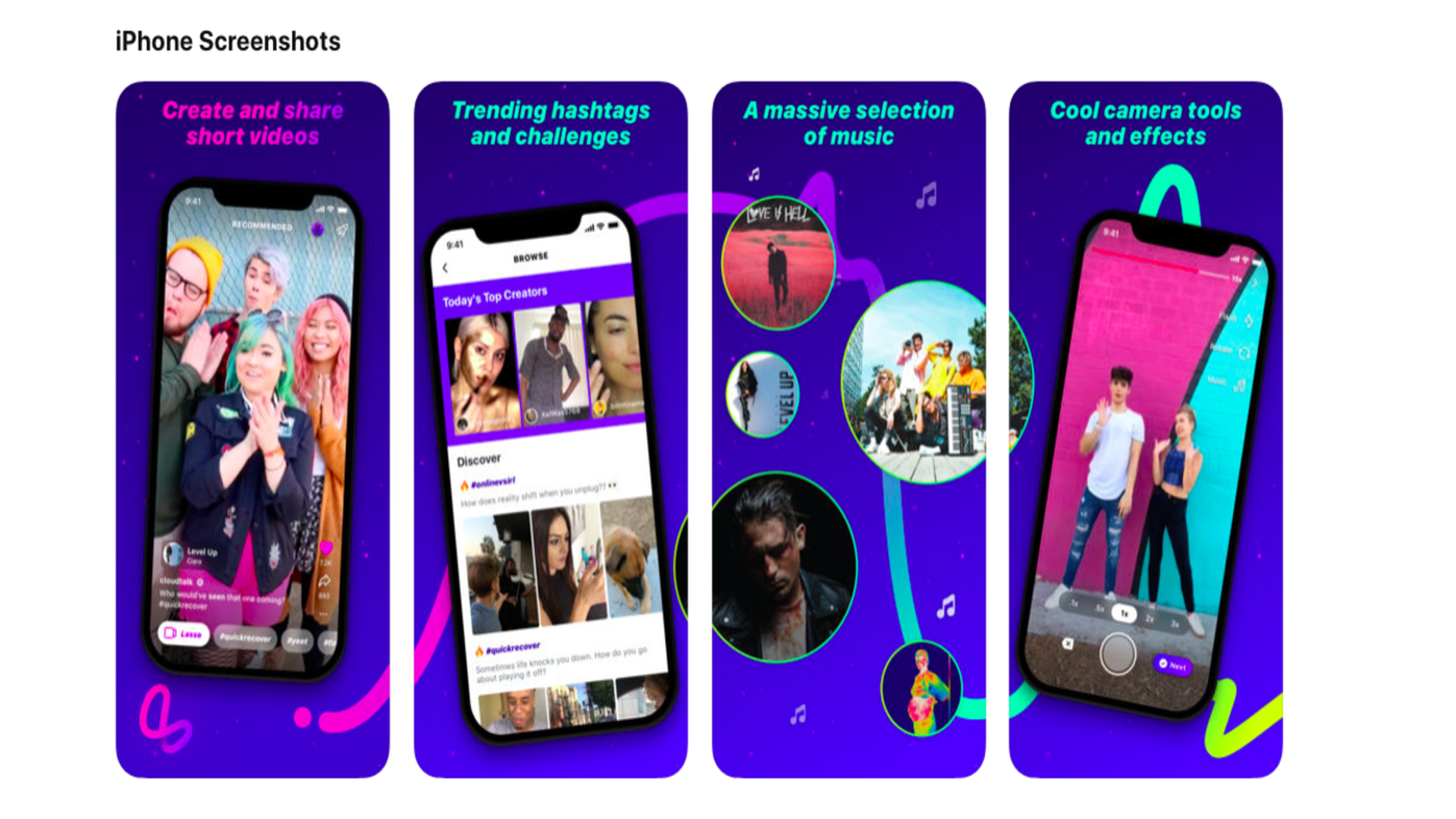
Facebook has quietly launched an app, Lasso, that allows users to create short music videos, similar to the highly popular Chinese app TikTok, The Verge reports.
Why it matters: The social network has struggled to keep teens on their Facebook feeds in 2018, per Pew Research Center, and is trying to stay relevant with younger users. Facebook is famous for building its own version of products that are achieving success with other companies — dating forums, stories, Facebook Portal and now a trendy video app.
Science is moving at a dizzying pace: around 2.5 million scientific journal articles are published a year around the world, and still the volume keeps climbing. But rather than propel science at an increasing clip, the flood has created information overload — and threatens to hold back progress.
The big picture: We have written about how artificial intelligence and faster computing are allowing scientists to go after much bigger problems. But part of the problem is also the more mundane task of simply keeping up with their field in an age of too much data.
Following Google's move in the face of employee pressure, Facebook is ending its mandatory arbitration for employee claims of sexual harassment, as the Wall Street Journal first reported and the company confirmed to Axios.
Why it matters: Unlike public lawsuits, forced arbitration for complaints of sexual harassment (as for those of discrimination) has been widely criticized as a tactic to silence victims and hide misconduct within companies. Earlier this year, Uber—followed by Lyft—made similar changes in response to ongoing criticism of the arbitration requirement from employees, drivers, and passengers.
Digital Content Next (DCN), the publishing trade group that represents digital publishers such as The New York Times and Condé Nast, says it supports national privacy legislation, according to comments it has filed in response to a new national privacy rule proposal.
Why it matters: Like other data-driven industries, the digital publishing business is pushing for a unified privacy regulation rather than face dozens of different state and regional regulations.
In Silicon Valley and Detroit, there seems to be a shared view that the first company to deploy self-driving vehicles at scale will have a huge competitive advantage. Chris Urmson, co-founder and CEO of start-up Aurora Innovation, tells Axios he is less worried about leading the self-driving car race than surviving to the end.
The big picture: Scores of auto and tech companies are sinking massive amounts of capital into autonomous vehicle technology, but only a handful of trusted players are likely to survive the inevitable shakeout.
Millions of dollars are being spent across apps, sets and props to help people project perfectly curated images for Instagram photos, Boomerangs and stories.
Why it matters: Instagram has exploded as the primary visual medium for social networkers around the world, with more than 1 billion users worldwide. Companies, influencers and everyday users are willing to pay big bucks to look their best.
Next-generation networks are expected to enable faster, more reliable data transmission and accelerate the deployment of better, safer autonomous vehicles. But a debate is raging over the right technology to achieve this vehicle-to-everything (V2X) connectivity.
Why it matters: If cars can coordinate themselves at intersections and report on road hazards, accidents could start to become a thing of the past. But for the safety benefits to be comprehensive, vehicles will have to communicate in a standardized language.
David Feinberg, CEO of Geisinger Health System, is moving over to lead health care programs at Google, the Wall Street Journal reports.
The details: Feinberg will be taking on a newly created role, in which he’ll “provide strategic direction for the initiatives already under way at the company targeting health care, from web services to machine learning to devices,” per WSJ.
Amazon employees left an all-staff meeting on Thursday disappointed with the response they got from executives on questions regarding the company's controversial facial recognition technology, BuzzFeed reports.
The details: Amazon Rekognition is being pushed out to law enforcement around the country, including Immigration and Customs Enforcement (ICE), which has resulted in backlash from employees and civil rights groups. But Andy Jassy, the CEO of Amazon Web Services, which oversees Rekognition, told staff that while he recognizes people will have "opinions that are very wide-ranging ... we feel really great and really strongly about the value that Amazon Rekognition is providing our customers of all sizes and all types of industries in law enforcement, and out of law enforcement."
With cars further evolving from “just” hardware into software platforms, the wide range of IT systems in an autonomous vehicle present many opportunities for cyberattacks. Artificial intelligence, especially machine learning technologies, can detect anomalous vehicle behavior or attempted code interference in real time.
Why it matters: Compromised code in the systems that control acceleration, braking, directional guidance and other crucial safety functions can jeopardize lives on the road.












/2018/11/09/1541729470519.gif?w=3840)