French President Emmanuel Macron released an international agreement on cybersecurity principles Monday as part of the Paris Peace Forum. The original signatories included more than 50 nations, 130 private sector groups and 90 charitable groups and universities, but not the United States, Russia or China.
The big picture: The Paris Call for Trust and Security in Cyberspace is another step in the disjointed effort to create international norms and laws for cybersecurity and warfare. In most international matters of regulating the internet, there tends to be a wide split between the liberal Western order and authoritarian nations like Russia and China.
Uber released a new report Monday, created in partnership with the National Sexual Violence Resource Center (NSVRC) and the Urban Institute, that outlined a new "taxonomy" for categorizing incidents of sexual harassment, misconduct and assault.
Why it matters: Underreporting of incidents and differences in definitions make it difficult to collect data on sexual misconduct. Uber's hope is that a standardized taxonomy — which categorizes 21 types of misconduct ranging from "staring and leering" to "non-consensual sexual penetration" — will help companies respond more effectively to allegations of abuse. Uber and its main competitor Lyft have taken similar steps this year to make it easier to report incidents of sexual assault and harassment, like removing a requirement for mandatory arbitration.
At the Reinvented Toilet Expo in Beijing on Nov. 6, Bill Gates committed the Bill & Melinda Gates Foundation to scaling up its investments in new toilet technologies. Eight companies based in India, China, the U.S. and Thailand, which had previously received grants from the foundation, displayed their pathogen-killing toilets and small-scale waste treatment plants that can disinfect fecal sludge.
Why it matters: 4.5 billion people don’t have access to safely managed toilets or still defecate in the open. Lack of safe sanitation leads to diarrhea (a leading cause of death among children under 5), infections such as schistosomiasis and trachoma, and vector-borne diseases such as West Nile virus. There's widespread consensus that greater support from donors such as the foundation and international banks is critical to extending basic sanitation services, especially to the world’s poorest.
Facebook has named Anne Kornblut — an alumnus of the Boston Globe, New York Times and Washington Post who has been at the company for three years — to the new position of Director of News, New Initiatives.
Per Facebook: "Anne will lead the expanded news partnerships out of our Menlo Park office. She will focus on new initiatives across the entire family of Facebook apps and services, and work across the many teams that touch news on Facebook: products, partnerships, policy, communications."
Tech’s Washington representatives are working to shape the Department of Commerce’s approach to privacy, with comments flowing into the agency last week ahead of a key deadline.
The big picture: From the halls of Congress to federal agencies to state houses, lobbying battles are raging as companies, trade groups, and their critics seek to influence how America regulates consumer data collection and its use.
Normally, making something safer means reducing the amount of money you need to pay to insure it. But that's not the case with today's autos.
The big picture: As cars evolve from being mostly mechanical to being computers on wheels, they become increasingly fragile, especially around the periphery. A CPU can sit safely in the center of the vehicle, but the sensors can't.
The midterms gave Democrats control of the House of Representatives while the Republicans held onto the Senate. As Axios' David McCabe writes, the fallout is that Congress may start aiming harder at Big Tech. Here are five stories this week buried beneath the election coverage.
Catch up quick: Amazon will now sell Apple-authorized products; traditional sports are looking to new tech to survive; GitHub users created 100 million repositories; Tesla picked Robyn Denholm as new board chair; and the Supreme Court will not hear challenges to net neutrality regulations.
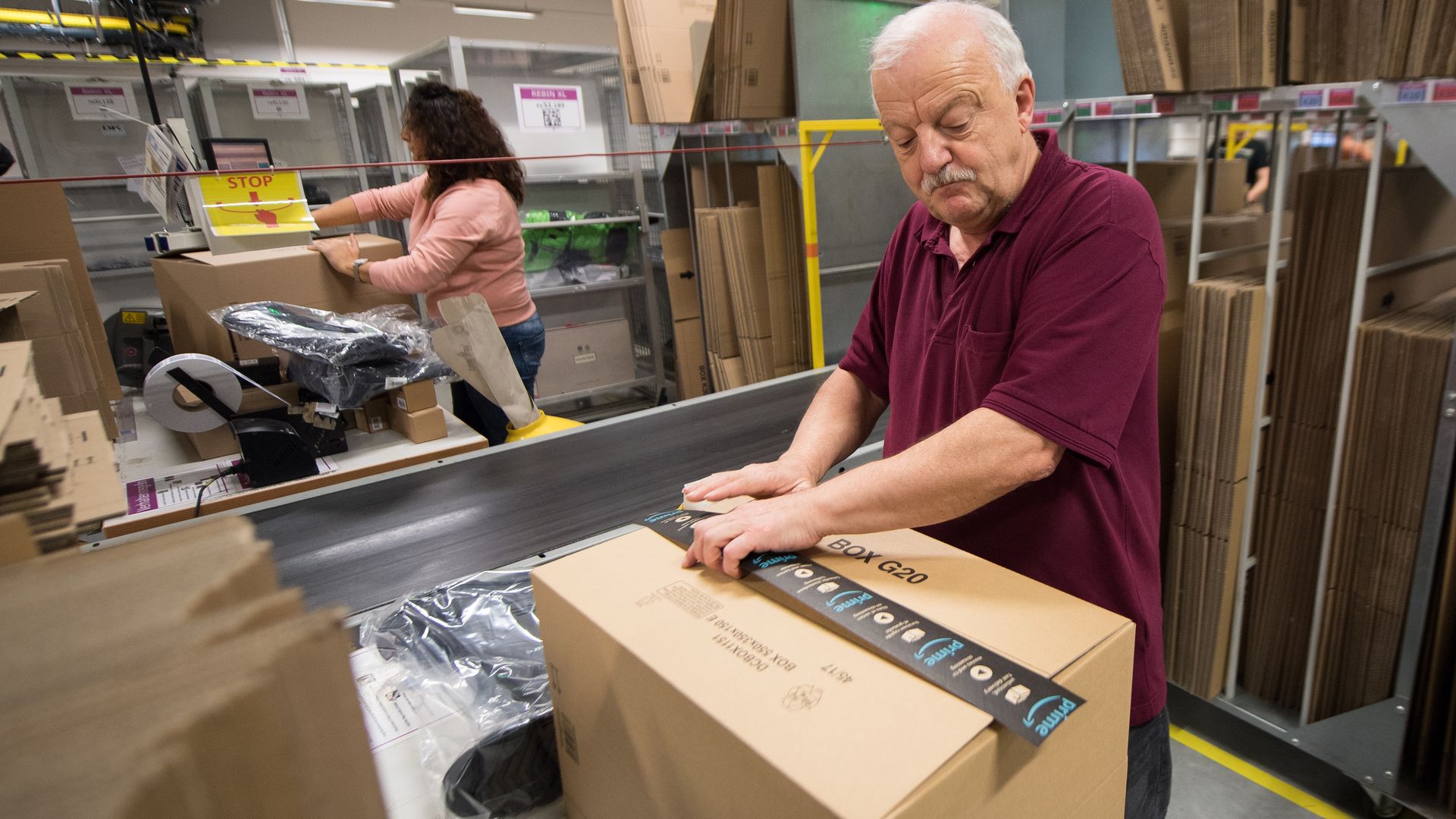
Sellers that are using Amazon's pilot shipping program in Los Angeles are reporting costs 50% cheaper than prices offered by UPS, CNBC reports.
Why it matters: Amazon is going after FedEx and UPS with steep discounts as it looks to court more sellers to try its pilot shipping service that launched this year. The discount program is an example of how Amazon is hitting the shipping companies hard, especially for the upcoming holiday season.