Seven employees have left Google over the company’s secretive work on possibly launching the search engine in China amid censorship concerns, according to a list circulating among Google’s ranks, BuzzFeed News reports.
Why it matters: The project, known as Project Dragonfly, has led human rights organizations to question whether Google is bending its free speech principles in order to take advantage of the large Chinese market. Google would not comment on the matter.
Facebook will expand its fact-checking operation to vet photos and videos, the company announced Thursday.
Why it matters: Advances in technology are making it easier for bad actors to manipulate real videos to make it appear that someone did or said something they did not. Experts predict that these very sophisticated forms of doctored media, called "deepfakes" are the next frontier of misinformation.
Three members of Congress today asked the nation’s spymaster to investigate the national security implications of computer-generated video and audio manipulations known as "deepfakes."
Why it matters: The lawmakers — two House Democrats and a Republican — echoed the warnings of experts who say deepfakes could become the next vector for poisonous propaganda and misinformation.
Amazon founder Jeff Bezos on Thursday revealed his long-awaited plans to increase his philanthropy: he and his wife have committed $2 billion to give to charities that support homeless people and to build new preschools in low-income areas.
Why it matters: The scale of his wealth means he can have a dramatic influence over almost any area of society he chooses. Up until now, Bezos has been relatively ungenerous compared to his status as the richest person in the world.
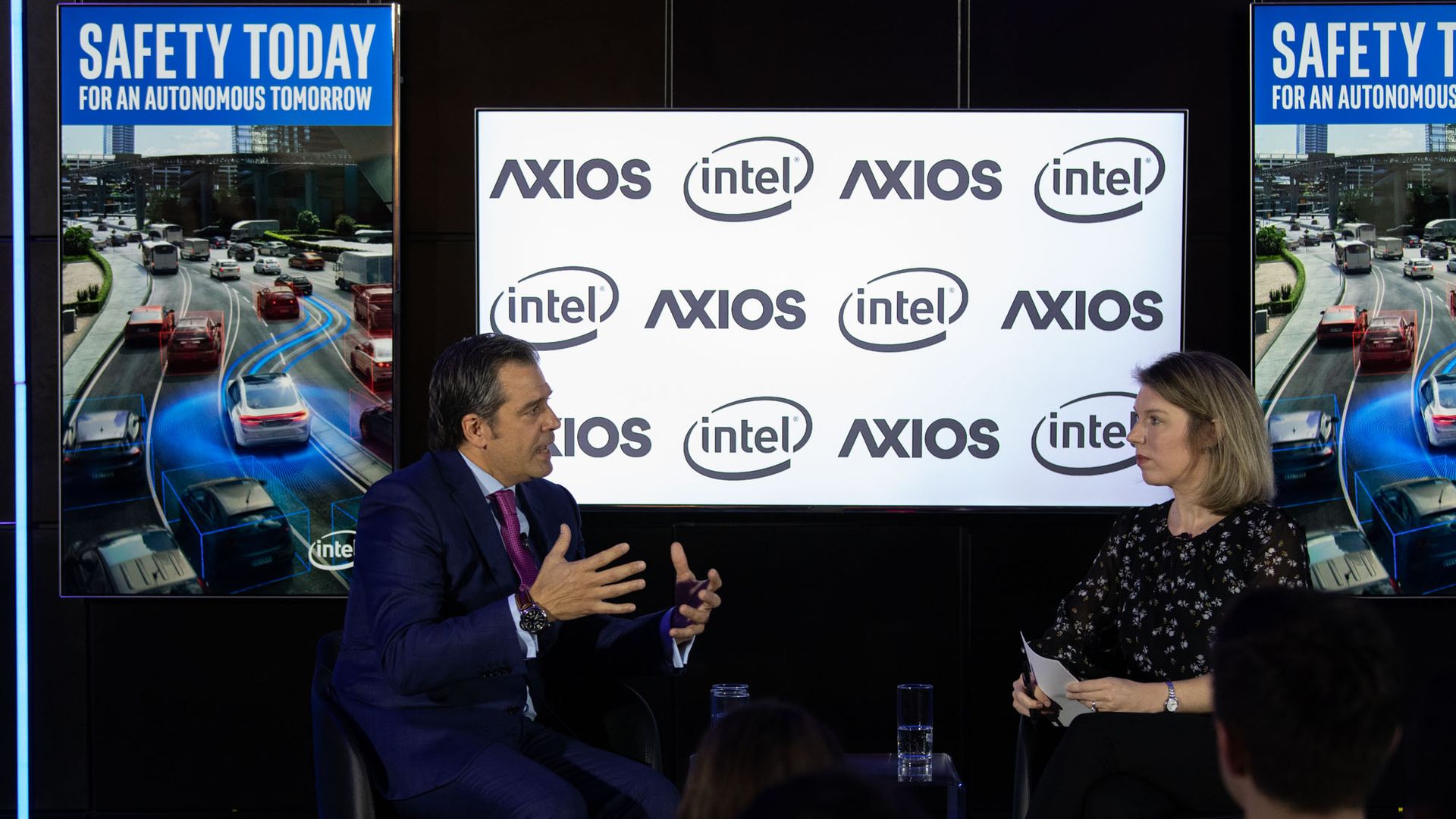
John Bozzella, president and CEO of Global Automakers, said at an Axios event Thursday that it's "critically important" that Congress pass federal legislation on autonomous vehicles.
Why it matters: It's been one year since the House approved the Self Drive Act, but the Senate has yet to pass it. This delay is set against a growing fear in Washington, Silicon Valley and the auto industry that the U.S. will fall dangerously behind in autonomous vehicle standards and policies while China and Europe leap ahead.
Snapchat is letting more than 20 news partners create curated "stories" with user-generated content from its platform as part of a new content push on its media section, Discover. CNN, which left Discover last year after mixed results, will be involved.
Why it matters: The move is part of a broader push by Snapchat to help more people discover and interact with the billions of user-generated photos and videos uploaded to its platform everyday. It also lowers the barrier to entry for media partners to get on Discover, which will help Snapchat add scale to its editorially curated media section.
Thursday morning, Axios Managing Editor Kim Hart hosted a conversation on autonomous vehicles and how transportation technology will impact the future with Rep. Bob Latta (R-OH), CEO of Global Automakers John Bozzella and CEO of SAE International David Schutt.
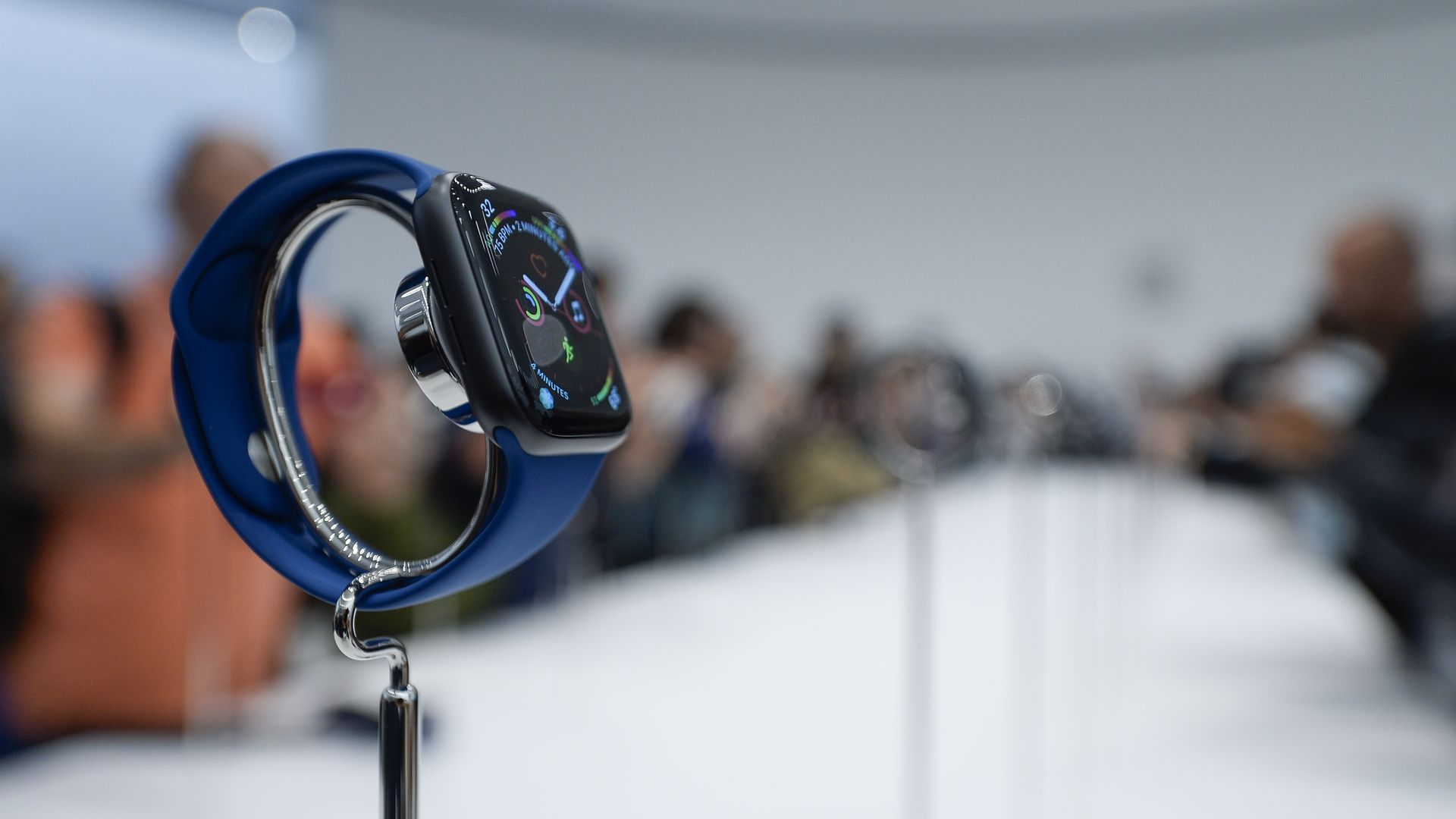
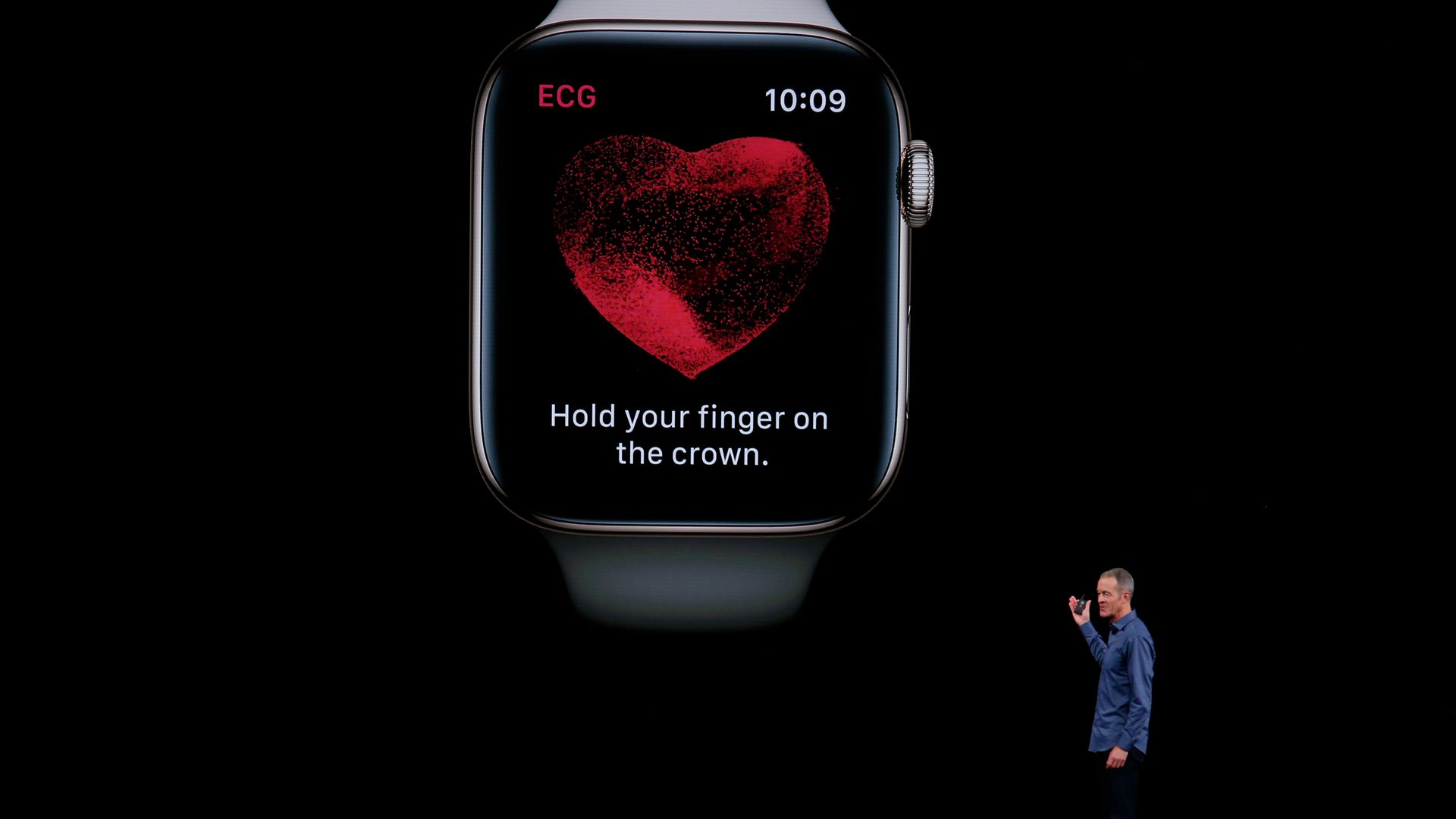
Apple expanded its health care footprint yesterday with its latest Apple Watch, adding features that can monitor users' heart rates and also detect falls.
The big picture: Apple is carving out a consistent niche for itself as the tech industry more broadly searches for ways into the health care market.
A video obtained by Breitbart of Google leaders lamenting the results of the 2016 election to employees at its first all-staff meeting after the vote is causing uproar from voices on the right.
Why it matters: The video adds fuel to the ongoing conservative narrative that Silicon Valley's progressive founders and corporate cultures cause their engineers to steer algorithms to be biased against conservative voices.
Groups representing major tech companies in Washington are trying to influence a growing debate over the future of federal privacy regulation.
Why it matters: Lawmakers are accelerating their examination of privacy in the United States, with a Senate panel announcing Wednesday it would question representatives of key companies on the issue.
It's 2018 and fancy smartwatches require FDA approval.
Apple said this morning that it got the agency’s green light for its fourth-generation watch. It's half smartwatch, half medical device, including a workout tracker and an electronic eye on its wearer's vitals.