Friday's technology stories


How T.G.I. Friday's uses artificial intelligence
As of late, T.G.I. Friday's — that American stalwart of strip malls and airports — has a surprisingly modern engine behind it: artificial intelligence.
What's going on: As researchers keep pushing AI forward, increasing types of businesses are experimenting with basic forms of the technology to cut costs, resolve problems efficiently — and achieve a little wow factor.

When $2 billion is a pittance
For centuries, business titans have risen in acts of ruthlessness, then washed their reputations in shows of charity, endowing monuments like libraries (Carnegie), museums (Getty), universities (Rockefeller) and plain-old philanthropies (Ford).
Not Jeff Bezos. For now, the Amazon kingpin says he plans to donate a tiny part of his $160 billion fortune, and continue to do business with the rest.

Pilot programs for low-speed AVs making quick progress
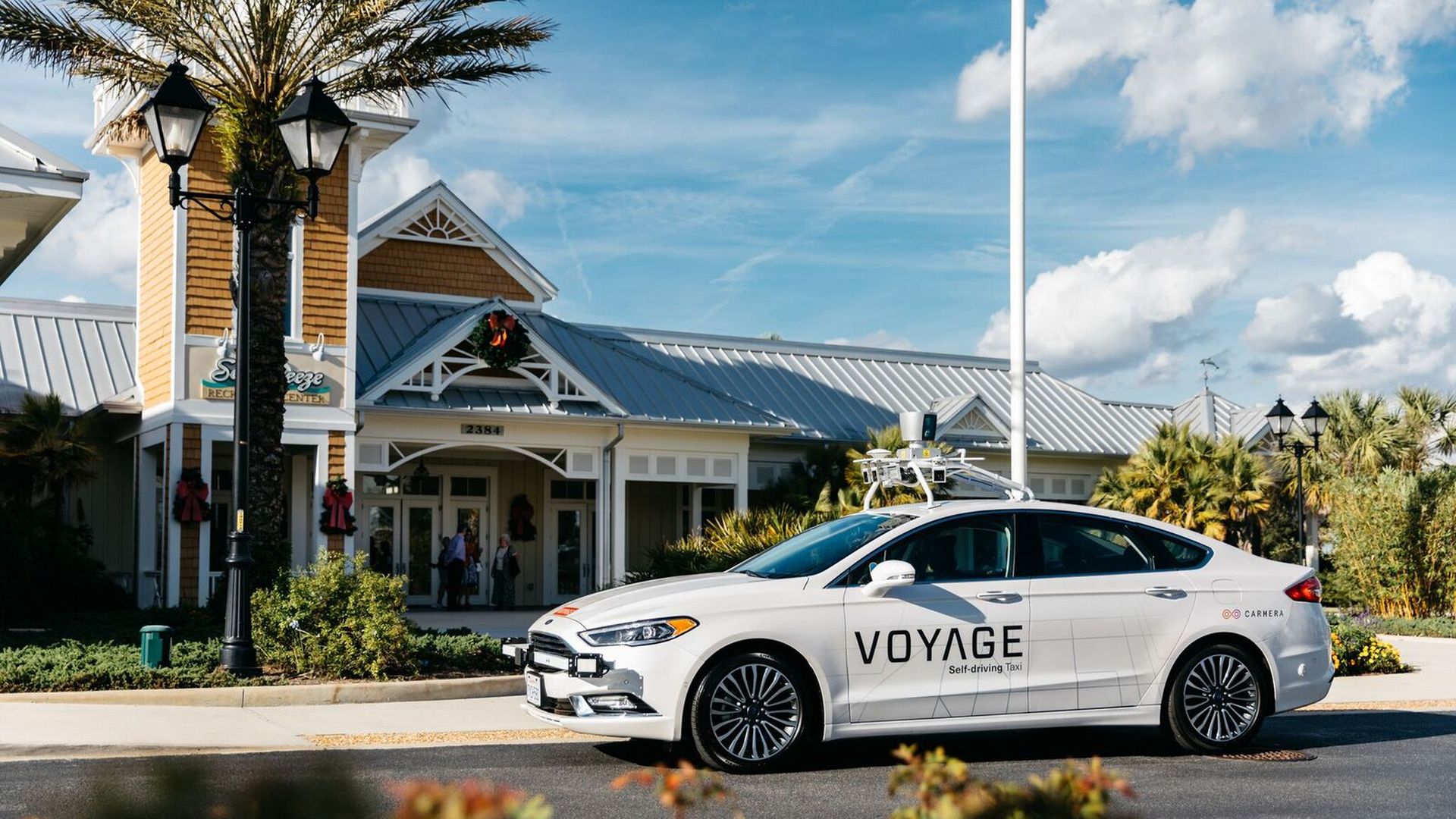
Although widespread deployment of autonomous cars and trucks, especially at highway speeds, is still a ways off, low-speed AV fleets could provide the majority of rides within the next decade and reduce vehicle ownership by up to 75% in densely populated areas.
Why it matters: LSAVs can help meet the complex mobility needs of neighborhoods, campuses and business districts, especially by being traveling in mixed traffic — alongside pedestrians, cyclists, scooter riders and more — and facilitating connections to other modes of transit. Cities across the U.S. are looking to these pilot programs to learn whether AVs can earn the consumer confidence to move further onto the road.

North Koreans used fake social media accounts to bypass sanctions
North Koreans used fake personas on Facebook, LinkedIn, and other social media sites to generate tens of thousands of dollars in income all the while bypassing sanctions, a Wall Street Journal investigation finds.
Why it matters: North Koreans are taking advantage of the same social media tools that allowed Russians to interfere in the 2016 election to test not just the limits of democracy, but financial exploits as well.

New Uber lawsuit shines light on reporter-source relationships
Former Uber Southeast Asia executive Eric Alexander this week sued former Uber communications chief Rachel Whetstone (soon joining Netflix) for allegedly breaching a two-way non-disparagement agreement.
Why it matters: This case could remind potential media sources they have few legal privacy protections.

U.S. cities building on Las Vegas' success with autonomous buses
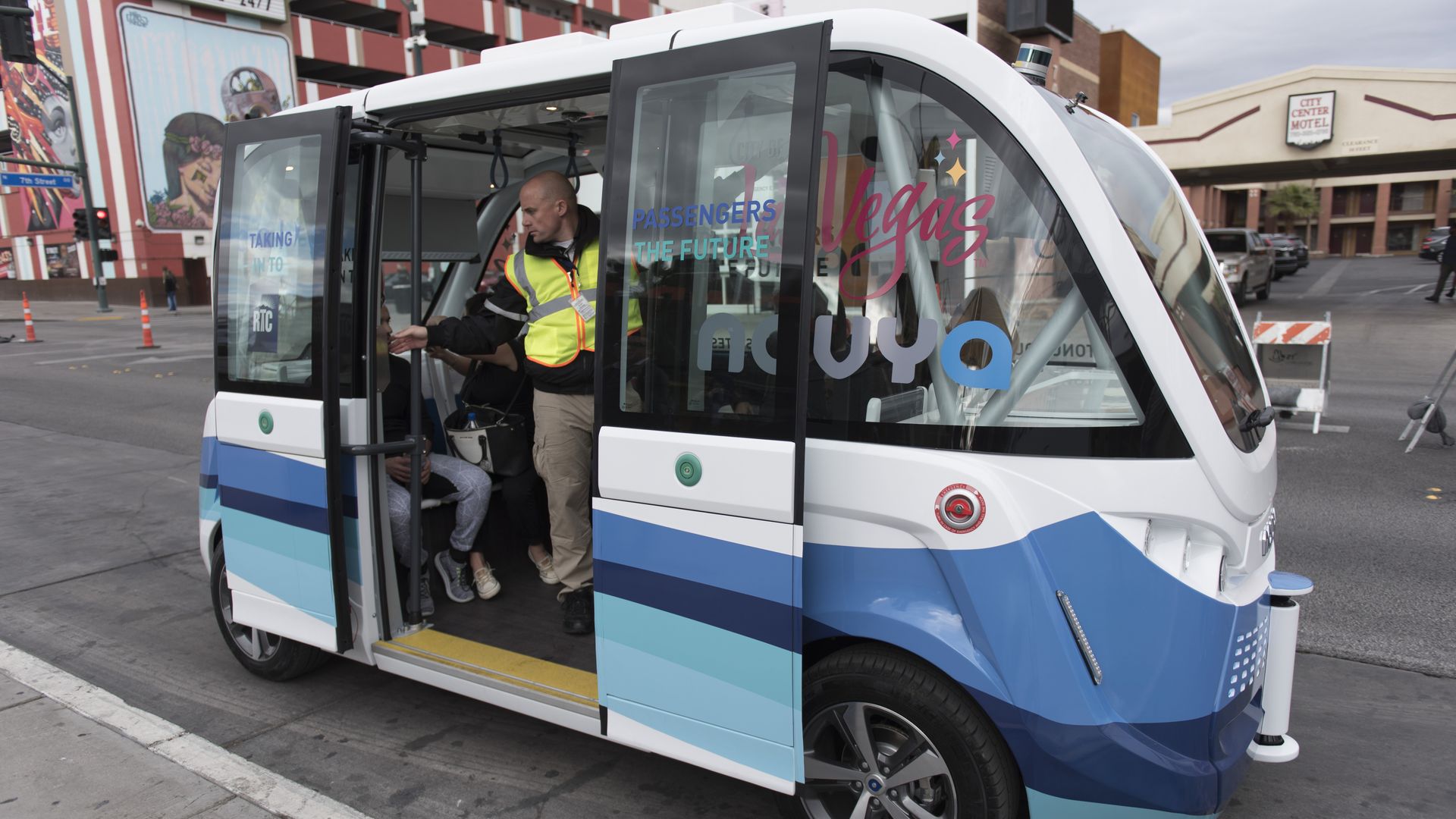
Last November, Las Vegas launched an autonomous bus route along a tourist-heavy stretch of Fremont Street, sponsored by AAA and using a Navya AV operated by Keolis Transit.
Why it matters: Cities across America are beginning to test driverless buses — including pilots in Austin and Detroit — but Las Vegas was the first to deploy them on public streets in mixed traffic, and its program is now the largest AV bus pilot in the U.S. Other than a first day snafu, when another truck ran into the AV, the service has run safely and without incident.

The Road Forward: The Era of Autonomous Vehicles
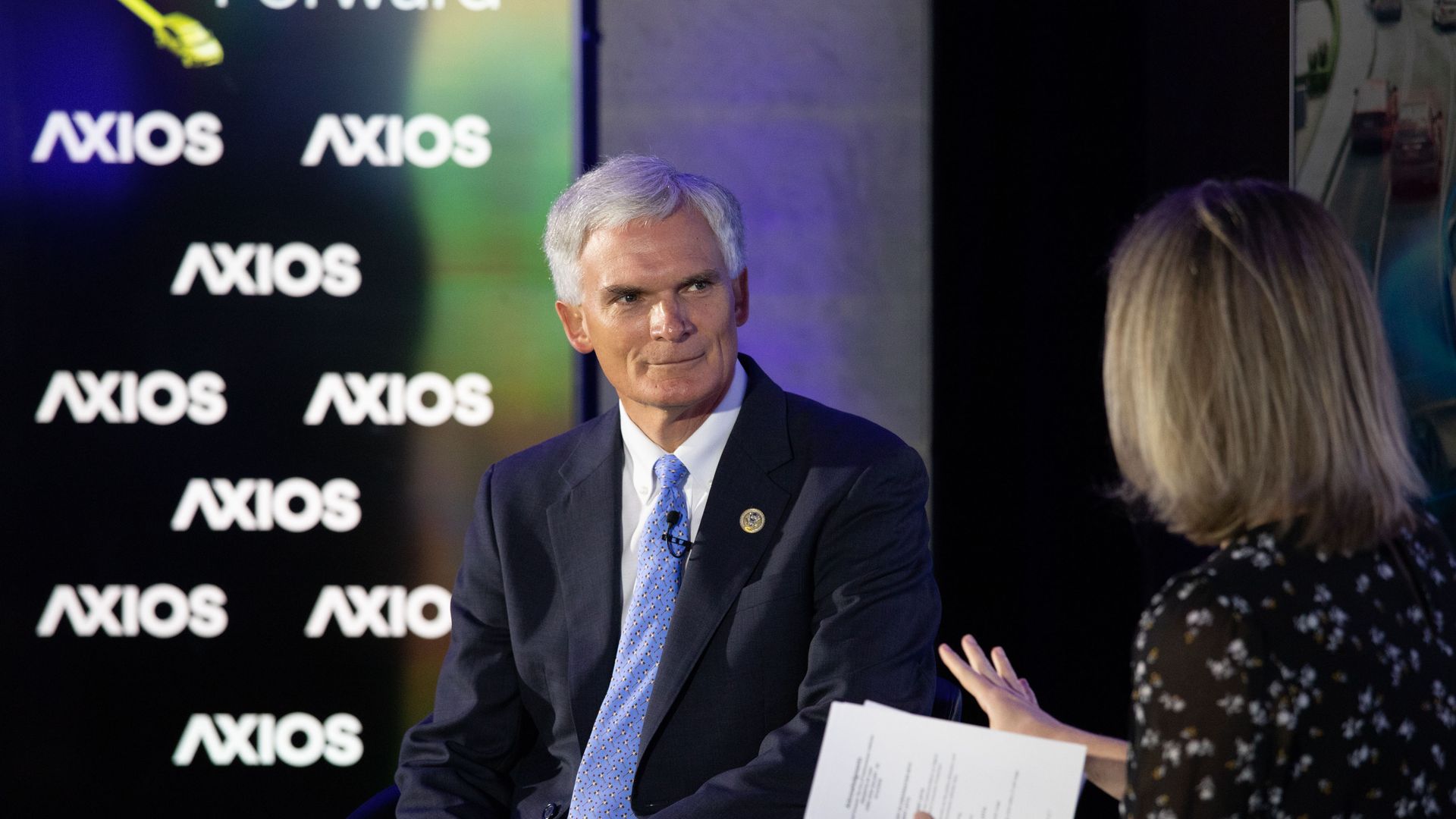
Thursday morning, Axios' Kim Hart sat down with three industry experts to discuss the future of autonomous vehicles, and the obstacles and opportunities that lay ahead for them. To get the technology, policy, and automaker perspectives, we heard from Global Automakers CEO John Bozzella, SAE International CEO David Schutt, and Rep. Robert Latta.
Why it mattered: This series of conversations explored why Americans fear driverless cars, how that fear could be mitigated, and the potential consequences of delaying AV innovation and policy.
SAE International CEO Dr. David L. Schutt
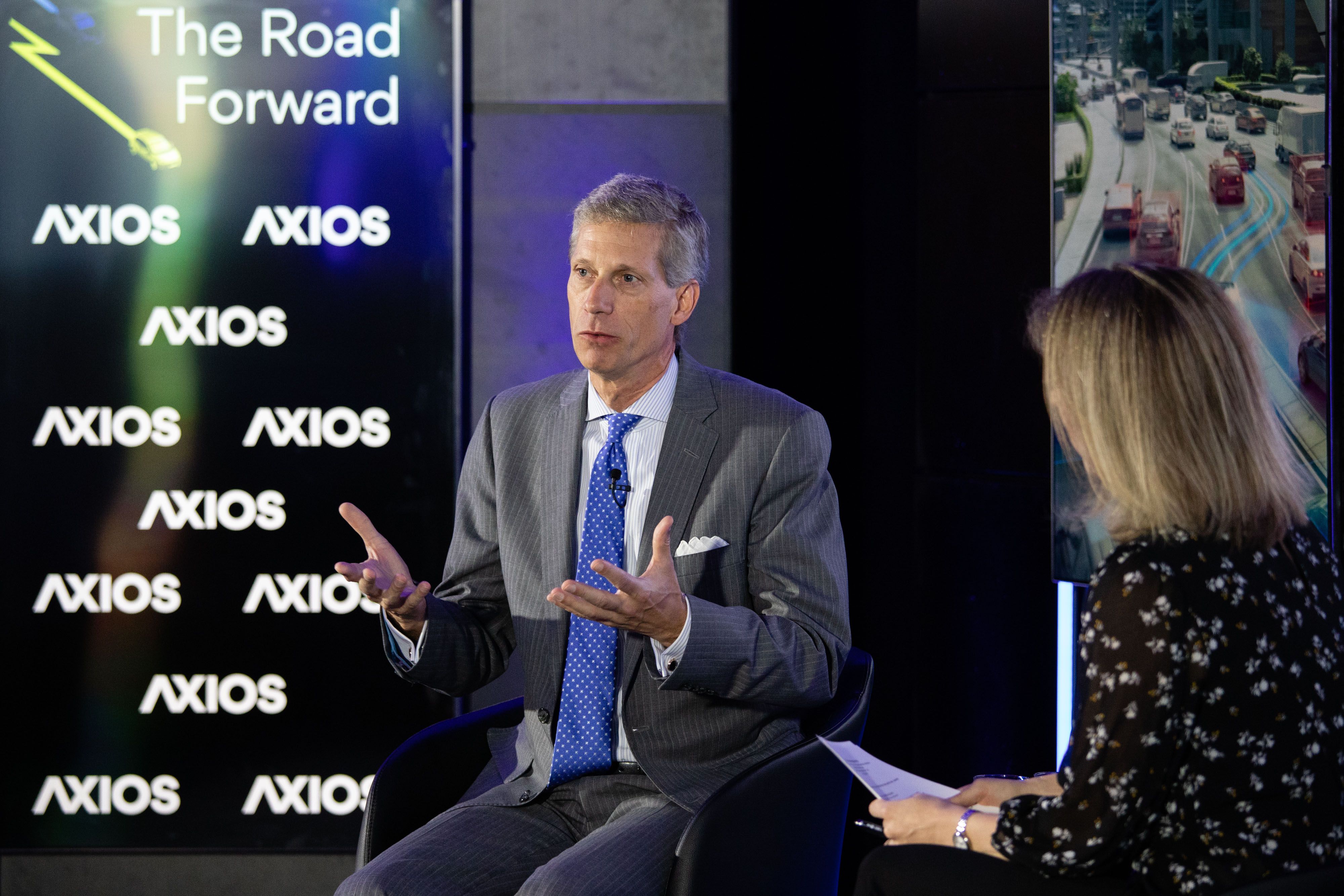
Schutt explained what stage autonomous vehicles are currently in and the biggest challenge they face going forward.
- SAE International's autonomy scale. "[There's] everything from level zero, where the human being does everything, to level 5, where you fall asleep in the back seat and magically appear. Right now, level 2 cars are in the market place."
- Roadblocks and solutions. "One of the great challenges we’re facing is finding a way to make people more comfortable with AV. That comes from the industry and organizations engaging the public on concerns and fears, test drives and getting the facts on the table."
Rep. Robert Latta
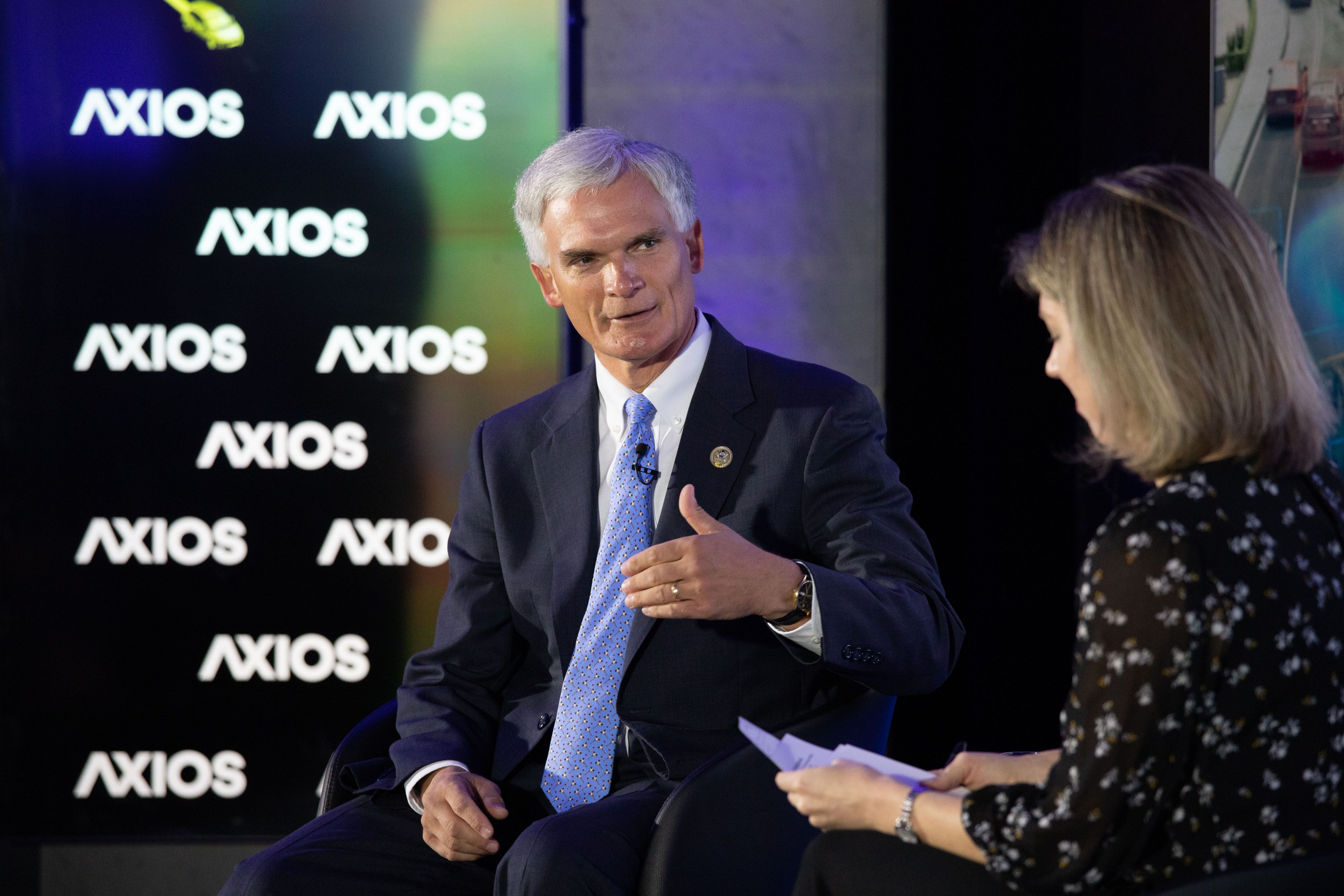
Rep. Latta, who authored the House's SELF DRIVE Act that's currently stuck in the Senate, discussed the economic impact of delaying autonomous vehicle standards and innovation. He also addressed the safety concerns surrounding these vehicles.
- Latta emphasized his focus on "safety first, safety last, safety always." "We want to make sure these cars are safe and even safer than cars on the road today — including having a plan when it comes to cybersecurity and privacy."
- On the need for country-wide standards. "We don't want all the states out there coming up with their own plan." He pointed out that patchwork regulations could lead to autonomous vehicles not being able to cross state lines.
- On moving policy forward. "Time is running out" to get policy caught up with innovation.
- "My fear is we'll fall behind" the rest of the world.
Global Automakers CEO John Bozzella
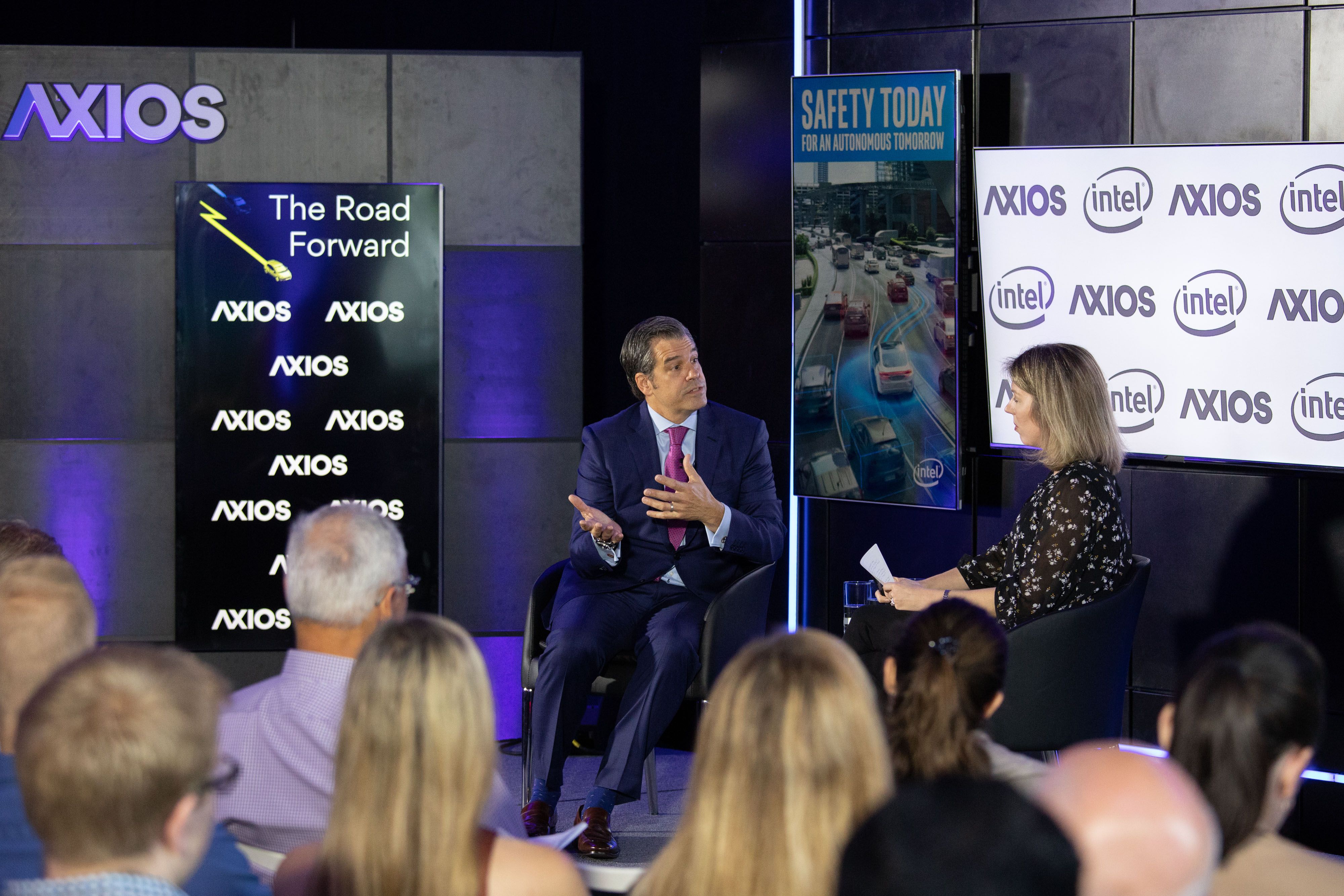
Bozzella gave his perspective on the current state of autonomous vehicle innovation and policy, and what he hopes it becomes.
- Mitigating crashes with technology. "37,150 people dying on America's roadways is way too many. It's a tragedy and we need to fix that, and technology is a big piece of the answer."
- Crashes then vs. crashes now. "In the past, we were talking about crash worthiness — meaning getting a human being to survive a crash. Now we're talking about crash avoidance. The technologies are very different. The systems are very different."
- The policy lag. "There's a lot of mechanical, electrical, and computer engineering being done [on autonomous vehicles]. The work that we're behind on is the political and policy engineering."
- The need for consistent policy. "We need a set of rules across the country in order to encourage innovation."
Go deeper:
Thank you Intel for sponsoring this event.

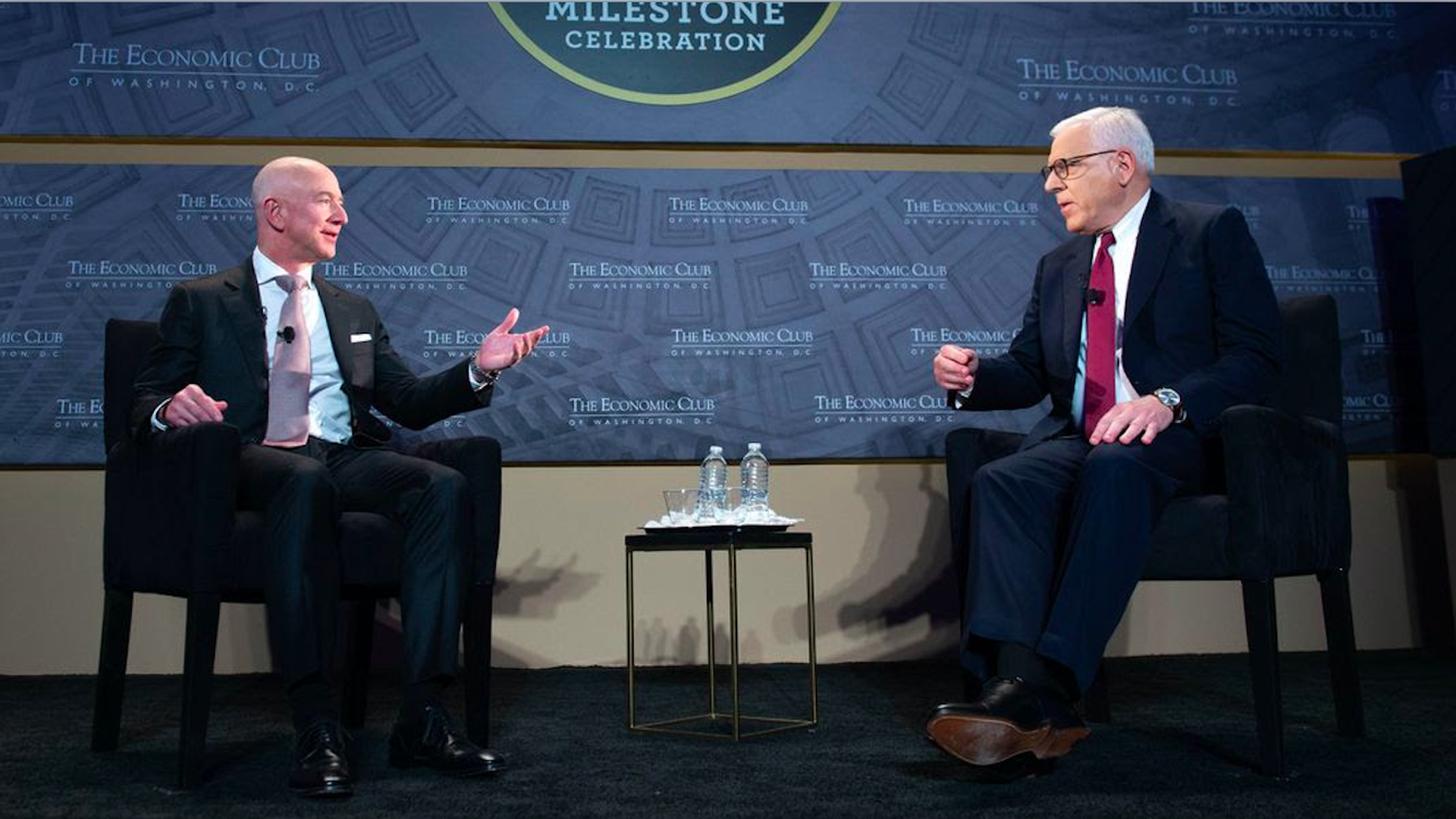
Jeff Bezos' secrets for life and business
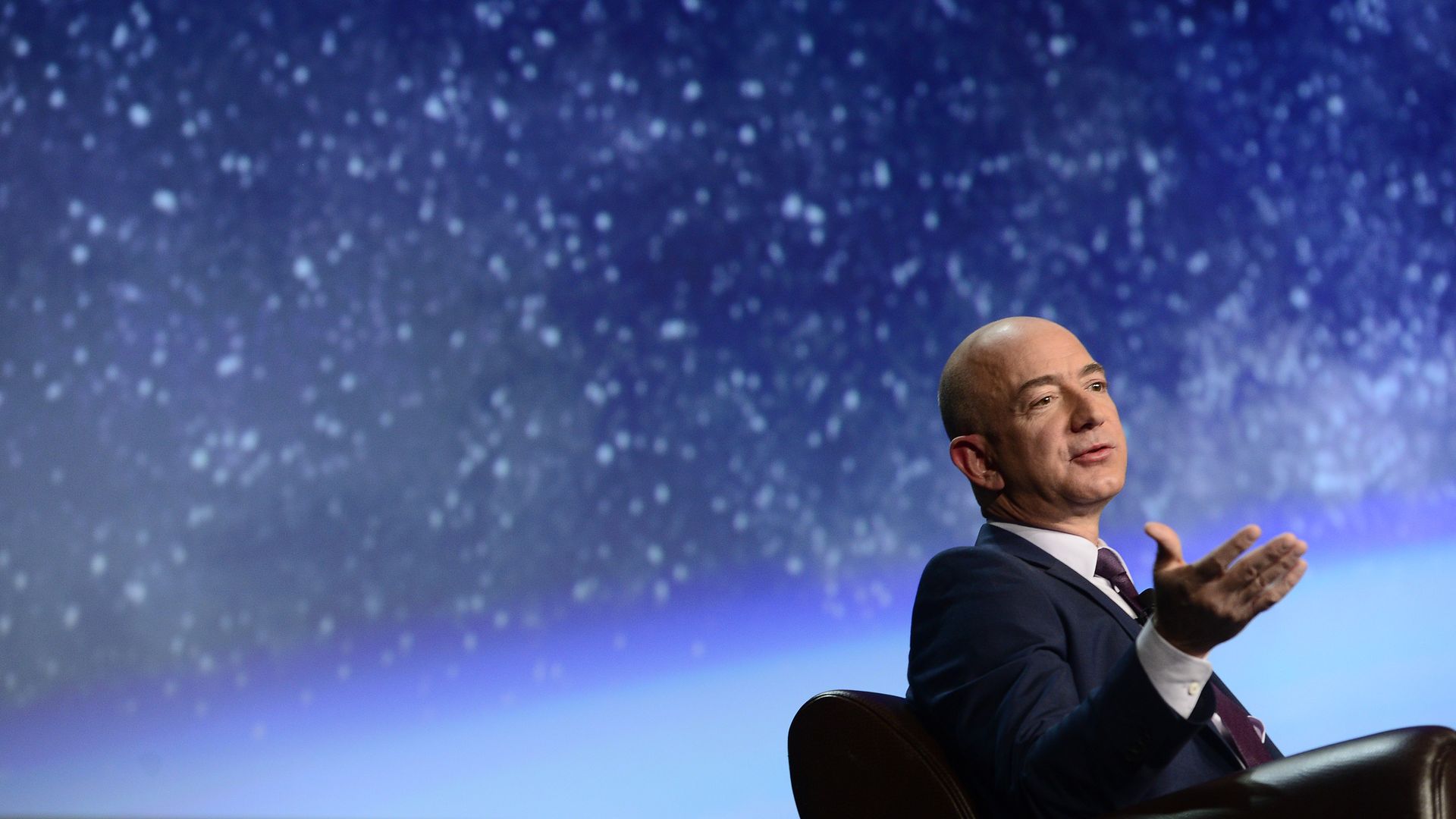
Jeff Bezos gave a master class on life and business onstage in Washington last night, with this keeper advice: "All of my best decisions in business and in life have been made with heart, intuition, guts, ... not analysis."
"If you can make a decision with analysis, you should do so. But it turns out in life that your most important decisions are always made with instinct and intuition."— Amazon CEO Jeff Bezos

Bezos' $2 billion charity expands his influence
Amazon founder Jeff Bezos has finally joined the ranks of tech billionaires who use their sprawling wealth to shape the world through charity.
Why it matters: A new class of tech elites is using ambitious philanthropic strategies, a stated desire to "change the world" and unprecedented resources to transform money into influence. And there’s nobody on the planet with more to give away than Bezos.