Tuesday's technology stories

Amazon will buy Target in 2018, influential tech analyst predicts

Technology analyst Gene Munster has predicted that Amazon will acquire Target Corp this year — a move that would further shake-up the evolving retail industry, Bloomberg reports.
"Target is the ideal offline partner for Amazon for two reasons, shared demographic and manageable but comprehensive store count," Bloomberg cited Munster saying. "Getting the timing on this is difficult, but seeing the value of the combination is easy."
Background: Amazon purchased Whole Foods Market Inc. in a deal valued at $13.7 billion.

Apple buys Canadian startup to help developers build iPhone apps

Apple has acquired BuddyBuild a small Canadian company that helps developers build and test mobile apps.
BuddyBuild, not surprisingly, will be winding down its Android-related work to focus solely on helping with iPhone app development. The team, which includes roughly 40 engineers, will remain based in Vancouver.
Why it matters: Making life as easy and lucrative for developers as possible is key for both Apple and Google, both of which have acquired various startups in the area.

Facebook, YouTube double down on music rights

Facebook and Universal Music struck a multi-year licensing deal just before the holiday to let users across all Facebook media properties use recorded music and publishing catalogs for video across Facebook.Just days before, YouTube and Universal Music Group announced a "global, multi-year agreement," and Bloomberg reported that the tech giant also struck a deal with Sony Music giving YouTube music licenses from three of the biggest record labels: Universal, Sony and Warner. Why it matters: The negotiations are a sign of improving relations between the music industry and tech giants. Labels have argued for years that YouTube in particular did not offer strict copyright protections or pay music creators fairly.For YouTube, the deals should give the tech giant more access to content to sell subscriptions. The company announced last month that it will launch its own subscription music program.For Facebook, Universal is the first major music company to license its recorded music and publishing catalogs for video and other social experiences. Until now, users couldn't upload videos with non-licensed music in them, making it harder for users to post their content and providing less exposure for artists whose songs are commonly used in user-generated videos.

Surveillance and sex-trafficking on Congress' to-do list
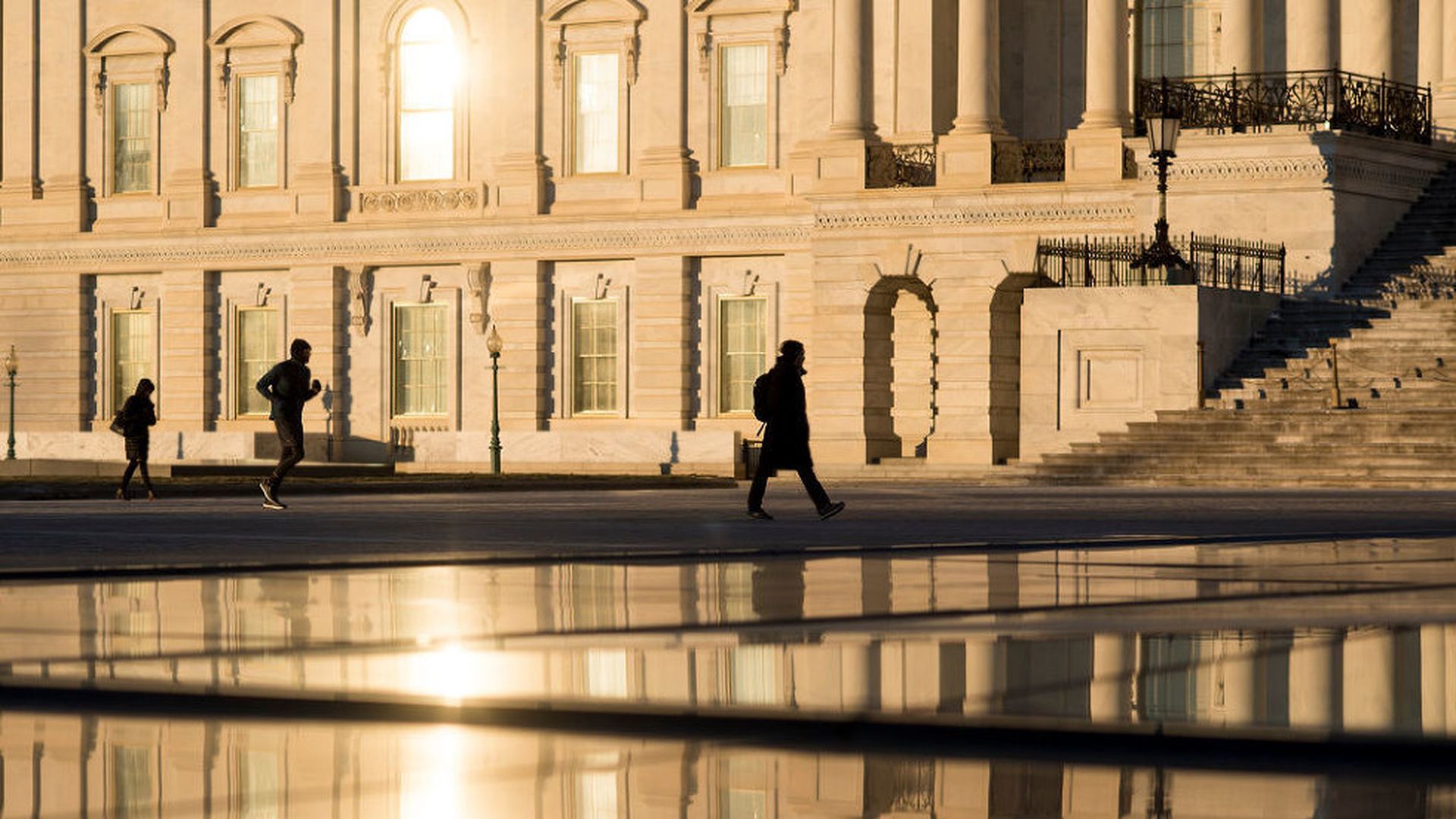
Lawmakers are coming back later this month. So are the big battles over tech policy.
The most urgent: The Section 702 surveillance law — used by the intelligence community to justify warrantless surveillance of electronic communications of foreign nationals located abroad — expires in mid-January, thanks to a short-term extension Congress passed before leaving for the holidays.

Twitter suspends German politician in hate speech crackdown

Twitter temporarily suspended the account of Beatrix von Storch, a far-right member of Germany's parliament, shortly after she sent an anti-Muslim tweet on New Year's Eve, per CNN. Twitter said the message, in which von Storch accused police of appeasing "barbaric, gang-raping Muslim hordes of men," violated its rules on hate speech.
Why it matters: A new German law, which was enacted in October but went into full effect Monday, requires that social media companies like Twitter and Facebook remove hate speech and fake news from their platforms within 24 hours of being flagged or face fines up to €50 million. Twitter's suspension of von Starch signals that the law is being taken seriously.
Microsoft execs: Big Tech and democracy need to work together
It's not often that Big Tech calls for more government action. But two top Microsoft executives — Brad Smith, president and chief legal officer, and Carol Ann Browne, director of executive communications — write in a tech trends forecast out today.
- "2018 will be a year when democratic governments can either work together to safeguard electoral processes or face a future where democracy is more fragile."
- "[T]his needs to include work to protect campaigns from hacking, address social media issues, ensure the integrity of voting results, and protect vital census processes."
- "While technology companies have a high responsibility to help, there is no substitute for the effective and unified voices of democratic governments themselves."
Using AI to mine Google Street View
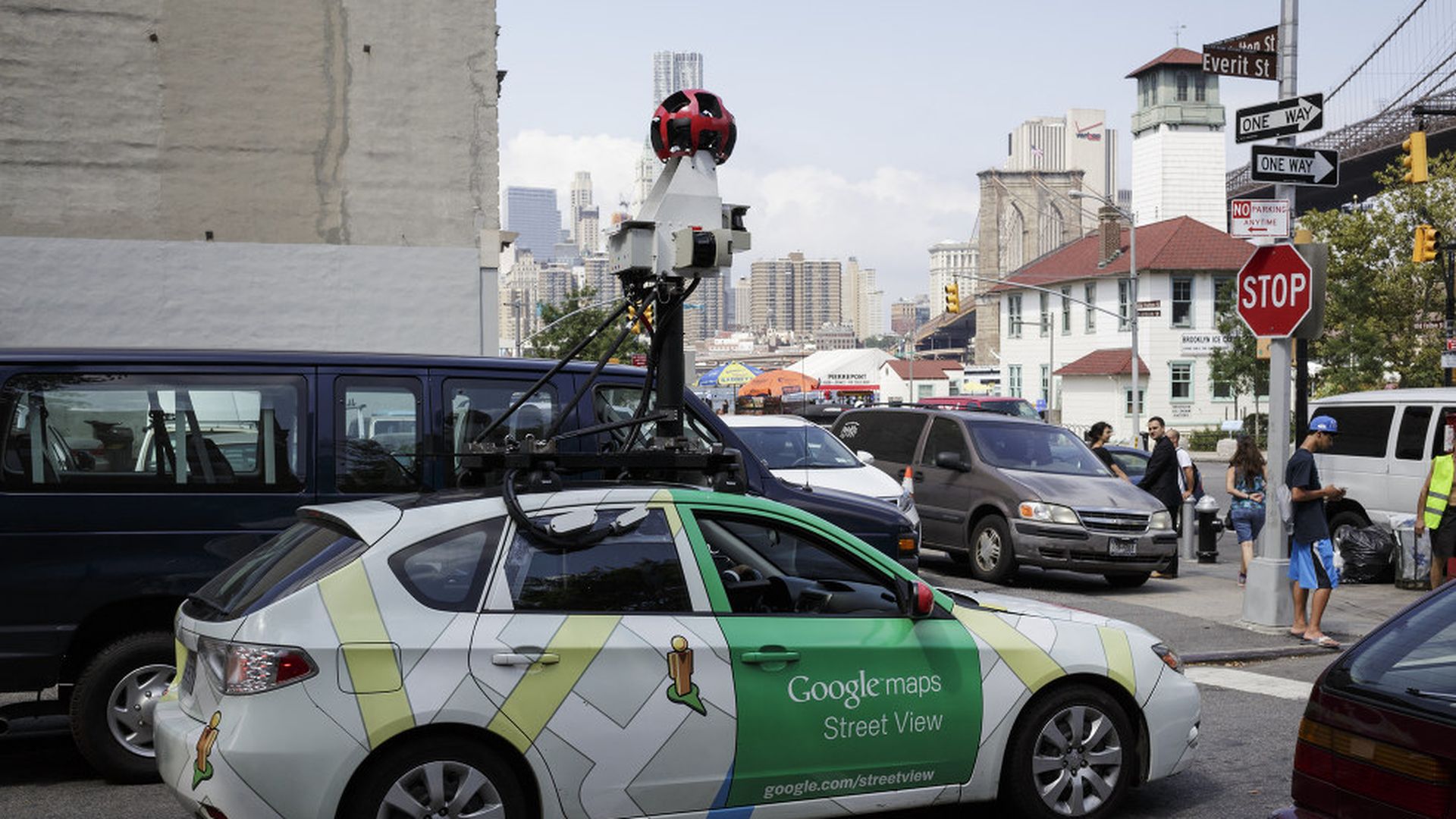
Artificial Intelligence can now scan millions of pictures taken by Google Street View to glean insights like income or voting patterns, The New York Times reports. In a Stanford project, computers scanned millions of pictures of parked cars to predict voting patterns and pollution.
Why it matters: The project at Stanford (where a computer did in 2 weeks what would have taken a human 15 years) shows that computer vision is getting smart enough, with some human training, to begin mining massive visual sets of data created by products like Google Street View.