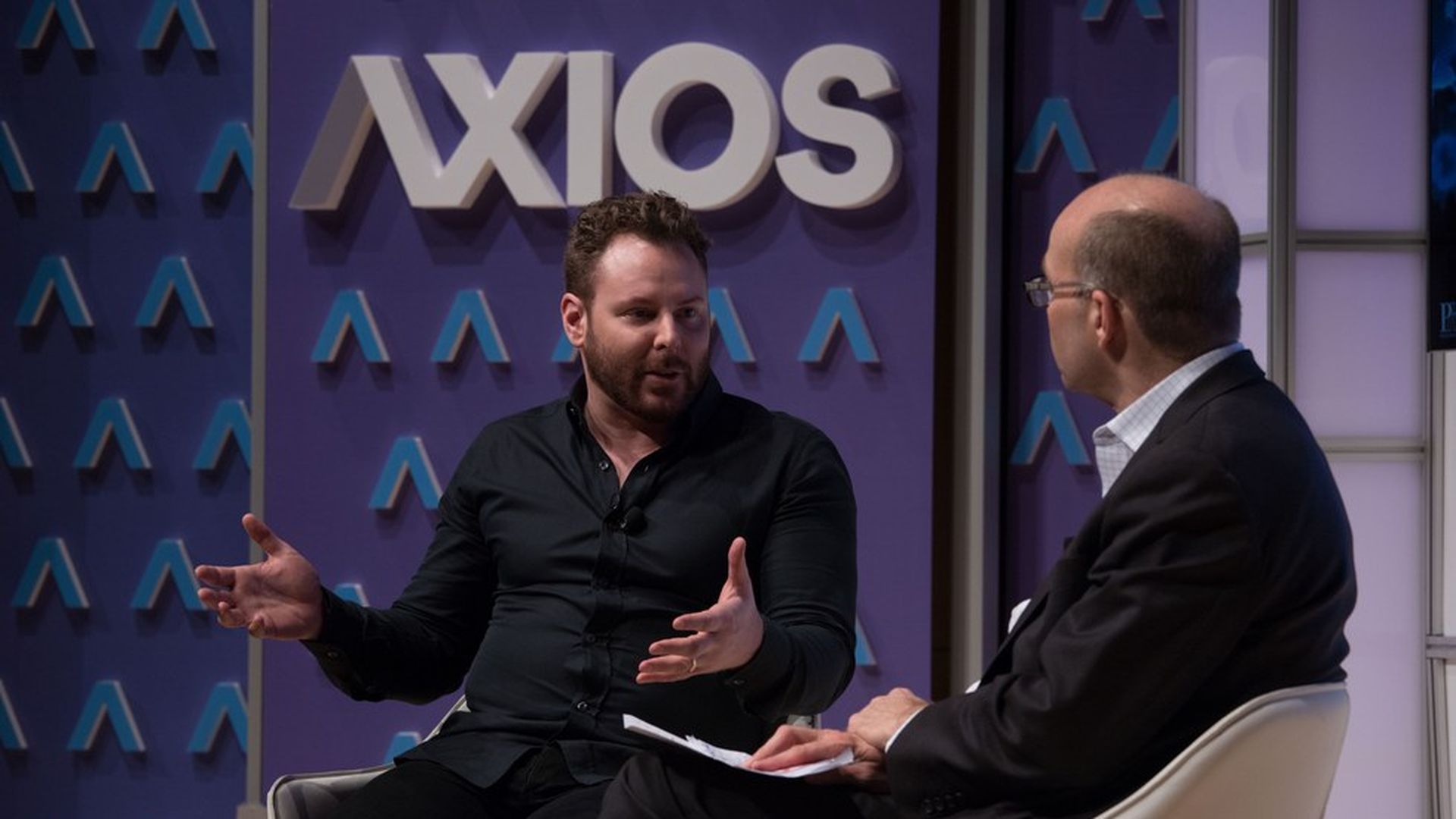
Napster founder and former Facebook president Sean Parker cited immunotherapy as the "opportunity for disruption" in the fight against cancer and the catalyst for his $250 million philanthropic project, the Parker Institute for Cancer Immunotherapy, during an event with Axios' Mike Allen this afternoon.
Parker said that he founded the Parker Institute after realizing that there's a disconnect between cancer research and actually finding concrete cures, saying, "I learned that the field of academic science — or just academic science in general — the values are not necessarily aligned with medicine or in bringing treatments to patients…We also need this sense of urgency."
Niantic, the company behindPokémon Go, announced Wednesday it is teaming up with Warner Bros. on a Harry Potter-themed augmented reality.
Details are scant on the new game, Harry Potter: Wizards Unite, though Niantic CEO John Hanks said in a blog post the game will merge virtual gaming with real world location.
Why it matters: Pokémon Go was an instant hit, but it's usage has waned. Adding similar dynamics to another globally popular franchise seems like a no--brainer.
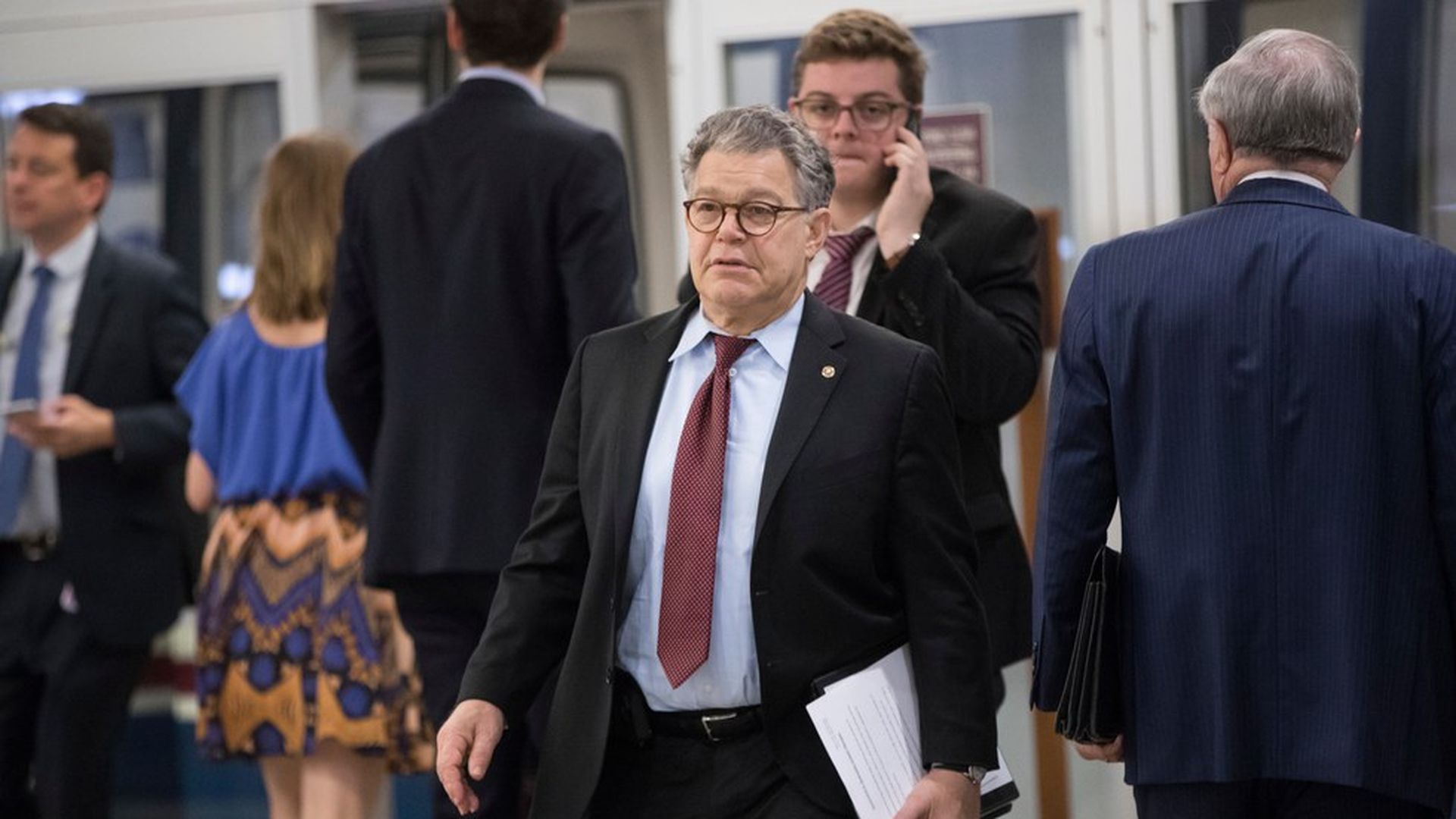
Democratic Sen. Al Franken said on Wednesday that the basic idea of net neutrality — that all web traffic and content should be treated the same — should apply not just to the internet service providers whose networks carry that content but also platforms that host it. Here's what he said at an event held by the progressive Open Markets Institute, where he name-checked Facebook, Google and Amazon:
While we fight to preserve the [current net neutrality regulations], we must now begin a thorough examination of big tech's practices in order to secure the freeflow of information on the internet.
Why it matters: It's not clear how net neutrality would be enforced on the largest web platforms. But the idea that ISPs and major web platforms should be treated equally is gaining some traction, as tech companies face broad political pressure.
Go deeper: Franken published this op-ed in The Guardian after speaking at the event.
Former Yahoo CEO Marissa Meyer, whose 5-year tenure at Yahoo was shaken by online breaches of user data, placing it at the top of the list of largest data breaches ever, told lawmakers Wednesday that she wants to "sincerely apologize to each and every one of our users," per CBS News.
Verizon, which recently acquired most of Yahoo, revealed last month the 2013 breach affected all 3 billion Yahoo user accounts, not just 1 billion as was originally disclosed in December last year.
Aetna plans to give away Apple Watches to more than 500,000 of its members next year and is working with the tech giant to develop a variety of health and fitness apps.
Why it matters: While smartphones are considered a must-have device for most Americans, smartwatches are still seen as luxuries. If Aetna can prove the devices save money on health costs it could dramatically expand demand for such devices and open up the possibility of someone other than consumers footing the bill.
Silicon Valley folded in a fight over a major anti-trafficking bill after months of mounting pressure from both political parties. The industry forged a compromise with senators that, while better for tech than the original proposal, amounts to the first major legislative defeat for tech giants Google and Facebook.
Why it matters: Online platform companies initially dug in their heals when lawmakers first approached them about the proposal. The fact that they were forced to make a compromise signals a big change for Big Tech, which has enjoyed immense political power in Washington during the past decade but now faces significant new pressures on several fronts.
Snap Inc. stock fell nearly 20% Tuesday after reporting earnings that fell short of Wall Street's revenue and user growth expectations. Snapchat CEO Evan Spiegel announced that the company is redesigning its app to make it easier to use and understand, which will hopefully lead to increased user adoption.
Why it matters: Snapchat has been assuring investors since going public in March that it's strategic investments in ad technology would drive revenue, particularly in North America, and that the creation of copycat products by rivals, like Instagram and Facebook Stories, would not continue to slow its user growth. Its earnings show that the company still has a long way to go in achieving those goals and redesigning its app is a big sign that it's feeling the pressure to make big changes quickly.
The day has come: Twitter, after years of forcing users to express themselves through its signature 140-character limit, is doubling that length for everyone's tweets (save for those in Chinese, Korean, and Japanese). The company began to test these longer tweets in September with a few users, though it was first rumored to be considering extending the character limit almost two years ago.
The big moment: Will this fundamentally change the nature of Twitter? The character limit has been iconic and it's even led to the "tweetstorm" as a workaround for longer thoughts and ideas that can't fit in one tweet (which Twitter filed to trademark in 2015), along with other creative solutions like screen shots of longer messages.
There is evidence that social media bots helped stir online activity around a controversial ad against Virginia Republican gubernatorial candidate Ed Gillespie in the buildup to election day today, The Washington Post reports. Democratic gubernatorial candidate Ralph Northam's campaign cited a third-party analysis that found automated Twitter accounts tweeted using terms linked to groups behind the ad, allegedly inflaming online tensions.
Why it matters: Similar automated social media accounts helped to stir online chatter over divisive issues on a national scale during the presidential election last year. Facebook, Google and Twitter came under fire on Capitol Hill last week over how Russian actors used their sites to spread controversial content and ads.
As Axios reported on Sunday, the issue drew the ire of LGBTQ individuals and organizations, many of whom noted that Twitter was blocking legitimate content even as it failed to adequately stop white supremacist and other hate speech.
Rex Tibbens is stepping down as chief operating officer of Lyft by year-end, Axios has learned from multiple sources. Tibbens, who joined the ride-hail company in 2015 after four years at Amazon and over a decade at Dell, has not yet decided on his future plans.
Why it matters: Lyft reportedly wants to go public next year, but first will need to fill this new hole in its senior executive team.