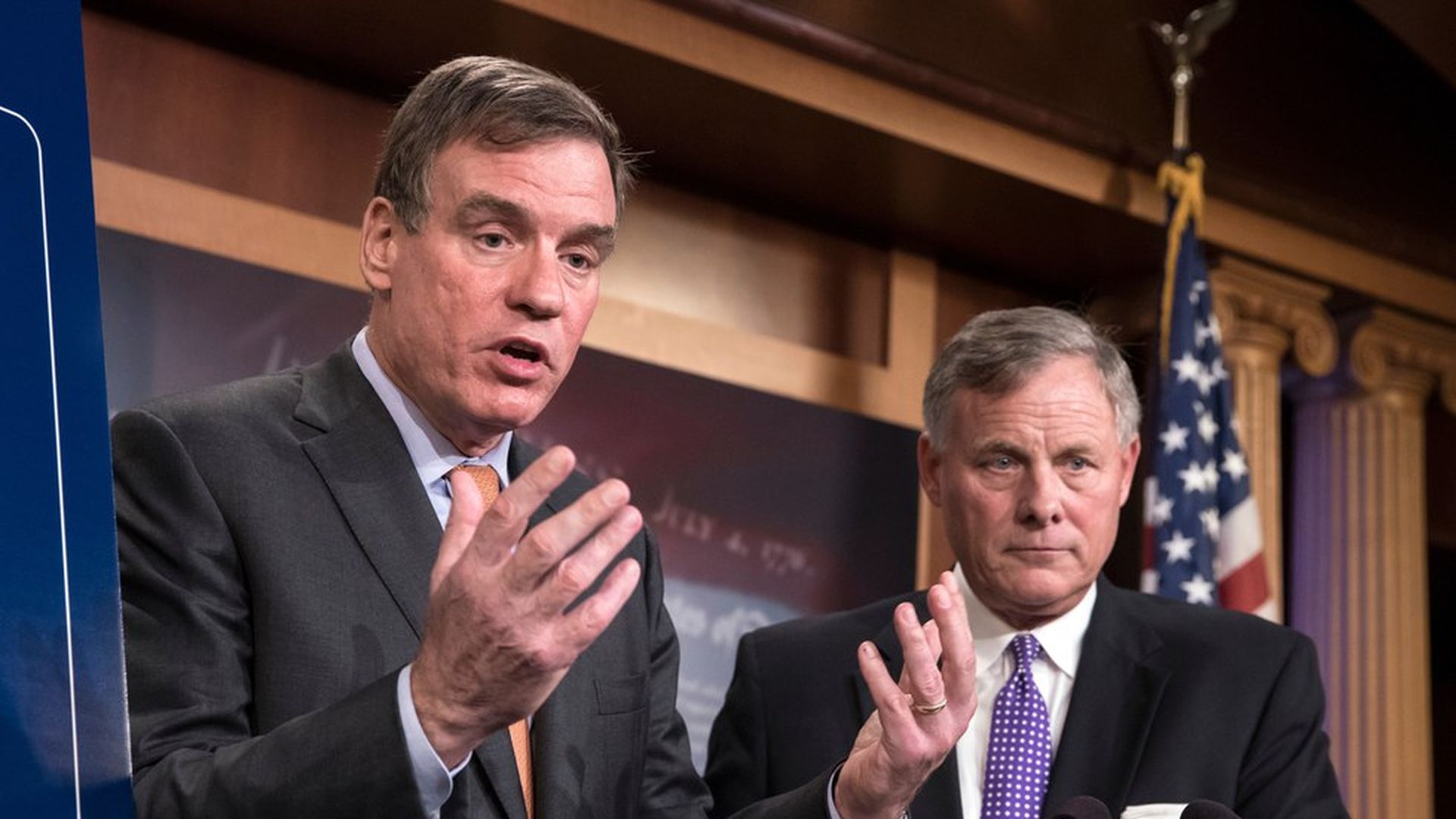
The Senate Intelligence Committee approved a bill during a closed 12-3 vote Tuesday that would reauthorize a key surveillance program.
Why it matters: The surveillance law, known as Section 702, expires at the end of the year. There's movement in the House to reform the law, which privacy advocates say can inadvertently pick up the communications of Americans. Meanwhile, some in the Senate have pushed to make the law permanent and some want more significant reforms.
Uber's latest move to make its drivers happier is a new fee it will apply when it takes longer than 8 or 11 minutes (depending on the city) to pick up a passenger. This is seemingly designed to make drivers feel less like they're wasting time and gas before they even get to the passenger. The fee will be calculated based on both time and distance.
Why it matters: While Uber told The Verge that it aims to help passengers by incentivizing drivers to go the longer distance to pick them up (if they live in the suburbs, for example), this is could backfire. For one, passengers might opt to not take an Uber ride given the higher fees—and say, hail a Lyft ride, or drive themselves.
A top Bloomberg editor highlights a message being conveyed by Saudi Arabia amid the turbulence in global crude oil: "Saudi Oil minister says the world of energy may be changing, but Aramco will survive longest and pump the last barrel of crude."
In a word, it's defiance.
Why it matters: OPEC's dominant producer, Saudi Arabia, is reacting to a widely perceived threat from U.S. shale oil and forecasts that global oil demand could level off in little more than a decade, and then start to decline. In such a scenario, Saudi and the world's other petro-states — already in their third year of low oil prices — could face even worse fiscal trouble. Saudi is saying: Even if the petro-world does comes apart, we will be the last man standing.
Two female former Uber engineers have filed complaints against the company alleging they were paid less than men in similar jobs and passed over for promotions, according to documents obtained by The Information. The complaints were filed with the California Labor and Workforce Development Agency, through the Private Attorneys General Act — the first step toward a public lawsuit, as The Information notes.
Why it matters: The complaints are filed under a law that allows them to circumvent their employment contracts' arbitration clauses, which have become a controversial practice many argue strip employees of their rights. Susan Fowler, the former Uber engineer whose blog post last February set off an investigation at the company, has filed an amicus brief to the U.S. Supreme Court arguing these clauses should be banned. Uber declined to comment on the complaints, but did point out that in August, Uber updated its contracts to allow employees to opt out of mandatory arbitration, and also recently worked to adjust employee salaries
Troubled division: The two women who filed the complaints worked as site reliability engineers — the same engineering division where Fowler worked.
Update, Oct. 25: On Tuesday, the two women and a current female Uber engineer filed a lawsuit in San Francisco Superior Court against the ride-hailing company, outlining much of the same gender pay discrimination claims, as The Recorder first noticed. Workers can file a formal lawsuit under the Private Attorneys General Act after they've filed a complaint with the Labor and Workforce Development Agency and the agency and employer do not take action within 65 days.
The story has been updated to include the newly filed lawsuit, as well as to clarify the changes in Uber's employment contracts.
Two House committees are going to probe a controversial Russian uranium deal approved by the Obama administration. The deal gave Russia control of one-fifth of all uranium production capacity in the U.S.
Why it matters: Last week, Trump brought the deal back into light when he singled out Hillary Clinton and the Obama administration for their involvement, calling it "the biggest story that Fake Media doesn't want to follow." He was referring to a 2015 New York Times report that revealed the Clinton Foundation had received donations from leaders involved in the uranium deal, as well as a recent report by the Hill that claimed the Obama administration had signed off on it even though the FBI had evidence that Russia had used bribery and extortion to expand Moscow's atomic energy footprint in the United States.
The hype around Russia's involvement in the elections and fake news is complicated.
The bottom line: Fake news is only going to get worse. Earlier this year, Axios outlined a number of ways fake news creators are becoming more creative in the face of efforts to stamp them out, often pivoting from circulating their own misleading stories to developing sophisticated techniques that manipulate real news.
The Information Technology Industry Council — a DC-based group representing the likes of IBM, Microsoft, Google, Amazon, Facebook and Apple— is today releasing principles for developing ethical artificial intelligence systems.
Why it matters: The tech industry is trying to get ahead of growing anxieties about the societal impact of AI technologies, and this is an acknowledgement on companies' part that their data-hungry products are causing sweeping changes in the way we work and live. The companies hope that pledging to handle this power responsibly will win points with critics in Washington, and that showing they can police themselves will help stave off government regulation on this front.
Bloomberg reports that major tech companies such as Facebook and Twitter are interested in hiring workers with top-secret security clearances as they deal with foreign meddling on their platforms and come under increased risk of hacks. Workers with clearances are already in high demand by government agencies and contractors who have access to classified information.
Why it matters: Former government employees, and those who work for government contractors, are becoming more valuable to tech companies that have typically preferred scrappy engineering graduates over those steeped in government bureaucracy. But they companies have realized having better access to government information could help them identify and deal with problematic accounts more effectively. And they need to show Washington policymakers that they're capable of fending off problematic activity on their platforms.
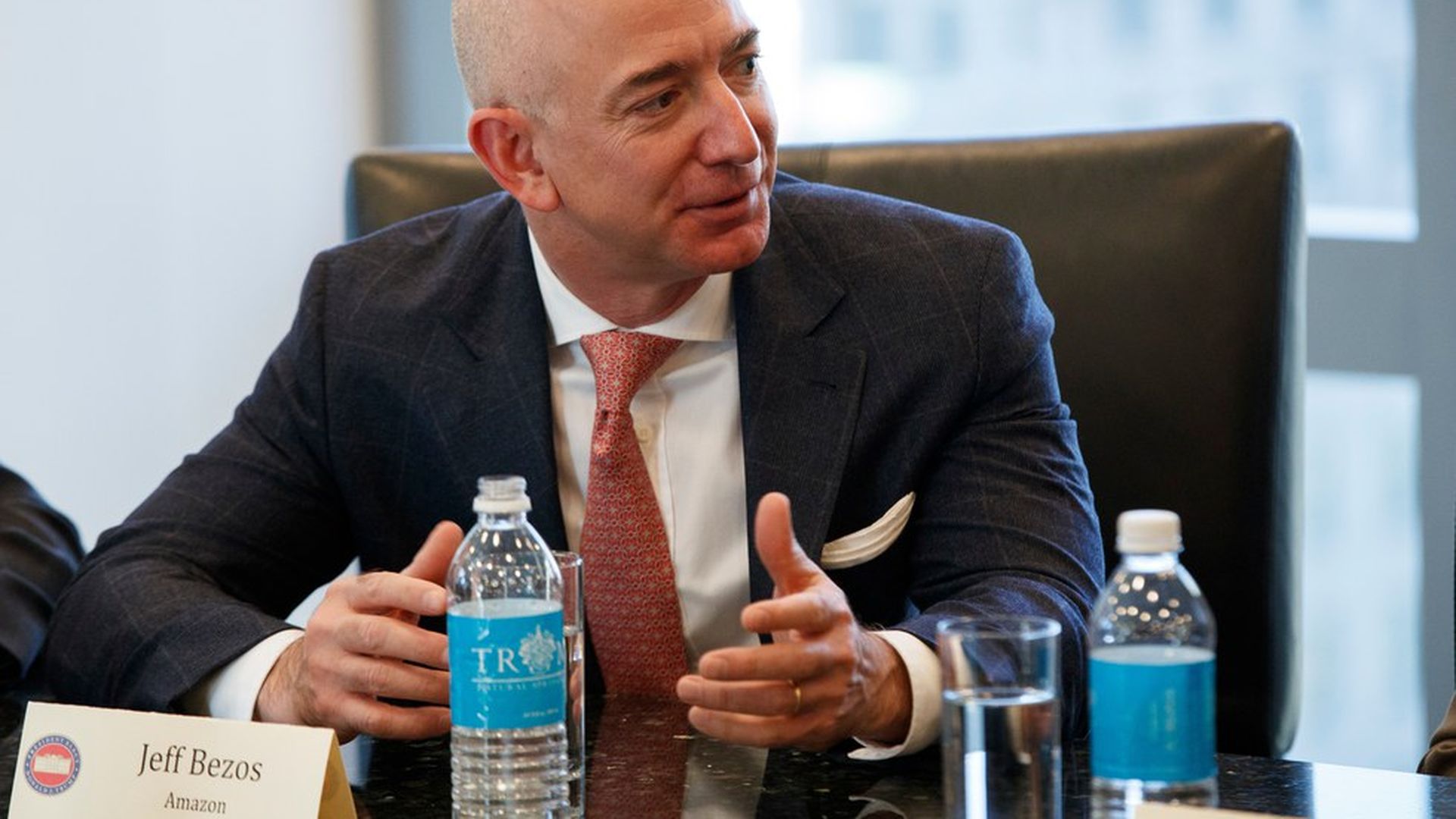
Amazon has been flooded with pitches from cities and regions that want to host its second headquarters, the company said Monday. The company received 238 proposals from "54 states, provinces, districts and territories across North America."
Why it matters: There's lots of competition for what Amazon is calling HQ2. While the new headquarters could bring 50,000 jobs that pay an average salary of $100,000 to the winning city, there are also potential downsides to hosting, including the possible cost of billions of dollars via tax breaks.
Go deeper: The New York Times recently covered the tactics cities are employing to court the project.
TechCrunch's Jon Evans explores whether the rise of big data and artificial intelligence will kill the era of the big startups in favor of the tech giants in his latest column.
On the one hand: Certainly the tech giants have a leg up when it comes to access to massive amounts of customer data and it is hard to see that the shift to AI will hurt those companies.
On the other hand: There's also a case to be made that as the tools for AI become democratized we will see a ton of startups emerge with expertise (and data) in specific verticals.
One way we may see autonomous vehicles changing our daily commutes is in the gaps at the edges of public transit systems — what urban planners call the "last-mile" problem. More than three-quarters of cities invested in mobilizing autonomous vehicles anticipate using them to solve "last-mile" transit gaps, such as transporting people between rail stations and employment centers or shuttles circulating within larger corporate campuses, according to a Bloomberg Philanthropies survey of cities out today.
Why it matters: Autonomous vehicles may link public transportation and major employment hubs, something cities often struggle with.While addressing these "last mile" gaps will improve commutes, some predict self-driving cars could add to sprawl as well as traffic.