Friday's technology stories

Major brand ads still slip into unsavory YouTube videos

YouTube has been found to run ads from major brands like Coca-Cola, Procter & Gamble, Amazon.com, and Microsoft on at least five videos with racist and anti-Semitic content, according to the Wall Street Journal. Some of the companies told the Journal they're suspending some or all of their advertising with Google.
A week ago, Google apologized after reports showed that U.K. advertisers were appearing alongside such videos
Ad tech reality: It's important to remember that with programmatic advertising, this is almost inevitable as ads are distributed onto content via automated software, not human curation, and software isn't perfect yet. And as Flurry founder Sean Byrne noted on Twitter, programmatic ads are usually placed on non-premium content, which means ads are bound to land on less-than-desirable videos.

Tech community "dumbfounded" by Mnuchin's dismissal of AI impact on jobs
Treasury Secretary Steve Mnuchin riled the tech community this morning when he told Axios' Mike Allen that displacement of jobs by artificial intelligence and automation is "not even on my radar screen" because the technology is "50-100 more years" away. Mnuchin also said he is "not worried at all" about robots displacing humans in the near future. "In fact, I'm optimistic."
The World Economic Forum opens SF center to study tech and society
The World Economic Forum, which hosts the exclusive annual retreat in Davos, Switzerland, is opening a new research center in San Francisco.
Its aim will be to study the impact of digital technologies like artificial intelligence and automation on societies and jobs, among other other related topics. The center plans to partner with a variety of organizations, from universities to tech companies, NGOs, and governments to work on these projects.
Why it matters: As it's become increasingly clear that technology's impact is accelerating, it's no surprise to see institutions try to get ahead of it and launch such studies. For example, in 2014, Stanford University announced its own 100-year project to track the effects of artificial intelligence on every aspect of people's lives. With that said, it's also unclear whether the center's studies will ultimately translate into significant policies on these areas.
Ello founder is back with a wacky Snapchat-like app
The man behind Ello, an "anti-Facebook" social network that made headlines in 2014 for its ad-free approach, is back with something new. It's Wuu, a quirky, yet simplistic, mobile app reminiscent of Snapchat and Instagram (minus public posting or "likes"). As with Ello, it's unclear how Wuu plans to make money as it won't have ads and is focused on user privacy.
Paul Budnitz, Ello's co-founder and original CEO, released Wuu yesterday on iOS, though the app is still invite-only. Budnitz still remains part-owner of Ello, though he no longer runs the company. The social network no longer makes headlines but has found popularity among artists. Earlier this month, Ello raised $2.5 million in new funding.
Wuu money: SEC filings revealed Wuu raised between $725,000 and $1.3 million over two convertible note rounds last year. Budnitz declined to say more about dollars, but did reveal to Axios that Founders Fund is the lead investor, adding that the firm told him to "do whatever the hell you want" as far as building the app. Other investors in Wuu include Vermont-based VC firm FreshTracks Capital (also an Ello investor), and a few undisclosed Hollywood celebrities.

The future of Amazon's "empire"
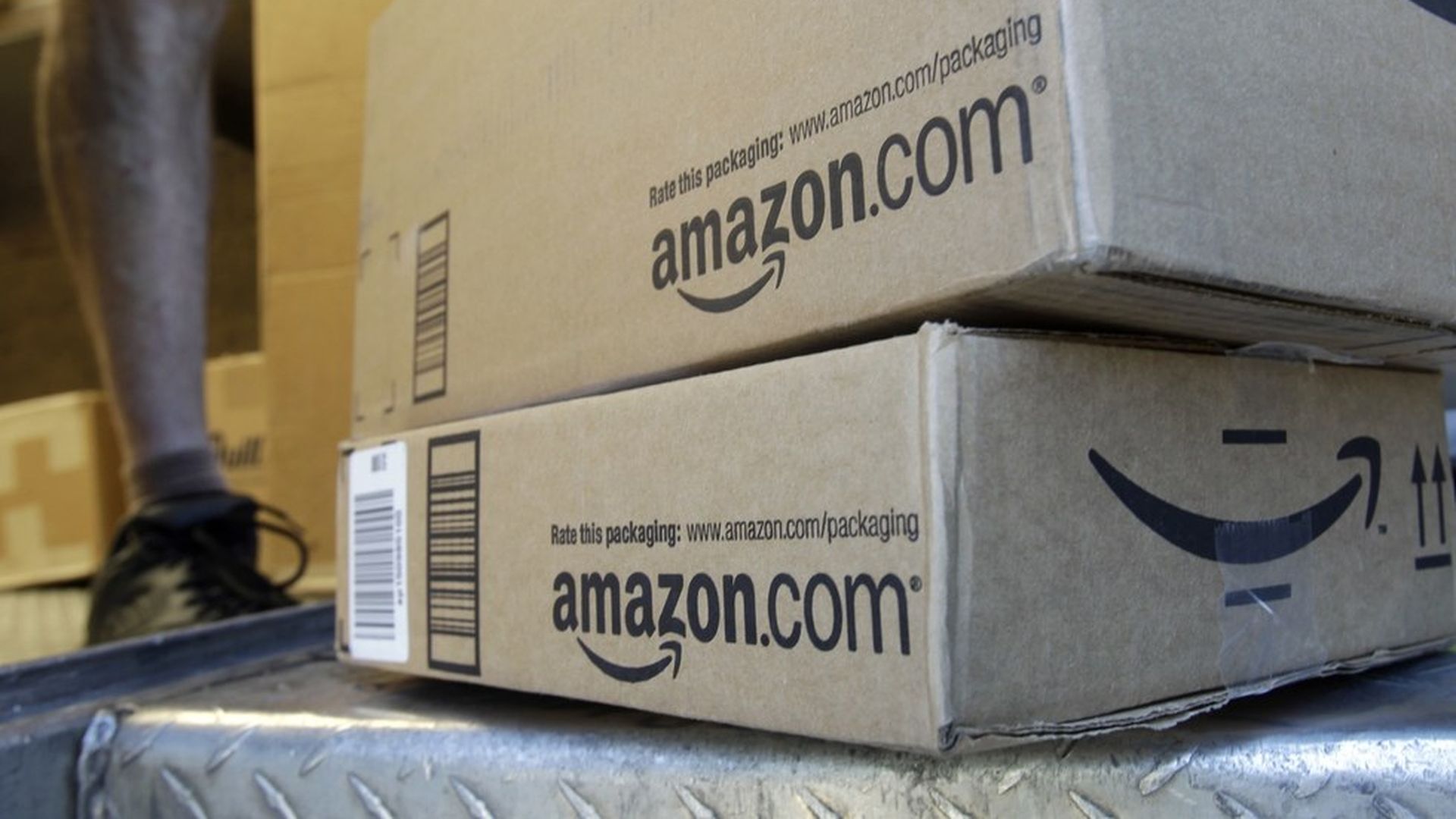
The Economist's cover story this week focuses on Amazon's "empire" — an online bookseller that transformed itself into a cloud-computing cable channel with a slew of branded physical products and one of America's biggest Internet marketplaces on the side — and how it can justify its massive $400 billion valuation.
- "Amazon will have to grow faster than almost any big company in modern history to justify its valuation."
- "Amazon's business model will ... encourage regulators to think differently. Investors value Amazon's growth over profits; that makes predatory pricing more tempting."
- "[F]irms could increasingly depend on tools provided by their biggest rival. If Amazon does become a utility for commerce, the calls will grow for it to be regulated as one."
- The biggest threat: "[S]uccess will bring it into conflict with an even stronger beast: government."

Matsui floats plan to retrain workers whose jobs face automation
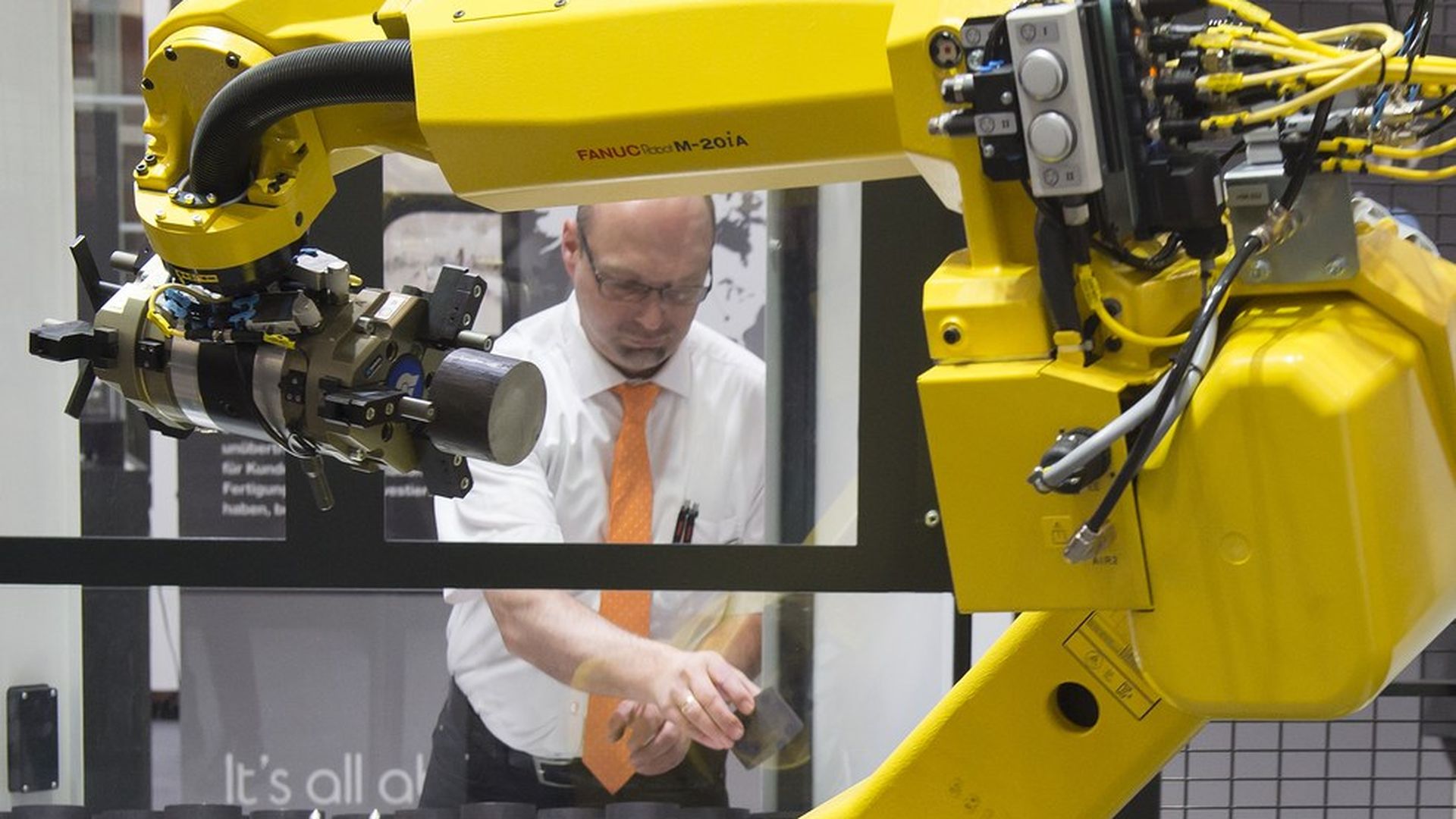
Rep. Doris Matsui has a couple of ideas for helping workers whose jobs may be swept away by a rising tide of automation:
- Fund programs through the Department of Commerce to retrain displaced workers, or workers who are at risk of losing their jobs in the future, in STEM jobs.
- Forgive up to $100,000 of the federal student loans of recent graduates who volunteer with those programs.
Why it matters: Matsui's proposal, introduced in the House last week, is one of the first concrete ideas floated in Congress for how the government could help retrain workers in response to automation. It's an issue that's likely to get attention as more autonomous vehicles hit the road and other industries begin to experiment more seriously with automation.
Twitter is weighing whether to build a paid version of TweetDeck
Twitter is considering whether to build premium software geared toward power users of its service.
The company already owns TweetDeck, a program geared toward those who juggle multiple Twitter accounts and spend a lot of time on the social media service. A paid version could offer extra features and bypass advertising.
Andrew Tavani, managing editor of Women in the World, first spotted a message from Twitter about the potential service.
Still pondering: It appears the idea is still in the early stages and Twitter hasn't decided if it'll build this. "We're conducting a survey to assess the interest in a new, more enhanced version of TweetDeck," a Twitter spokesperson told Axios, adding that Twitter is "exploring several ways to make TweetDeck even more valuable for professionals."
Why it matters: Twitter acquired TweetDeck in 2011 from developer Iain Dodsworth, but hasn't done much with it since as far as expanding features and capabilities. This could be a welcome option for users for whom Twitter is a critical part of doing their job.

Hackers claim to have millions of iCloud credentials, but Apple denies breach

A group called the Turkish Crime Family is claiming to have millions of passwords for Apple's iCloud, and is demanding Apple hand over money or it will delete the accounts.
Apple, while not saying what contact it has had with the group, issued a statement saying it doesn't believe its systems have been compromised. Instead, it suggests that any account information that has fallen into the wrong hands is probably the result of other well-publicized breaches and because people reuse their passwords on multiple sites.
There have not been any breaches in any of Apple's systems including iCloud and Apple ID. The alleged list of email addresses and passwords appears to have been obtained from previously compromised third-party services.We're actively monitoring to prevent unauthorized access to user accounts and are working with law enforcement to identify the criminals involved.
The upshot: Use different passwords on different sites and, whenever possible use two-factor authentication. It sounds simple, but most people don't do it. And if you haven't done so recently, change your iCloud password.
Amazon pushes transportation agenda in Washington
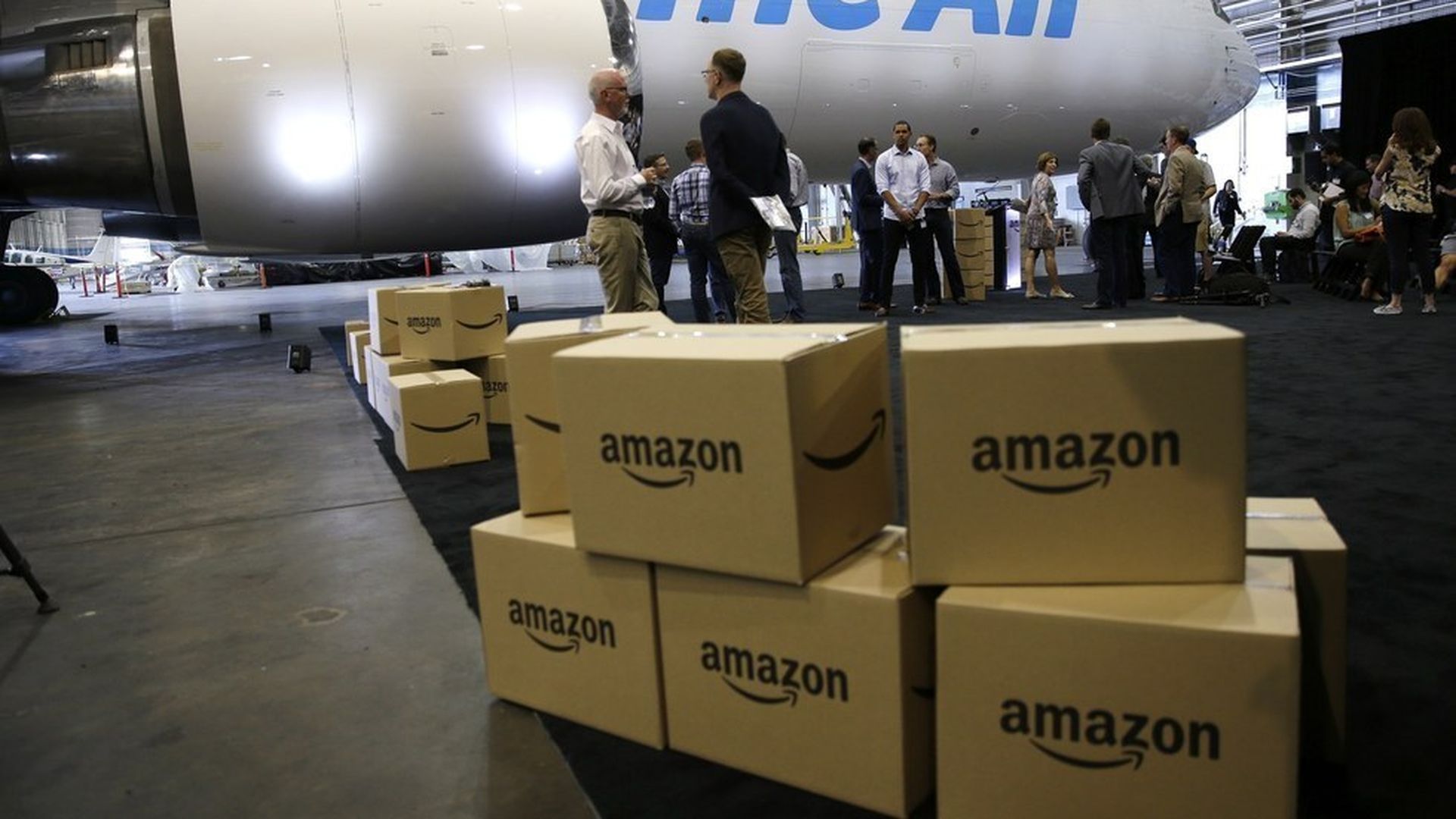
About 50 senior Amazon leaders flew in from Seattle this week to meet with the Trump administration and lawmakers on transportation issues, ranging from trucking to drones.
The team, led by SVP of Worldwide Operations Dave Clark, oversees everything that takes place from the time a you buy a product on the website to when the box lands on your doorstep — basically, a ton of transportation logistics. Last night Amazon hosted a reception for members of Congress who have Amazon jobs in their states and districts.
Why it matters: Amazon needs strong allies in Washington as it moves into delivering goods in addition to selling them. So far, it's a pretty positive story for Amazon: Last month, it announced the creation of an Air Cargo Hub in Kentucky to support its new fleet of Prime Air planes, creating some 2,000 new jobs. In January, the company said it plans to create 100,000 new jobs in the U.S. by 2018 — an effort surely not lost on Trump, who traded barbs with Amazon boss Jeff Bezos during the campaign.
How Adobe stumbled upon a new way to measure inflation

Data: Adobe; Chart: Andrew Witherspoon / Axios
For years, economists have relied on the Consumer Price Index as a proxy for the rise in inflation seen by average American households. It's made up of some 80,000 prices in 200 categories.
Adobe thinks it has a more modern approach that can surface the data — and therefore spot inflation trends — much faster. Dubbed the Digital Price Index, it draws on the tons of data that the company gets from online retailers that are part of its digital marketing cloud. It gets pricing data for 2.5 million distinct goods.
The idea to create the index occurred to Adobe after looking at the amount of holiday pricing data it had after the holiday season two years ago.
Senate backing Comcast, Google, Facebook, AT&T on privacy
Republicans in Congress are barreling ahead to overturn FCC privacy rules opposed by a rare union of broadband providers and internet companies. A vote is expected today.
The rules adopted by the FCC last fall require broadband providers to first get permission from their customers before sharing or selling sensitive personal data to advertisers and other third-parties. Rolling back the rules would be a victory to both broadband providers (like AT&T and Comcast) and internet companies (like Google and Facebook). Why? Because getting rid of the rules makes it easier to use consumer data, including web-browsing and app-use habits, to target ads.
Why it matters: Online advertising is a primary revenue stream for web companies and a growing one for ISPs. The $72 billion online advertising market is expected to grow to more than $113 billion by 2020, according to eMarketer. Right now that market is dominated by companies like Google and Facebook, but broadband providers also want a piece of that pie and say nixing the privacy rules would help them compete against the more established web players.