Saturday's technology stories

Uber halts Arizona self-driving car testing following accident
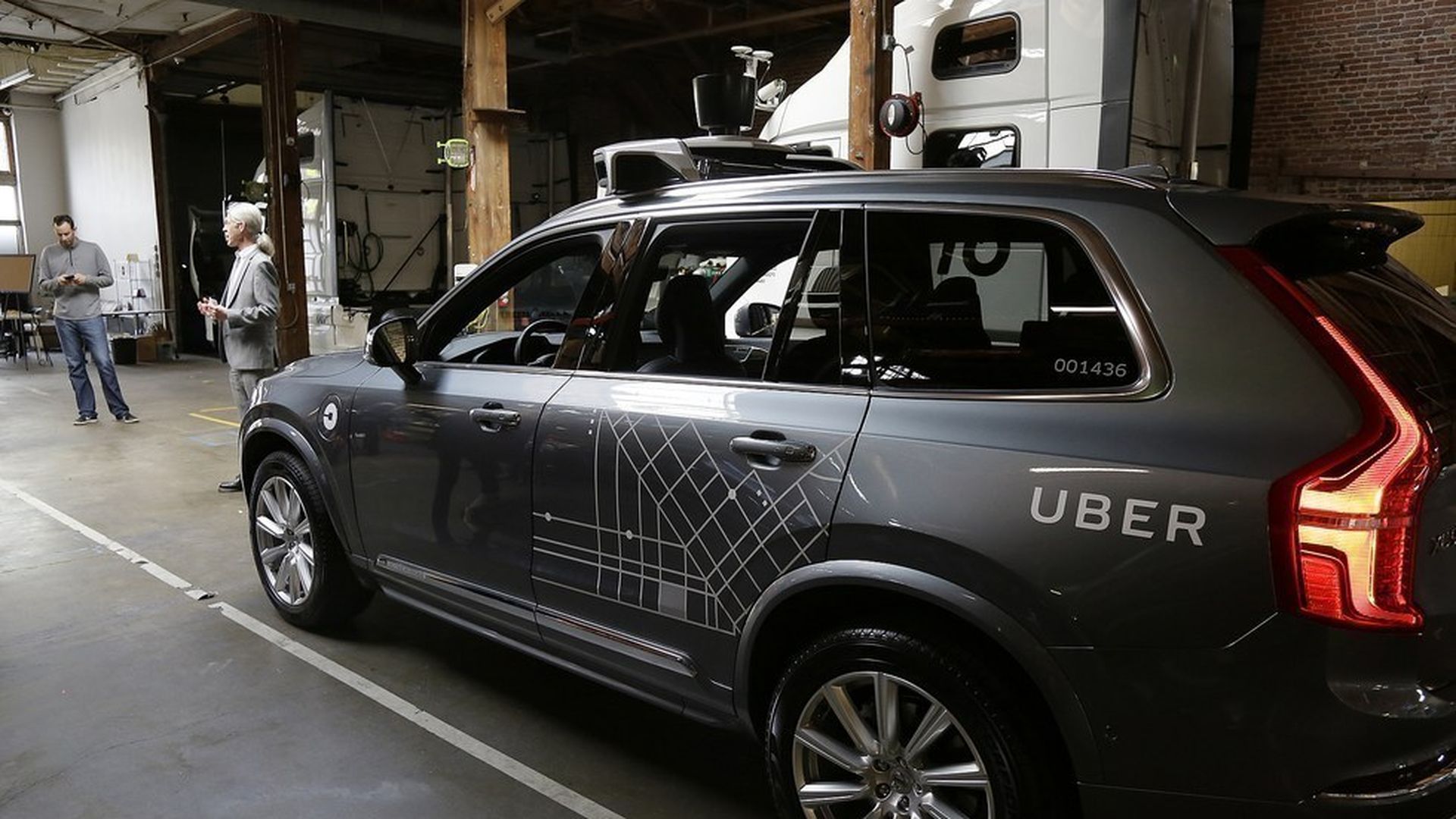
Uber has grounded its self-driving cars in Arizona while it continues to investigate an accident that happened on Friday evening in Tempe. The company also confirmed that the car was in self-driving mode when another car hit it.
While it had a safety driver in the driver's seat (as all its self-driving cars do), there were no passengers in the back, and no serious injuries to anyone in either car, according to Uber.
What to watch: The results of the investigation could raise questions about Uber's self-driving car software if its car was at fault or should have avoided the collision.

Netflix is eating Hollywood

Wall Street Journal front page, "THE NEW HOLLYWOOD VILLAIN: Netflix is hogging talent and pushing up prices to create shows, spurring pushback," by Joe Flint and Shalini Rakmachandran:
- "Netflix's spending on original and acquired programming this year is expected to be more than $6 billion, up from $5 billion last year, more than double what Time Warner Inc.'s HBO spends and five times as much as 21st Century Fox's FX or CBS Corp.'s Showtime."
- Why it matters: "Its shock-and-awe spending — combined with that of Amazon and other new players — is driving up costs industrywide and creating a scarcity of people and equipment."
Uber self-driving car involved in crash in Arizona
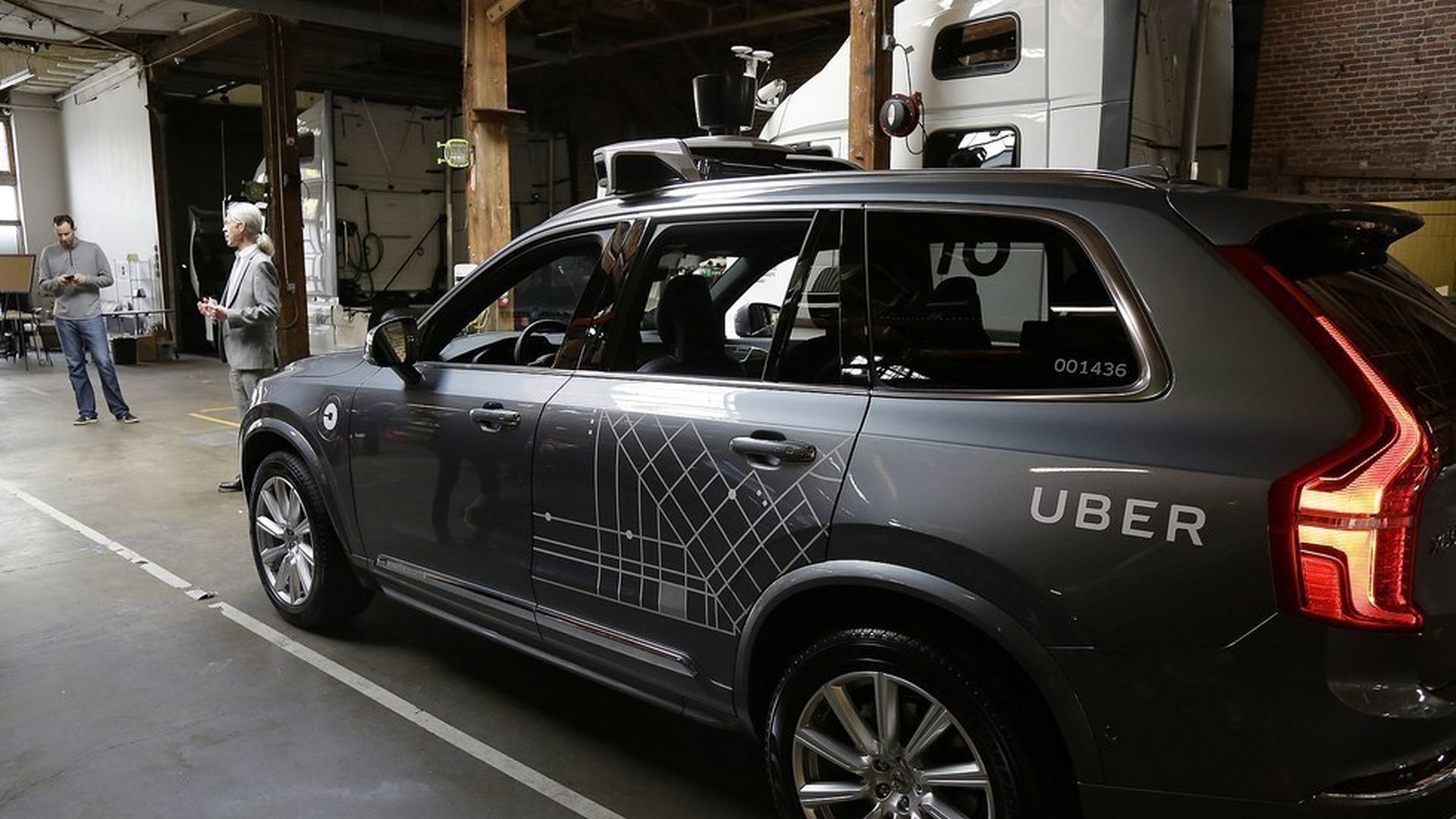
One of Uber's self-driving cars was hit by another car and rolled onto its side in Tempe, Arizona, according to local news reports. While there was a safety driver in Uber's self-driving car, it's unclear whether the vehicle was driving itself in that moment. There were no injuries according to authorities.
And Uber spokesperson told Axios that the company is aware of the accident and will provide updates when it has more information.
Why it matters: While it appears the accident was caused by the other driver, the accident will raise questions if it is found that the software was controlling the car at the time, including why it couldn't avoid the collision. Uber has been working to avoid regulation for its self-driving cars, though in Arizona, it had a heavy hand in shaping the state's legislation on self-driving car testing.
Major brand ads still slip into unsavory YouTube videos

YouTube has been found to run ads from major brands like Coca-Cola, Procter & Gamble, Amazon.com, and Microsoft on at least five videos with racist and anti-Semitic content, according to the Wall Street Journal. Some of the companies told the Journal they're suspending some or all of their advertising with Google.
A week ago, Google apologized after reports showed that U.K. advertisers were appearing alongside such videos
Ad tech reality: It's important to remember that with programmatic advertising, this is almost inevitable as ads are distributed onto content via automated software, not human curation, and software isn't perfect yet. And as Flurry founder Sean Byrne noted on Twitter, programmatic ads are usually placed on non-premium content, which means ads are bound to land on less-than-desirable videos.

Tech community "dumbfounded" by Mnuchin's dismissal of AI impact on jobs
Treasury Secretary Steve Mnuchin riled the tech community this morning when he told Axios' Mike Allen that displacement of jobs by artificial intelligence and automation is "not even on my radar screen" because the technology is "50-100 more years" away. Mnuchin also said he is "not worried at all" about robots displacing humans in the near future. "In fact, I'm optimistic."
The World Economic Forum opens SF center to study tech and society
The World Economic Forum, which hosts the exclusive annual retreat in Davos, Switzerland, is opening a new research center in San Francisco.
Its aim will be to study the impact of digital technologies like artificial intelligence and automation on societies and jobs, among other other related topics. The center plans to partner with a variety of organizations, from universities to tech companies, NGOs, and governments to work on these projects.
Why it matters: As it's become increasingly clear that technology's impact is accelerating, it's no surprise to see institutions try to get ahead of it and launch such studies. For example, in 2014, Stanford University announced its own 100-year project to track the effects of artificial intelligence on every aspect of people's lives. With that said, it's also unclear whether the center's studies will ultimately translate into significant policies on these areas.
Ello founder is back with a wacky Snapchat-like app
The man behind Ello, an "anti-Facebook" social network that made headlines in 2014 for its ad-free approach, is back with something new. It's Wuu, a quirky, yet simplistic, mobile app reminiscent of Snapchat and Instagram (minus public posting or "likes"). As with Ello, it's unclear how Wuu plans to make money as it won't have ads and is focused on user privacy.
Paul Budnitz, Ello's co-founder and original CEO, released Wuu yesterday on iOS, though the app is still invite-only. Budnitz still remains part-owner of Ello, though he no longer runs the company. The social network no longer makes headlines but has found popularity among artists. Earlier this month, Ello raised $2.5 million in new funding.
Wuu money: SEC filings revealed Wuu raised between $725,000 and $1.3 million over two convertible note rounds last year. Budnitz declined to say more about dollars, but did reveal to Axios that Founders Fund is the lead investor, adding that the firm told him to "do whatever the hell you want" as far as building the app. Other investors in Wuu include Vermont-based VC firm FreshTracks Capital (also an Ello investor), and a few undisclosed Hollywood celebrities.
The future of Amazon's "empire"
The Economist's cover story this week focuses on Amazon's "empire" — an online bookseller that transformed itself into a cloud-computing cable channel with a slew of branded physical products and one of America's biggest Internet marketplaces on the side — and how it can justify its massive $400 billion valuation.
- "Amazon will have to grow faster than almost any big company in modern history to justify its valuation."
- "Amazon's business model will ... encourage regulators to think differently. Investors value Amazon's growth over profits; that makes predatory pricing more tempting."
- "[F]irms could increasingly depend on tools provided by their biggest rival. If Amazon does become a utility for commerce, the calls will grow for it to be regulated as one."
- The biggest threat: "[S]uccess will bring it into conflict with an even stronger beast: government."

Matsui floats plan to retrain workers whose jobs face automation
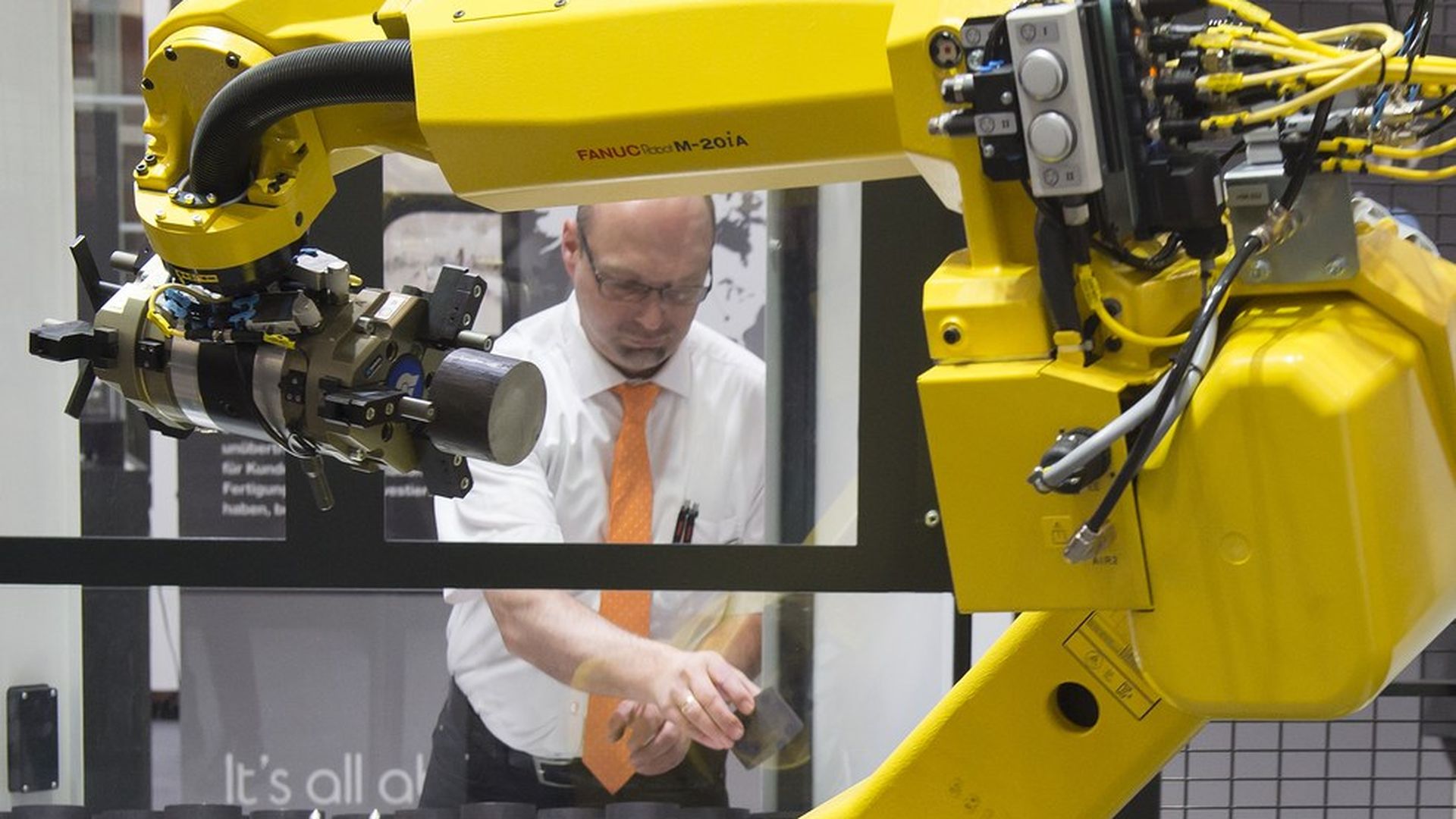
Rep. Doris Matsui has a couple of ideas for helping workers whose jobs may be swept away by a rising tide of automation:
- Fund programs through the Department of Commerce to retrain displaced workers, or workers who are at risk of losing their jobs in the future, in STEM jobs.
- Forgive up to $100,000 of the federal student loans of recent graduates who volunteer with those programs.
Why it matters: Matsui's proposal, introduced in the House last week, is one of the first concrete ideas floated in Congress for how the government could help retrain workers in response to automation. It's an issue that's likely to get attention as more autonomous vehicles hit the road and other industries begin to experiment more seriously with automation.