Thursday's technology stories

Microsoft pushes for Trump travel order relief
Add this to your list of how tech is responding to President Trump's ban on refugees and immigrant travel from seven majority-Muslim countries: Microsoft has asked the administration to consider a process for making exceptions for certain individuals affected by the order.
The request came in a letter Microsoft exec Brad Smith sent to Secretary of State Rex Tillerson and Secretary of Homeland Security John Kelly that emphasizes the impact the executive order has had on Microsoft's workforce and on other "responsible applications for entry into the country."
- Microsoft has 76 employees — and 41 dependents — who have "nonimmigrant visas to live and work in the United States" and are affected by the order.
- Smith said that "even among just our own employees, we have one individual who is unable to start her new job in the U.S.; others who have been separated from their spouses; and yet another employee who is confronted with the gut-wrenching decision of whether to visit her dying parent overseas."
- Microsoft has been active in several venues in expressing concerns about the ban. "At the outset, we recognize that this proposal will not and should not end the broader debate and deliberations regarding last week's executive order," the company said in a blog post about the letter.
The bigger picture: Tech companies are under a lot of pressure, including from their own employees, to speak out against Trump's ban. In framing their response, they've toe'd the line between expressing concern for their own employees and the larger impact on migrants and U.S. permanent residents affected by the executive order.
Uber CEO quits Trump council
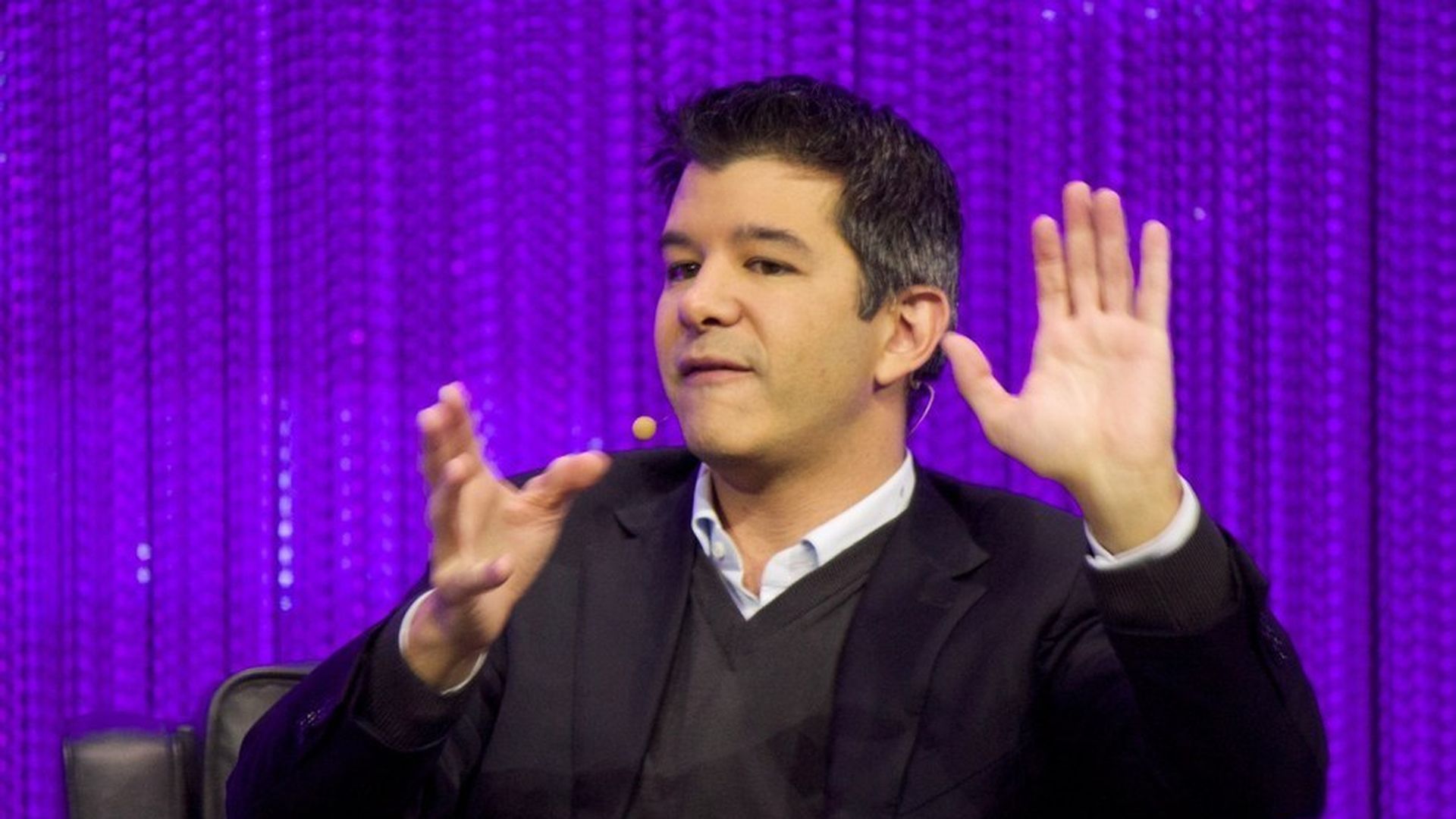
Uber CEO Travis Kalanick will no longer be a part of a council of business leaders advising the Trump administration.
Kalanick said in an internal memo obtained by Axios that he had spoken to Trump briefly "about the immigration executive order and its issues for our community." He also said that signing on to the council "was not meant to be an endorsement of the President or his agenda but unfortunately it has been misinterpreted to be exactly that." The news of his departure was first reported by Recode.
Why this matters: This comes amid public pressure on Uber because Kalanick's ties to Trump. That, along with what was seen by some as trying to break a taxi strike during protests about Trump's immigration order this weekend, resulted in many users deleting the application.
Timing is everything: The council of CEOs is meeting with Trump tomorrow morning. Kalanick had promised to raise his concerns over the travel ban with Trump.

Google dethrones Apple
Google has surpassed Apple as the world's most valuable brand, according to the latest Brand Finance Global 500 report, per MarketWatch. Google, which hasn't been in the No. 1 spot since 2011, saw its brand value rise 24% to $109.5 billion in 2017 from $88.2 billion in 2016. Brand Finance cites its "unchallenged" search business as the leading source of its successful advertising income.
Meanwhile, Apple has slipped into the second spot with a 2017 brand value of $107.1 billion, down 27% from $145.9 billion in 2016. The report says that Apple has lost its "luster" and is now forced to compete on a higher playing field with a number of new Chinese brands.
"Put simply, Apple has over-exploited the goodwill of its customers, it has failed to generate significant revenues from newer products such as the Apple Watch and cannot demonstrate that genuinely innovative technologies are in the pipeline" wrote Brand Finance.

Trump effect: Samsung may build U.S. factory
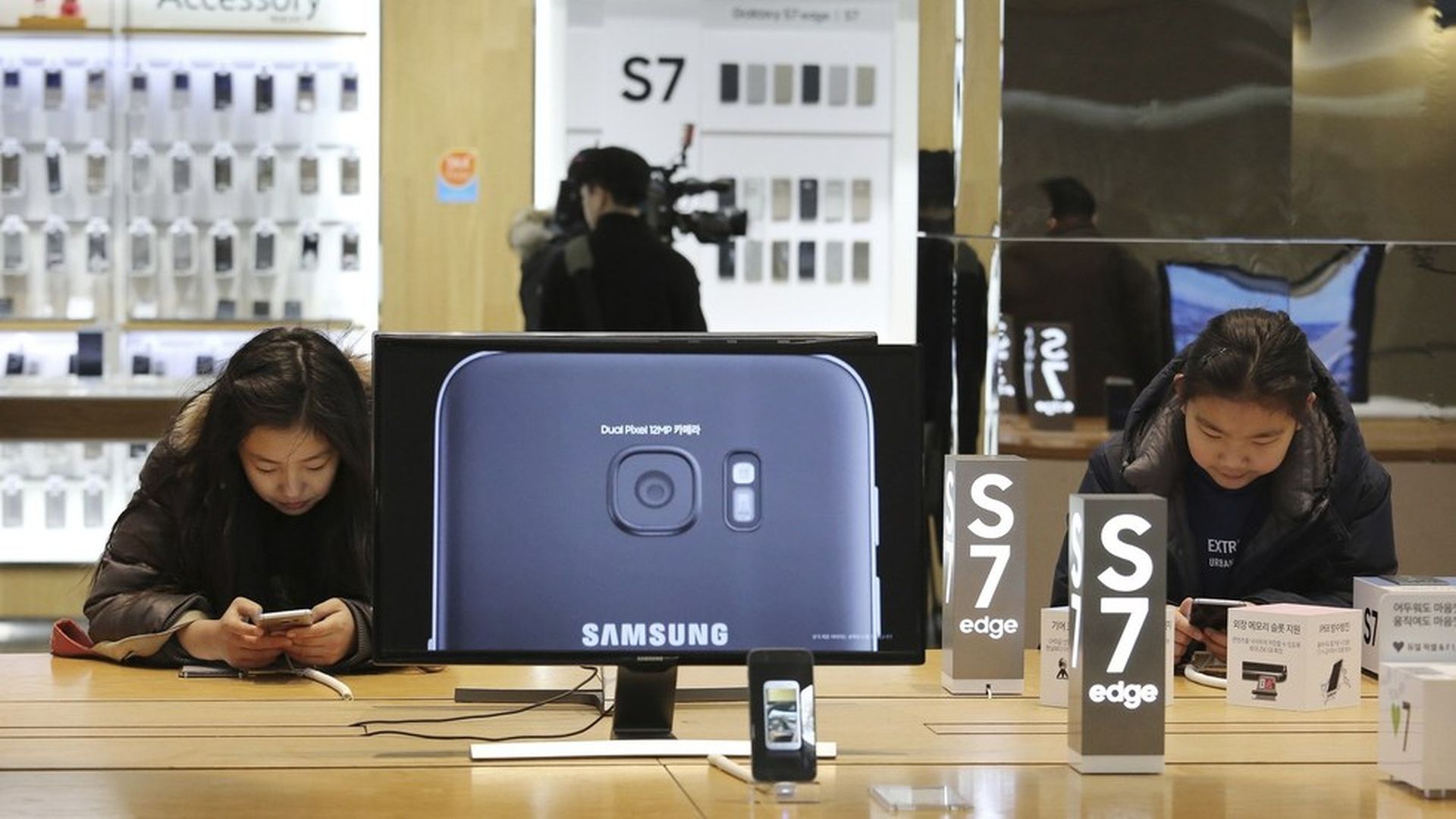
Samsung is considering constructing a U.S. factory to produce home appliances, per Reuters. If the plan comes to fruition, Samsung would join a handful of other firms that make appliances in the United States.
A win-win: Companies can grab headlines with news of even considering bringing production to the U.S., and the Trump White House benefits from the ability to take credit. These moves may not add up to significant job growth, but it's hard to beat the PR.
(The second sentence has been corrected to say several firms make appliances in the U.S. The previous version said Samsung would be only one of two major companies with factories in the U.S.)

Those annoying new chips moved credit fraud online
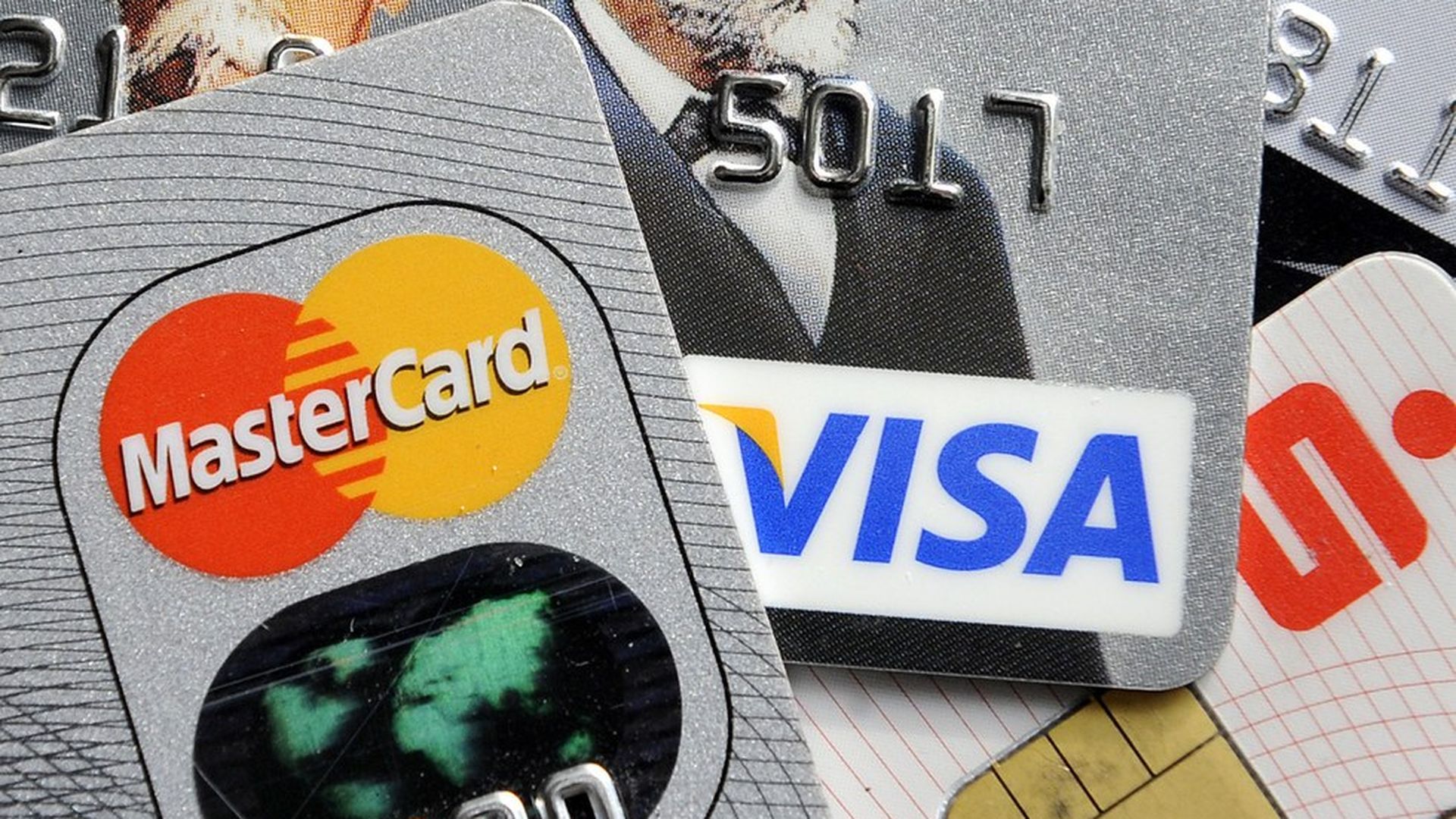
Nearly half of the fraud committed in 2016 was "card not present" (CNP) fraud; it was either committed online or in physical stores that don't have chip software activated yet. LifeLock reports overall fraud was up 18% last year, per the WSJ.
Wasn't chip technology supposed to make transactions more secure? Although it may take longer in store, chip technology brought losses from existing-card fraud down 30% from 2013 since chips are nearly impossible to clone. But 64% of storefront merchants still don't accept chips — that's because there have been massive delays in on-boarding retailers' software for the chip readers, since retailers and their hardware must be certified in a long queue, per CBS. Plus, after October 1 of 2015, the burden of paying for fraud costs transferred from financial institutions to the storefronts themselves.
Why it matters: Consumers are still bearing some hefty costs: identity theft and credit card theft cost 15.4 million consumers $16 billion in 2016 according to the study.
In the meantime, companies are investing in tokenization programs to protect information and combat cloning card fraud that comes from swiping cards (think Apple's Apple Wallet and MasterCard's Masterpass).

What Zuckerberg thought of Facebook, 5 short years ago
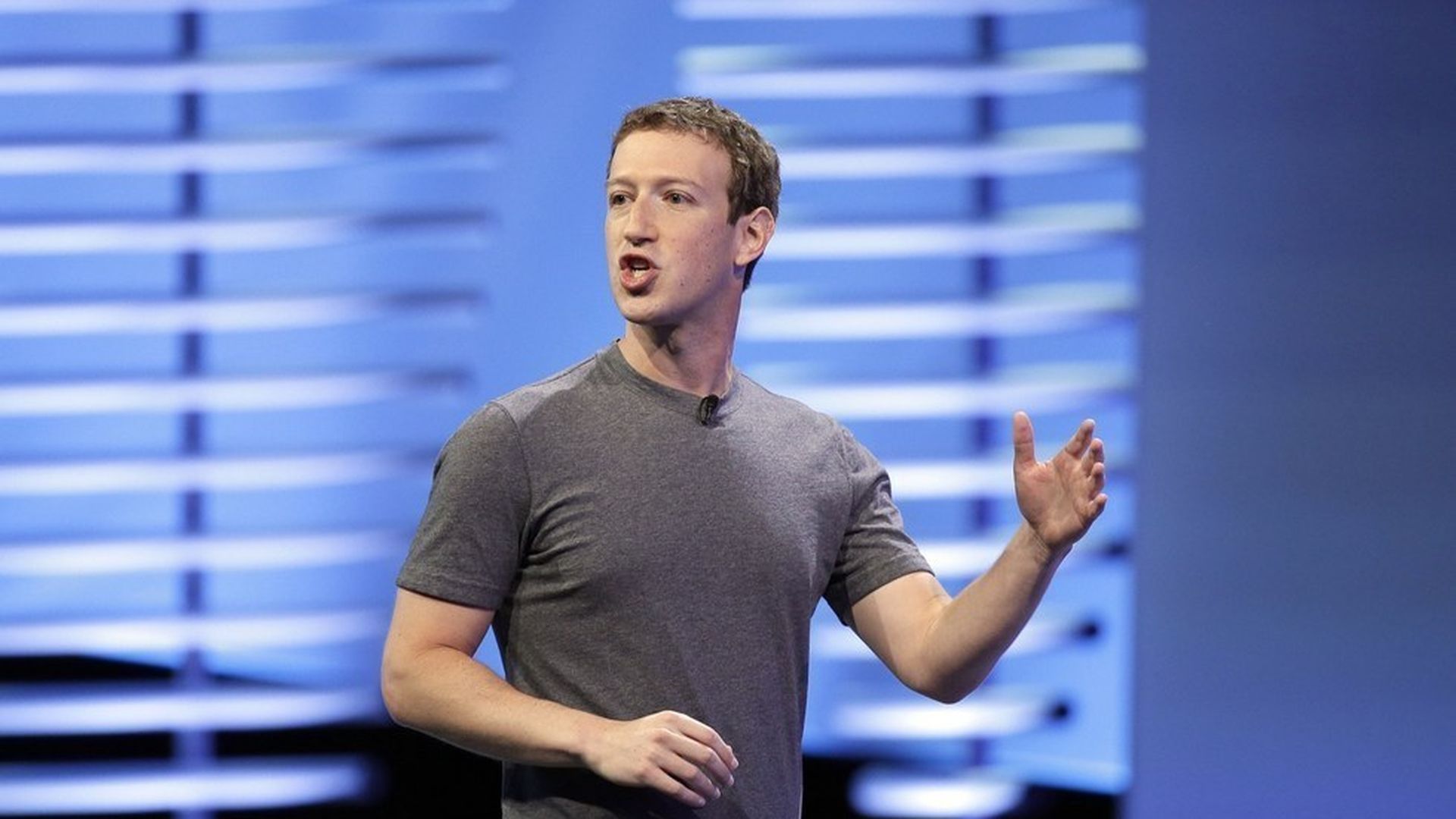
Facebook co-founder and CEO Mark Zuckerberg has republished the founder's letter he published exactly five years ago to announce his company's IPO. Among other things, Zuckerberg highlighted at the time how he believes Facebook is changing the relationship between citizens and government.

Facebook's plan to bury fake news

- Adding universal engagement data to its algorithm to better identify and rank "authentic content" in your newsfeed
- Categorizing pages to identify whether they're posting spam or gaming the system for engagement
- Accounting for changes in personal "signals" or engagements in real time to make newsfeeds more personalized with timely updates
How they're framing it: "We've heard from our community that authentic stories are the ones that resonate most — those that people consider genuine and not misleading, sensational or spammy."
What they mean: We're algorithmically weeding out fake news from your feed because it's affecting user engagement and brand loyalty and that's bad for our business.
Why this matters: This is the first time Facebook has announced changes in how they will weigh content in individual newsfeeds. Until recently, the technology giant was weary of calling itself a media company and denied its fake news problem. Shortly after the 2016 election, Mark Zuckerberg called it "crazy" to think that fake news on Facebook affected the outcome of the election. The company has since taken strategic steps to tackle fake news, including hiring several high-level journalists to better inform their news decisions.

Ex-Twitter CEO: I'm sorry
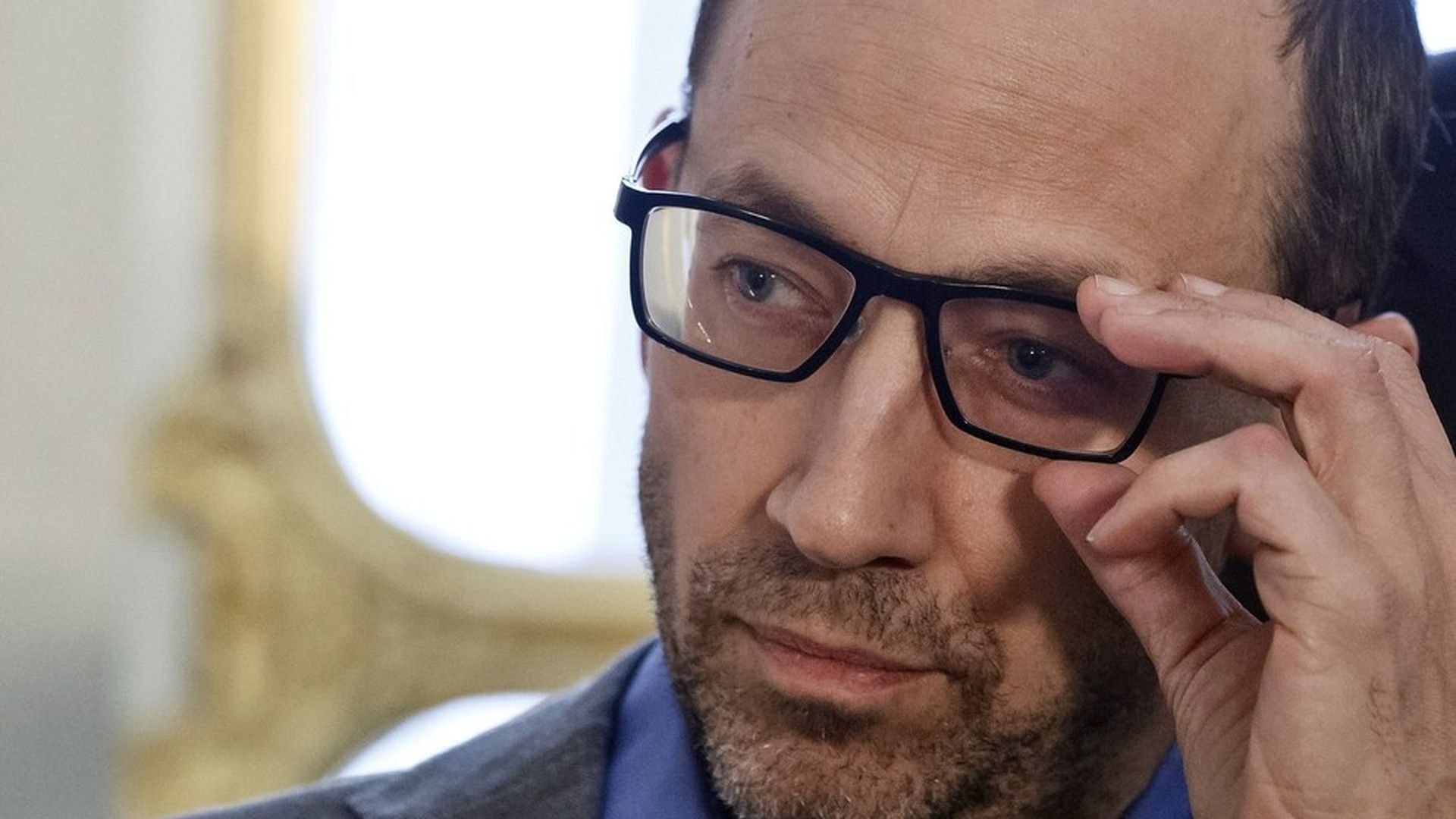
Dick Costolo, the former CEO of Twitter, said today during the Upfront Summit in Los Angeles that he missed an opportunity to stop bullying on the platform. In short, it proved to be a very complicated problem ("lots of edge cases") and he got distracted by other things: Moreover, being a hired CEO rather than a founder made him less bold:
I wish I could turn back the clock and go back to 2010 and stop abuse on the platform by creating a very specific bar for how to behave on the platform... I take responsibility for not taking the bull by the horns.
Costolo added that social media bullying is a bit like tech's spam problem, in which you must make it more time-consuming and expensive to be the abuser than the abused. He also believes that dichotomy can extend to the "fake news" situation, and that Twitter should engage in manual curation that highlights authoritative voices rather than just hyperbolic ones.
Amazon's new job engine: a cargo hub in Kentucky
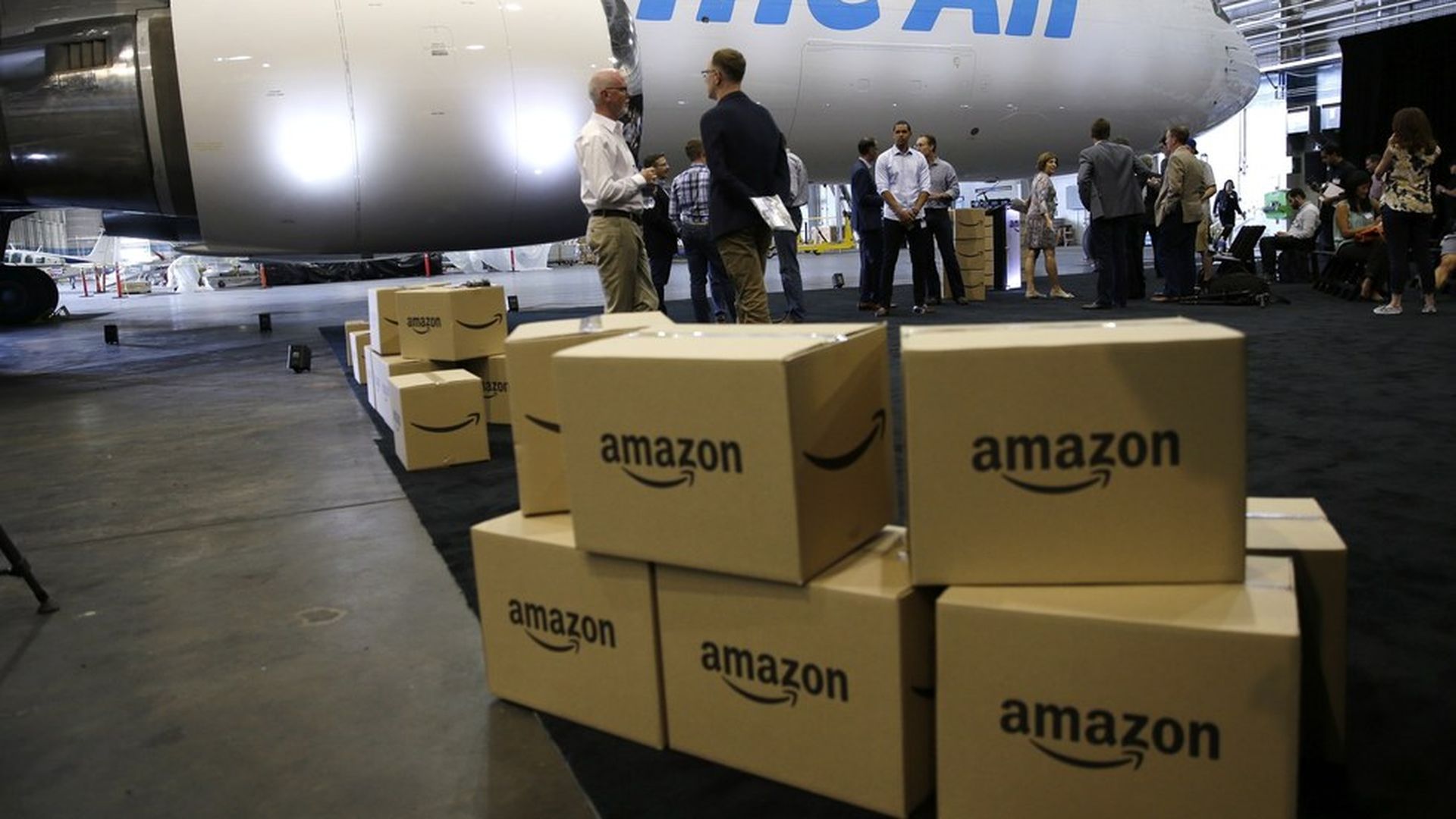
Amazon's pledge to bring 100,000 jobs to the United States over the next year and a half drew plaudits (and some credit-claiming) from then President-elect Donald Trump's team. Now a smaller announcement is getting attention: Amazon says it will build an air cargo hub in Kentucky that will create more than 2,000 jobs.
Why it matters: Amazon wants to play a larger role in the delivery of products from factories to its customers. The company has been made inroads by leasing cargo planes and shipping products from China to the United States. But it's still far from competing with the major air freight operations — like FedEx and UPS — if that is the goal. No word yet on an opening date for the hub.
Facebook testing TV-streaming app to rival Netflix, Hulu
Facebook is developing a video app for television-like content, The Wall Street Journal reports. The app will stream content from Apple TV, as well as other over-the-top (OTT) content providers. According to the Journal, Facebook is also in talks with media companies to license long-form programming.
Hot in Silicon Valley: Slack goes corporate
Slack goes after the big customers: Despite being a tool for organizations and companies by nature, workplace chat tool Slack didn't make a deliberate push to service "enterprise"-sized customers until now. Slack announced on Tuesday that it has already signed Capital One, Paypal, and IBM as its first enterprise clients.
Over the last few years, Slack quickly became a Silicon Valley darling thanks to its quirky design and popularity among startup teams. It also quickly raised large rounds of funding and its valuation shot up to over $1 billion very early. But its user growth began to somewhat slow down a few months ago, and it had yet to prove whether it could compete for the largest customers and continue to justify its valuation.
Apple makes a comeback this quarter: After a disappointing fourth quarter last year, the tech giant posted record revenue and iPhone sales. The App Store saw $3 billion in purchases in December alone, and Apple's overall services category continues to grow. It's also making headway in Greater China, though sales are still in decline there.
Facebook updates data transparency practices

Facebook is changing its data reporting and measurement practices to renew ad buyer confidence after a series of data discrepancies that damaged publisher relations in 2016.
Why it matters: Brands and publishers will penalize publishing partners that do not comply with industry standards for measuring and reporting data. Most notably, Procter and Gamble Chief Brand Officer Mark Pritchard said Sunday that he will no longer advertise with groups that do not meet industry data transparency standards. There have been several instances of Facebook misreporting data to publishing partners. Most notably, Facebook apologized in September for inflating video engagement metrics up to 60% for two years.
Snapchat users open their app 18 times a day
Ahead of Snapchat's highly-anticipated IPO, Snapchat Chief Strategy Officer Imran Khan revealed some key engagement stats to advertising executives at the Interactive Advertising Bureau's annual meeting Tuesday.
Opens: The average Snapchat user opens the app 18 times per day. Khan said the average person in the U.S. checks their mobile phone 46 times a day, and millennials, Snapchat's core audience, check their phones over 75 times per day.
Time spent: The average Snapchat user spends 25-30 minutes a day in the app. The average U.S. adult (18+) spends 5.5 hours weekly on social media, per Nielsen.
Sound on: More than 60% of Snapchat content plays with the sound on. Roughly 85% of Facebook video is watched without sound. According to Khan, a sound-on platform makes all the difference in their advertising effectiveness. "An ad that plays without sound is just a moving banner," Khan said.
Content teams: According to Khan, one publisher has 30 people creating content specifically for Snapchat.