Wednesday's technology stories

Those annoying new chips moved credit fraud online
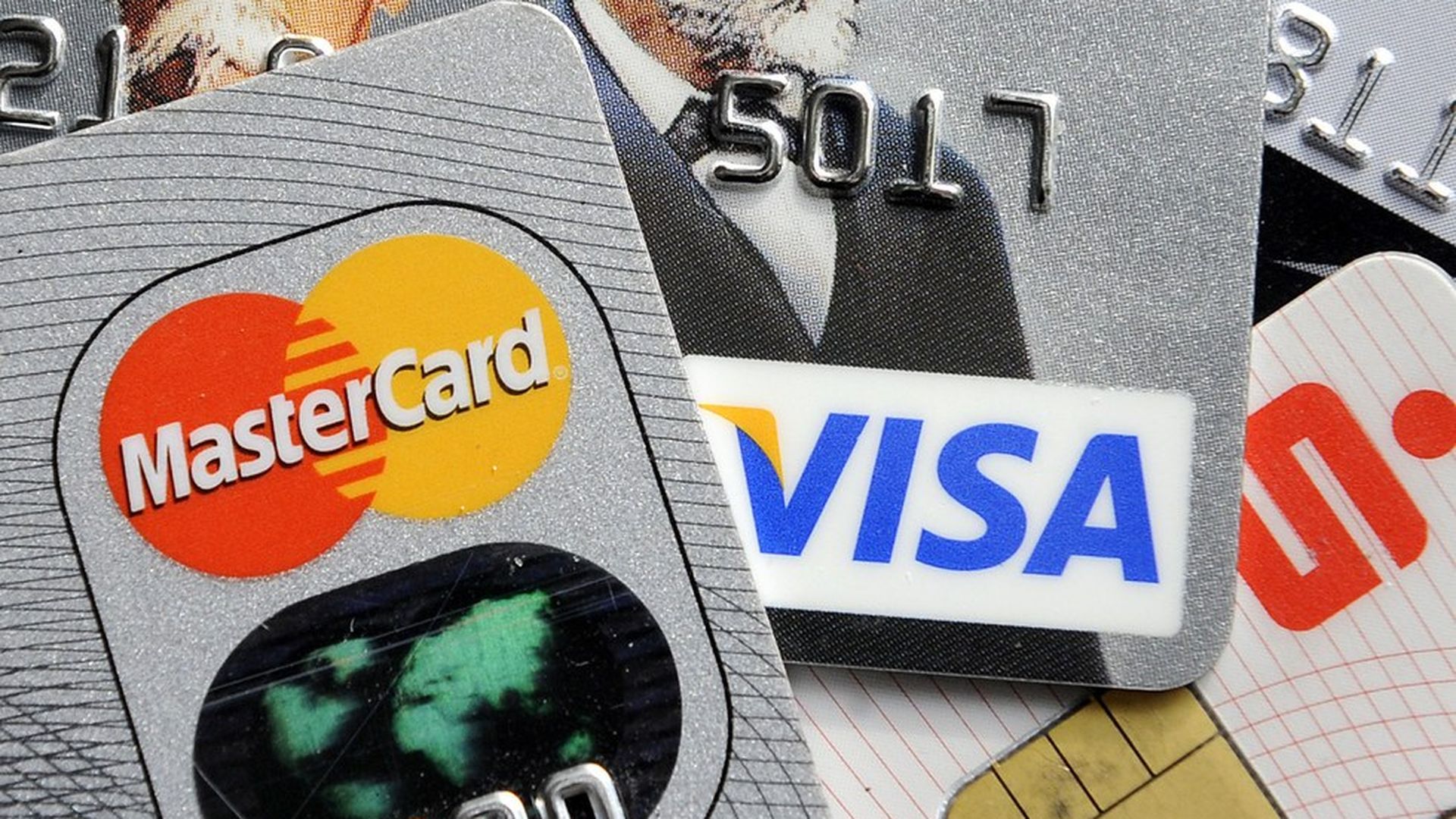
Nearly half of the fraud committed in 2016 was "card not present" (CNP) fraud; it was either committed online or in physical stores that don't have chip software activated yet. LifeLock reports overall fraud was up 18% last year, per the WSJ.
Wasn't chip technology supposed to make transactions more secure? Although it may take longer in store, chip technology brought losses from existing-card fraud down 30% from 2013 since chips are nearly impossible to clone. But 64% of storefront merchants still don't accept chips — that's because there have been massive delays in on-boarding retailers' software for the chip readers, since retailers and their hardware must be certified in a long queue, per CBS. Plus, after October 1 of 2015, the burden of paying for fraud costs transferred from financial institutions to the storefronts themselves.
Why it matters: Consumers are still bearing some hefty costs: identity theft and credit card theft cost 15.4 million consumers $16 billion in 2016 according to the study.
In the meantime, companies are investing in tokenization programs to protect information and combat cloning card fraud that comes from swiping cards (think Apple's Apple Wallet and MasterCard's Masterpass).

What Zuckerberg thought of Facebook, 5 short years ago
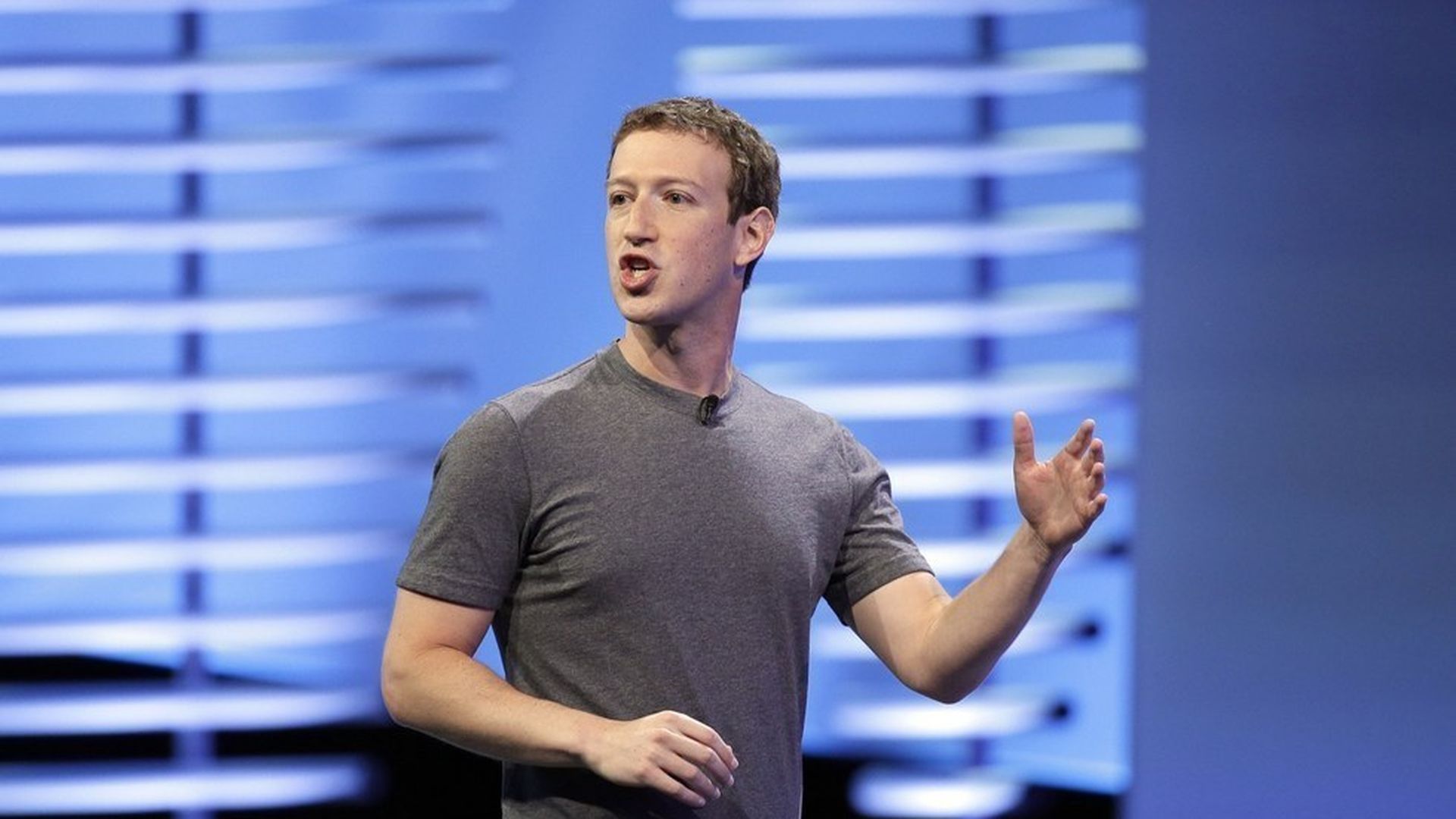
Facebook co-founder and CEO Mark Zuckerberg has republished the founder's letter he published exactly five years ago to announce his company's IPO. Among other things, Zuckerberg highlighted at the time how he believes Facebook is changing the relationship between citizens and government.

Facebook's plan to bury fake news

- Adding universal engagement data to its algorithm to better identify and rank "authentic content" in your newsfeed
- Categorizing pages to identify whether they're posting spam or gaming the system for engagement
- Accounting for changes in personal "signals" or engagements in real time to make newsfeeds more personalized with timely updates
How they're framing it: "We've heard from our community that authentic stories are the ones that resonate most — those that people consider genuine and not misleading, sensational or spammy."
What they mean: We're algorithmically weeding out fake news from your feed because it's affecting user engagement and brand loyalty and that's bad for our business.
Why this matters: This is the first time Facebook has announced changes in how they will weigh content in individual newsfeeds. Until recently, the technology giant was weary of calling itself a media company and denied its fake news problem. Shortly after the 2016 election, Mark Zuckerberg called it "crazy" to think that fake news on Facebook affected the outcome of the election. The company has since taken strategic steps to tackle fake news, including hiring several high-level journalists to better inform their news decisions.

Ex-Twitter CEO: I'm sorry

Dick Costolo, the former CEO of Twitter, said today during the Upfront Summit in Los Angeles that he missed an opportunity to stop bullying on the platform. In short, it proved to be a very complicated problem ("lots of edge cases") and he got distracted by other things: Moreover, being a hired CEO rather than a founder made him less bold:
I wish I could turn back the clock and go back to 2010 and stop abuse on the platform by creating a very specific bar for how to behave on the platform... I take responsibility for not taking the bull by the horns.
Costolo added that social media bullying is a bit like tech's spam problem, in which you must make it more time-consuming and expensive to be the abuser than the abused. He also believes that dichotomy can extend to the "fake news" situation, and that Twitter should engage in manual curation that highlights authoritative voices rather than just hyperbolic ones.

Amazon's new job engine: a cargo hub in Kentucky
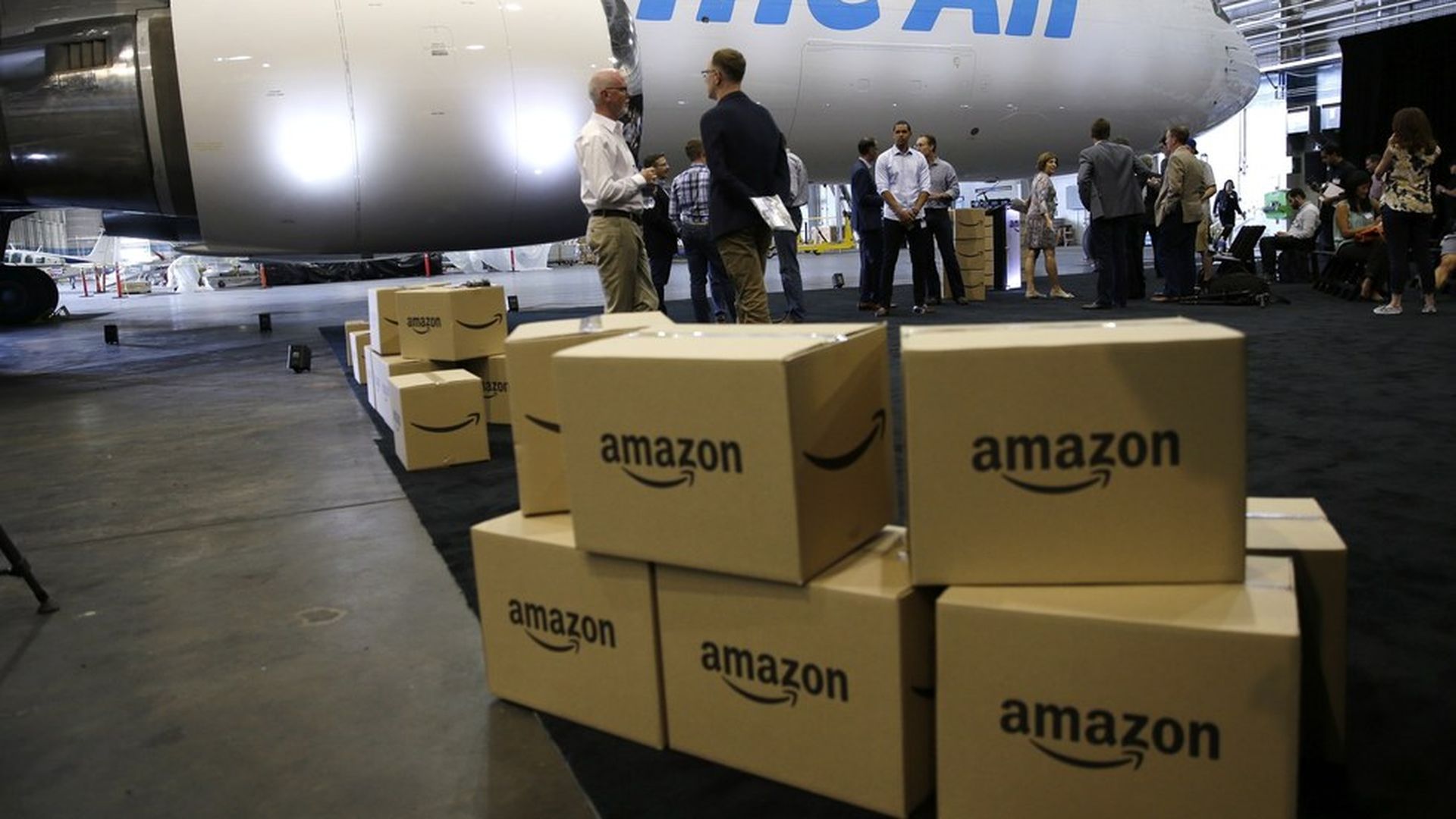
Amazon's pledge to bring 100,000 jobs to the United States over the next year and a half drew plaudits (and some credit-claiming) from then President-elect Donald Trump's team. Now a smaller announcement is getting attention: Amazon says it will build an air cargo hub in Kentucky that will create more than 2,000 jobs.
Why it matters: Amazon wants to play a larger role in the delivery of products from factories to its customers. The company has been made inroads by leasing cargo planes and shipping products from China to the United States. But it's still far from competing with the major air freight operations — like FedEx and UPS — if that is the goal. No word yet on an opening date for the hub.
Facebook testing TV-streaming app to rival Netflix, Hulu
Facebook is developing a video app for television-like content, The Wall Street Journal reports. The app will stream content from Apple TV, as well as other over-the-top (OTT) content providers. According to the Journal, Facebook is also in talks with media companies to license long-form programming.
Hot in Silicon Valley: Slack goes corporate
Slack goes after the big customers: Despite being a tool for organizations and companies by nature, workplace chat tool Slack didn't make a deliberate push to service "enterprise"-sized customers until now. Slack announced on Tuesday that it has already signed Capital One, Paypal, and IBM as its first enterprise clients.
Over the last few years, Slack quickly became a Silicon Valley darling thanks to its quirky design and popularity among startup teams. It also quickly raised large rounds of funding and its valuation shot up to over $1 billion very early. But its user growth began to somewhat slow down a few months ago, and it had yet to prove whether it could compete for the largest customers and continue to justify its valuation.
Apple makes a comeback this quarter: After a disappointing fourth quarter last year, the tech giant posted record revenue and iPhone sales. The App Store saw $3 billion in purchases in December alone, and Apple's overall services category continues to grow. It's also making headway in Greater China, though sales are still in decline there.
Facebook updates data transparency practices

Facebook is changing its data reporting and measurement practices to renew ad buyer confidence after a series of data discrepancies that damaged publisher relations in 2016.
Why it matters: Brands and publishers will penalize publishing partners that do not comply with industry standards for measuring and reporting data. Most notably, Procter and Gamble Chief Brand Officer Mark Pritchard said Sunday that he will no longer advertise with groups that do not meet industry data transparency standards. There have been several instances of Facebook misreporting data to publishing partners. Most notably, Facebook apologized in September for inflating video engagement metrics up to 60% for two years.
Snapchat users open their app 18 times a day
Ahead of Snapchat's highly-anticipated IPO, Snapchat Chief Strategy Officer Imran Khan revealed some key engagement stats to advertising executives at the Interactive Advertising Bureau's annual meeting Tuesday.
Opens: The average Snapchat user opens the app 18 times per day. Khan said the average person in the U.S. checks their mobile phone 46 times a day, and millennials, Snapchat's core audience, check their phones over 75 times per day.
Time spent: The average Snapchat user spends 25-30 minutes a day in the app. The average U.S. adult (18+) spends 5.5 hours weekly on social media, per Nielsen.
Sound on: More than 60% of Snapchat content plays with the sound on. Roughly 85% of Facebook video is watched without sound. According to Khan, a sound-on platform makes all the difference in their advertising effectiveness. "An ad that plays without sound is just a moving banner," Khan said.
Content teams: According to Khan, one publisher has 30 people creating content specifically for Snapchat.
Snapchat expands major advertising feature to all brands ahead of IPO
Snapchat announced Tuesday it's opening up its automated API platform to all advertising partners, not just a handful of high-level test partners, like Unilever and Gatorade.
Apple's iPads aren't selling so well
Apple is making a come back this quarter, after a disappointing third quarter, with record revenue and iPhone sales.
But the iPad isn't doing so hot—units sold are down 19% from the year-ago quarter, and revenue is down 22% over the same period.
Why this matters: With personal computers decreasing in popularity, Apple (and its competitors) have been trying to convince consumers that tablets, especially more powerful ones like the iPad Pro, are a great alternative. Apple has also tried to position its iPad Pro as a "hybrid" device—a tablet at times, a laptop at others—to compete with those of Microsoft, Lenovo, and the like.But it seems this isn't working; even this last holiday season couldn't help the iPad.
Uber strikes self-driving deal with Daimler
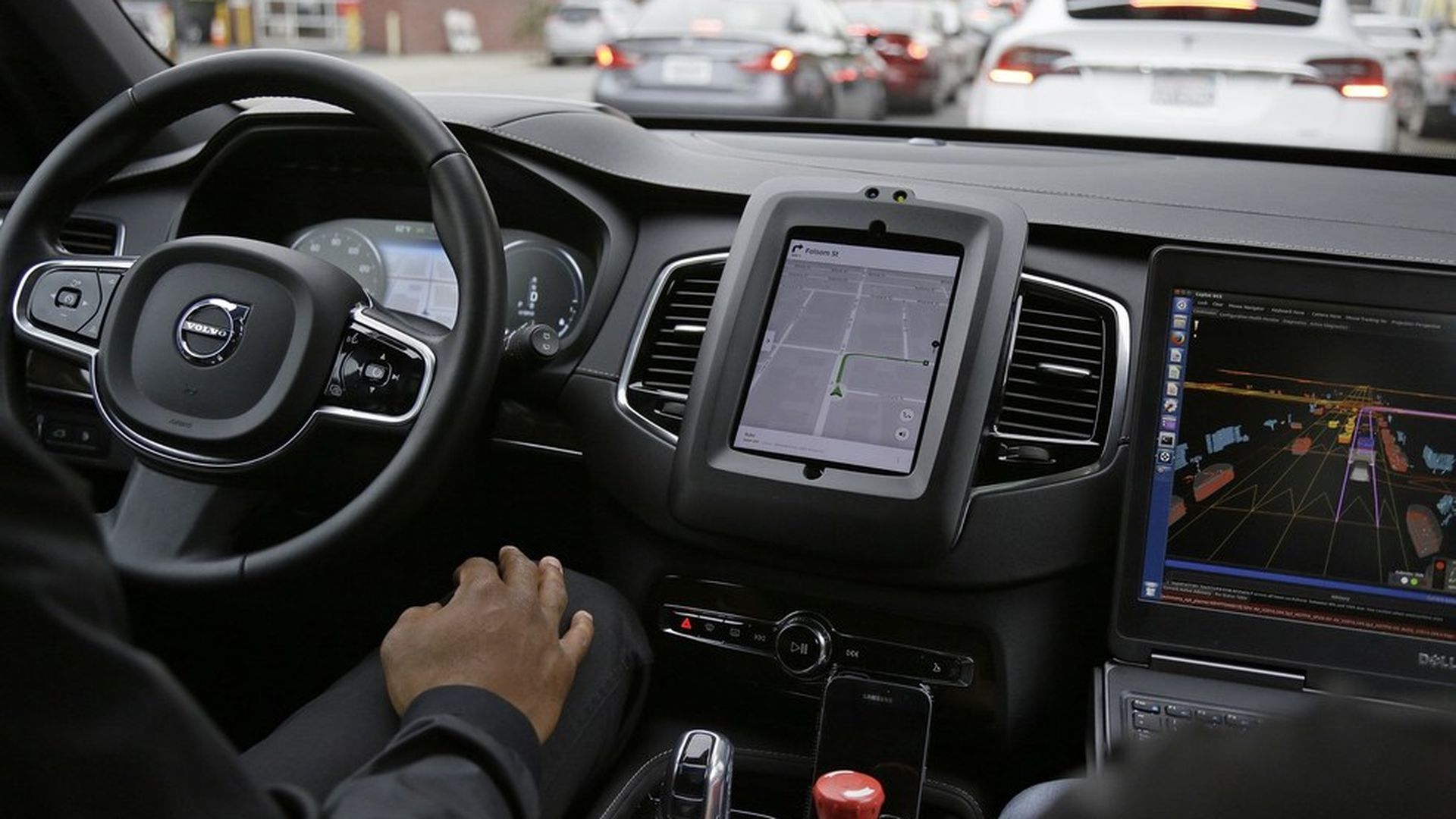
Uber and German automaker Daimler today announced an agreement whereby Daimler will begin producing self-driving Mercedes-Benz vehicles that will operate on Uber's global ride-sharing network.
Why it matters: This is the first time that Uber has contracted with an auto OEM to put a fleet on its rider network ― self-driving or otherwise ― and it sounds unlikely to be the last (this is a non-exclusive agreement on both sides). It also reflects a bit of strategy shift, or at least strategy broadening, from an existing program to outfit cars with Uber's self-driving "kit."Expect to see a mix going forward.
Is it unique? No. Lyft and General Motors (a major Lyft shareholder) struck a similar agreement last year.
Open questions: No word on the financial terms, nor if the agreement involves any sort of equity. We also don't know the timing of roll-out nor where initial markets will be.
Quotable: "Auto manufacturers like Daimler are crucial to our strategy because Uber has no experience making cars—and in fact, making cars is really hard. This became very clear to me after I visited an auto manufacturing plant and saw how much effort goes into designing, testing and building cars." ― Uber CEO Travis Kalanick.
China is not having Facebook's efforts to get social
Mark Zuckerberg has been lobbying since 2009 to get China to allow his social networking service back into the country, but it's probably not going anywhere, per the WSJ.
The bottom line: Efforts to soften China — such as hiring Chinese employees, using tech that's acceptable to the ruling Communist Party and learning Mandarin — aren't breaking down the barriers. Meanwhile social media brands in China, such as Weibo and Tencent Holding's WeChat and QQ, are already dominating the scene.
Why the Chinese blockage matters: There are 700 million internet users in China, making it an enormous potential growth area. The growth prospects in the U.S. are slowing as the company's ad revenues are possibly peaking: it boasted an 84% share of industry ad revenues in the third quarter of last year, per a WSJ report.
What to watch: Facebook will announce its earnings this Wednesday. Look for signs of growth with its Messenger app, Oculus VR headset, WhatsApp, or Instagram — since China isn't on its list of growth markets (at least for now).
Instagram Stories is taking a bite out of Snapchat
A dozen analytics providers, social media celebrities, and talent managers TechCrunch spoke to have seen a decline in Snapchat Stories view counts ranging from 15% to 40% since Instagram Stories launched in August. Many also noted that users are posting much less frequently on Snapchat, opting for Instagram's Stories instead.
Our take: As TechCrunch points out, Snapchat removing the auto-advance feature, which automatically opened all of a user's friends' stories in a row, has definitely affected the number of Stories people are watching.
- Instagram's success in ramping up with Stories is due in part to its massive scale. Stories already has 150 million daily users, out of Instagram's total of 600 million monthly active users.
- Then there's what the Stories feature offers: non-permanence. Users and celebrities commonly say that posting on Instagram has them sweating over whether each photo is perfect. Many presumably turned to Snapchat to escape this, but now that they can have both through Instagram, why need Snapchat?
Why this matters: There is no doubt that analysts and bankers will—if they haven't already—ask Snapchat about this as it embarks on its IPO roadshow. The company is expected to publicly file to go public this week, and hit the public market in March.